
Bloomington board of public works: Kirkwood open to traffic in 2026, with parklets allowed for outdoor dining
Bloomington’s board of public works approved a 2026 Kirkwood dining plan that keeps the street open to vehicle traffic while allowing restaurant parklets. The move departs from seasonal closures used most years since 2020, despite city council objections.
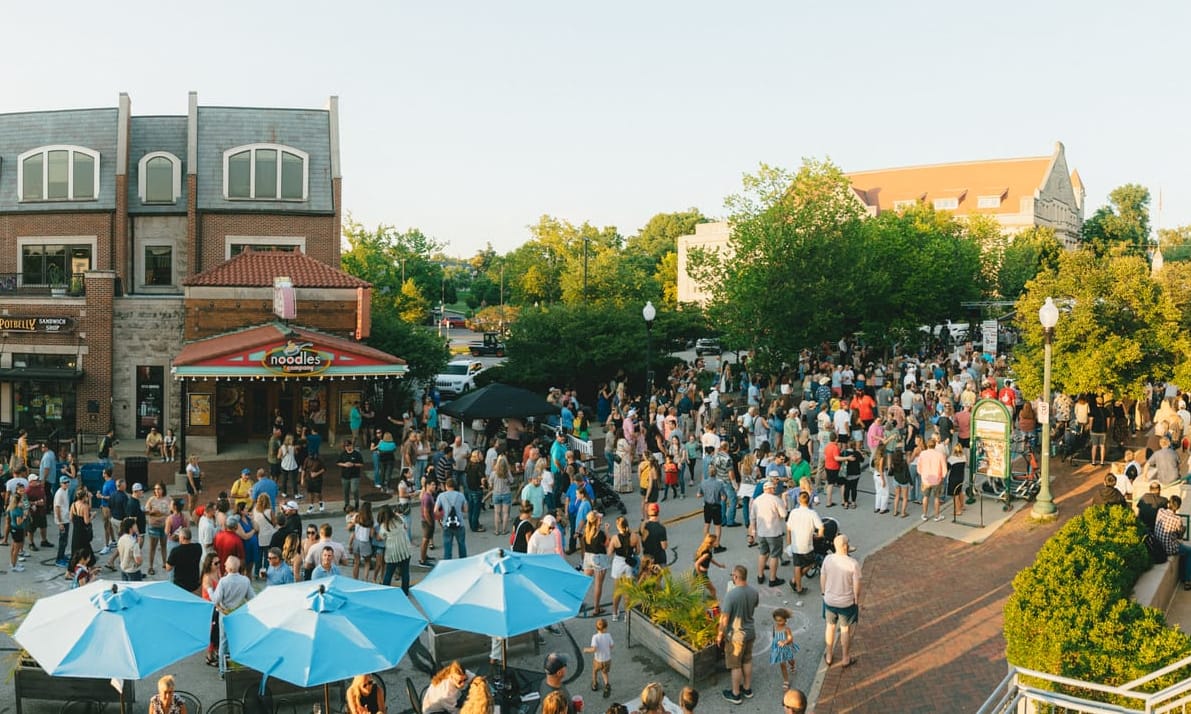
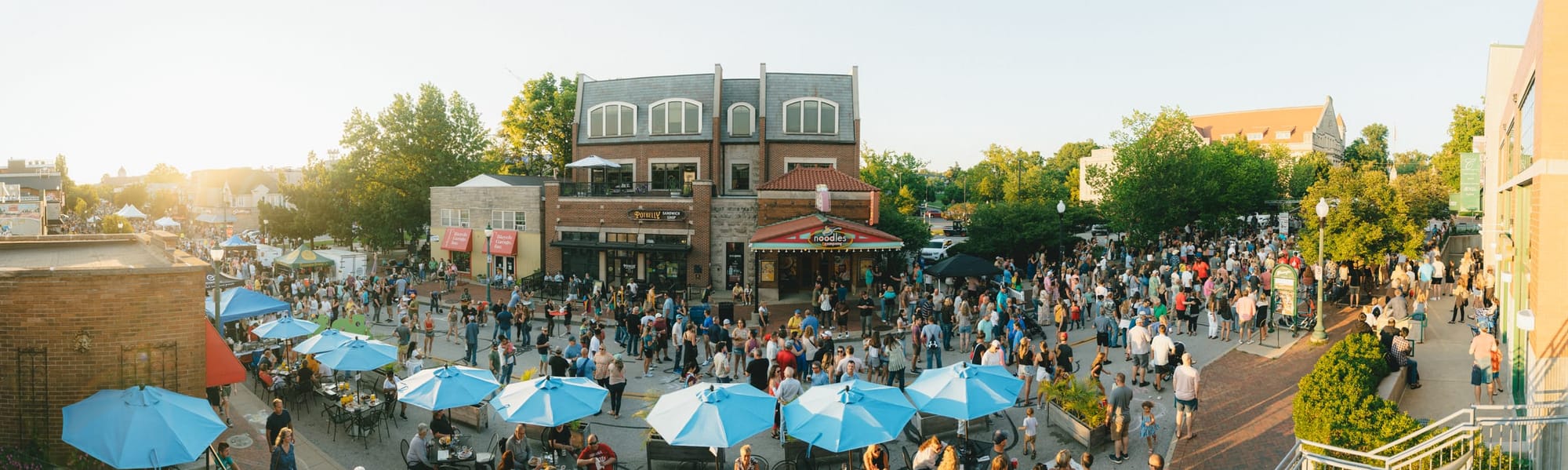
The spring and summer season for Bloomington’s annual Kirkwood Avenue outdoor dining program has now been set by the board of public works: The street will be kept open to vehicular traffic while continuing to allow individual “parklet” installations for restaurants.
That’s based on a vote by the three-member board on Tuesday night (Feb. 24). Kyla Cox Deckard and Elizabeth Karon attended; James Roach was absent.
A parklet takes the on-street parking spots in front of a restaurant and converts them to outdoor dining space. Public works director Adam Wason noted at Tuesday’s meeting that the parklets mean that additional outdoor dining will not completely disappear from the Kirkwood scene.
The board’s decision, formalized through a resolution that was included in the meeting information packet, marks a move away from the full‑street seasonal closures that have, in most years since the pandemic of 2020, turned portions of Kirkwood into a pedestrian‑oriented dining zone.
The proposal to keep the street open to motorized traffic, except for specific closures for special events like Pridefest and Taste of Bloomington, had received some strong pushback from city council members when it was presented to the council in the first week of February. The council’s ordinance was meant to ensure some predictability for the public and for business owners, not make each year’s program subject to new policy review by city staff.
There had been some indication from Bloomington’s economic and sustainable development director Jane Kupersmith that the department was prepared to rethink the plan. The proposal was originally supposed to be presented to the board of public works two weeks ago. And the required order from the city engineer to suspend the council-authorized program was originally expected the day after the city council met.
Even though the order from city engineer Andrew Cibor did not come until the following week, the document still had the administration’s advertised effect. The council’s ordinance authorizes the city engineer to permanently or temporarily suspend the program in part or in whole “in cases of emergency, lack of participation, or any other reason that may render the program impractical.” Cibor’s order says that “... the Kirkwood closure component of the program is suspended for the 2026 season due to lack of participation and impracticality (budget).”
So in the end, the key element of the plan that drew city council objections earlier in the month was left intact—Kirkwood Avenue will be left open to vehicle traffic this year, except for special events.
Presenting the administration’s proposal to the board of public works on Tuesday, was Cassie Werne, who is special projects and operations manager in public works. She framed the recommendation as a balance among competing uses of one of Bloomington’s signature streets.
Werne said, “The recommendation maintains Kirkwood Avenue as an open public right of way, while continuing to allow parklets for outdoor dining. This approach balances stakeholder interest and maximizes overall public benefit.”
Werney said Kirkwood serves restaurants, retailers, service businesses, visitors, motorists, and event organizers, and that feedback on full street closures has been consistently split.
“Feedback regarding a full street closure has been mixed, with business surveys reflecting approximately a 50–50 split.” That’s been the split historically and it was roughly split that way during the most recent outreach period, Werne said. Of more than 25 restaurants along Kirkwood, Werne reported that only five participated in outdoor dining last year.
It was those five restaurants that apparently formed the basis of Bloomington mayor Kerry Thomson’s inaccurate claim made on the Feb. 18 edition of WTIU’s “Ask the Mayor” segment, that only five businesses supported the closure.
During her interview with Joe Hren, Thomson said, “There’s lots of different folks who go to Kirkwood and their safety concerns, parking concerns, but in the end, we did survey all of the businesses impacted by a closure on Kirkwood, and only five of them said that they supported a closure.” In fact, according to the city’s own numbers, 20 business “strongly support” a Kirkwood closure and another six “somewhat support” it. From the city’s numbers:
Support for the city’s proposal came from an email message sent by from Talia Halliday, who is shopkeep for Gather on the courthouse square, and who was awarded the contract through an RFP (request for proposals) to serve as activation coordinator for Kirkwood Avenue. The award was not made in time to have an impact on the 2025 season. Halliday’s email message said in part:
Kirkwood is the gateway between downtown and Indiana University Bloomington, leading directly to the Sample Gates. When those blocks are not fully and positively activated, the visual impact is not one of energy, but absence. We can activate Kirkwood strategically without a full-time closure by keeping the road open while expanding parklettes, modular seating, temporary high impact low stakes activations within the business community, weekend programming, and targeted event-based street closures. This approach allows us to fill the space intentionally, drive foot traffic when it is most viable, and create measurable economic impact—without restricting daily access, parking,or delivery flow. It also ensures that activation supports all downtown businesses equitably, rather than benefiting only a limited number of establishments.
Even though some supporters of a Kirkwood conversion had spoken during public comment at the city council’s early February meeting, just one business owner appeared on Tuesday, and he spoke in favor of keeping Kirkwood open to vehicular traffic. The owner of Dagwood’s, John Santos, said that the policy should prioritize the broad public’s ability to access and park on the street, not just the interests of a small number of restaurants that directly benefit from outdoor seating.
Whatever the city does, Santos told the board, “should be done with the benefit of the entire public in mind, not five businesses that are financially profiting from it, while the rest of the businesses are losing parking spaces.” Santos said his customers had complained about the difficulty of finding parking during closures, and he questioned whether curbside dining areas were used enough to justify the loss of parking and drive-through access.
The staff memo presented to the board indicated that some owners requested that their input be gathered privately, because they were not comfortable sharing their perspectives in a public forum. The memo also concedes that communication to participants in the outdoor dining program could have been better: “Staff acknowledges that communication regarding this recommendation could have been more proactive to outdoor dining participants prior to it becoming public.”
The memo continues, “We value our working relationships with downtown partners and appreciate the ongoing collaboration and dialogue as we work toward solutions that support the entire district.”
During Tuesday’s meeting, board of public works president Kyla Cox Deckard was keen to make clear the board’s role, both that night and in the future. She noted that the board’s role was to approve the outdoors dining program, with its parklets for this year, which was different from the city council’s role which had been enactment of an ordinance.
Cox Deckard also stressed that even though an eventual study of the Kirkwood Avenue corridor had been called for, that was not what was being approved Tuesday night. Still, the board of public works will be asked eventually to approve such a study, if one is to be done, public works director Adam Wason said.

Comments ()