
Bloomington council OKs historic status for Ivan Adams House on 12th Street
Bloomington’s city council voted 6–3 Wednesday to designate the Ivan Adams House at 115 E. 12th St. as a single-property historic district. Supporters cited Adams’ significance as a limestone sculptor; dissenters questioned whether residence alone justified historic protection.
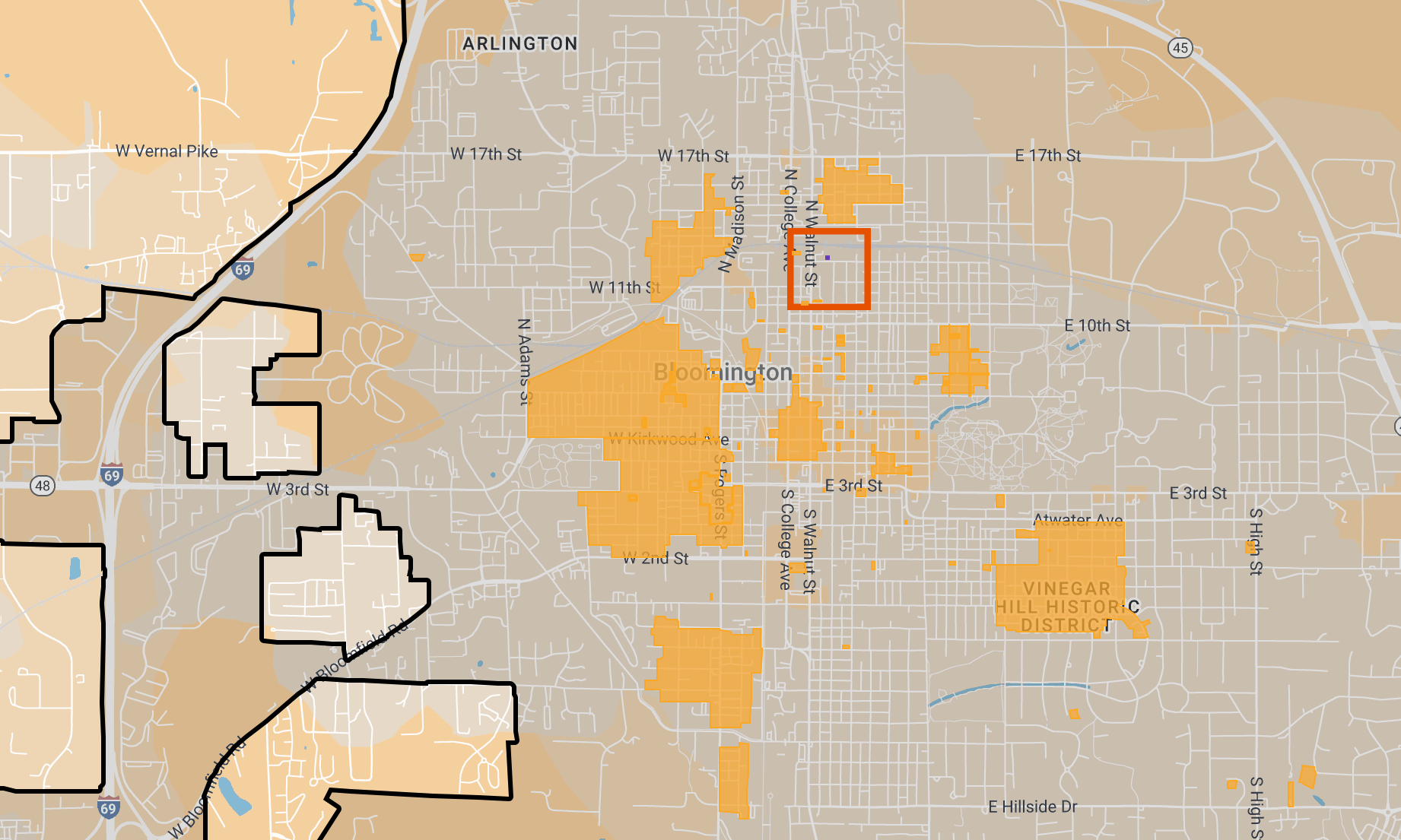
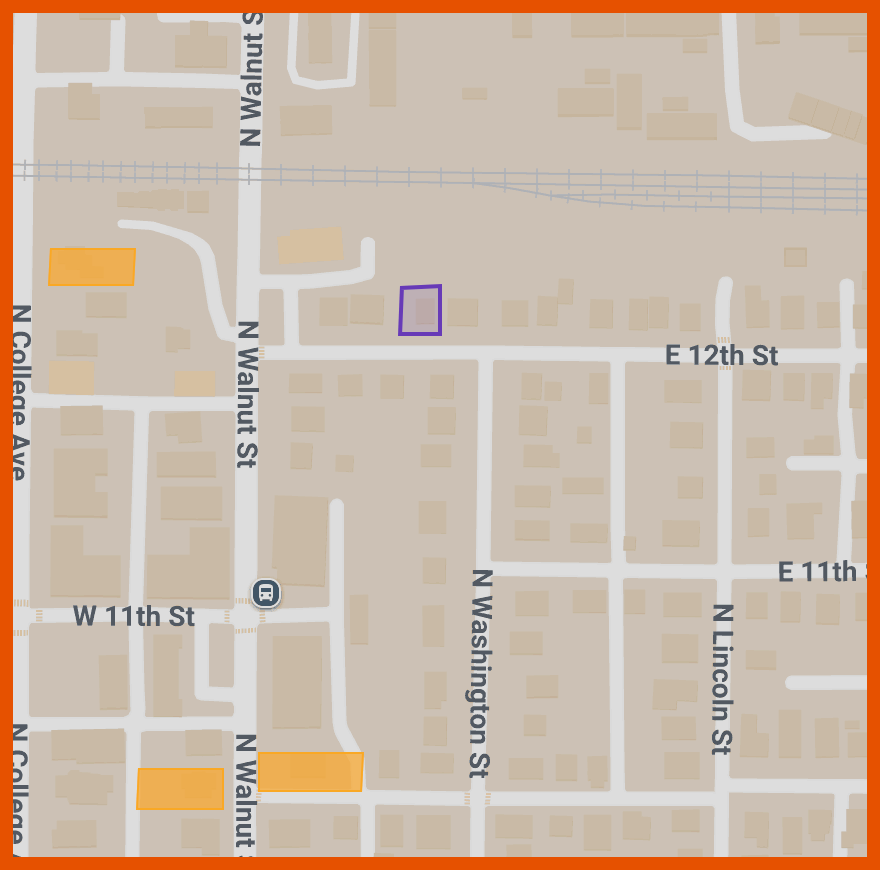
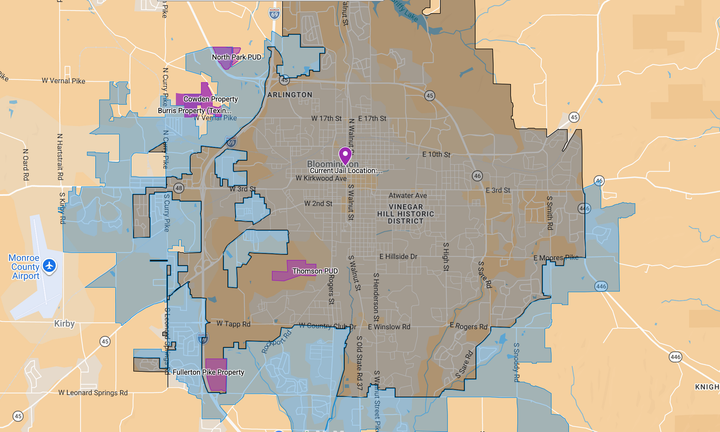
Maps by The B Square with information from the city of Bloomington. The areas in orange are existing historic districts. Left: A vicinity overview of the Ivan Adams House at 115 E 12th Street. Right: A close up of the area of the Ivan Adams House, which is indicated in purple. [link to dynamic map]
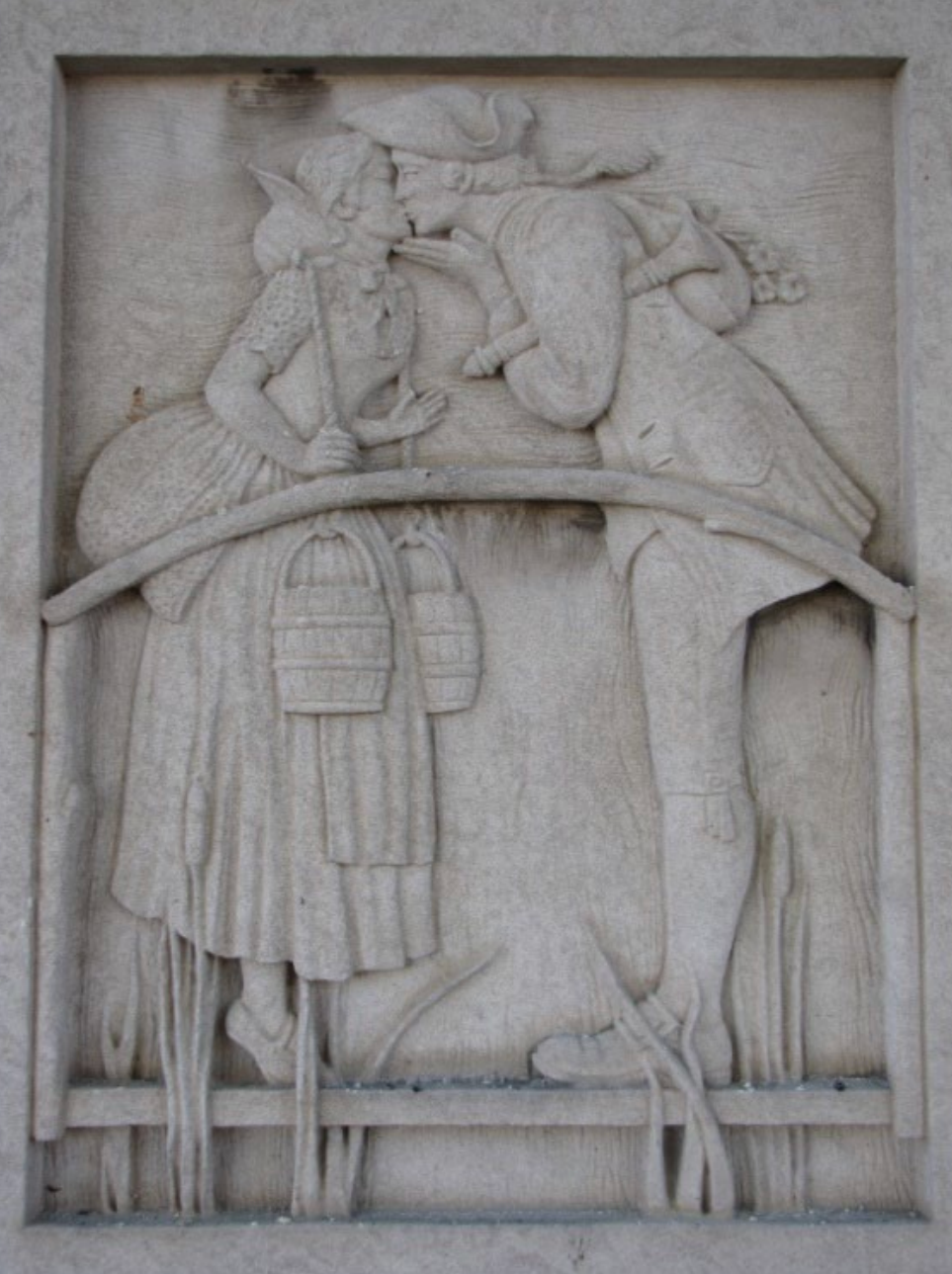
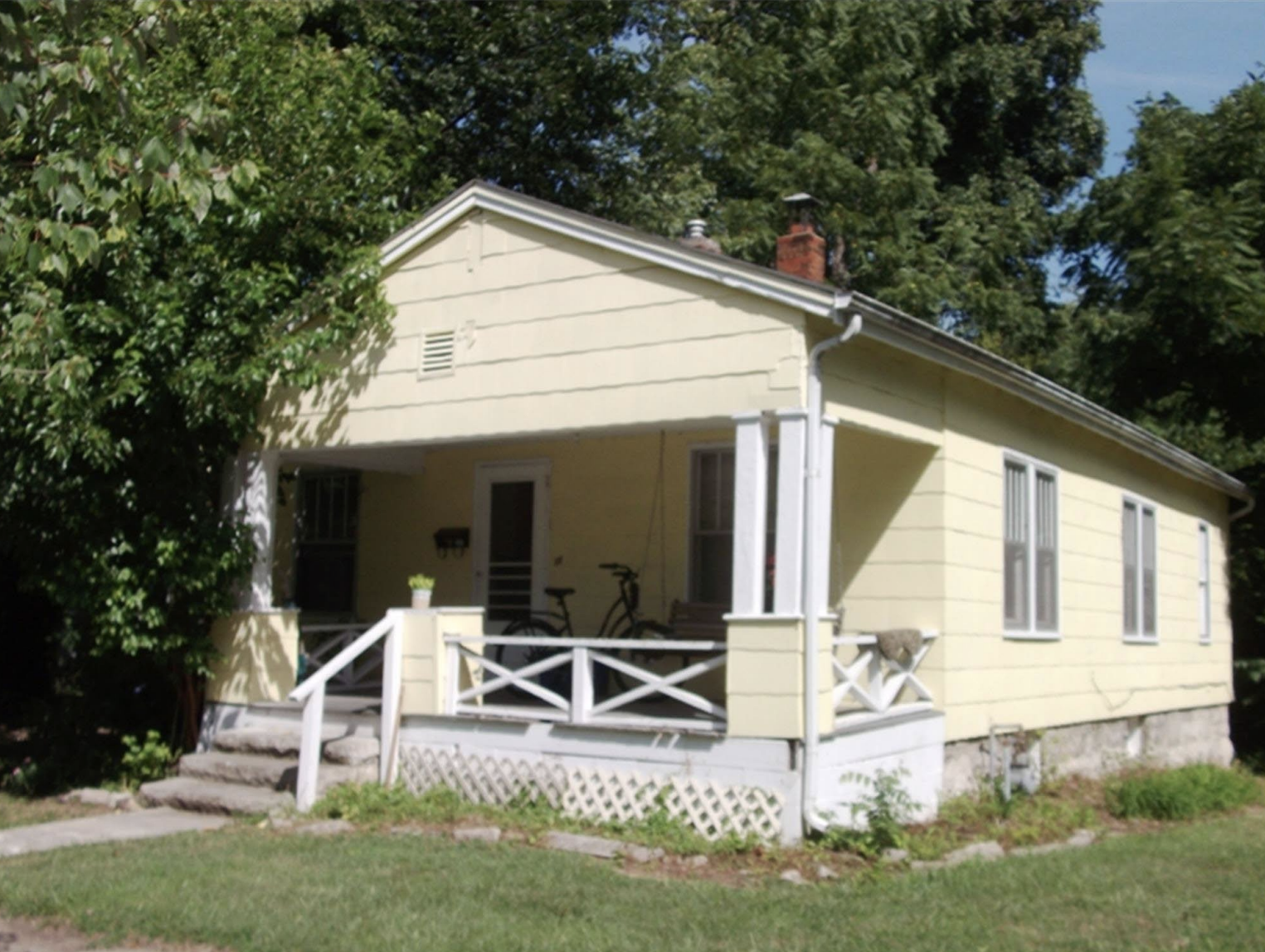
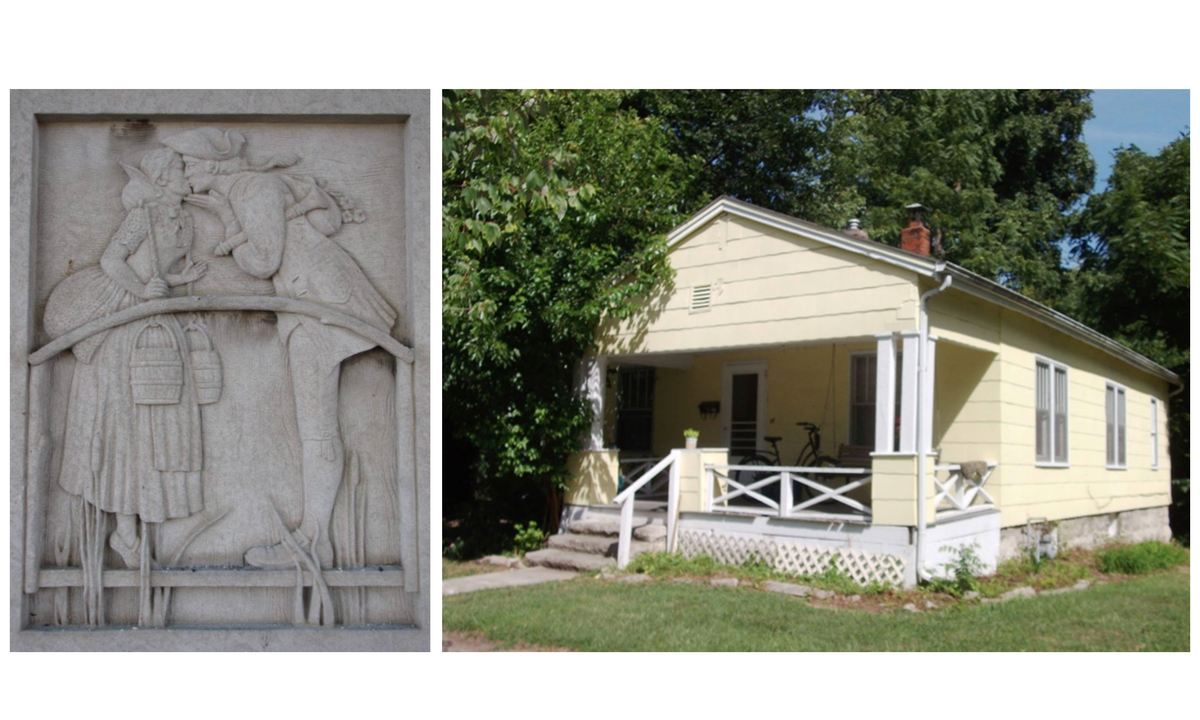
Left: A relief carved by Ivan Adams on the house at 3rd and Dunn streets from the Bloomington city council's meeting information packet. Right: An 2025 image of 115 E 12th Street from the Bloomington city council's meeting information packet.
Wednesday night, the Ivan Adams House at 115 E. 12th St. in north central Bloomington was designated as a single‑property historic district on a 6–3 vote by the city council. Dissenting were Matt Flaherty, Kate Rosenbarger, and Hopi Stosberg.
Presenting the item to the council was historic preservation program manager Noah Sandweiss, who laid out the case to give historic protection to a modest California bungalow where stone carver Ivan Adams lived. The proposed local historic district designation was based on findings adopted by Bloomington’s historic preservation commission (HPC) in late October.
According to Sandweiss’s report, the house is a one-story, gable-front California bungalow built in the mid-1920s that retains a high degree of architectural integrity. But that’s not the reason it was nominated for historic protection.
The basis of its nomination was the fact that from 1927 to 1945, it was the residence of Ivan Adams, a locally prominent limestone sculptor, whose work includes a relief carved on a house at 3rd and Dunn streets, sculptural elements at Indiana University’s Foster Quad, and nationally recognized religious commissions, including work for the National Shrine of the Immaculate Conception in Washington, D.C.
Under local law, a property can qualify for historic designation if it meets at least one historic or architectural criterion. The HPC concluded that the Ivan Adams House satisfies a single historic criterion, which applies to properties “associated with a person who played a significant role in local, state, or national history.”
The staff report says that Adams lived at the 12th Street house during a productive period of his career and that other properties associated with his later life and work no longer exist, increasing the significance of the surviving residence.
The report also concludes that the house remains a representative example of a small 1920s bungalow, despite later siding changes, and that its exterior has not been substantially altered from its original appearance. The house is classified as a “contributing” structure which means that it’s one that could add to the historical significance of an area, but is not itself either “notable” or “outstanding.”
Weighing in from the public mic in favor of the historic designation were the current owners of the house, John and Amy Butler, who purchased it recently. It was was to be demolished—but the owner agreed to sell it to them. It was the house that John Butler grew up in.
John Butler said, “Ivan Adams was [an] exceptional carver, and preserving his memory is important to the cultural heritage of this city … a great person lived in this small house …”
Amy Butler described how the house narrowly escaped demolition earlier this year: “I was devastated to see ‘the little yellow house’ have a demolition sign in front of it. … My husband grew up in this house, and this amazing carver lived in this house, and I think it’s something that’s worth saving.”
The Butlers are currently working on the establishment of a conservation district (which is a precursor to a historic district) that would encompass a bigger area of the same Cottage Grove neighborhood. That’s a topic that drew a question from councilmember Isabel Piedmont-Smith, who wanted to know: Given that there’s no imminent threat of demolition, why not just wait until the bigger conservation district is up for formal consideration by the HPC and then potentially the the city council?
Sandweiss told Piedmont-Smith the Ivan Adams House was nominated “on its own merit” before the broader effort at a conservation district emerged, and urged the council to judge it independently, saying, “We don’t know what the end result of that process [to establish a conservation district] will be.”
Councilmembers who supported the nomination included Dave Rollo, who called the ordinance “very appropriate” for a community like Bloomington, which was shaped by limestone, saying the house “reflects our local heritage” and “demonstrates the cultural value of structures,” enriching “our sense of place.”
Andy Ruff drew on his own childhood memory of a neighborhood stone carver to argue that a carver’s presence can imbue an ordinary house with community meaning.
City council District 6, where the Ivan Adams House is located, is represented by Sydney Zulich, who praised the extensive neighborhood outreach by the Butlers, saying they had “done the work for this project,” so she supported it.
In voting against the historic district designation, Matt Flaherty said he was “a little torn” about the decision. But he questioned whether mere residence, without a stronger physical or event‑based connection, should justify local designation: “I’m just not sure that someone of cultural or historical significance living at a place on its own, without more, is … a sound criterion or basis for historic preservation.”
Flaherty also warned that using historic preservation to block otherwise permissible development risked drifting from its core purpose.
In opposing the historic designation, Kate Rosenbarger called it a “very slippery slope” to preserve homes where “people lived who contributed something to our community that is of note.” Rosenbarger said the legacy that Adams had left, like that of many artists, is preserved in his works that can be seen across the city and country.
Hopi Stosberg cited the fact that only one of the criteria for historic designation was met for the property, saying she generally has a “pretty high bar” for wanting to designate something as a historic district. She added that if meets only one of the criteria, then it would only rarely be the case that the property would get over that bar. She agreed with Rosenbarger that there are better ways to mark the memory and the significance of the carvings done by Adams.

Comments ()