
Bloomington council turns down quadrupled septic hauling rate jump; wants different path to a needed increase
On Wednesday, Bloomington’s council unanimously rejected a four-fold septic hauling rate hike but agreed some increase is needed. Councilmembers are hoping for rates that distinguish between holding tanks and drain-field systems. CBU is expected to return in 2026 with a different proposal.
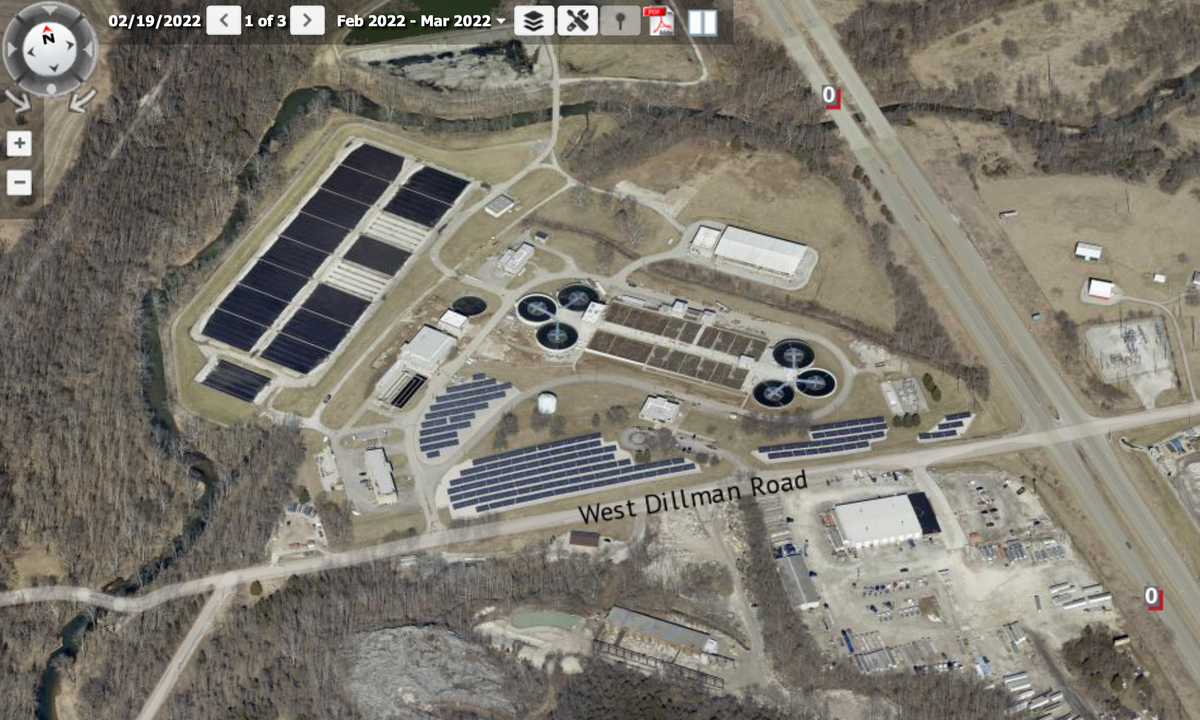
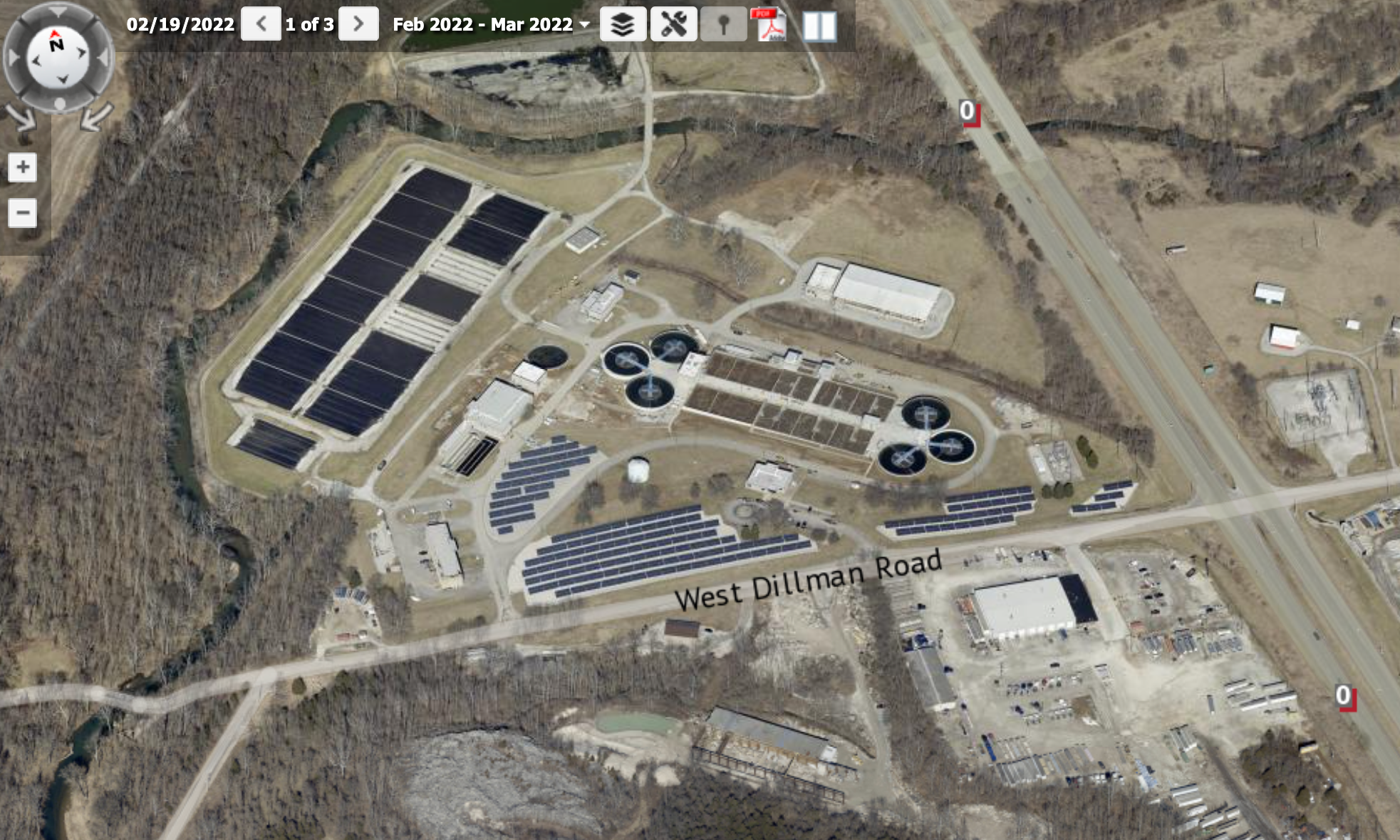
Bloomington’s city council voted unanimously on Wednesday to reject a proposed four-fold increase in the city’s septic hauling rates. But councilmembers indicated a clear consensus that an increase is needed—because the rates have remained the same for 25 years.
It looks likely that City of Bloomington Utilities (CBU) will bring a revised proposal to the council for consideration sometime in 2026.
Under the ordinance proposed by CBU, waste haulers who take the contents of septic tanks to Bloomington’s Dillman Road wastewater treatment plant for disposal would have paid a uniform rate of 8.0 cents per gallon for all hauled wastewater, starting in 2026. That’s about four times the 2.06 cents per gallon that is currently charged.
That four-fold increase means haulers would have started paying around $80 instead of $20 for a 1,000-gallon load, which is a typical size for a residential septic tank. That translates to about $60 more that septic tank owners would pay for a routine pumping, after septic waste haulers pass along the extra cost to their customers.
Currently, there are different rates for regular septage, grease, and commercial or industrial waste that is hauled to the Dillman plant. Even though there was no objection at Wednesday’s meeting to combining those different charges into one single rate, councilmembers were concerned about the failure to distinguish between the source of septage—septic tanks that are just holding tanks, compared to septic tanks that are connected to a drain field.
Holding tanks, common in lakeside campgrounds and seasonal facilities near Lake Monroe, have to be pumped far more frequently than systems with a drain field, where solids settle out and liquids leach away underground. When a septic tank that is connected to a drain field is eventually pumped out, its contents are way “stronger” than for a holding-tank type system.
Several council members questioned the fairness of charging both system types the same rate, given the vastly different impact their waste has on the city’s wastewater treatment facility.
From the public mic on Wednesday, Jerry Jackson, with Whispering Wilderness Campground, described his facility, which has about 30 septic tanks—all of them holding tanks. Most of the time, when a septic hauler pumps out a Whispering Wilderness tank, it’s “nothing but water,” Jackson said. “You get people in there on the weekend, Friday, Saturday night, they go out on the lake all day. Everybody comes in, everybody showers—we catch all that. We catch all the sink water, all the shower water.” But there’s not much solid sludge in any of the tanks, Jackson said.
Holding tanks have to be pumped out as often as once a week, which means that the extra $60 per pump-out would amount to an extra $3,000 every year, instead of an extra $20 per year for a tank that is connected to a drain field.
Part of the concern that city councilmembers voiced was the basic fairness of that scenario in terms of the sheer size of the increase, especially when applied to holding-tank systems. Councilmember Andy Ruff put it like this: “We’ve built a reasonable expectation among property and business owners that this is what the cost is …” Ruff advocated for a more incremental approach.
During Wednesday’s meeting, councilmember Isak Asare pressed Steven Stanford, who is the pretreatment coordinator with the City of Bloomington Utilities (CBU) for an analysis of the “elasticity of demand” that might be expected from dramatically higher rates. In Stanford’s memo, included in the council’s information packet, he describes the logic behind increasing the rate just to 8 cents a gallon, instead of the full 17.5 cents per gallon that was calculated to be the true cost of treating septic waste.
Stanford’s memo says that charging the full cost “is likely to be disruptive to the current waste hauler’s market and counterproductive for CBU’s mission of promoting environmental stewardship.” That raises the specter of eventual deferred maintenance by septic tank owners with drainage fields, with the potential for avoidable backups.
But for holding-tank systems, significantly higher costs could have an immediate impact on sensitive areas near the lake. Maggie Sullivan, who is the watershed coordinator with the nonprofit Friends of Lake Monroe, told councilmembers that many marinas offer bathrooms to encourage people to use them “rather than peeing in the lake.” And those are typically holding tanks, Sullivan said. “We would hate to see [the rate increase] encourage them to shut off their bathroom access just because of the cost involved.”
Another source of concern for city councilmembers was the difference in septage strength for tanks connected to drain fields compared to holding-tank type systems. Stronger, more-concentrated sewage is more expensive to treat. It’s the concept that Crowe LLP used for the study it did of septic hauling rates, under a $50,000 contract with CBU to analyze treatment costs and determine an appropriate rate. Crowe calculated that the true cost of service is 17.5 cents per gallon concluding that that a rate at that level “would provide the revenue corresponding to the cost of treatment, CBU staff activities, and billing charges.”
Another source of concern for councilmembers was the statutory mandate that the rate be tied to the cost of treatment, which would be an amount eight times, not just four times, the current rate.
Councilmembers were also concerned that the current rate is so low that it attracts haulers from distant locations to dump their waste at Bloomington’s Dillman Road wastewater treatment plant. Even at the proposed four-fold increased amount, it would still mean regular Bloomington sewer rate payers would be subsidizing the cost of treating hauled septic waste.
So councilmembers appeared to recognize on Wednesday that a rate increase is needed. It’s a question of how to implement the increase.
Councilmembers are hoping for a way to charge different rates for waste water from a holding tank compared to a tank with a drainage field. CBU director Kat Zaiger told the council that CBU is working on an approach to sampling septic loads, using RFID cards, and implementing a flow meter system that might allow for an approach to differentiated billing more like what the council is looking for.



Comments ()