
Bloomington plan commission sends Northgrove subdivision to second hearing amid concerns
The Bloomington plan commission advanced the proposed 18-lot Northgrove subdivision to a second hearing, but members voiced concerns about requested waivers and variances from city subdivision standards, including alleys and sidewalks. Other concerns include stormwater impacts and tree loss.
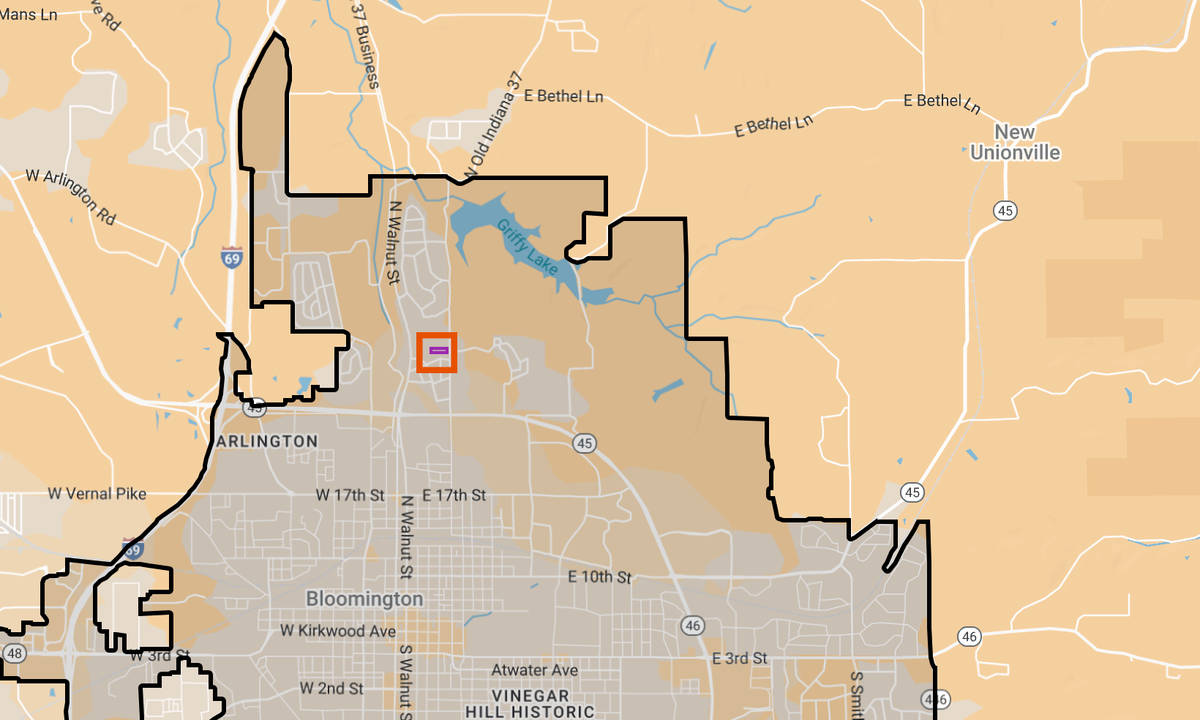
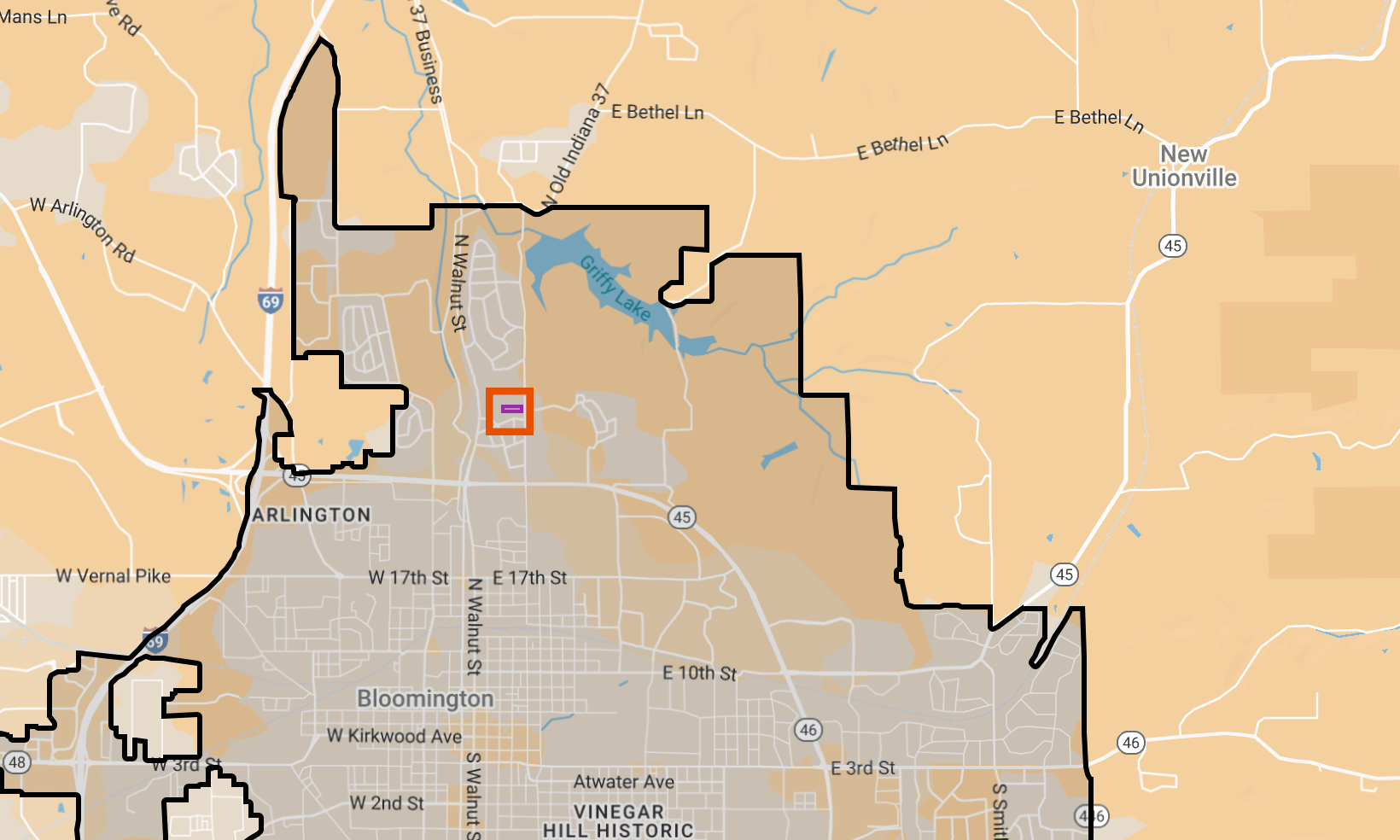
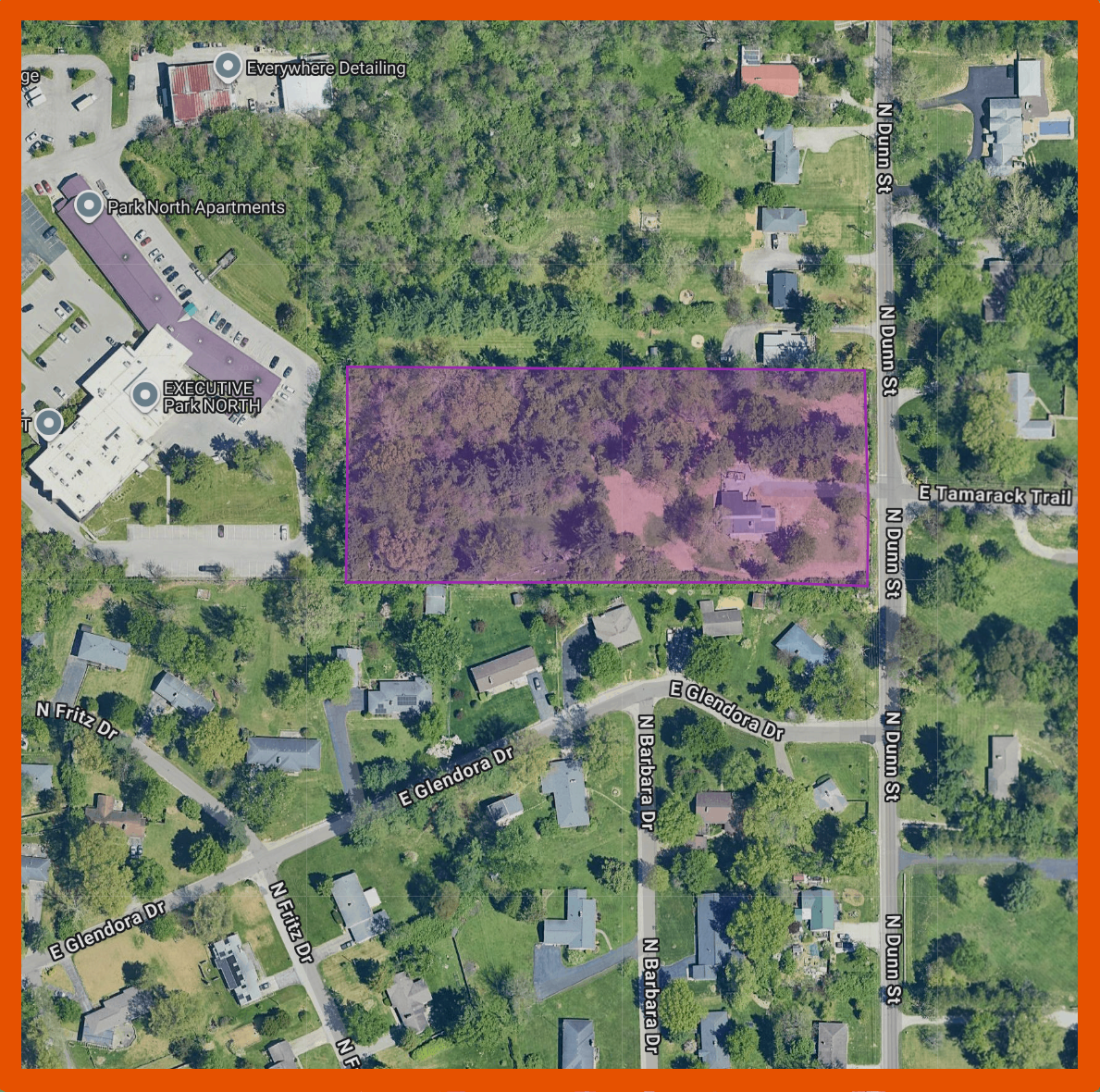
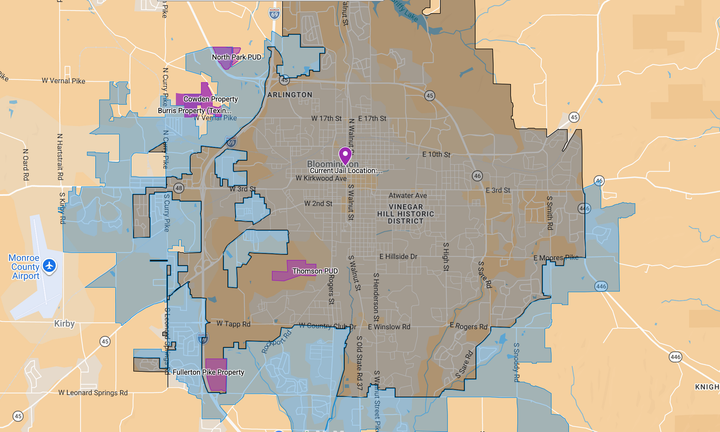
Maps by The B Square with information from the city of Bloomington. [link to dynamic map]
A proposal to plat an 18‑lot subdivision called Northgrove on a wooded four‑acre parcel at 2511 North Dunn Street got a cautious reception from the Bloomington plan commission at its regular monthly meeting on Monday (Jan. 12).
Commissioners voted unanimously to forward the primary plat to a required second hearing at its February meeting, but it looks like an open question whether they’ll approve it next month—because of some key waivers the developer is requesting.
The needed waivers arise from the fact that the site is bigger than three acres and zoned R2 (Residential Medium Lot), which means it has to meet the “traditional subdivision” standards in the city’s Unified Development Ordinance (UDO). Among the standards: At least 67% of lots have to be served by alleys; and sidewalks must be installed along both sides of a new internal street. Those standards are requested by the developer to be waived.
The petition, filed by Paul Pruitt and Keith Kline with consultant Bynum Fanyo & Associates, would create 15 single‑family lots and 3 common area lots, including stormwater and tree‑preservation areas.
The developer is requesting waivers from the alley and sidewalk requirements, and several separate variances from the city’s board of zoning appeals (BZA), including lot size and width, side setbacks, tree‑canopy preservation, and riparian‑buffer disturbance.
Here’s a table of the requested exceptions organized by the body that would have to approve them.
At Monday’s meeting, several plan commissioners signaled discomfort with the number and scope of exceptions being requested. And their remarks won them quiet applause from the three dozen neighbors who attended the meeting to express their opposition to the plan.
Comment from the public mic, much of it from residents of Matlock Heights, a historic district just south of the site, was overwhelmingly critical of the current plan. Themes included tree loss, stormwater, traffic on Dunn Street, and the overall fit with the existing neighborhood.
Several speakers framed the four‑acre site as an established urban forest and wildlife corridor. Julia Livingston said, “Long in development has been a magnificent grove of tall white pine trees. Ironically, it is the very grove of trees that gives the subdivision Northgrove its name and the very trees proposed to be cut down in their prime.”
Livingston tied her objection to the city’s own environmental policies, citing the wording in Bloomington’s environmental action plan language about preserving large, long‑lived trees and urban forest benefits.
Others focused on existing drainage and basement‑flooding problems in Matlock Heights and the risk of adding more impervious surface uphill. Robin Halpin Young told commissioners: “One of the ways the developers saved money was to skip putting in a storm sewer system.” She added, “One of my top concerns is that under the proposed plan, paved streets, cement sidewalks and driveways and homes that create roof runoff will cover about 75% of the penetrable ground surface, upending the natural flow of the watershed and increasing surface runoff.”
Former city councilmember Susan Sandberg, and for part of that time the council’s appointee to the plan commission, said that the project “does not seem to be a fit for UDO standards for a subdivision” of any of the three types—traditional, infill, or conservation. Sandberg urged the commission to “lean into the protection of our zoning codes and ordinances.”
Also from the public mic came narratives about neighborhood character and scale. Michael Douglas, whose property is next to the site, told commissioners: “Matlock Heights is a very nice neighborhood. The lot sizes are about twice or more than the proposed lots.” He added, “All of our homes are nice stone homes, and I don’t think this new project is consistent with our neighborhood.”
Several residents stressed they are not opposed to all development, but to the intensity and number of exceptions on this particular site. Heidi Darling, a long‑time Matlock resident, summed up that expressed view: “Does Bloomington need housing? Absolutely. Should the need for housing circumvent the unified development ordinance? Absolutely not.” She added, “If the variances are granted, the precedent is set: Build anywhere a developer finds available land.”
On the plan commission’s side several members raised potential objections.
Patrick Holmes focused on the legal test for waivers, which requires conditions unique to the property, not self‑created by the site plan. He told the petitioner that arguments about wanting smaller lots or avoiding alleys “are unique to the plan and not to the property,” and said he would “like to see a plan that actually complies” with the UDO to understand how many houses the site can reasonably accommodate.
Jillian Kinzie pressed on the question of the alley waiver and pedestrian safety. Without alleys, every house would have its own driveway on a short internal street. She asked the petitioner to explain why an alley could not at least serve the south‑side lots, to reduce the number of drive cuts. If alleys could be worked into a plat to make it viable, that would help reduce some of her concerns about safety in connection to the number of drive cuts and the impact on safety, Kinzie said.
Kinzie and Flavia Burrell both flagged stormwater and sewage as major unresolved issues, especially given long‑standing flooding and infrastructure problems in Matlock Heights. Burrell said explicitly she wanted a second hearing to iron out those kinds of issues.
Hopi Stosberg, the city council’s appointee to the plan commission, said she generally supports density. But Stosberg questioned whether this location—with no sidewalks on Dunn, limited bike-ped facilities, and no transit—was appropriate for relatively high density. She described the proposal as “a lot of stuff squeezed into the space.” Stosberg also noted the lack of any affordability commitments that come with the increased density.
Steve Bishop asked for rough price ranges for the homes and indicated that knowing whether they would be “attainable or affordable” could affect how he views the requested waivers.
Bloomington’s senior zoning planner Jamie Kreindler underscored staff’s own safety concern: If alleys are waived, the combination of narrow lots, numerous driveways, and a missing sidewalk segment “could have a negative impact on public safety.”
The commission’s vote on Monday set up a second primary‑plat hearing, next month when staff will return with full written findings and updated analysis, including:
- a detailed stormwater and sanitary review by city of Bloomington utilities (CBU);
- a refined grading and drainage plan; and
- further exploration of alley, sidewalk, and lot‑layout alternatives
Separately, the board of zoning appeals will hear the developer’s variance requests. If the BZA denies those variances, the developer would likely have to redesign the plat and return with a new proposal, development services manager Eric Greulich told plan commissioners.
Comments ()