
Bloomington police policy on Flock cameras revised ahead of April 15 city council briefing
Opponents of Bloomington’s Flock Safety cameras protested outside and inside Mayor Kerry Thomson’s State of the City address on Tuesday. Thomson said the city will brief the council on April 15. BPD has updated its ALPR policy, including new audit rules and limits on certain investigations.
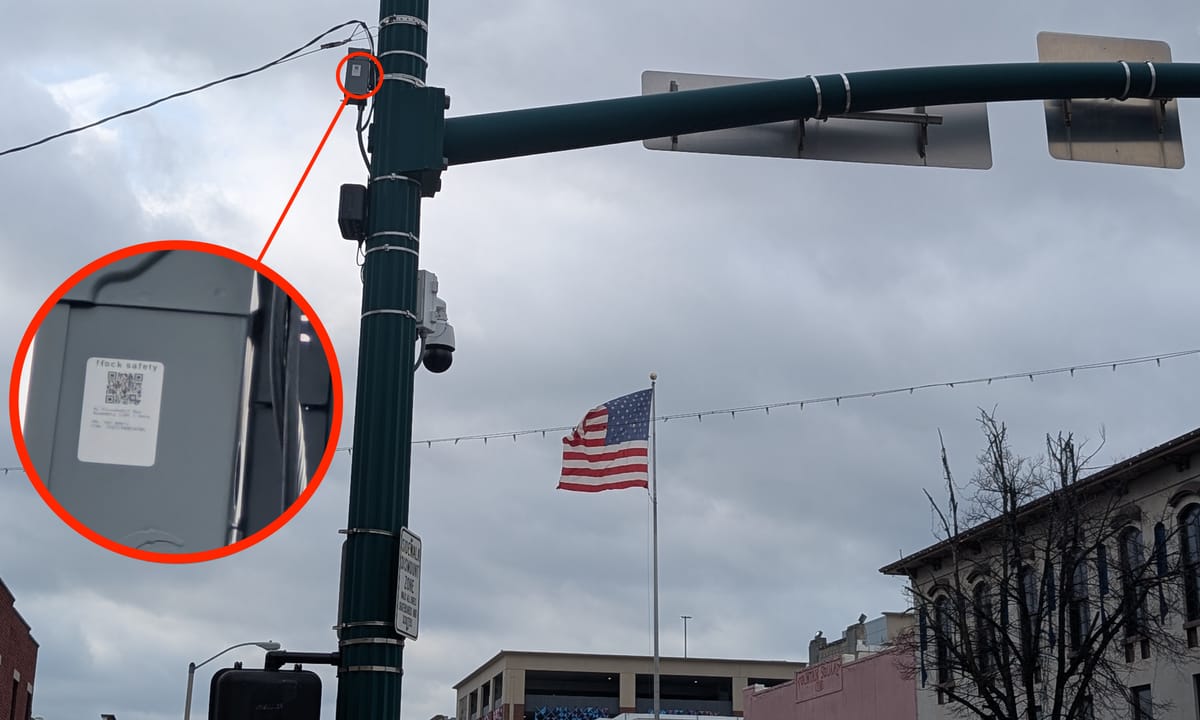
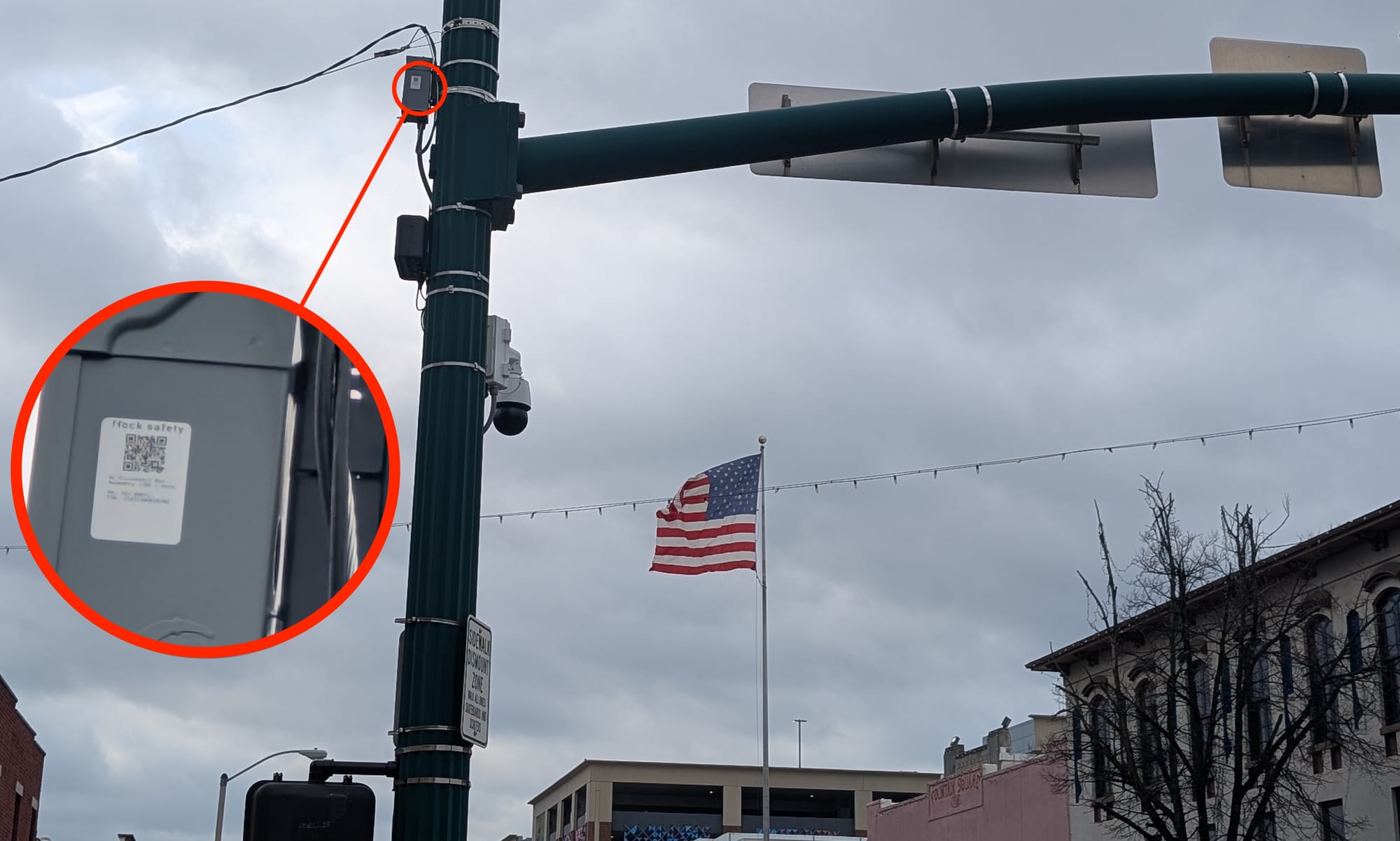
Before this past Tuesday’s State of the City address, given by Bloomington mayor Kerry Thomson, some residents who opposed to the city’s deployment of Flock Safety cameras distributed flyers outside the Buskirk-Chumley Theater where the speech was delivered.
The cameras, with their automatic license plate readers (ALPRs), are networked with the data collected by other jurisdictions that use the devices. The information can be used by law enforcement agencies to help locate criminal suspects.
But civil liberties advocates warn that the system results in a large database chronicling the movements of ordinary residents, raising concerns about privacy, data retention, and potential misuse.
Inside the theater, during the speech, Thomson gave Flock cameras a mention: “The city is currently reviewing our contract for Flock cameras, and we’ll be presenting our findings on April 15 to the city council, based on their recent resolution.”
From the audience came some applause and shouts calling for Bloomington to end its relationship with Flock: “Cancel the contract!” Thomson continued her speech after recognizing the shouts from the crowd: “I am happy to meet with people and talk to you about your feedback. I have met with several of you.”
The council’s resolution, which was passed on March 4, calls on the mayor to give the council a public briefing on various topics related to the city’s ALPR program within six weeks of the resolution’s passage, which works out to April 15, the date mentioned in Thomson’s speech. There’s also supposed to be a written packet provided by the police department a week ahead of the public briefing.
The city’s policies related to use of ALPR have already been modified—in a way that tries to address some of the concerns that have been expressed about use of the data. In response to a records request from The B Square, the city produced the general police order on the use of ALPR systems, which was updated on March 26, 2026. The original general police order on the topic was effective July 23, 2025.
One difference in the updated policy is easy to spot—the exclusion of uses involving investigations into reproductive health and immigration issues:
B. Use of the ALPR System.
…
3. The following uses of the ALPR system are strictly prohibited:
…
c. Reproductive healthcare or immigration investigations. The ALPR system shall not be used and data shall not be shared with any agency conducting an investigation regarding an individual seeking or using reproductive health care services or an individual’s immigration status.
The previous policy included a requirement for audits of searches, but the updated policy makes explicit how frequently audits of searches are done
C. Data Storage and Retention
…
3. An audit trail of all searches is kept. The System Administrator shall perform an audit of various user accounts once every 60 days to ensure compliance with this General Order. The results of the audit shall then be provided to the Captain of Operations for review.
The upcoming briefing of the city council on April 15 comes against the backdrop of a Jan. 30 protest outside city hall, which drew a crowd of hundreds. Part of the context of the mid-April briefing also includes the city’s history of redacting parts of Flock contracts, when providing them in response to records requests, when there was no legitimate legal basis for doing so.
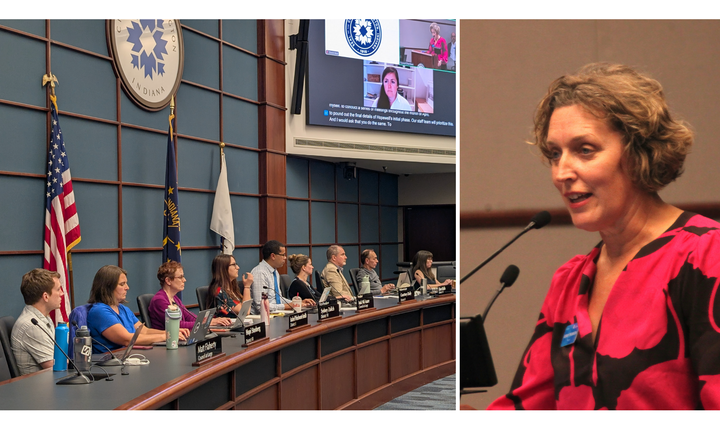
It is not yet clear if the April 15 briefing, which will almost certainly highlight the recent revisions in the policy, might persuade the city council to allow the Flock camera contract to stand, or if the nine elected officials will take steps to sever the city’s connection to Flock. For the council to end the contract, would likely require the council to exercise its fiscal powers—by not funding such contracts.
Early in the public conversation about Fock cameras, Bloomington city council president Isak Asare issued a written statement that included this passage:
My preference is to eliminate our relationship with this technology entirely. The strongest protection for civil liberties is not better settings or better assurances—it is restraint. You cannot misuse data that does not exist. You cannot be compelled to share what you never collected. And you cannot normalize a form of power you have chosen not to build.

Comments ()