
Bloomington Transit: Route 13 safe for at least six weeks; testimony urges tweaks, not termination
Bloomington Transit will keep Route 13 running for 45 more days, after public comment uniformly urged against cutting the service. The extension gives Monroe County time to finalize possible funding for the route, which serves major employers west of the city and requires non-city subsidy.
On Tuesday night (Feb . 24) at a public hearing held by Bloomington Transit’s board, everyone who weighed in urged the public bus agency to keep Route 13 running—at least long enough to adjust it and give it a fair test.
Board members are now giving the route another 45 days, which is a time frame that should allow potential funding from the Monroe County government to firm up. In the notice of Tuesday’s hearing, the reason given for cancelling the route was “[d]ue to the withdrawal of required funding from Monroe County …”
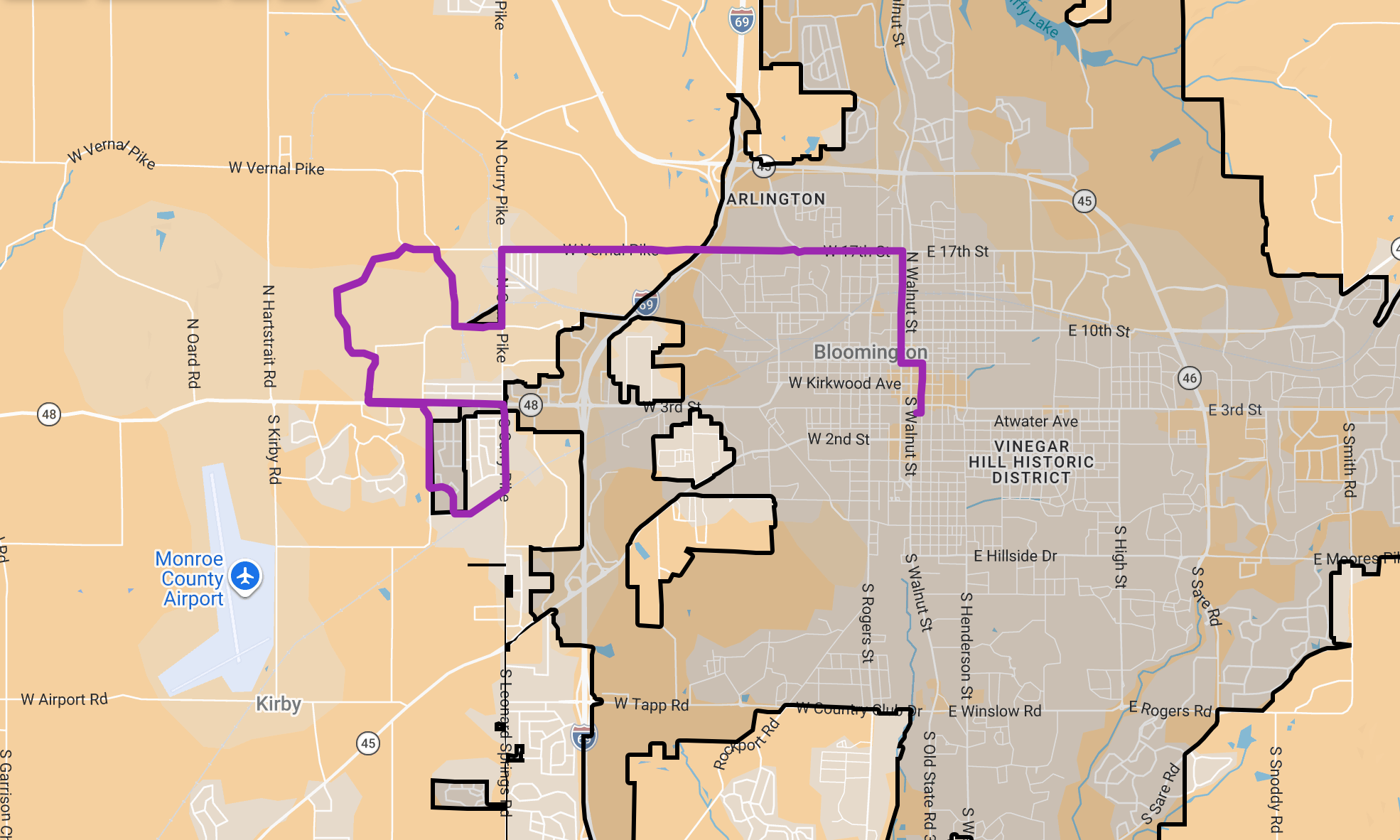
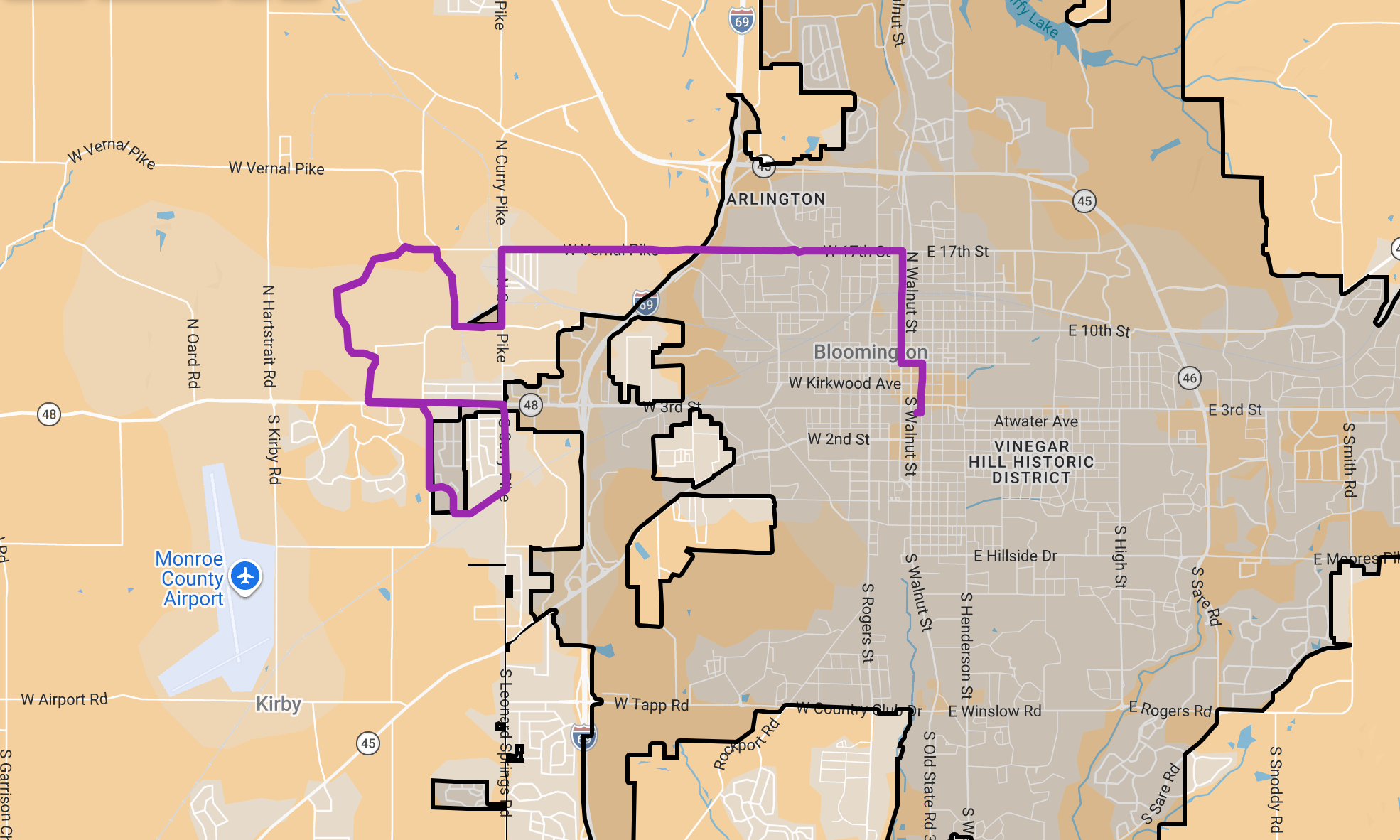
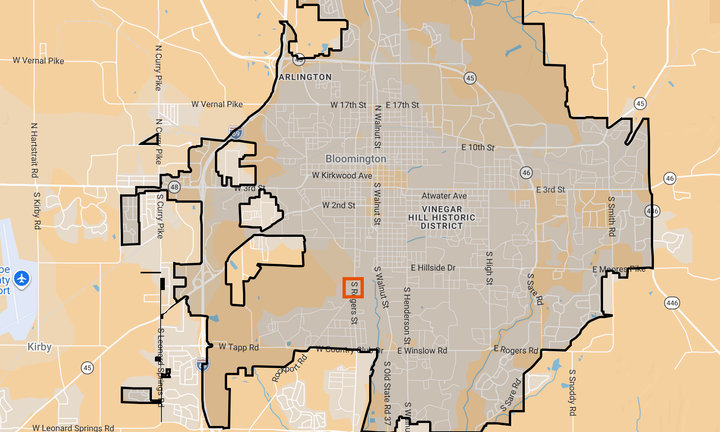
The route, which was launched a year ago, is an out-and-back loop from downtown out to Park 48, where Ivy Tech, Cook Medical, and Simtra form an employment and educational center outside the city limits.
The reason some funding from the county government is needed to support Route 13 is tied to the fact that it runs part of the way outside city limits. When Bloomington’s city council in 2023 finally made it legally possible for BT to provide service outside city limits, a stipulation was baked into the council’s ordinance, which forces BT to use non-city funds to support service outside Bloomington.
As BT general manager John Connell put it at the hearing, “Unfortunately, to date, a formal commitment for funding for calendar year 2026 has not materialized.” BT has to hold a public hearing on any significant service cut, and that’s why Tuesday’s hearing was held.
Based on county council discussion on the topic at a meeting on Feb. 10, county councilors are now inclined to support Route 13 with funding, and county commissioners are inclined to support the required interlocal agreement—it’s a matter of satisfying statutory noticing requirements for making the appropriation.
Public commentary: Mostly by email
The only live speaker at the public hearing was Christoper Emge, who is director of advocacy for the Greater Bloomington Chamber of Commerce. Emge said the route has not been running long enough to be fairly evaluated and that regional access to the Park 48 area is strategically important.
Shelley Strimaitis, who is BT’s planning and special projects manager, read several written comments submitted by email into the record, all supporting continued service on Route 13 and emphasizing its role as a commuting lifeline for west-side workers and students.
In one email, an employee at Simtra Biopharma Solutions, described relying on Route 13 to reach their workplace from downtown. A Cook Medical employee said they and many colleagues “rely on it daily” and urged the board not to discontinue the route. If full service cannot be sustained, they requested at least peak-period trips.
One person who submitted written comments described himself as a frequent Route 13 rider, said he had been using it as his “main mode of commute since 2026 began,” and reported that ridership, from his vantage point, appeared to be “steadily picking up.” The frequent rider wrote: “I can guarantee you that a lot of people would ride a BRT [bus rapid transit] route that goes from College Mall to Ivy Tech with a stop at the downtown transit center.”
A final emailed response that was read aloud came from another Cook Medical employee, who wrote: “I personally use this route every day to commute to Cook Medical and several of my colleagues depend on it as well.”
Board reaction to comment
Board members signaled that they understood both the ridership-development challenge and the funding constraints. Board member Kent McDaniel agreed that new routes take time to build ridership.
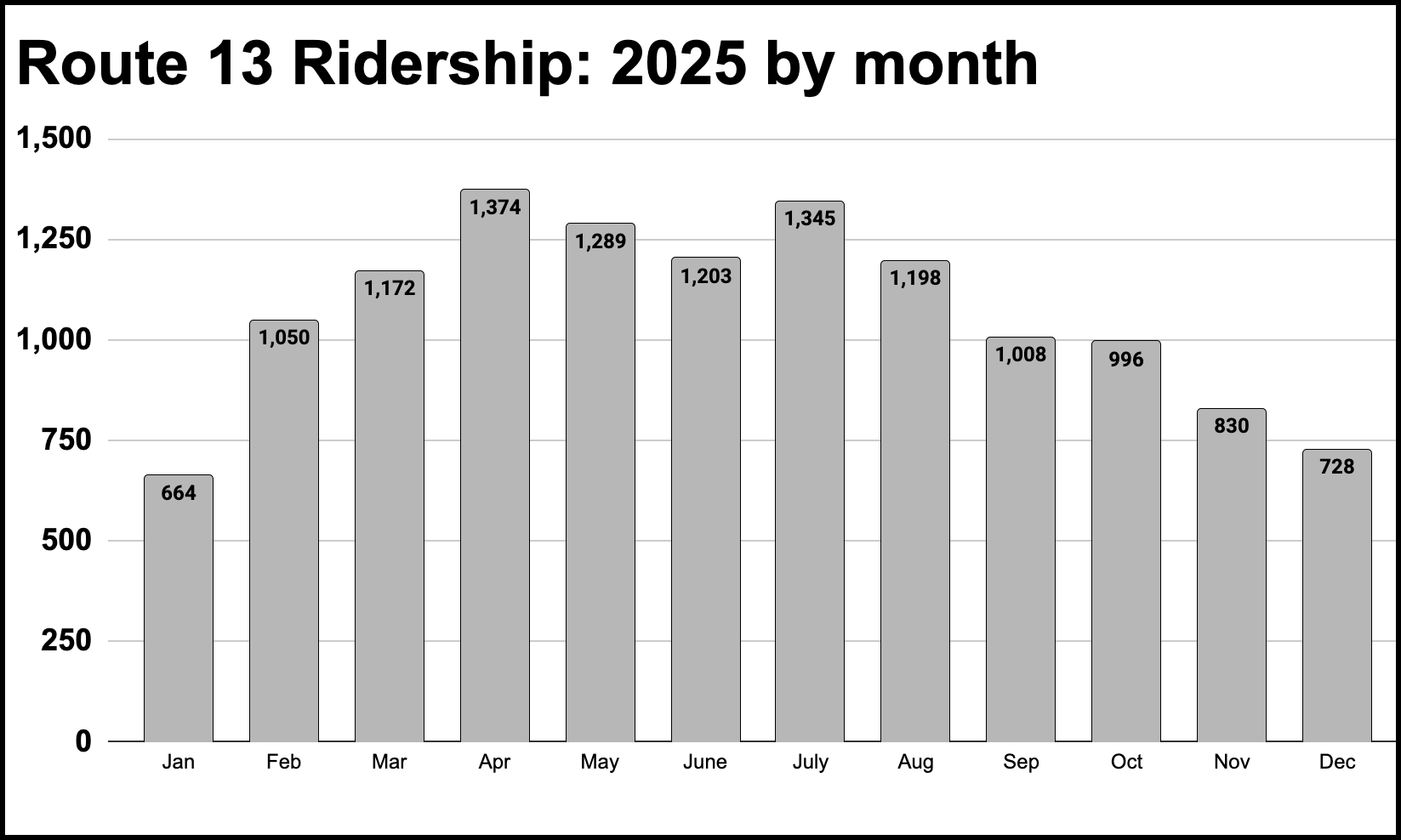
Connell added that even without the funding issue, Route 13’s productivity would have prompted a review. “If the funding issue wasn’t in play, we’d still be discussing changes for the route, because it hasn’t reached a level of service that we anticipated,” Connell said. Route 13 is by far the poorest performing route in BT's system based on metrics like riders per service hour.
Connell said staff have already been evaluating possible reconfigurations involving Route 13 and Route 3, and potentially Route 4, to “do more with less” and improve frequency.
The frequency of Route 13 is just once an hour. Connell emphasized that higher-frequency routes tend to be the most successful: “Throughout my career, the most popular routes all had one thing in common … they had the highest frequency of service."
The immediate question before the board was timing. The agency had previously targeted March 8 as date to shutdown Route 13, while the Monroe County Council’s earliest possible action date was March 10. Connell recommended a 45‑day extension from the hearing date, both to allow the county council time to formally act and to give riders fair notice, if service does eventually end or change.
Board members expressed support for that approach in discussion. They agreed to keep Route 13 running for now, communicate clearly with city and county officials, and bring the matter back at the next regular board meeting—by which point they hope to know whether Monroe County will commit to continuing its subsidy.
Board member Doug Horn, a city council appointee, pressed for transparency with elected officials, noting the city’s legal role in authorizing service outside its borders: “Does anyone else feel it appropriate that we let them know that we’re going to be covering costs for a few days while we wait for the calendar to play out, just so that we’re transparent?” Horn asked.
Connell agreed and said that, after final board direction, he would formally notify the city council, the mayor’s office, the county council, and the county commissioners that Bloomington Transit would maintain Route 13 service, while giving the county government a hard deadline to decide.
Comments ()