
County council approves $184K to keep Bloomington Transit Route 13 running to west side
Monroe County councilors unanimously approved $184,104 in EDIT funding to keep Bloomington Transit’s Route 13 operating for a year between downtown and the Ivy Tech–Park 48 corridor. Debate centered on process and regional transit policy, but there was no opposition to keeping the route running.
Monroe County Council has approved a one-year appropriation of $184,104 to keep Bloomington Transit’s Route 13 operating to and from the west-side Ivy Tech campus and nearby employers, using Economic Development Local Income Tax (EDIT) dollars.
The vote at Tuesday’s (March 10) meeting was unanimous among the seven councilors. But it came after some conversation about process, regional transit equity, and a last-minute adjustment to the amount of money appropriated.
The future of the route has been in jeopardy for a few months, after Bloomington Transit gave the required newspaper notice of a public hearing about the possible cancellation of the route.
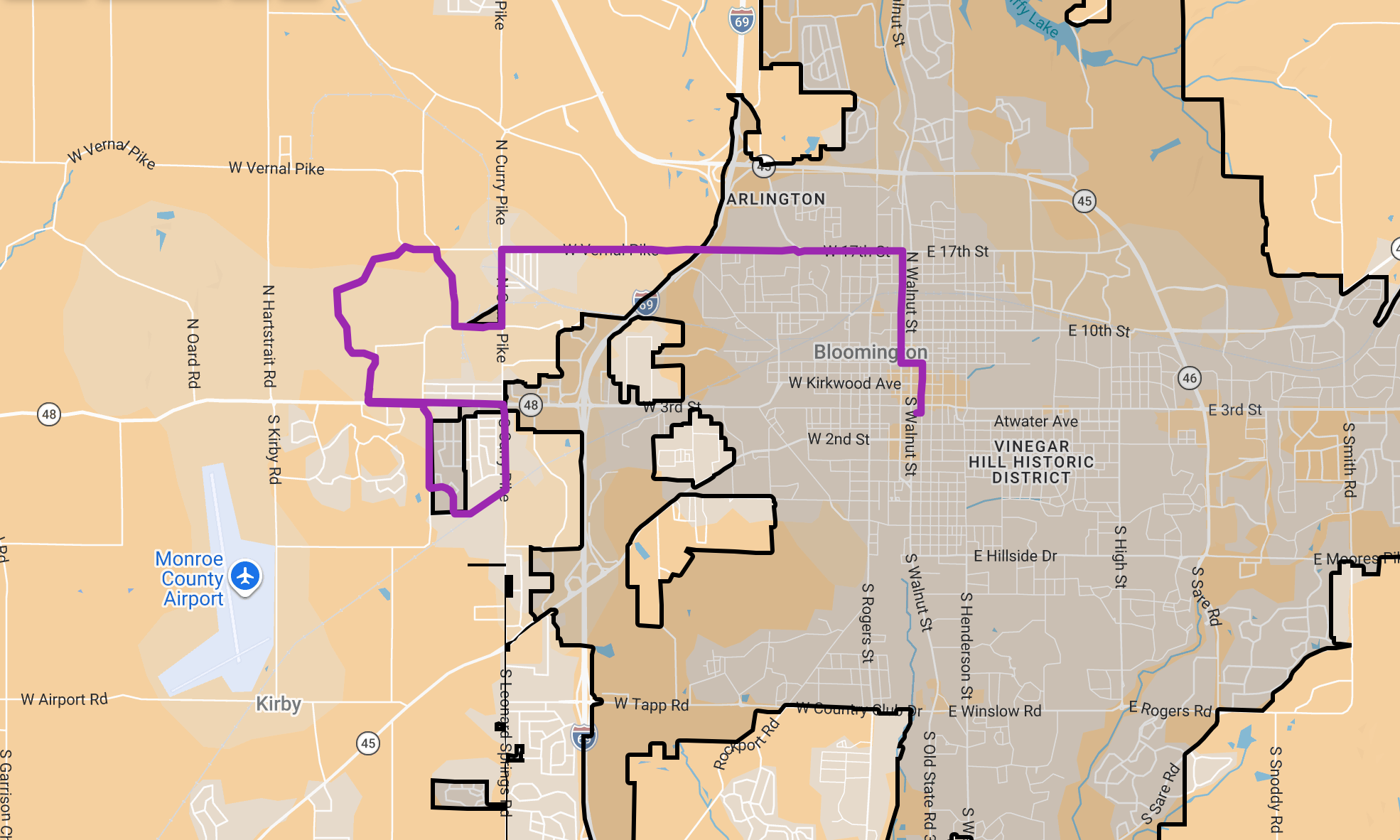
The route, which was launched a year ago, is an out-and-back loop from downtown out to Park 48, where Ivy Tech, Cook Medical, and Simtra form an employment and educational center outside the city limits.
The reason some funding from the county government is needed to support Route 13 is tied to the fact that it runs part of the way outside city limits. When Bloomington’s city council in 2023 finally made it legally possible for BT to provide service outside city limits, a stipulation was baked into the council’s ordinance, which forces BT to use non-city funds to support service outside Bloomington.
Tuesday’s action by the county council set the stage for county commissioners to approve an interlocal agreement between Monroe County and Bloomington Transit at their meeting this Thursday (March 12).
The request was advertised at $195,000. But before the council voted administrator for the commissioners, Angie Purdie, who joined the meeting remotely, asked that the amount be lowered to match the finalized interlocal agreement amount of $184,104.
Purdie described the higher advertised number as a standard precaution when the exact contract figure is not yet known at the time of legal notice.
The one-year time frame for the interlocal agreement came after councilor Peter Iversen asked: “So is this money supporting the continuation [of Route 13] for a year? Is it supporting it for five years? What? What exactly are we approving today?”
Councilor David Henry asked questions about process and countywide fairness in how transit is funded. Henry drew comparisons between the county’s decision to fully fund the county share of Route 13 out of EDIT revenues, and the county’s earlier approach to funding urban-to-urban rural transit service involving Ellettsville.
He recalled the situation with Ellettsville two years ago and how the town was told it needed to contribute a local match to keep urban-to-urban service operating through Rural Transit. Henry questioned whether an equitable approach was being taken now to Route 13 funding.
Councilor Trent Deckard stressed that the county is only paying for the portion of service that extends outside the Bloomington city limits, not the entirety of the line’s operating cost. “When that transit bus leaves the city and goes out into the county, … that’s what we’re paying for, friends. ”
Deckard framed the route as a piece of economic development infrastructure that links workers to jobs and training along the west-side corridor. He told council colleagues he had heard from several people about the importance of keeping the route in place, including the Ivy Tech chancellor, Erik Coyne, and life sciences employers on the west side.
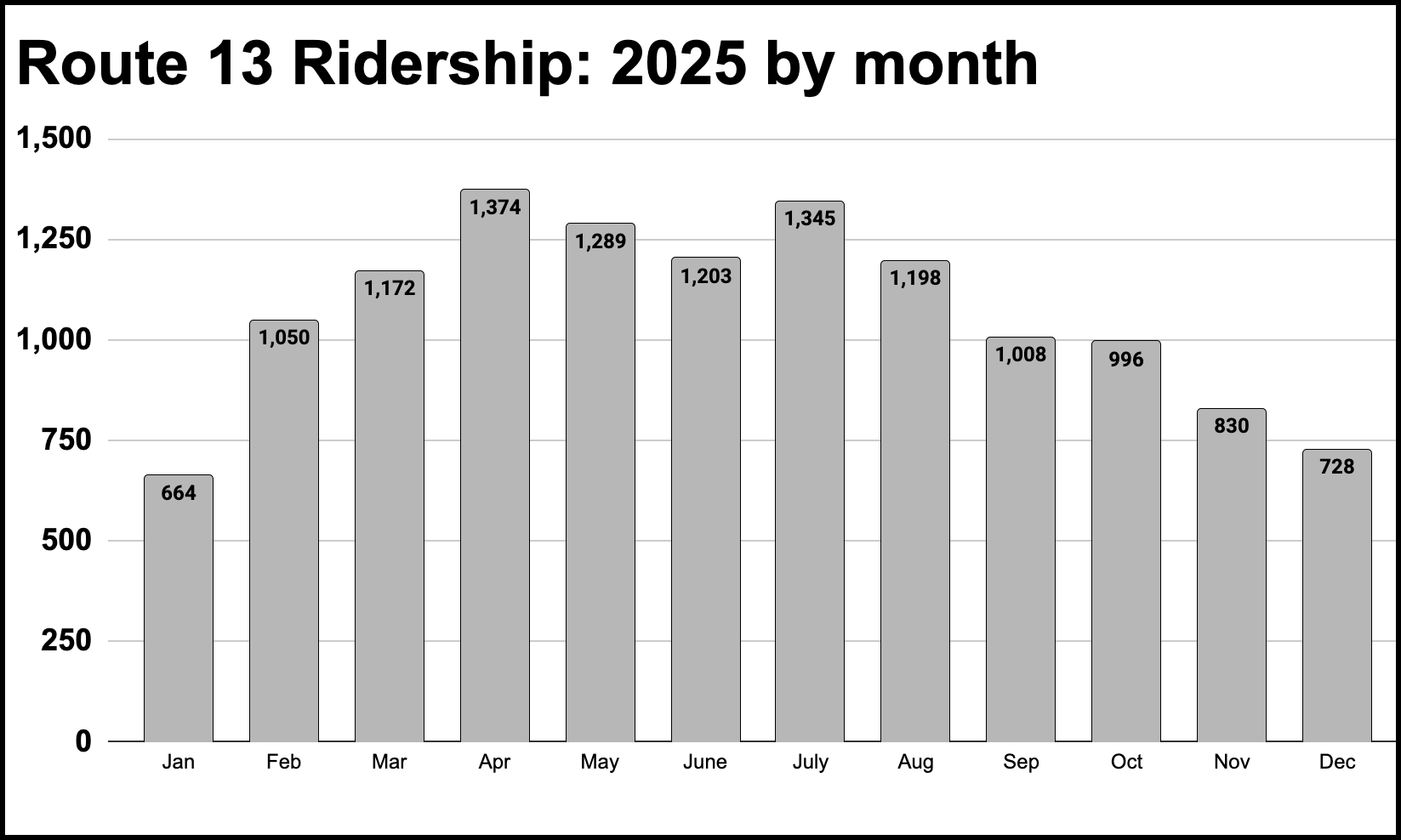
Deckard said, “Our constituents are looking for ways to get to work, and … this is something that they rely on.” Alluding to the less-than hoped for ridership on the route in its first year of operation, Deckard added, “Ridership increases over time when something becomes reliable.”
Henry said he supports the goal of keeping the line open: “Of course we’re going to support people to get to their work.” But Henry criticized what he called “transportation policy by firefighting,” where a bus line faces an imminent funding crisis and the county scrambles to respond at the last minute, rather than acting under a durable regional plan.
Henry said that with EDIT now on the table as a funding tool with a limited lifespan, the county should develop a consistent, countywide strategy for transit in partnership with urban and rural providers, possibly through the Metropolitan Planning Organization. “We have a community that was told one thing two years ago about how to fund transit, and we are working on this solution here,” Henry said. “I’m just trying to work on how we get to a place where there’s consistency in how we’re doing county transit.”
Purdie responded to Henry’s point about how urban-to-urban service for Ellettsville had been funded in the past, by pointing out the state funding had been obtained to make up the difference, when Ellettsville did not provide a requested local match.
The most pointed criticism of the night did not involve whether the county should fund Route 13, but rather how the appropriation request arrived at the council. On the agenda, the item was listed as coming from the council office “on behalf of the board of commissioners,” councilor Marty Hawk pointed out.
Purdie explained that the procedure path had evolved that way because Deckard had raised the need for the appropriation during a council meeting, and council staff then drafted the agenda item to get it in front of the body, while the commissioners prepared the interlocal agreement for their own agenda. The formal contract, Purdie stressed, would be between the board of commissioners and Bloomington Transit.
Councilor Marty Hawk objected to that procedural path, saying it violated the county’s established budget protocols. In her view, an appropriation from a commissioner fund should be requested by the commissioners themselves, not initiated by the council office on their behalf.
“There’s a major confusion here from somebody,” Hawk said. “This council does not put together an appropriation request from … any other budget than from our own budget. That’s the way it works.” Hawk ended with a clear statement: “Don’t do this again, period.”
Council president Jennifer Crossley said about the route that she is “thankful as a mom of a child who goes to Ivy Tech” that her daughter has another option besides her parents’ car, to get to school.
In the end, despite questions about process and broader regional equity, there was no dissent on the substance of keeping Route 13 running. The council approved the appropriation unanimously.
The commissioners are expected to approve the one-year interlocal agreement with Bloomington Transit at their Thursday (March 12) meeting this week.
Comments ()