
Deckard, Henry outline competing approaches to Monroe County leadership
Democrat county councilmembers Trent Deckard and David Henry faced off at two forums Tuesday as they compete for the District 1 county commissioner nomination. Housing affordability, local taxes, homelessness and plans for a new jail were among the issues discussed.
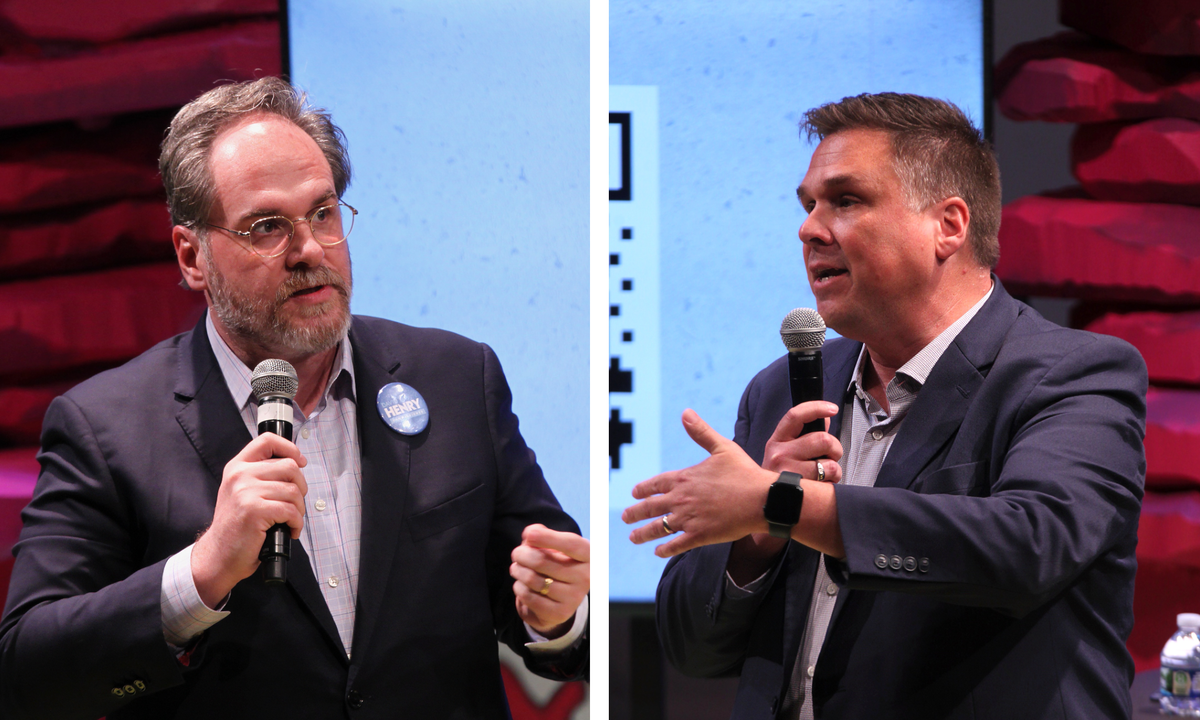
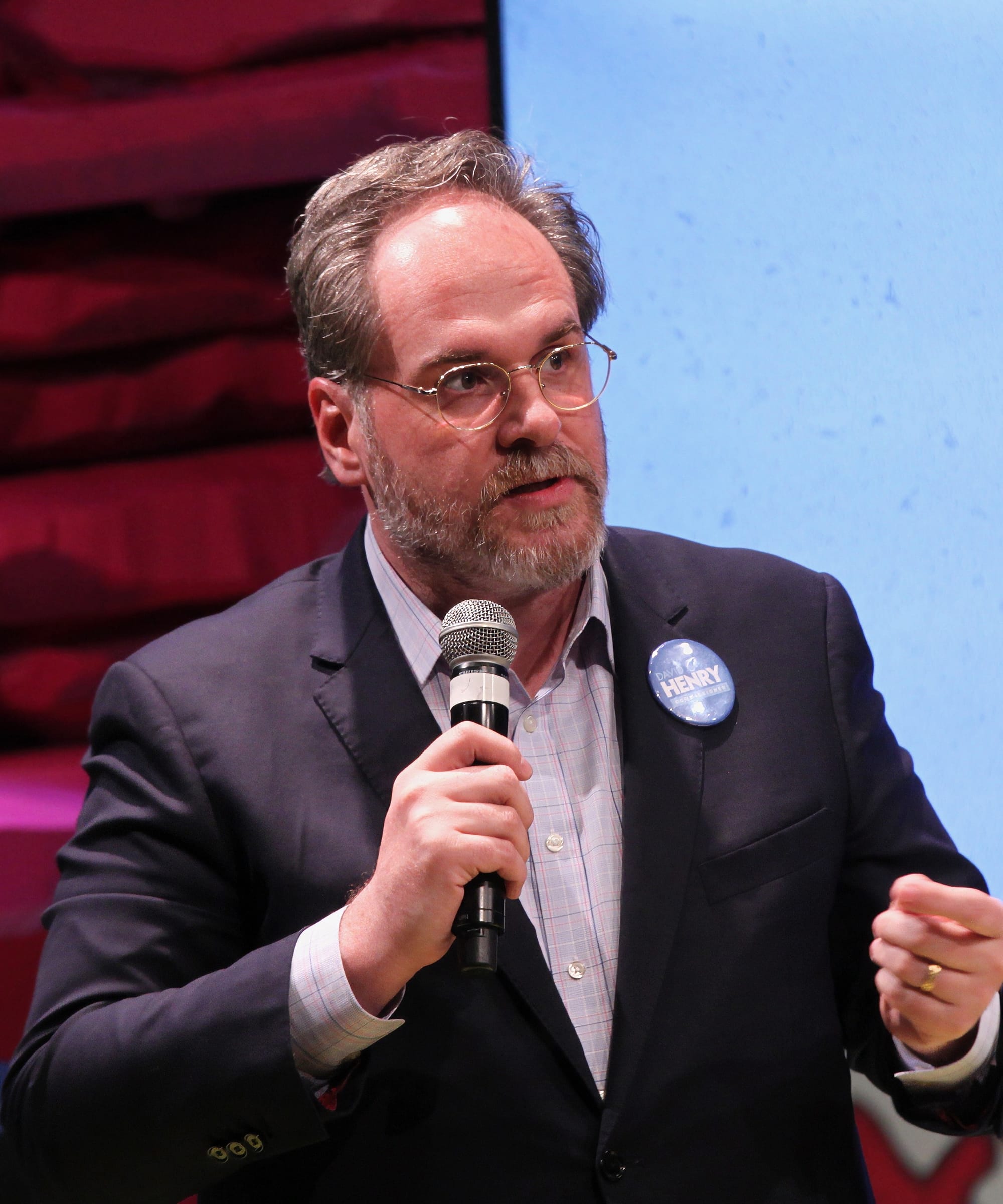
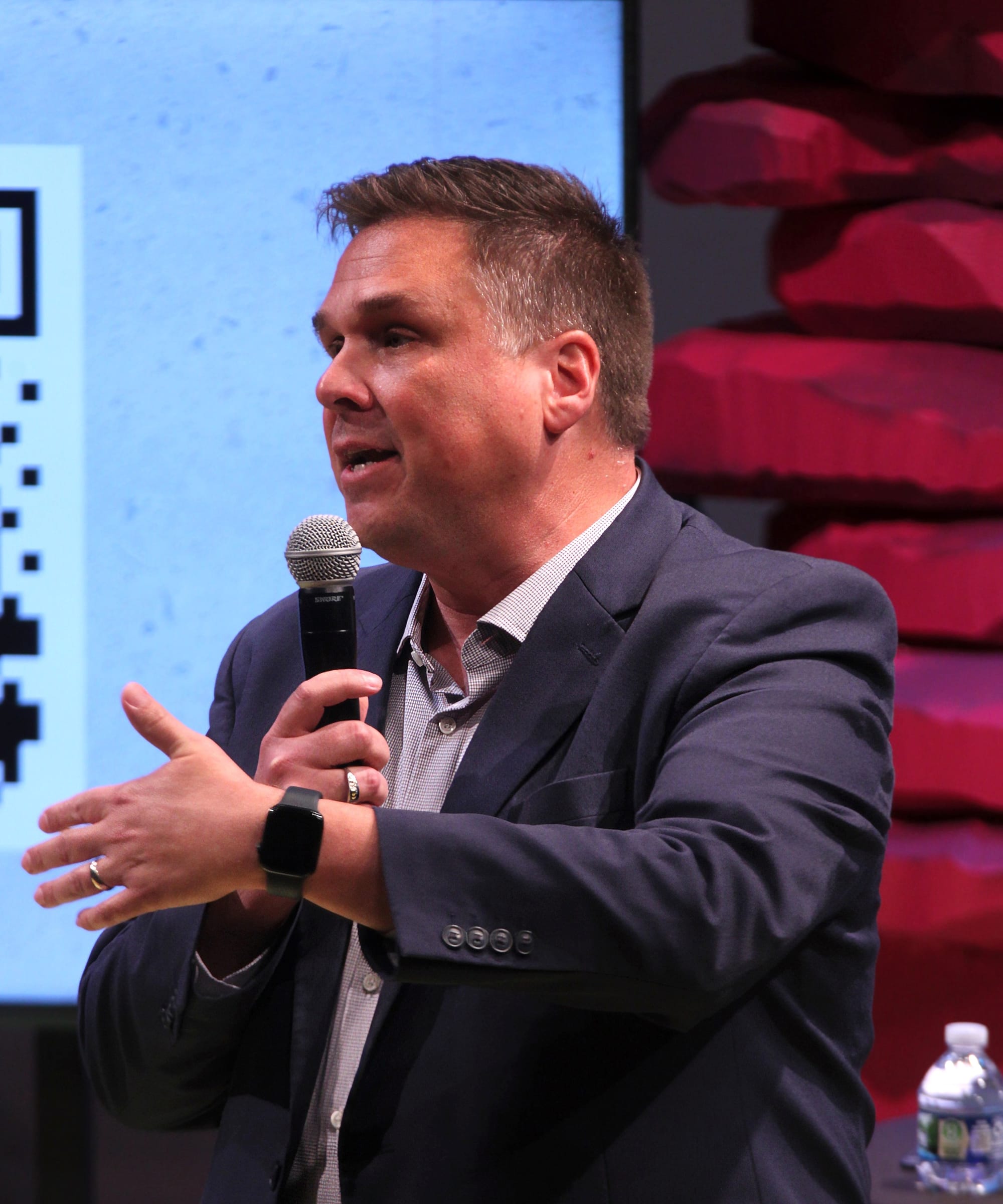
Candidate forum at the Waldron Arts Center. Left: David Henry. Right: Trent Deckard. (Dave Askins, April 22, 2026)
Candidates for the Democratic Party’s nomination for the District 1 county commissioner’s seat, Trent Deckard and David Henry, appeared at two forums on Tuesday (April 21).
The first was a lunchtime gathering of Democrats at D’Angelo’s restaurant. The second was an evening forum hosted by the Greater Bloomington Chamber of Commerce at the Waldron Arts Center on Walnut Street, moderated by former Bloomington mayor and now Amplify Bloomington CEO John Fernandez.
The pair of Democrats currently serve together on the seven-member county council as at-large representatives. The council is the fiscal body of county government, while the three commissioners function as both the legislative and executive branch.
Both were elected to the council in 2024. Henry’s victory that year was his first. Deckard was reelected after first joining the council in 2019 through a Democratic Party caucus that filled the vacancy created when Lee Jones won election to the District 1 commissioner seat in 2018. Jones is not seeking reelection.
Although candidates must live within District 1, a western slice of Monroe County, voters countywide will choose between Deckard and Henry in the May 5 Democratic primary.
The forums took place as voting is already underway. Early voting began April 7, and by Tuesday evening 1,771 voters had cast in-person ballots. Through the same period, that’s 35% more than in 2018, which is the year that had the highest numerical early voting turnout over the last five mid-term elections. It’s likely an indicator of strong interest in a local race that will shape decisions on housing, the new jail, and how county government conducts itself over the next decade.
There’s no Republican candidate on the primary ballot. The GOP could still fill the ballot vacancy, and independent candidates could still appear on the Nov. 3 general election ballot, if they collect enough signatures.
Housing: Country club economy, 3 blocked generations
Housing affordability was a big topic at both events.
Deckard framed the issue partly through his family’s experience, saying he comes from “a nine-generation family that’s seen a lot of change” and has worked in federal, state, and now county government. He noted that his father bought a house in 1977 for about $17,000, while his own home in 2007 cost about $139,000. Realtors now tell him the typical local sale price is around $379,000.
The result, Deckard said, is that Monroe County risks becoming “a country club economy,” where people who already own homes remain locked in and those trying to enter the market struggle to get in.
Deckard said the county needs to build housing across a wider range of price points and should treat areas such as the airport corridor as potential hubs for jobs, housing, and services.
Henry also said the county’s housing market is failing many residents, framing the issue in generational terms. “Fewer and fewer kids are able to stay in our community if they choose to,” he said, adding that three generations of residents (Gen X, millennials, and Gen Z) now face barriers to buying their first home or moving up to a larger one.
Henry linked the problem to local policy decisions, including zoning rules and the county’s development code, which he said have limited opportunities for middle-class housing.
Henry also pointed to an affordable housing advisory commission, on which he served, that examined using federal pandemic relief funds for projects such as tiny homes and transitional housing, but said the response of county commissioners to those recommendations was to dissolve the advisory commission.
For Henry, the county’s 800-page development code has restricted innovation and helped close off the housing ladder for younger residents. At D’Angelos, Henry made Deckard’s ninth-generation-family talking point his own: “Can they afford to stay here, so that your kids, your grandkids, my kids, might be able to call Monroe County home and be a ninth-generation Monroe County resident someday, too? That’s why I’m running.”
Local taxes after SEA 1
Candidates were asked about Senate Enrolled Act 1 (SEA 1), a state law that reshaped local government tax structures and could reduce revenue for local governments.
The question was whether the county should consider imposing the law’s new authority to adopt a countywide local income tax of up to 1.2 percent.
Deckard said any decision would require coordination with local governments and agencies including the city of Bloomington, Ellettsville, townships, fire districts, and the library. He said officials must evaluate potential property-tax losses while remaining mindful that “taxpayers are stretched as it is.”
Henry also acknowledged that SEA 1 could reduce revenue and shift more of the burden toward wage earners. But he started with his basic answer to the question of imposing the maximum rate: “Let me cut to the chase of the question, which is: No.” Henry said governments should demonstrate better fiscal discipline before asking residents for additional revenue. Both the city of Bloomington and Monroe County, he noted, adopted 2026 budgets that relied partly on reserves.
Henry suggested the county’s Metropolitan Planning Organization could evolve into a broader regional structure to share costs with Bloomington, Ellettsville, and townships on services such as emergency management and cybersecurity.
Deckard said governments now face expenses their predecessors did not, pointing to the cost of body-worn cameras and cybersecurity threats as examples of obligations that must now be part of local budgets.
Homelessness, Thomson encampment
On homelessness, both candidates said the county has often reacted too late.
Henry described homelessness as a continuing economic crisis and said Monroe County should invest more heavily in prevention with local service providers. He also said the state government is moving toward criminalizing public camping through new legislation. That’s a reference to SEA 285, which prohibits camping, sleeping, or using for long term shelter land owned by the state or a political subdivision.
Deckard said the county’s approach has sometimes placed nonprofit organizations in difficult positions, asking them to take on work that government declines to fund while also facing community resistance when those organizations expand services.
Both candidates discussed the encampment on county-owned Thomson property.
Henry said he visited the site after learning the camp might be cleared near the holidays. He said the county still lacks a clear plan for what will happen to residents if the site is closed.
Deckard said he participated in meetings organized by fellow councilor Kate Wiltz that brought together people connected with the campsite to discuss the situation.
Both agreed that homelessness policy should shift toward prevention rather than emergency responses after encampments form.
Jail and justice building
The proposed new county jail and the deteriorating justice building was an obvious topic for the forum, which Fernandez introduced as moderator with dry humor: “You’re going to be shocked by this next question!”
Deckard emphasized the county’s constitutional obligation to maintain safe jail conditions and said the county must move forward rather than delay further.
Henry said that if the county builds a new jail, it should remain within Bloomington rather than outside the city. He also questioned whether the county has the tax base to support the scale of some proposals that have been discussed.
Deckard said the first step should be agreement among commissioners and council members on non-negotiable factors such as size and cost. Delays, he said, will only push construction costs higher.
Henry also raised concerns about mold and other conditions in the justice building, where courts and county employees work. Henry noted that county commissioners had sent out a memo that morning, telling employees to get ready for mold season again. Henry said the county government should have been taking care of the building for the past 20 years so that employees are not breathing in mold. He said the county should treat repairs and upgrades as a defined project with clear timelines and budgets.
Deckard said decisions about a new jail should also account for operational realities, including the costs of moving people and services between facilities if courts and the jail are located separately.
Both candidates agreed the current situation with the jail and justice building cannot continue indefinitely.
Planning and the county development code
Land-use policy and the county’s development code were also major themes.
Henry said that for more than a decade the county plan commission has made development difficult by repeatedly raising new obstacles for modest projects. He said the county’s comprehensive plan has not been fully updated since 2012 and should be revisited to guide future growth.
Deckard said Monroe County has often been passive in shaping development and should take a more active role in attracting jobs and housing. Deckard said the county’s development code is overly complex and confusing for residents trying to understand what can be built on their property.
What’s leadership?
Probably the sharpest exchange came late in the Chamber forum during a discussion about housing supply.
Deckard warned against candidates offering “magic wand” solutions to complex problems and said effective leadership requires navigating difficult conversations in a community with many competing views.
Deckard put it like this:
We’re tough people, have lots of different opinions on what housing looks like, and how it should go. We need an elected official that can have that conversation with those tough communities, and keep them into the room so that we can move forward. So much of our action doesn’t happen because those conversations aren’t navigated. I think that I have the background, the training and the skills to do that, and not only do it, but get us to the action, so that we can get results
After a couple of months of campaigning, Henry said the audience had heard many of the same lines from the two candidates before. “You know, I appreciate the play-by-play. I’m just not running for county commentator. I am running for county commissioner.”
Henry said that campaigns are precisely the time for candidates to present clear positions, not just to talk about how they will listen. Henry put it like this:
The listening occurs in the entire time you’re a citizen of this community, involved in organizations and at your kid’s sporting events, where people are telling you things. Campaigns are about elections or campaigns are about ideas. They’re about issues and putting them before the public. Based on those conversations, we run on ideas and put them before people in this community, because that’s who we are.
Early voting in Monroe County takes place at one location in downtown Bloomington, at the North Showers building on Morton Street.

Comments ()