
Editor’s Notebook: A musical welcome to Bloomington, in the key of 20 mph
The proposal is to put Bloomington’s $125,000 Miller-Showers gateway art budget into a musical roadway. Tire grooves would play a tune that sounds right only at 20 mph, welcoming drivers while encouraging them to slow down.
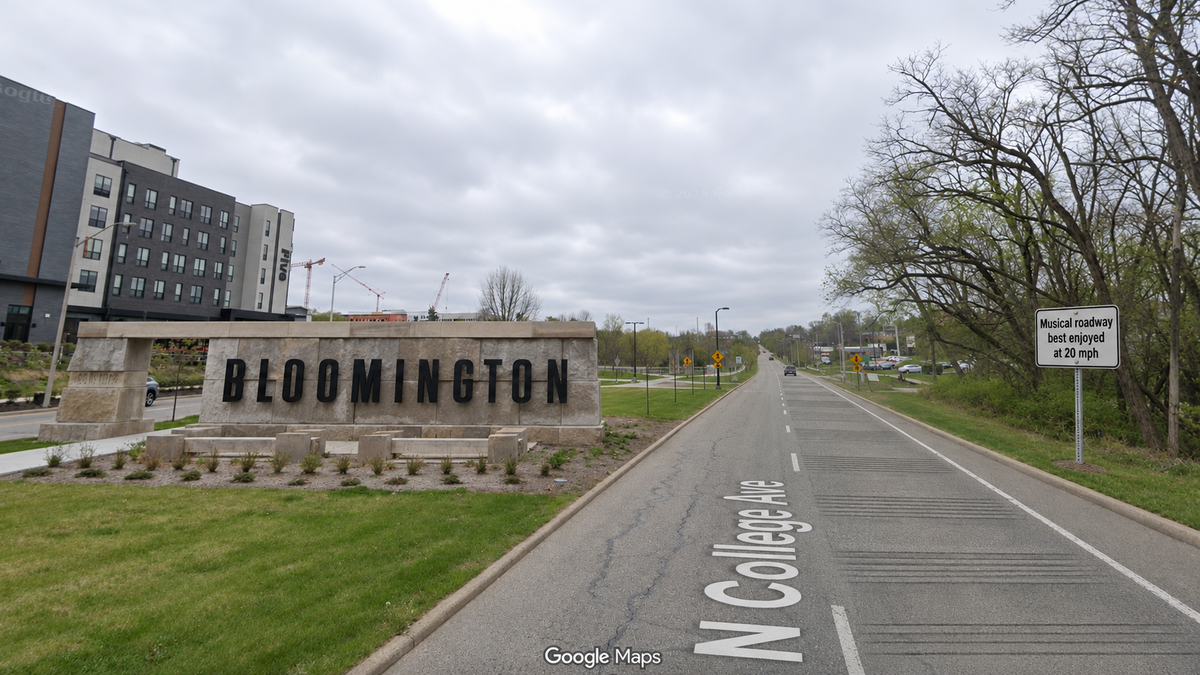
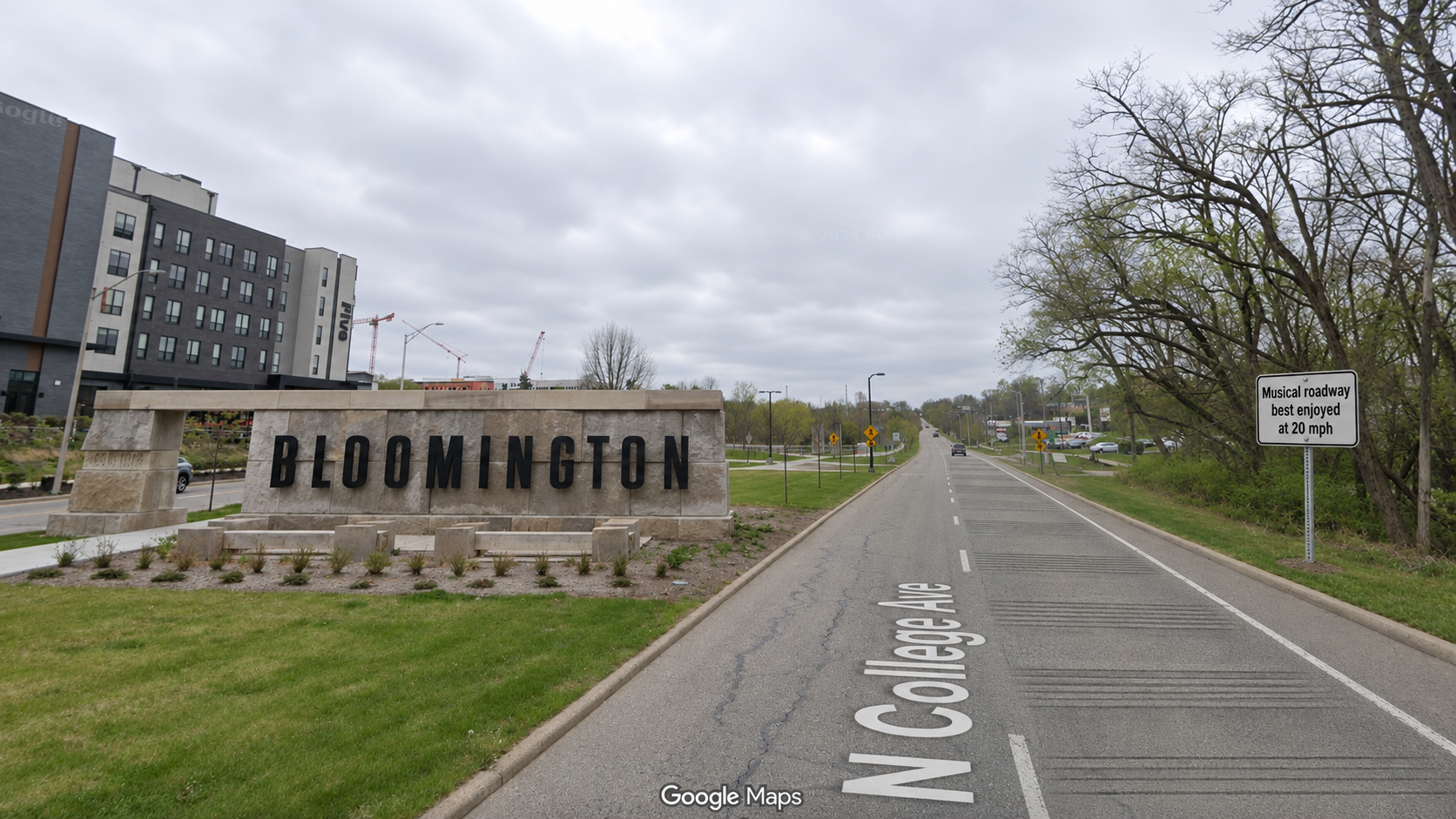
Bloomington has budgeted $125,000 for public art at the Miller-Showers Park gateway.
In case the decision makers need another two cents: Don’t put the art next to the road. Put it right in the pavement.
If a piece of visual art is spectacular, in all the ways public art is supposed to be spectacular, it will be lovely. But distracting motorists right as they pull into town seems counter to the city’s goal of making the College and Walnut corridor safer.
How about a musical roadway? Precisely spaced grooves cut into the pavement would play a short, recognizable tune as car tires rolled across them. Other cities have done it. New Mexico even installed one on Route 66 to encourage motorists to obey the 45-mph speed limit.
The physics come with a built-in lesson. The song sounds right only at the speed it was designed for.
So we could tune ours to a speed of 20 mph.
There are cautionary examples. Lancaster, California, installed a musical road that plays the “William Tell Overture” off-key, thanks to an engineering error. Neighbors also complained about the noise, forcing the city to relocate it. So we’d want to get the math right.
Imagine rolling into Bloomington at 20 mph, your tires playing the opening riff of Jack White’s “Seven Nation Army.” It’s a rock-and-roll welcome with an important message for visitors: In Bloomington, even the White Stripes want you to slow down.
Or imagine rolling into Bloomington to the strains of “Indiana, Our Indiana.” Be undaunted all you like, but at 20mph or slower.
Bloomington mayor Kerry Thomson has said the College-Walnut overhaul won’t happen during her time as mayor. With a price tag north of $100 million, there’s simply not enough money lined up to do it now.
A musical roadway wouldn’t be a substitute for a complete safety overhaul for the corridor. But the budget for gateway art might buy a modest safety-minded intervention at a fraction of the cost.
In 2024, I proposed a “stonograph” as a public art installation. It was a 10-foot limestone sphere that visitors could rotate by hand.
Around the stonograph’s equator would be a metal band machined with the waveform of a musical recording. Hold an ordinary credit card against the band as the sphere turns, and the card will play the recording. The metal band could be swapped out to play different tunes for different occasions.
A musical roadway is basically a stonograph laid flat. The artwork for the gateway could come with a roadway sign: “Musical road best enjoyed at 20 mph.”
Visitors would be welcomed to town with an unmistakable message: Slow down, you’re in Bloomington now.
Maybe we can’t afford to redesign the College and Walnut corridor just yet. But maybe we can afford to change the tune.

Comments ()