
Federal court sets timetable for Monroe County jail lawsuit, with key motions due in March 2027
A new federal court order puts the Monroe County jail lawsuit on a schedule stretching into 2027, with discovery starting this month and key motions due in March next year. Meanwhile, county officials remain divided over where and how to replace the aging jail.

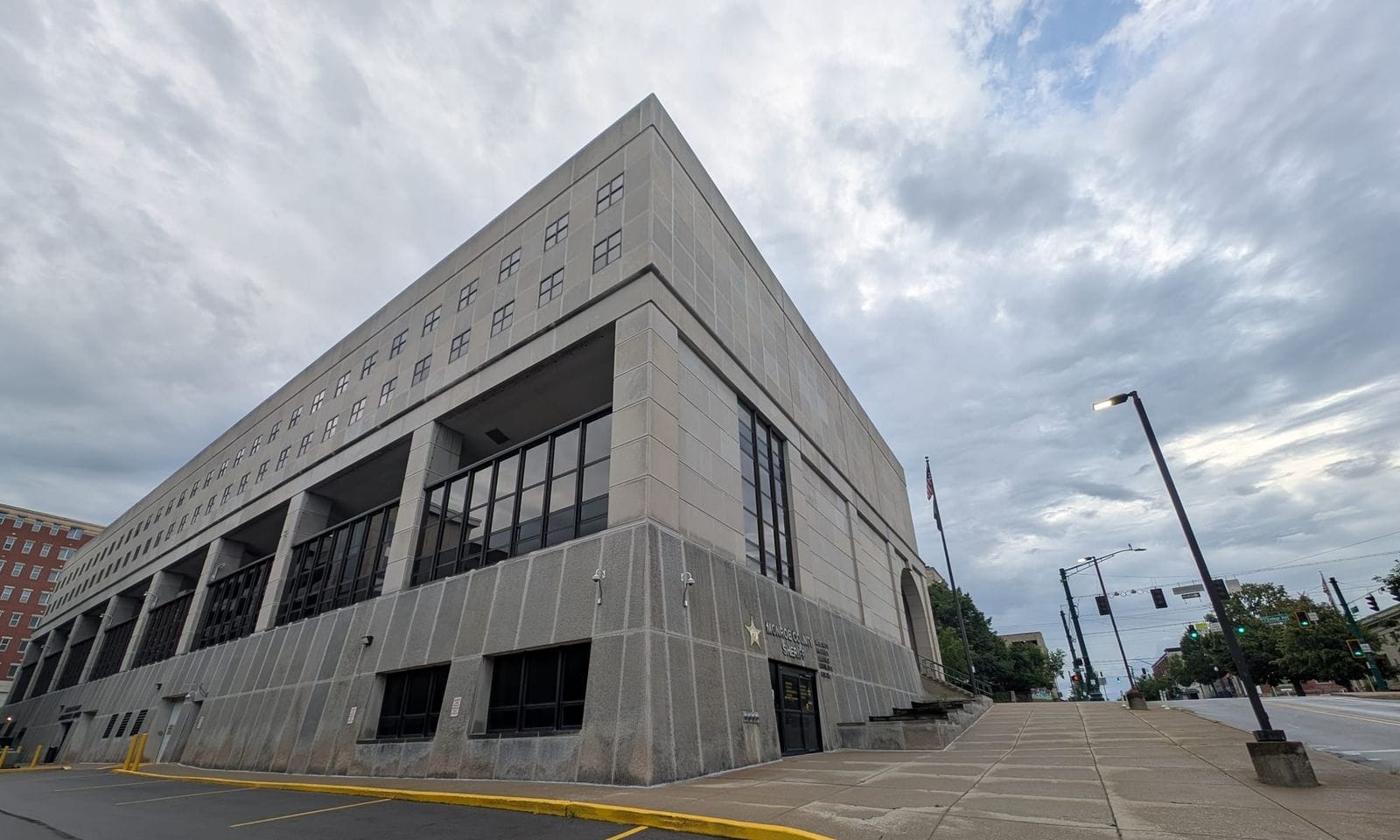
A new federal court order has put the latest Monroe County jail lawsuit on a schedule that could stretch well into 2027. The order comes even as county officials continue to disagree over where and how to replace the aging downtown jail and justice center building.
Last Wednesday (Sept. 2) U.S. Magistrate Judge Tim A. Baker approved a case management plan in the class-action lawsuit filed in July by the ACLU of Indiana on behalf of people incarcerated at the jail. The defendants are the Monroe county council, Monroe County commissioners and sheriff Ruben Marté.
The very next step is not a trial or a ruling on whether conditions at the jail are unconstitutional. Under the case management plan ordered by the court last Wednesday, the case now moves into a discovery process, where the two sides exchange documents, information and testimony.
The first set of disclosures required under the federal rules of civil procedure are due this Thursday (Sept. 10). Those are the basic pieces of information each side has to give the other without waiting for the other side to ask. Examples are the names of people likely to have relevant information and categories of documents that may be used to support claims or defenses.
Under the case management order, preliminary witness and exhibit lists are due later in September, and the deadline for adding claims or parties is Oct. 13.
The more consequential deadline comes Feb. 10, 2027, when non-expert discovery and discovery on liability must be completed. A month after that, on March 10, motions are due asking the judge to resolve some or all of the case without a trial. In legal terms those are “dispositive” motions. That category includes motions for summary judgment, which assume that key facts are not genuinely disputed and that the law alone requires a particular result.
Based on the reported position of the ACLU in the case management plan it believes that the case could be resolved at least partly through summary judgment. The plan says the ACLU thinks discovery to show there are no factual disputes about whether the jail is outdated, overcrowded and dangerous, and that its conditions violate the constitutional rights of those held there.
The county defendants dispute the point about the constitutional condition of the jail, but there is substantial agreement about problems with the building itself.
The sheriff and commissioners agree that the jail has exceeded its structural and functional life expectancy, is difficult to operate because of its multistory linear design and does not have enough permanent beds for current and projected needs. They say a new jail is the only prudent and fiscally responsible solution, while denying that existing conditions amount to constitutional violations.
The county council likewise acknowledges that the jail is inadequate and sometimes lacks a permanently installed bed for every prisoner, but also denies the constitutional claims. The council says alternatives to the North Park proposal from the commissioners could be more prudent.
There’s a deadline slotted in for a settlement conference, which translates to Jan. 10. But the ACLU doesn’t think a settlement is likely to be a viable path. From the case management order: “Due to the long history concerning unsuccessful attempts to negotiate a resolution of the problems at the Monroe County Jail, the plaintiffs do not believe that a settlement conference would be useful in this case.”
The current legal fight is the newest chapter in a dispute that dates to an ACLU jail-overcrowding lawsuit filed in 2008 and a private settlement reached in 2009. After years of studies and attempts to choose and fund a replacement, the old litigation was dismissed in June 2026, following the county council’s rejection of the $11.375-million North Park purchase proposed by commissioners. The ACLU filed the new lawsuit on July 10.
One step that has not yet been completed in the current litigation is class certification. That’s when the judge formally decides whether the named plaintiffs can pursue the lawsuit on behalf of a larger group of people in similar circumstances. The ACLU has asked the court to certify the case as a class action, and the defendants have agreed to that request, but the judge had not yet ruled on it at the time the case management plan was ordered.
If the case isn’t resolved earlier through a dispositive motion, expert discovery would continue into June, with final witness and exhibit lists due in July. The two sides have requested a three-day bench trial in October 2027. A bench trial is one where a judge rather than a jury would decide the case. That October date is a request in the case management plan, not yet a trial date set by the court.
So for the next several months, the jail saga will proceed on two tracks. County officials can continue trying to settle the unresolved questions of location, design and financing for a replacement facility. The federal case will accumulate a factual record that could ultimately leave a judge to decide whether the county has to remedy conditions at the existing jail and by when.


Comments ()