
Federal lawsuit challenging Indiana’s student ID voting ban seeks emergency court order ahead of primary
With early voting set to start April 7, plaintiffs challenging Indiana’s new student ID voting ban have asked a federal judge to block the law before the May 5 primary. If the judge agrees, college IDs could be used at the polls this spring; if denied, students will need other identification.
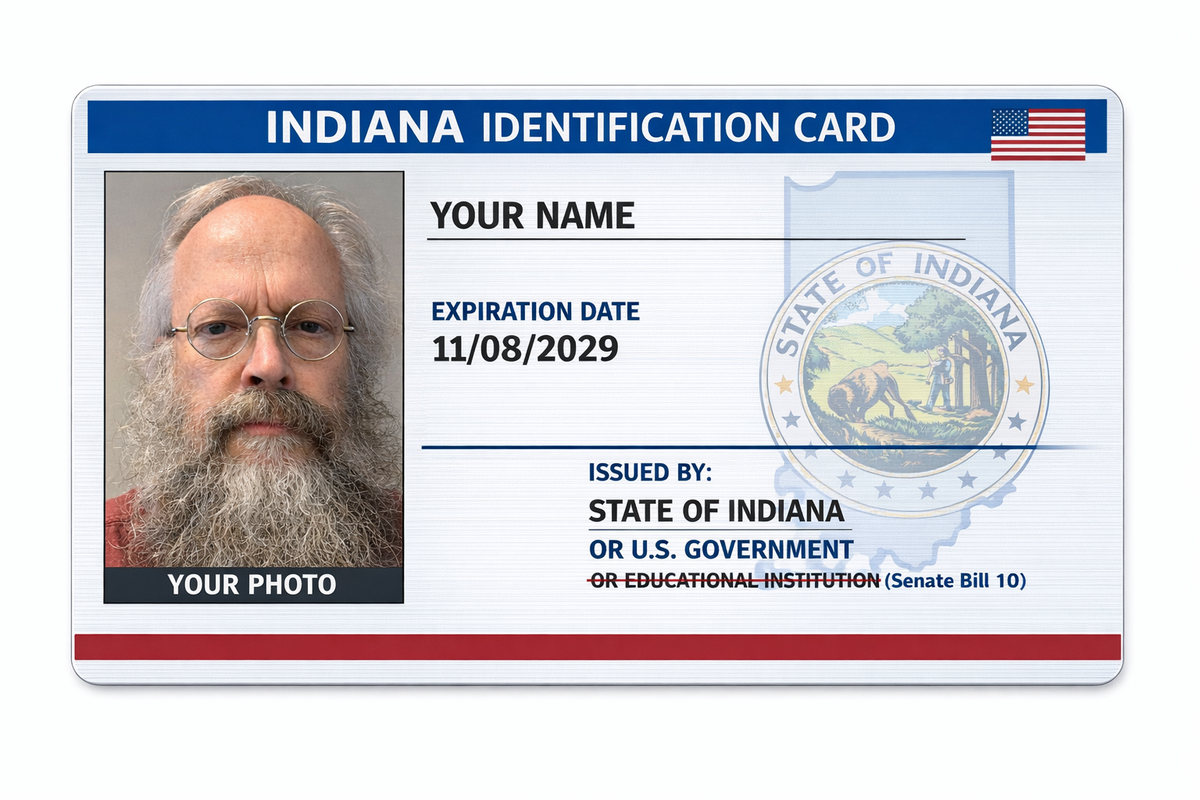
With the 2026 primary elections fast approaching, plaintiffs in a federal lawsuit challenging Indiana’s new prohibition on using student IDs are asking a judge for an emergency order blocking enforcement of the law. In-person early voting starts April 7.
The motion for a preliminary injunction, filed on Feb. 6 in U.S. District Court for the Southern District of Indiana, asks the court to temporarily suspend enforcement of Senate Bill 10, which was a law passed during the 2025 legislative session. The request comes with the May 5 primary election approaching and early voting set to begin in less than two months.
If granted, the injunction could allow college students—including thousands in Monroe County—to use their university identification cards when casting ballots this spring. If denied, the new restriction will remain in place for the primary.
Plaintiffs in the case include Count US In, a nonprofit that works to increase civic participation, and Women4Change Indiana, a statewide advocacy organization focused on mobilizing women voters and promoting political participation. Also a plaintiff is Josh Montagne, an Indiana University student who has used his student ID card to vote in the past.
Senate Bill 10 eliminates student ID cards issued by Indiana’s public colleges and universities as an acceptable form of photo identification for voting. Indiana has long required voters to show photo ID at the polls, and student IDs issued by public universities had previously qualified, if they met basic criteria.
Under the new law, voters have to use some other form of qualifying identification, like an Indiana driver’s license, state ID card, passport, or certain government-issued IDs.
The plaintiffs argue the new law violates at least three provisions of the U.S. Constitution by making it harder for young people to vote. In court filings, they contend the law imposes an “undue burden on the right to vote,” in violation of the First Amendment and the Equal Protection Clause of the Fourteenth Amendment.
They also argue the law violates the Twenty-Sixth Amendment, which prohibits denying or abridging the right to vote on account of age.
According to the plaintiffs, student IDs were accepted for years without any issues, and banning them now disproportionately affects younger voters, who are less likely to have alternative forms of qualifying ID and may face obstacles in obtaining one before an election.
Indiana state officials are asking the court to dismiss the lawsuit. They say there is no constitutional right to use a student ID to vote and that Indiana is within its authority to determine what forms of identification are acceptable.
In their papers, state attorneys point to prior court rulings, including a 2024 federal decision upholding a similar student ID ban in Idaho, as well as a 2023 decision by the U.S. Court of Appeals for the Seventh Circuit involving Indiana election law.
The county election board of Monroe County—home to Indiana University, Bloomington—is named as a defendant because the board administers elections in the county where plaintiff Josh Montagne lives. Other defendants in the case include Diego Morales in his capacity as secretary of state, as well as various other state officials.
The case could have an impact locally, because more than 40,000 students are enrolled at Indiana University in Bloomington. Even if typical turnout among those voters is percentagewise low, the raw numbers could add up to a significant number of people at the polls who are trying to vote without an ID that’s allowed under law.
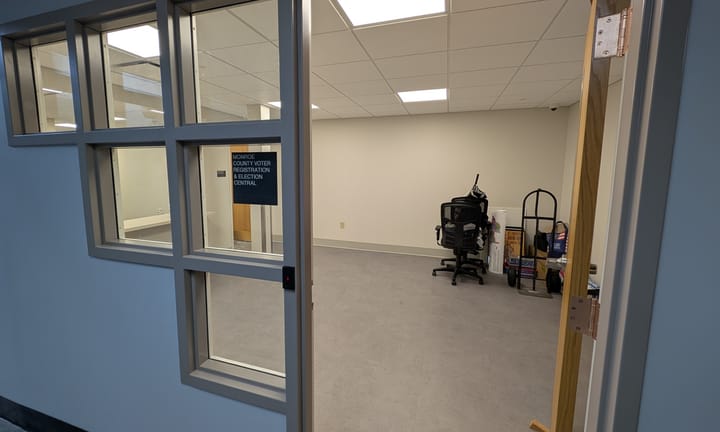
Monroe County election supervisor Kylie Farris told the election board at its Feb. 5 meeting that the election worker training paperwork reflects the requirements of Senate Bill 10. But a secondary template is being created “just in case” there is a last minute change imposed by the court.
The standard that judges use for granting a preliminary injunction, is whether the plaintiffs are likely to succeed on the merits of their claims and that allowing the law to take effect would cause irreparable harm.
A response from the defendants to the motion for a preliminary injunction is expected in the next few days.

Comments ()