
Hopewell South PUD heads back to Bloomington city council amid flurry of proposed conditions
Bloomington’s city council will again consider the Hopewell South PUD on March 25, with 13 proposed conditions highlighting lingering concerns. Legal limits on amending the plan complicate the path forward, and while approval seems likely, another delay could also be possible.
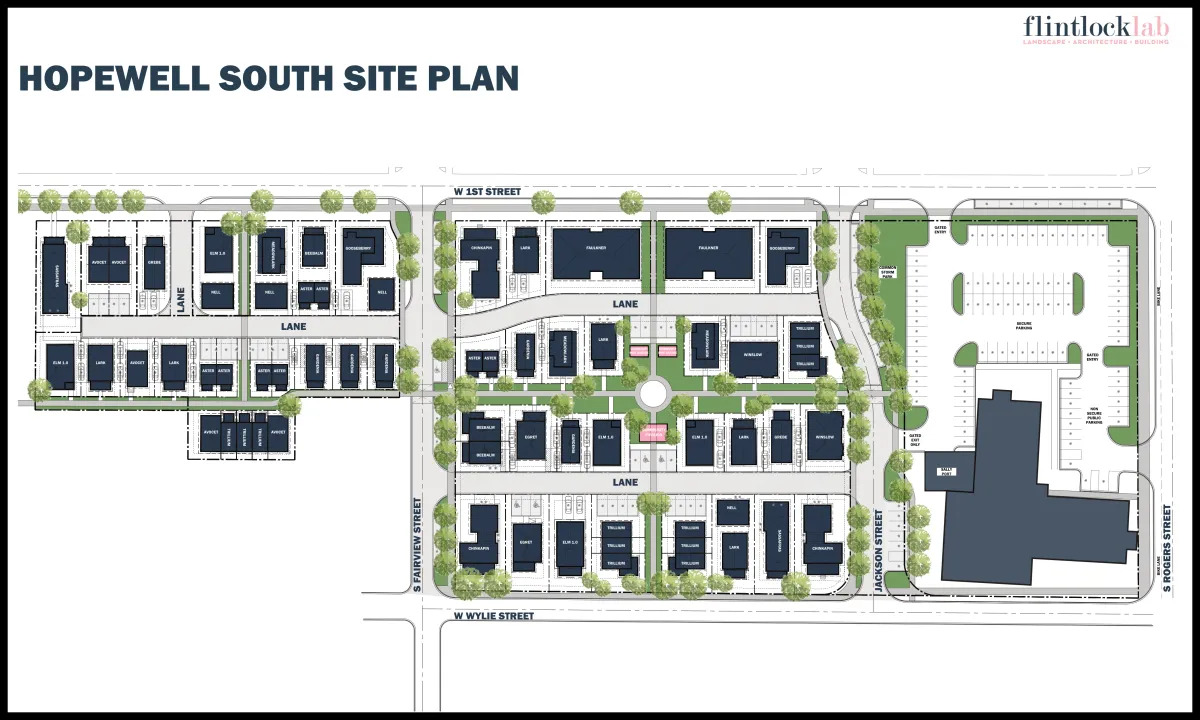
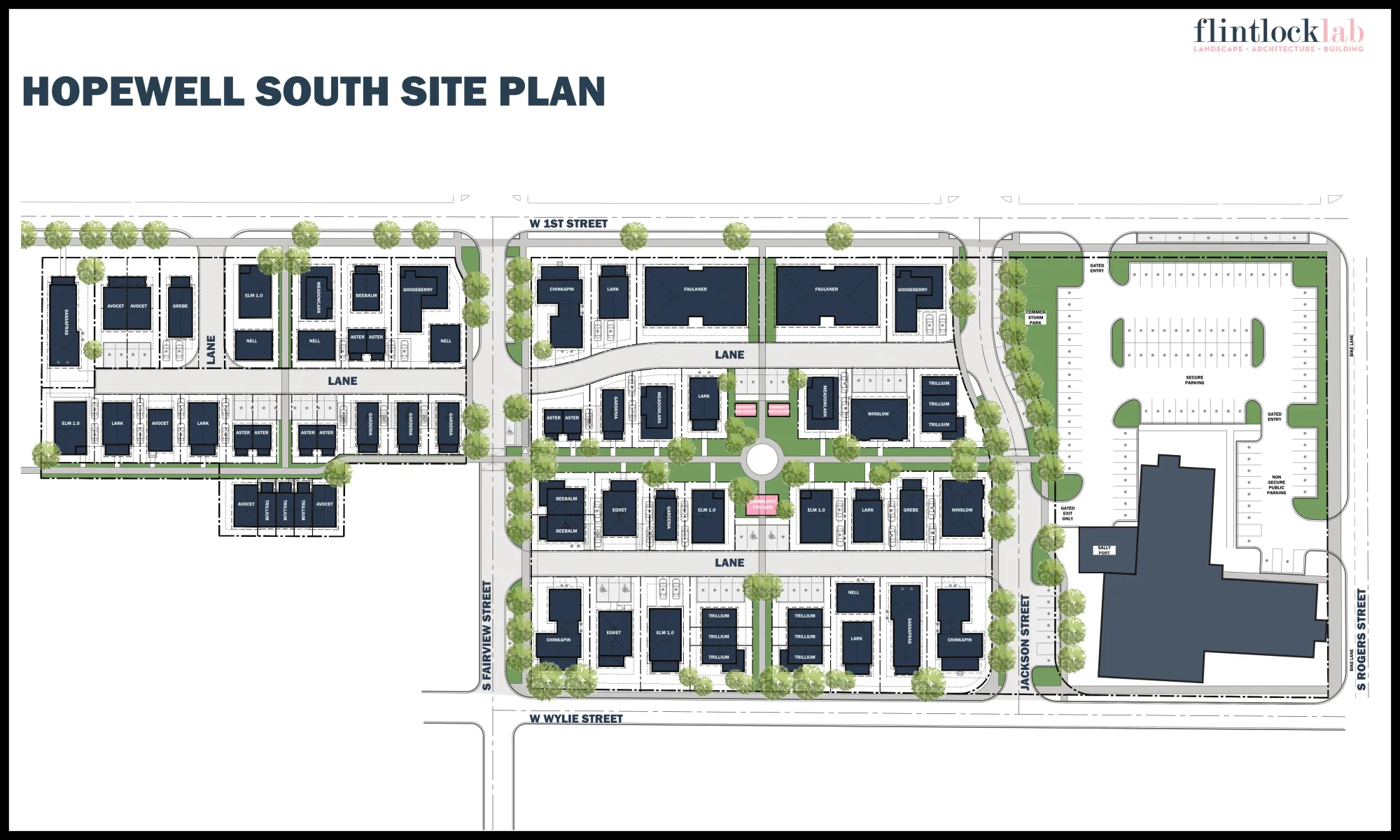
Next Wednesday (March 25), Bloomington’s city council will be considering for the second time a rezone for Hopewell South—as a PUD (planned unit development) on the city’s zoning map. Three weeks ago, the council had its first chance to approve the rezone of the city-owned real estate, but chose instead to put off a vote until next week.
Even though the council signaled basic support for the rezone at its meeting three weeks ago, the meeting information packet for Wednesday provides a clear picture of how contentious the proposal might prove to be.
Five different councilmembers have proposed a total of 13 “reasonable conditions” for the PUD. Even if several of the proposed conditions might not pass legal muster, based on a memo in the packet from corporation counsel Margie Rice, their sheer number is a measure of some councilmembers’ discomfort with at least some aspects of the proposal.
Several sharply worded written questions from councilmember Matt Flaherty include one that challenges the idea that the Hopewell South PUD meets the basic eligibility criteria for PUDs as specified in the city’s Unified Development Ordinance.
Although outright defeat of the Hopewell South PUD appears unlikely next Wednesday, another delay remains a possibility—even with the backing of Bloomington mayor Kerry Thomson. On Feb. 18, the city council declined to introduce the measure on a 2–7 vote, with only council president Isak Asare and vice president Sydney Zulich in support.
For Thomson, who has invested significant political capital in the project, in connection with her administration’s housing goals, another delay would have a practical consequence: When she delivers her State of the City address on March 31, Hopewell South would not reflect the level of progress she had hoped to show on it since taking office at the start of 2024.
Hopewell South: Basic features of the rezone
The geographic area of the PUD includes roughly a block and a half near the former IU Health hospital site, with an emphasis on small-lot, owner‑occupied housing, a mix of housing types, and pre‑approved building plans intended to streamline permitting and lower costs. Bloomington’s redevelopment commission purchased the site, after IU Health decided to move its hospital to the eastern edge of town off the SR 46 bypass.
The proposed PUD is supposed to include more housing than would be possible under the existing zoning. Hopewell South has a target build‑out of about 98 housing units, compared to 28 under the existing R4 zoning.
Planned for Hopewell South is a mix of single‑family houses, duplexes, small multifamily buildings, and townhouses, with lot sizes and building types calibrated to support lower price points. The plan relies on smaller rights‑of‑way and “lanes” that still meet fire and ADA standards, but allow more buildable land.
The plan comes with a commitment that 30% of units will meet at least Universal Design accessibility standards, with some units built to higher standard, clustered where the topography allows zero‑step entries.
Under the PUD, the city’s redevelopment commission (RDC), which owns the real estate, would initially control the land and disposition of the affordable units.
Affordability requirements for PUDs
The issue raised by councilmember Matt Flaherty’s written question about affordability requirements is pretty narrow, but it bears on whether Hopewell South even qualifies as a PUD under the city’s Unified Development Ordinance (UDO).
Bloomington’s UDO sets up specific criteria for qualifying as a PUD. A PUD has to meet one of three tests, and the city’s position is that Hopewell South qualifies under the third one.
(E) At least one of the following criteria are met; …
(iii) The proposed PUD zoning district provides affordable housing beyond the amounts that the petitioner would have been required to provide in order to earn a Tier 1 or Tier 2 affordable housing incentive under Section 20.04.110(c)(5) by either:
(1) Income-restricting at least 10 percent more of the dwelling units at or below the income levels required to earn a Tier 1 or Tier 2 incentive, or
(2) Income restricting the same number of dwelling units required to earn a Tier 1 or Tier 2 affordable housing incentive, but limiting incomes to at least 10% lower AMI level than would have been required to earn a Tier 1 or Tier 2 incentive.20.04.110(c)(5)
The Tier 1 and Tier 2 incentives are spelled out like this in Bloomington’s UDO:
20.04.110(c)
(2) Eligibility. Projects that satisfy one of the following criteria shall be eligible for the incentives established in subsection (5) below:
(A) Tier 1
(i) At least 60% of the total gross floor area of the building (including additional area awarded with an incentive) is dedicated to residential dwellings; and
(ii) A minimum of 15% of the total dwelling units (including those on floors awarded with an incentive) are income-restricted permanently, unless otherwise adjusted or forfeited by the City, to households earning less than 120% of the HUD AMI for Monroe County, Indiana; or
(B) Tier 2
(i) At least 60% of the total gross floor area of the building (including additional area awarded with an incentive) is dedicated to residential dwellings; and
(ii) A minimum of 7.5% of the total dwelling units (including those on floors awarded with an incentive) are income-restricted permanently, unless otherwise adjusted or forfeited by the City, to households earning below 120% of the HUD AMI for Monroe County, Indiana; and
(iii) A minimum of 7.5% of the total dwelling units (including those on floors awarded with an incentive) are income-restricted permanently, unless otherwise adjusted or forfeited by the City, to households earning below 90% of the HUD AMI for Monroe County, Indiana.
Flaherty’s question focuses on the part of the Tier 1 and Tier 2 incentives that require permanent income restriction. Specifically, a PUD has to exceed the Tier 1 and Tier 2 requirements by 10 percentage points, or else limit incomes to at least 10 percentage points lower AMI (area median income) than in the Tier 1 and Tier 2 incentives.
The affordable housing requirement in the Hopewell South PUD says that at least 15% of total dwelling units within the PUD will be permanently income-limited to households earning less than 120% of AMI. But that 15% just matches the incentive, and does not exceed it by 10 percentage points, as required by the UDO’s requirement for PUDs.
The affordable housing requirement in the Hopewell South PUD also says that at least 50% of total dwelling units within the PUD will be affordable to home buyers under 100% AMI.
Flaherty points out that an requirement on an initial sale does not mean the units will be permanently income restricted as required to meet the standard. The city staff response focuses on the “out clause” in the Tier 1 and Tier 2 incentives, which says “unless the requirement is otherwise adjusted or forfeited by the city.”
The staff response to Flaherty’s question says: “Within this PUD we are building in an adjustment to the length of time for the affordability period for single family residences. The language in the UDO allows for an adjustment to the length of time for that affordability.”
Hopewell South proposed conditions of approval
The 13 different conditions of approval for the Hopewell South PUD that are included in Wednesday’s meeting information packet are followed by a memo from corporation counsel Margie Rice.
Rice’s memo doesn’t analyze the proposed conditions of approval, but the impact of the memo calls into question whether the council would have the legal authority to impose some of the conditions of approval—because they would be tantamount to amending the Hopewell South PUD, which the council can’t do.
As a procedural matter, Bloomington’s plan commission recommended approval of the Hopewell South PUD and certified it to the city council.
Rice’s memo mentions a 2007 case involving the City of Crown Point which decided the question of whether a city council can amend a zoning ordinance, after it has been certified by the plan commission. In City of Crown Point vs. Misty Woods Properties, a panel for the Indiana court of appeals considered a rezoning request, which the city’s plan commission had certified to allow both R-1 (single-family) and R-2 (which permits duplexes as a special use).
Instead of voting the proposal up or down, the Crown Point city council amended it, to allow only R-1 zoning, stripping out the R-2 component. The court said Indiana law does not permit that kind of rewrite: For map amendments, a council may adopt the proposal as certified by the plan commission or reject it, but not modify it on its own. Because the Crown Point council changed the substance of what had been certified, the court said its action should be treated as a rejection rather than a valid approval.
Here’s a summary of the proposed conditions of approval from Bloomington councilmembers with a note on the apparent status of the conditions as amendments or not.


Comments ()