
Lawsuit over student IDs for voting prompts sparring over question: How long is brief?
With early voting weeks away, Indiana officials are urging a judge to deny a bid to block a law barring student IDs at polls, arguing the challenge came too late and lacks merit. Plaintiffs say it burdens young voters; the state calls it a modest clarification of existing requirements.
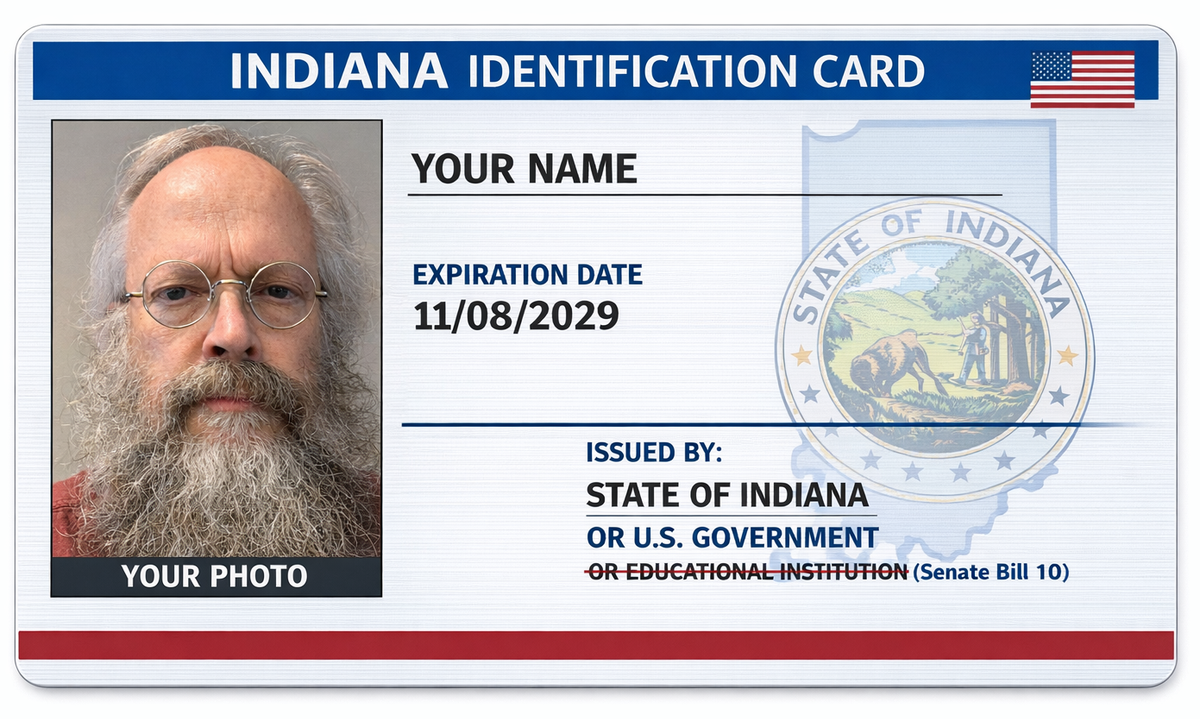
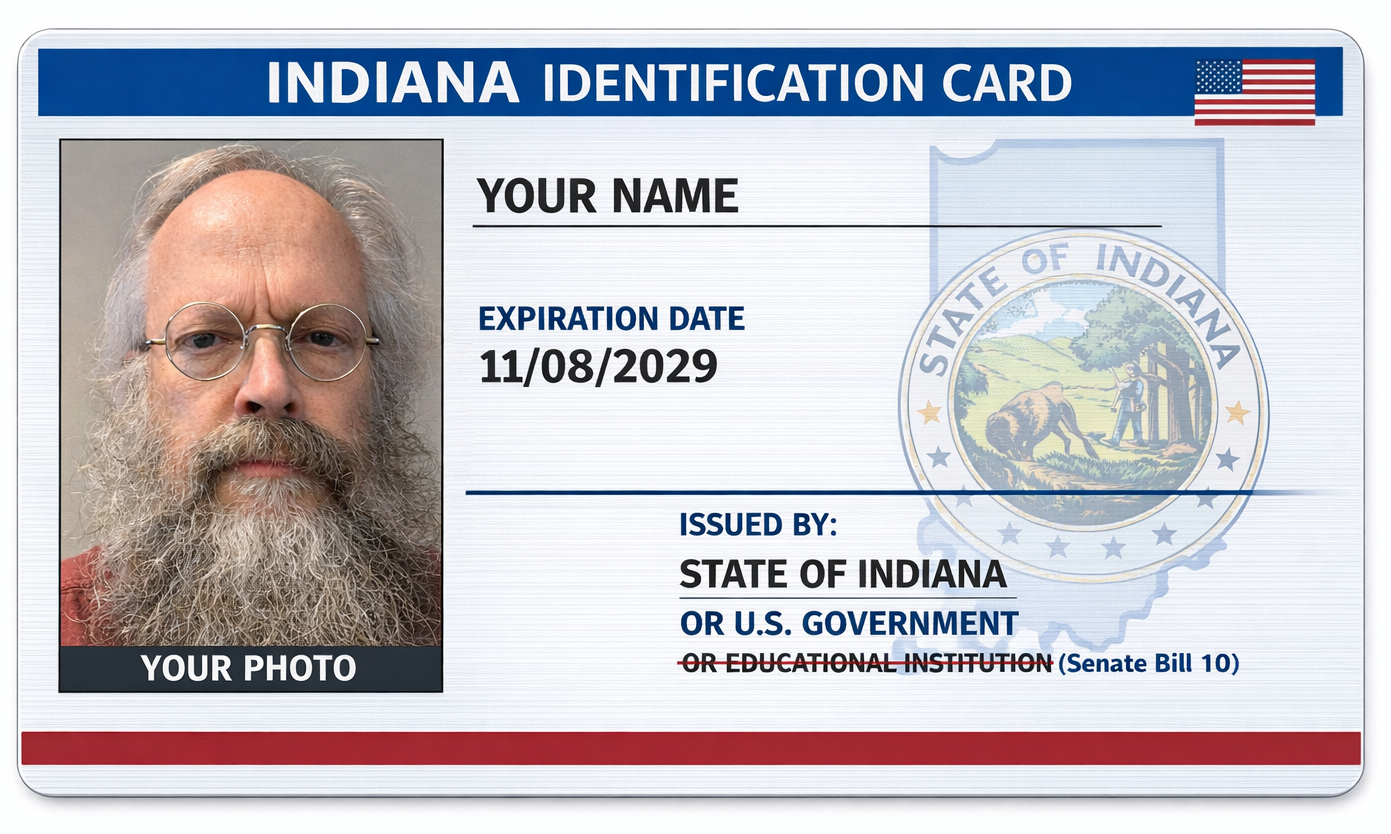
With early voting set to start in less than a month (April 7), Indiana state officials are urging a federal judge to reject a request to block a new state law barring the use of student IDs at the polls.
State officials say that the challenge comes too late, is too close to an actual election, and that the constitutional claims made by the plaintiffs are not strong enough.
In a filing submitted March 6 in the U.S. District Court for the Southern District of Indiana, state officials gave its response to a motion for preliminary injunction filed in early February by a coalition of advocacy groups and an Indiana University student.
At issue is SB 10, enacted in 2025, which says that identification issued by state educational institutions does not qualify as valid voter ID.
In their early-February brief, the plaintiffs—Count US IN, Women4Change Indiana, and IU Bloomington student Josh Montagne—argue that the law “bars students—and only students—from using the IDs most accessible to them,” imposing unconstitutional burdens on young voters in violation of the First, Fourteenth, and Twenty-Sixth Amendments.
They contend that student IDs had been widely used for nearly two decades and that many students, particularly those from out of state or without driver’s licenses, will face added hurdles to vote.
In their filing, state attorneys counter by framing SB 10 as a modest clarification of long-standing voter ID requirements. The law, they argue, simply places students “on the same footing as all other Indiana voters,” who must present government-issued identification such as a driver’s license, passport, or a free state ID.
They stress that Indiana has required photo ID for in-person voting since 2005—a system upheld by the U.S. Supreme Court—and that free identification remains available through the Bureau of Motor Vehicles.
A central theme of the state’s opposition is timing. Citing the U.S. Supreme Court’s decision in Purcell v. Gonzalez, the state argues that courts should avoid changing election rules close to an election. Early voting for Indiana’s May 5 primary begins April 7. The plaintiffs filed their motion for a preliminary injunction on Feb. 6, which was two months before the start of early voting. The regular timelines for briefing of motions push the decision close to the election.
Also related to timing, the state points to what it describes as a “ten-month delay” by plaintiffs in seeking emergency relief after SB 10’s enactment, arguing that the delay alone weighs against granting an injunction.
Beyond timing, the state challenges the court’s jurisdiction, asserting that the organizational plaintiffs lack standing because their alleged injuries—such as updating voter education materials—are “self-inflicted” and not legally recognizable.
The state also argues that the named state officials are not proper defendants, because Indiana’s voter ID laws are enforced primarily by local election officials. The Monroe County election board is a named defendant in the lawsuit because one of the plaintiffs, Josh Montagne, is a Monroe County resident.
On the merits, the dispute turns on whether SB 10 places an undue burden on the right of students to vote.
Plaintiffs argue that the law targets students as a distinct class, and disproportionately affects younger voters, who are less likely to have alternative forms of identification.
The state responds that any burden is minimal, noting that most students already possess qualifying ID and that the law does not prevent anyone from voting, given the availability of free, state-issued identification.
The state further contends that the law serves legitimate interests, including simplifying poll-worker training, reducing confusion stemming from varied university ID formats, and promoting confidence in election administration.
On the Twenty-Sixth Amendment claim, which prohibits age-based discrimination in voting, the state maintains that SB 10 is age-neutral, applying equally to faculty, staff, and others who hold university IDs—not just students.
Leaving it to briefer?
The plaintiffs are now expected to file a reply brief addressing the state’s arguments. That’s the usual order of things: There’s a motion, a response, then a reply to the response. But before filing their reply, the plaintiffs have asked for permission to exceed the standard 15-page limit.
It is a pretty common request to make of a court—for leave to file excess pages—and such requests are routinely granted. However, on Thursday (March 19) the state filed a response opposing the request for up to 25 pages. It wraps up with the following:
Every party must be selective in constructing their briefs; Plaintiffs are not entitled to an expansive reply containing every argument they wish to make. Reply briefs are short on purpose: they are meant to be a short opportunity to respond, not a lengthy response used for sandbagging or covering the entire length and breadth of the case.
So the next decision from the court will be whether to allow more pages to be filed, and after reading any extra pages, only then will a decision on the preliminary injunction be made.
Comments ()