
MCCSC board OKs no raises for non-teacher pay, gets finance report, hears safety update
This report includes everything you wanted to know about MCCSC’s board meeting—from flat pay and stipends for union and non-union staff, to reshaped teacher grants, required fund transfers, public concerns over finances and ICE, a safety review, and approval of the 2028-29 calendar.
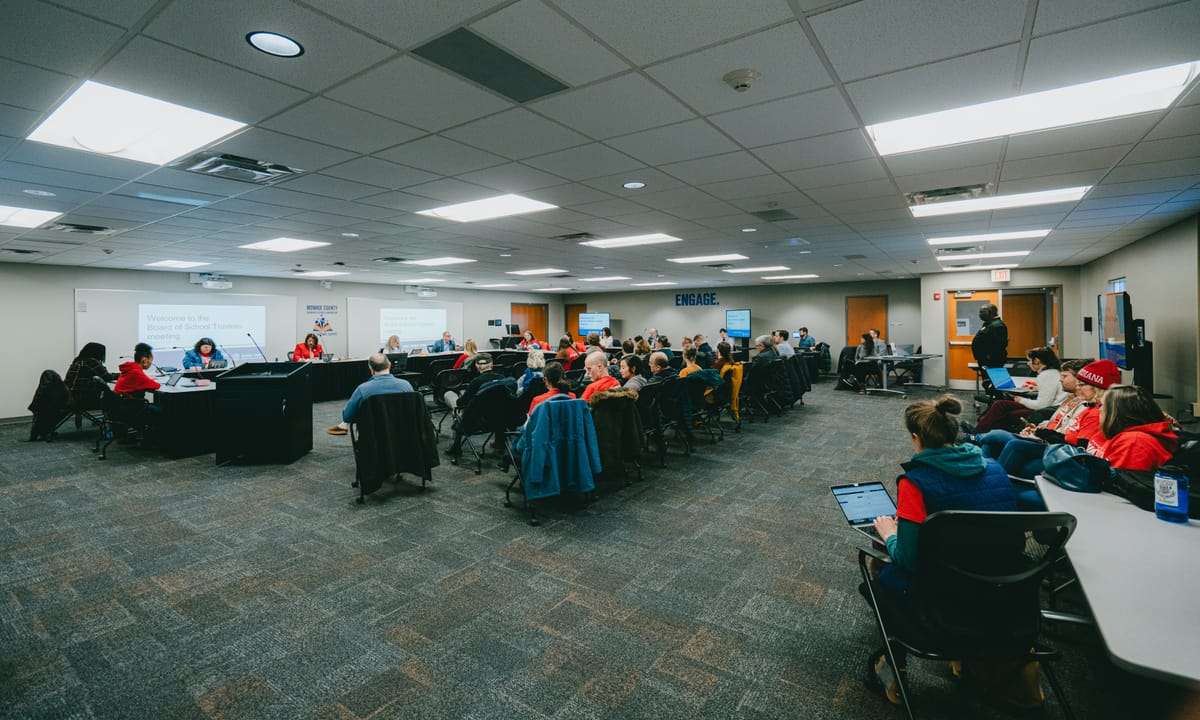
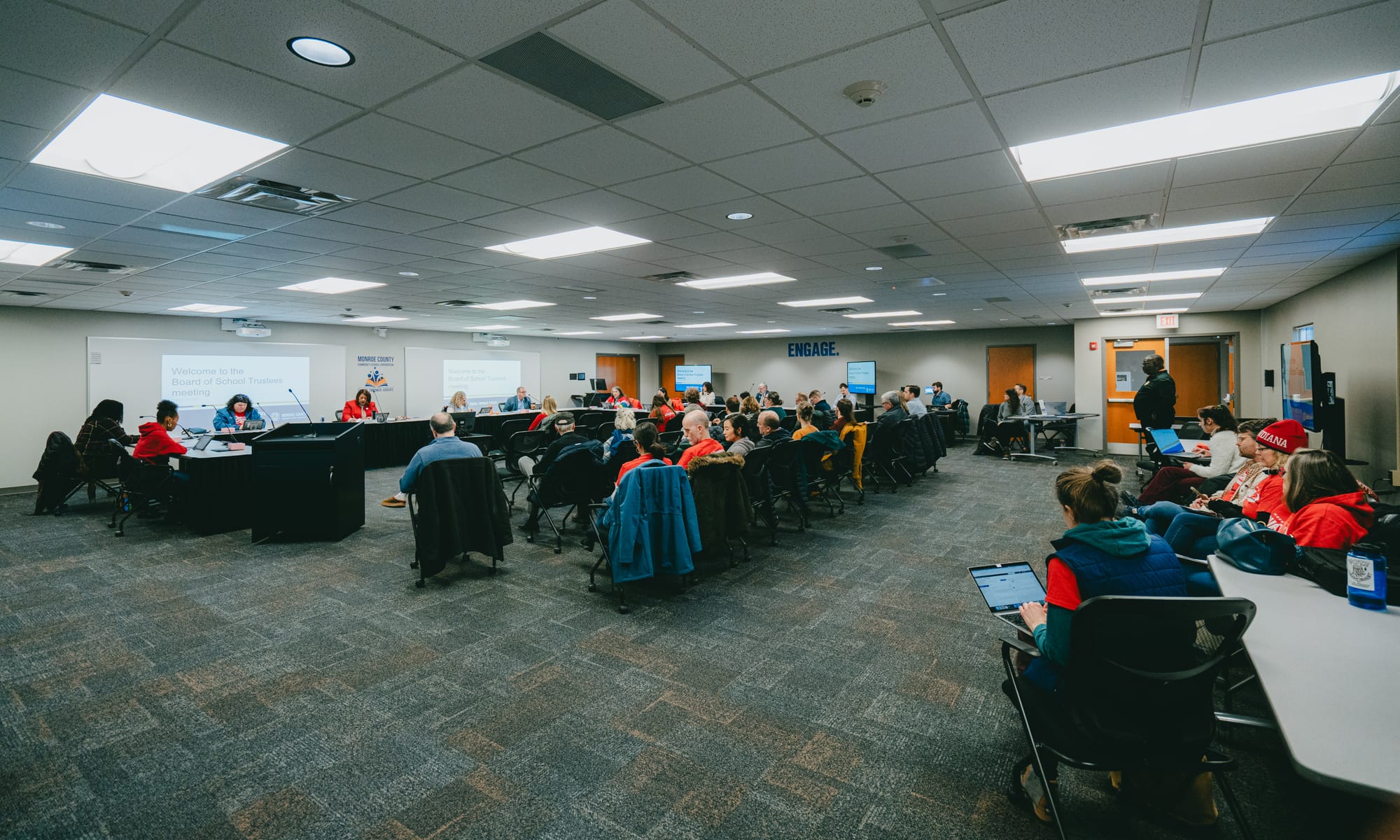
The Monroe County Community School Corporation (MCCSC) board held its first regular meeting of 2026 Tuesday (Jan. 27) evening. It was the first meeting with Erin Cooperman presiding as board president.
The meeting took place after two weather-impacted MCCSC school days: Monday (Jan. 26) was a snow day with no e-learning and Tuesday (Jan. 27) was a self-paced (asynchronous) e-learning day. MCCSC also announced that Wednesday (Jan. 28) would be a real-time (synchronous) e-learning day.
Superintendent Markay Winston said that Presidents’ Day, Feb. 16, will now be a school day, to make up for Monday’s snow day. Presidents’ Day is one of two built-in snow days on the calendar, which are days off that can be used to make up for snow days without e-learning.
Tuesday’s meeting featured several unanimous votes by the board, which underscored the district’s central financial tension: how to manage flat compensation for staff, reshaped state grants for teachers, and legally required fund transfers, while trying to stabilize a budget squeezed by state policy changes and declining revenue growth.
The board also got an after-action report of sorts in connection with a shooting threat. The board also heard concerns about ICE activity from the public mic.
Non-teacher employees: AFSCME, non-union contracts
The board unanimously approved two items related to non-teacher pay.
First, the board approved the collective bargaining agreement between MCCSC and the American Federation of State, County, and Municipal Employees (AFSCME) Local 3995 for Jan. 1, 2026 through Dec. 31, 2027. The contract has no base pay increase. However, each union member will receive an annual, one-time stipend for the next two years, between $250 and $600, depending on their job.
Also unanimously approved was compensation for non-union support staff and administrators for the next two years. According to the administration’s cover memo, non-union staff will also see no pay increase for the next two years, and will see MCCSC insurance contributions that are similar to those of AFSCME staff and teaching staff.
That puts non-teachers in the district on the same footing for the next two years as teachers, whose base salaries will also stay flat over the next two years.
State Teacher Appreciation Grant stipends
Also on Tuesday, the board approved two agenda items related to the Indiana Department of Education (IDOE) Teacher Appreciation Grant (TAG). In previous years, about 90% of teachers statewide received grant awards. This school year, as a result of HEA 1001, fewer teachers can receive stipends, but the amount each teacher will receive is much higher.
Last school year, 736 of roughly 800 MCCSC teachers received a stipend of roughly $500. This year, MCCSC can only award stipends to 13% of its teachers, and the amount each teacher receives will be either $3,500 or $5,000. An application was emailed to teachers on Dec. 12, 2025.
If more than 13% of teachers apply, MCCSC and MCEA will create a lottery system to determine who receives the stipend. The lottery will be random, according to Jenny Noble-Kuchera, president of the Monroe County Education Association (MCEA), the teachers’ union. She also told The B Square in an email on Tuesday (Jan. 27) that the process of organizing applications is ongoing, and that “names and numbers will be revealed” on Feb. 2.
Contracts: One abstaining vote
The MCCSC board approved several contracts as part of a single vote, including one with Covenant Christian Early Learning Place, to provide preschool to 3- and 4-year-olds in Monroe County. Two others were for construction projects. One was with decarbonization company Veregy to install a solar panel bus canopy in the transportation lot for just under $3 million. The other was with E&B Paving for just over $8 million, and is part of a parking lot and athletic facility improvement project at Bloomington High School North.
The seven contracts were approved with support from all board members but one—Ashley Pirani abstained. She told The B Square her decision was because of the contract with Covenant Christian Early Learning Place, which is a religious school. HB 1102, passed by the state legislature in 2025, removed the requirement that preschool partnerships “may not be religiously affiliated.”
“I understand we have to follow it,” Pirani said about the legislation, “but I wanted to abstain because I don’t agree with [it]. I feel like that’s a breach of separation of church and state.”
District finances: Internal transfers, cash balance reports, finance portal
Three agenda items from Tuesday’s meeting involved MCCSC’s finances. The district is nearly a year into its two-year plan to reach financial sustainability.
The first finance-related agenda item was Resolution 2026-04, which allows the transfer of $12.5 million from the education fund to the operations fund over the course of the calendar year. The board approved the resolution unanimously after explanation from MCCSC chief financial officer Matt Irwin and some board discussion.
The education fund covers expenses directly related to learning. This includes teacher salaries and classroom supplies. This funding comes from the state of Indiana. The operations fund, which comes from local property taxes, covers day-to-day operating expenses, such as transportation, building maintenance, utilities, and technology.
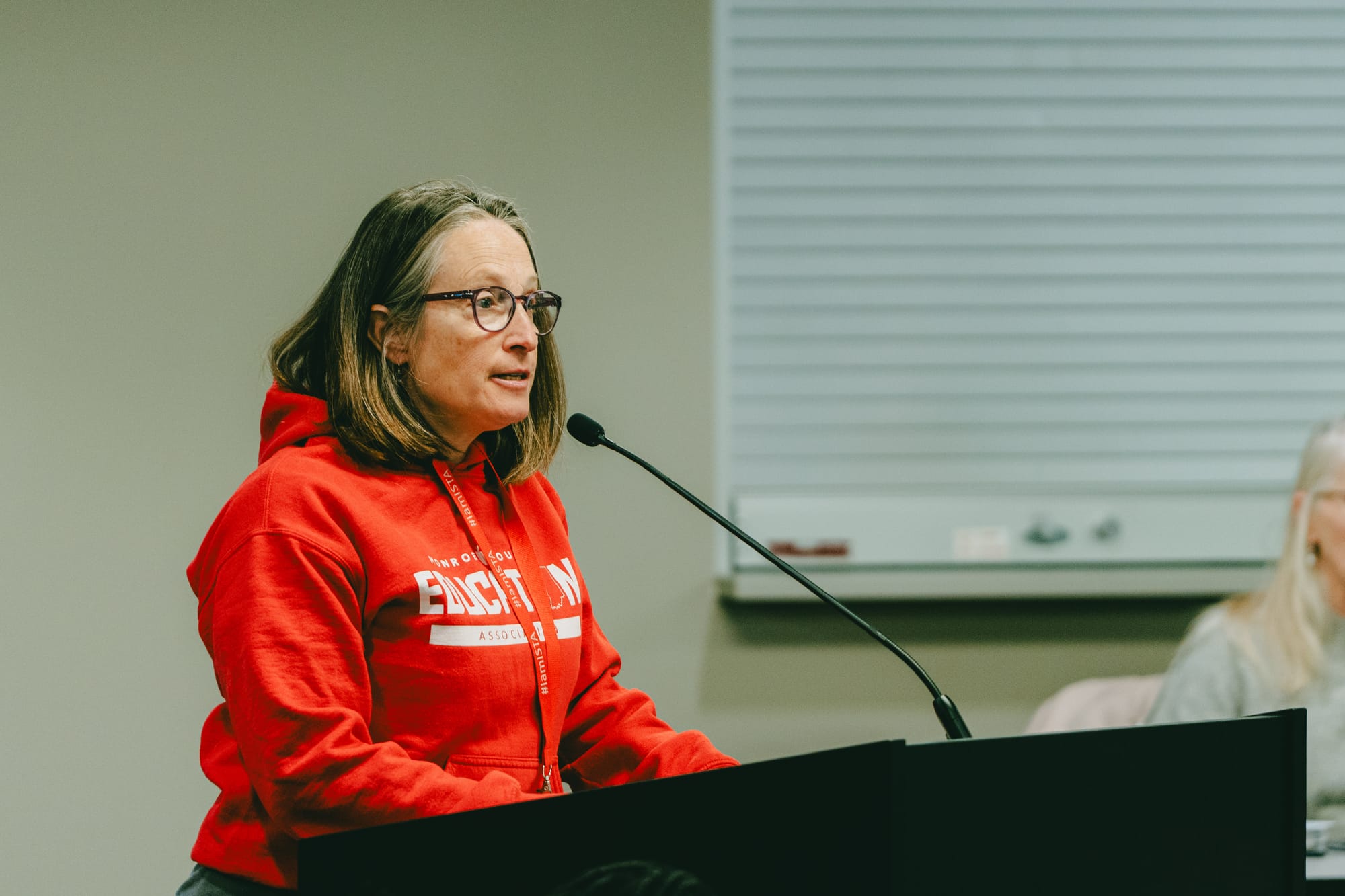
At the start of the meeting, two people expressed concern from the public mic about the resolution. One was MCEA president Jenny Noble-Kuchera. “I speak tonight in opposition to the board resolution 2026-04,” she said, representing the teachers’ union. Noble-Kuchera is also an English as a new language teacher at Bloomington High School North (BHSN).
Noble-Kuchera framed the issue as weighing money for athletic fields and desks against compensation for teachers—in the context of the state’s reduction of public education funding. She told the board that the number of full-time MCCSC teachers since Aug. 2024 has decreased from 834 to 757. The personnel report approved at Tuesday’s meeting included five teacher resignations between December 2025 and January 2026. The report also included 14 non-teacher resignations.
“We know what the state has not given us,” she said. “But the toll that this takes on the teachers who are left is palpable. Fewer adults in a building means more work for everyone.” She continued, “In essence, this [resolution] means more money for ball fields and furniture, and less for the hiring and retaining of qualified professionals to work with students.” She urged board members to “consider all perspectives” before voting. “While you may not see an immediate effect if you pass this resolution, it’s just seen as yet another cut to the morale of a lot of our teachers. “What are we worth?” she asked.
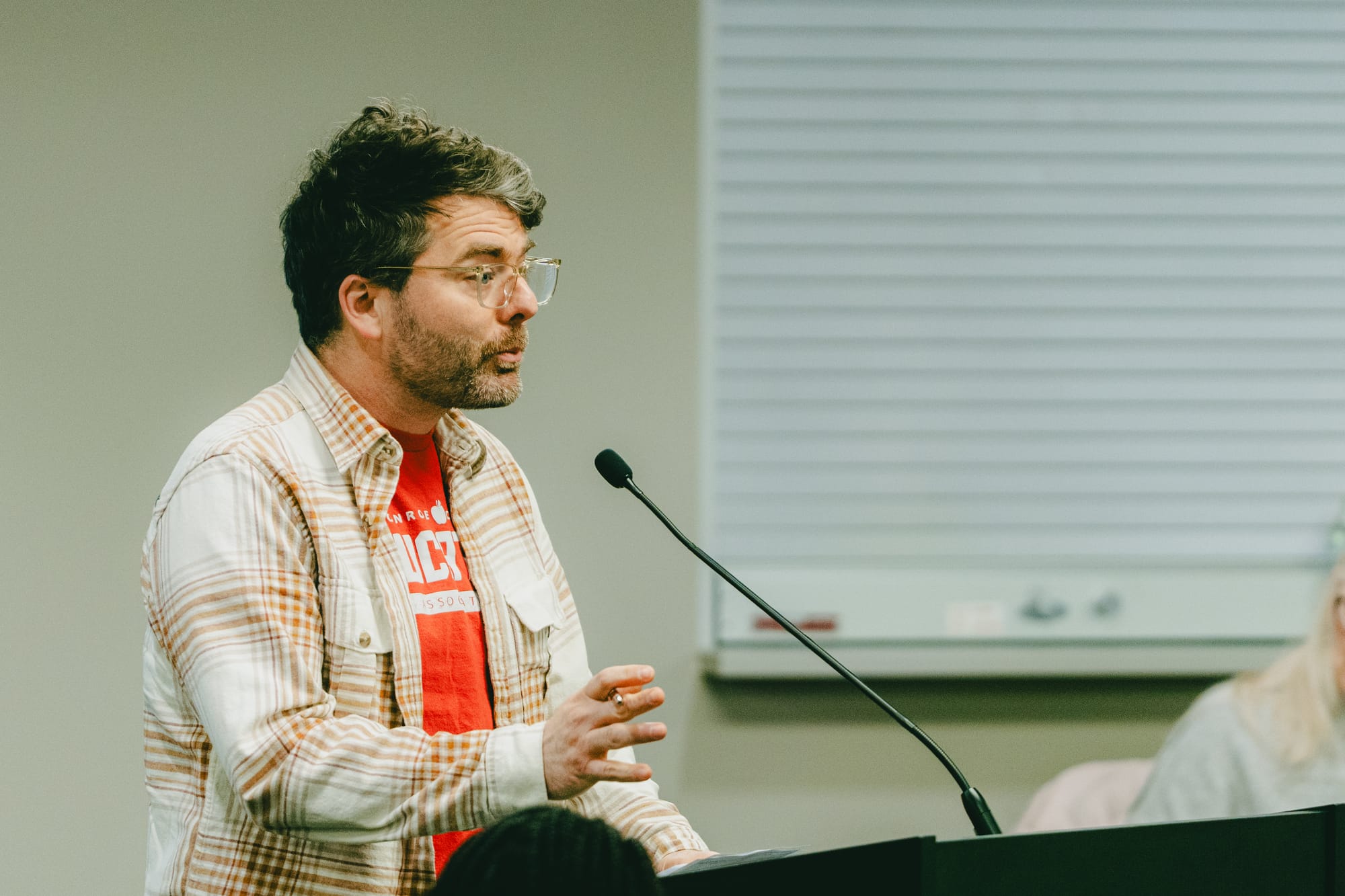
Also from the public mic, Erich Nolan echoed concern about the difference between the education fund and the operations fund: “So, we’re taking money from that fund that pays teachers, while stating that we don’t have enough money to pay teachers.” Nolan was speaking as a parent and community member, not in his role as a teacher in the district.
It was Matt Irwin, the district’s CFO, who presented the resolution to the board. “This is an annual ask of the board,” he said, and one that is mandated by state law. He explained that in 2019, the state of Indiana created the operations fund for school corporations, but did not establish a source of revenue for it. Instead, state law stipulates that schools “shall make every reasonable effort to transfer not more than fifteen percent (15%) of the total revenue deposited in the ... education fund ... to the ... operations fund during a calendar year.”
Irwin said the $12.5 million is an “up-to amount” not the planned amount that the district plans to move. Last year, the school board approved a fund-to-fund transfer of $15 million. Irwin said that amounted to a transfer of 5.8% of the education fund revenue. He said that was “extremely low” compared to other school districts across the state.
Before the board voted on the resolution, MCCSC superintendent Winston responded to a question from board member April Hennessey. Winston said that the fund-to-fund transfer was not a topic of discussion between the administration and the teachers union.
Hennessey’s second question was to Irwin: “What would you say to Mr. Nolan’s comment earlier that this is a disingenuous use of our funds and that it lacks transparency to our community?”
Irwin said, “The property tax levy that we receive is not enough to cover the expenses that come into the operations.” He said the 5.8% figure for last year’s transfer is “something to be proud of.” Hennessey agreed with his final sentiment.
Noble-Kuchera told The B Square after the meeting that while Irwin is “absolutely correct that this is permissible by state law, and that other school corporations move up to 15% of it, what our teachers union was saying is this year’s different because the overall revenue is lower across the board because of SEA 1.”
In past years, she continued, moving to a higher percentage for the fund transfer would not have made as big a difference, adding, “But as the state squeezes us fiscally, everything gets tighter.”
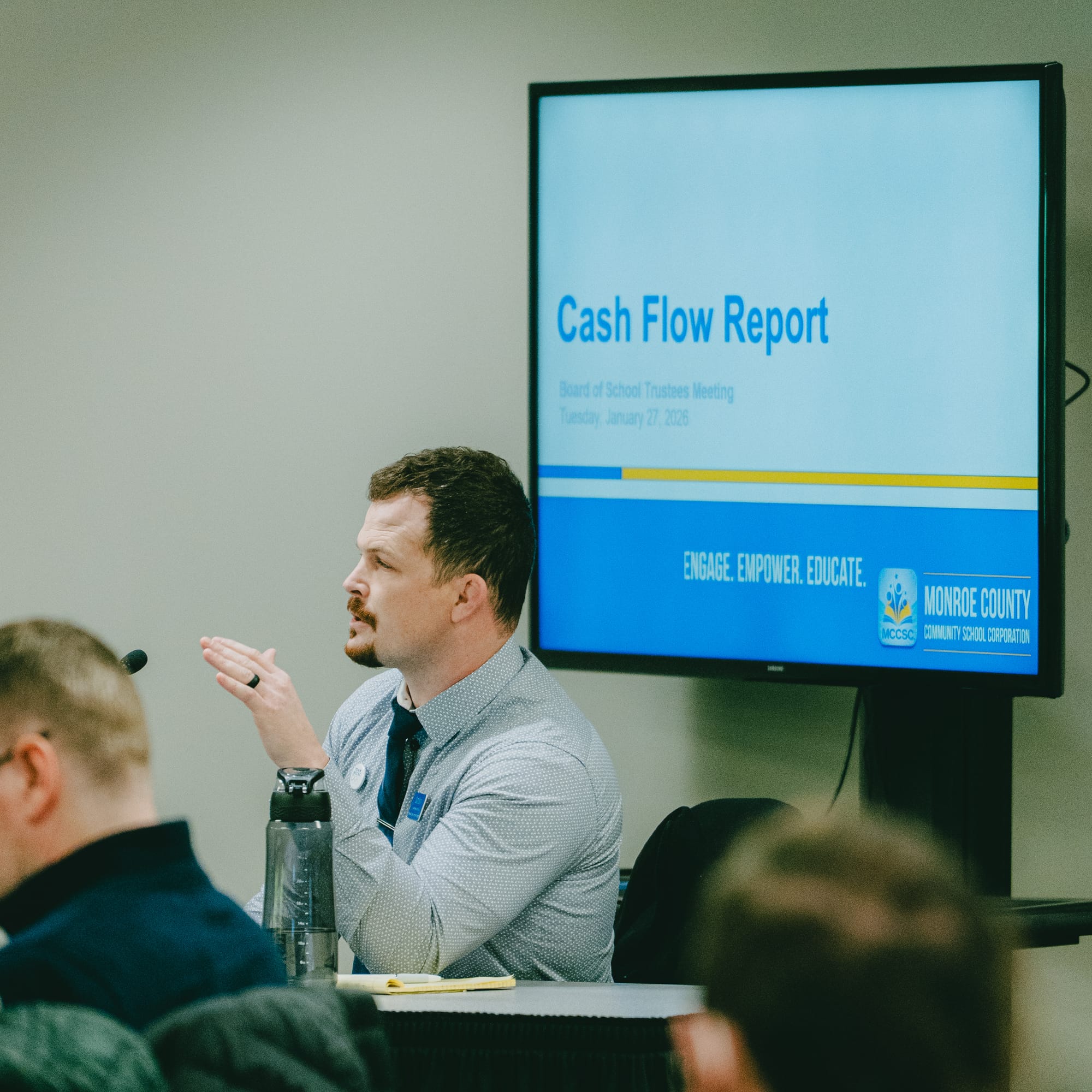
Irwin also gave the board a cash flow report. Winston said such reports will now be provided monthly. The report highlighted activity in the district’s five primary funds.
The education and operations funds both ended 2025 with cash balances above November projections. Both 2022 and 2023 referendum funds ended the year “slightly below projections.” The debt service fund ended the year with an expected cash balance, and MCCSC received 100% of the expected property tax levy.
Near the end of the meeting, Winston announced the launch of a finance portal, available on MCCSC’s website. With the tagline “Every Dollar, Every Student,” the webpage includes the district’s budgets, a “School Funds 101” section, frequently asked questions, referenda spending and impact, and updates on the district’s two-year financial plan. Winston said 2024 and 2025 revenue and expenditures as well as bond and capital project financial updates will be available in the coming months.
Irwin said the portal aims to collect data from several state and local sources to one place.
Public comment: Finances
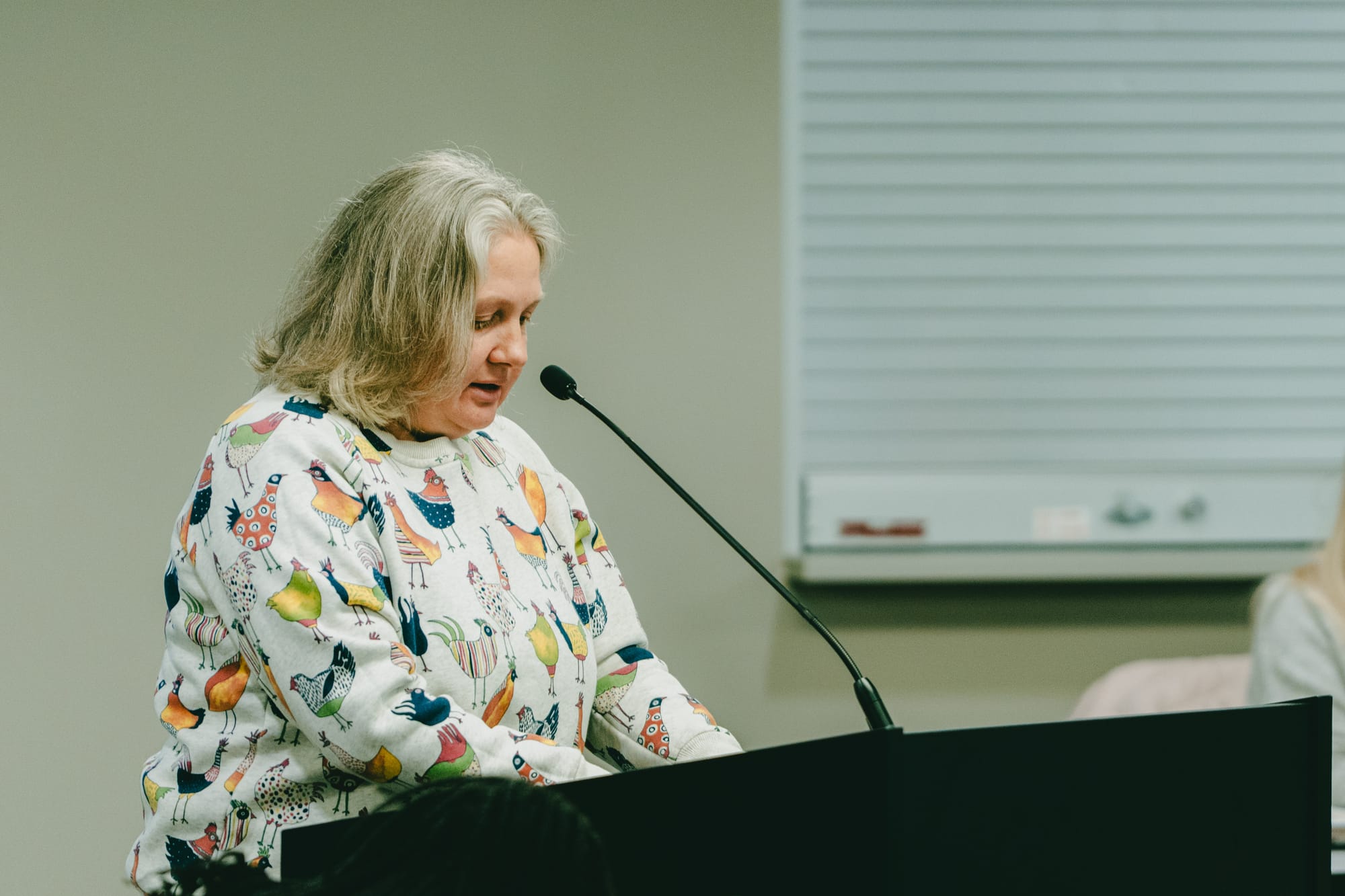
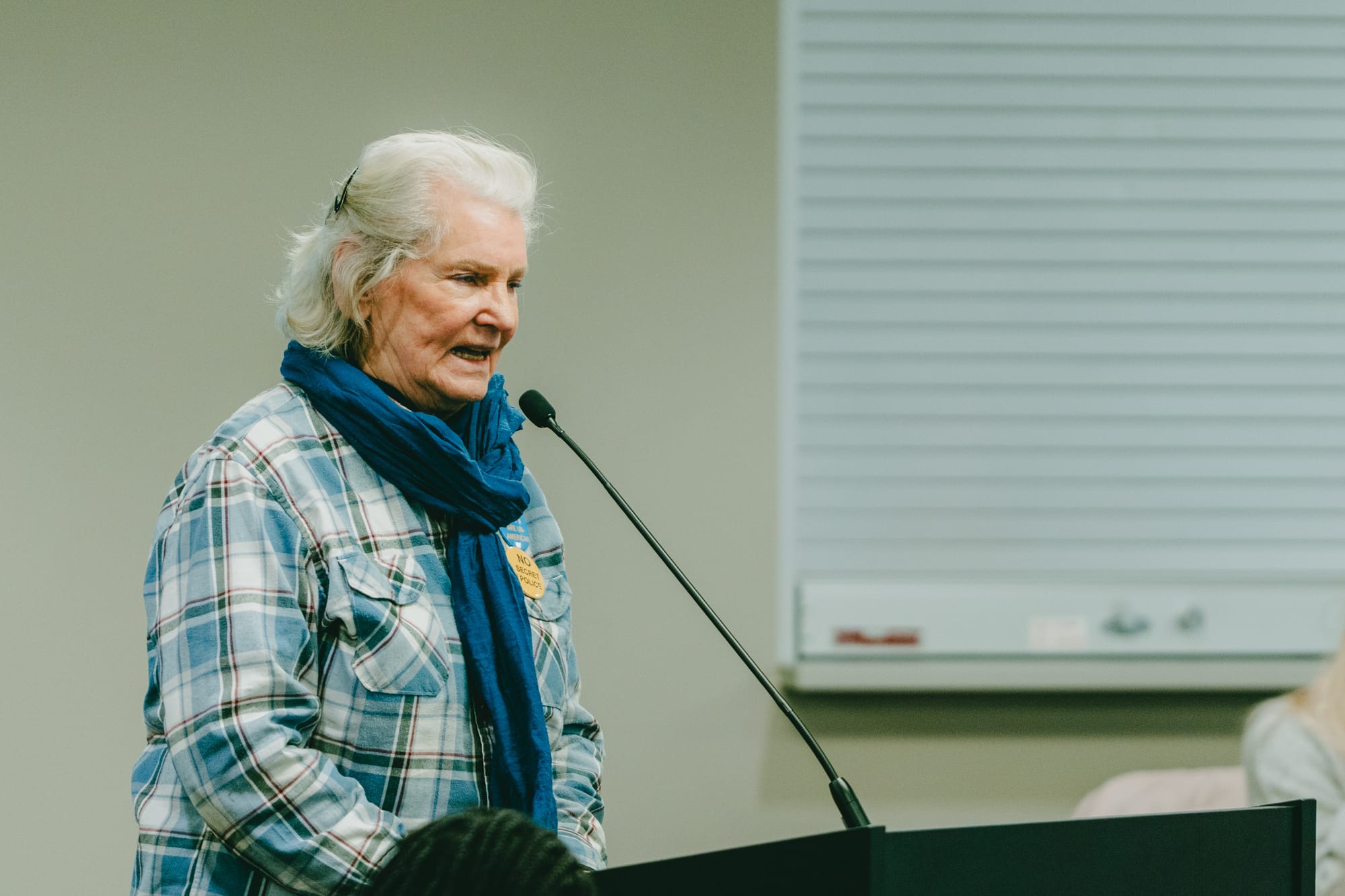
From the public mic, several people commented on the state of the district’s finances.
Erich Nolan framed his remarks by saying the support by voters of the 2022 referendum was a vote to support the district’s teachers. According to MCCSC, the 2022 referendum approved over $17 million for MCCSC in property tax revenue. However, a state tax cap means the district received about $1.3 million less in 2025, and will continue to receive less revenue growth each following year.
Nolan said, “I feel like MCCSC is breaking trust with our community when we continue to eliminate teaching positions, leading to larger class sizes and increased workloads for teachers remaining.”
Nola’s comments were similar to those of Alice Kilbride, a district teacher who spoke as a parent and community member. She said the district’s two-year financial plan “primarily revolves around adjusting staffing by not posting positions for new hires when teachers retire or resign.” She pointed to differences between jobs posted and resignations and retirements in the personnel report.
Kilbride said she’s concerned about increasing class sizes as a result of fewer teachers. She said, “I’m disappointed when my daughter says her class sizes are huge.” She continued, saying that when a teacher leaves, “the students didn’t disappear, and still need education provided by a teacher.” Kilbride said, “Not replacing a teacher who resigns mid-year is not strategic, it’s convenient.”
Public comment: ICE
Two other speakers at Tuesday’s meeting were concerned about MCCSC’s preparation for potential Immigration and Customs Enforcement (ICE) operations at a school. This month, two Minneapolis residents, Renee Nicole Good and Alex Pretti, were killed by ICE agents.
Seaforth Breeze, a former Bloomington High School South student and sibling of a current BHSN student asked: “What steps can you take? How can we provide for students and families if any such operations should happen?”
Jana Pereau said to the board, “ICE is all over the country, it is operating, it is kidnapping children and parents. And schools have a responsibility to make sure that there is a plan in place when ICE shows up and the whistles go off, ... that everybody in the building knows what to do.” She compared preparation for ICE interventions to active shooter drills: “It’s just something we have to acknowledge.”
After the public comment period, board member April Hennessey responded to the concerns about ICE. She said that in her work with Hoosier Asian American Power, she works on immigration policy. She said that consistently, the organizations she works with regarding ICE policy and rapid response organizations across the Midwest region, “their caution to us was that when it comes to your plans, especially safety plans for students in schools, you should be quiet about them.”
“This administration is very, very thorough in the work that they do to keep our students and our families and our staff safe,” she said about MCCSC. “To assume that the district and the board doesn’t have a plan, I think, would be erroneous. This district and this administration has a plan for everything. But just as with some other safety plans, we do not broadcast those publicly, because they then no longer are safe.”
In early December a student at MCCSC’s Broadview Learning Center was taken into custody by FBI agents working on behalf of ICE. The law enforcement activity did not take place on MCCSC property.
Additional updates: Shooting threat, delayed messaging
At Tuesday’s meeting, MCCSC superintendent Winston gave some background on district communications in the context of the school shooting threat received by the Bloomington Police Department last Thursday (Jan. 22). She said district administrators conducted an “after-action review,” which is part of normal protocol. It included discussion of what happened, and the identification of possible improvements to how the district handles safety incidents. The review revealed a delay in district communications.
One point Winston made on Tuesday was about communication with parents and families during any incident. “Understandably,” she said, “our parents want to know the moment we know something. Winston continued, “In the best case scenario, we would secure the safety of thousands of students and staff, we would coordinate with the local authorities, we would investigate the threat, all while communicating simultaneously with our families.”
Winston added, “The reality is that we will always ensure the safety of our students and staff first and foremost. Once their safety is confirmed, and quite frankly, not a moment before, then we will notify our families.”
Winston also said, “While the majority of our family and staff notifications went out on schedule, we learned that some of our families experienced delays in receiving our message, and we are addressing that.”
MCCSC communications director Sarah DeWeese said in an email on Friday (Jan. 23) to The B Square that ParentSquare is the messaging system in question. She wrote, “We are investigating the root cause which could be an outage or other causes. We are committed to ensuring our notification systems perform reliably when families need information most.”
“It was absolutely unacceptable that the system did not work as intended,” Winston said at Tuesday’s board meeting.
2028-29 calendar
At Tuesday’s meeting, the board also approved the 2028-29 school year calendar. School that year will begin on Aug. 4, 2028, which is a Friday. Fall break will have one extra day, for a total of three days off.
Photos: Jan. 27, 2026 MCCSC board meeting
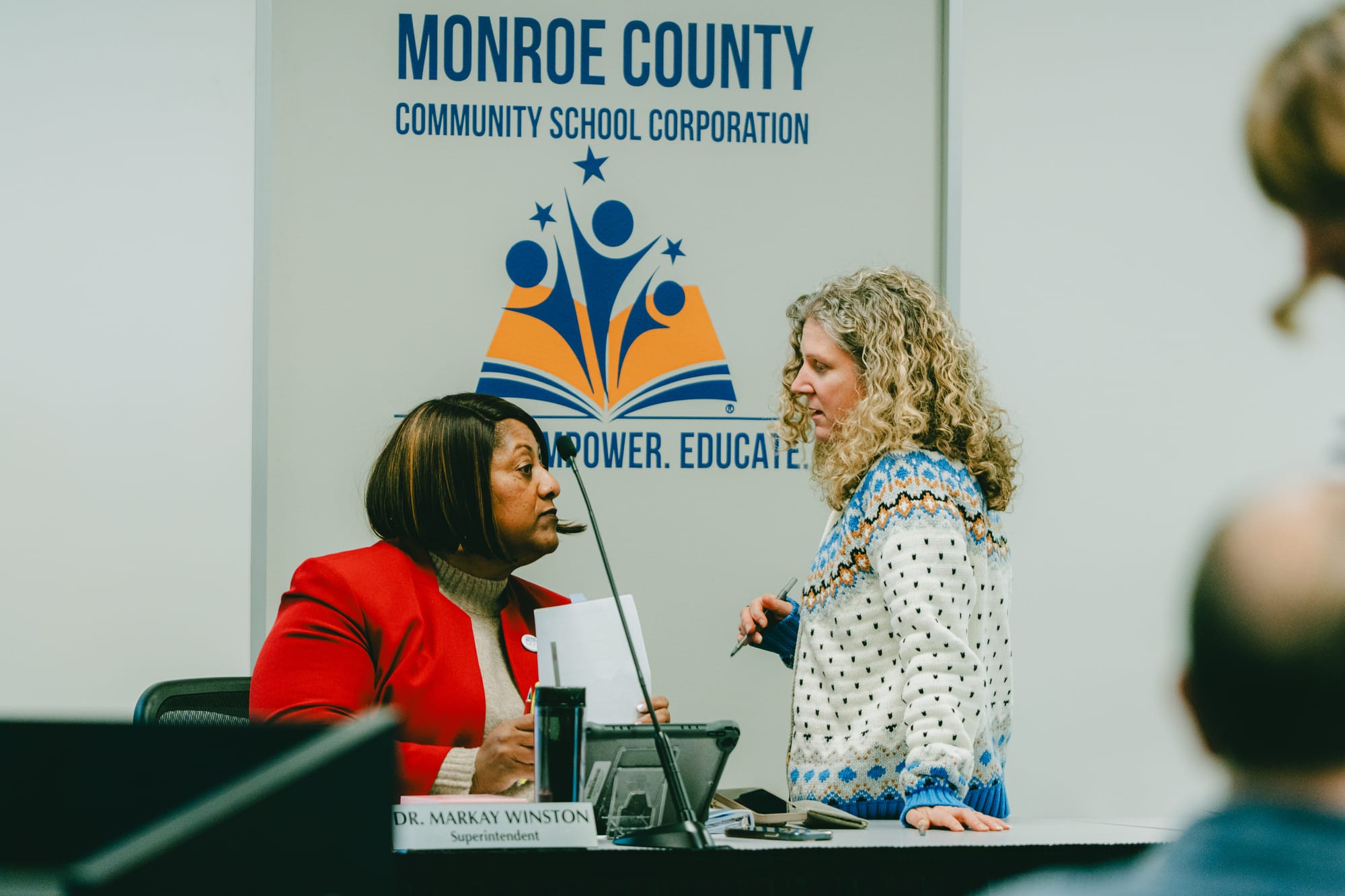
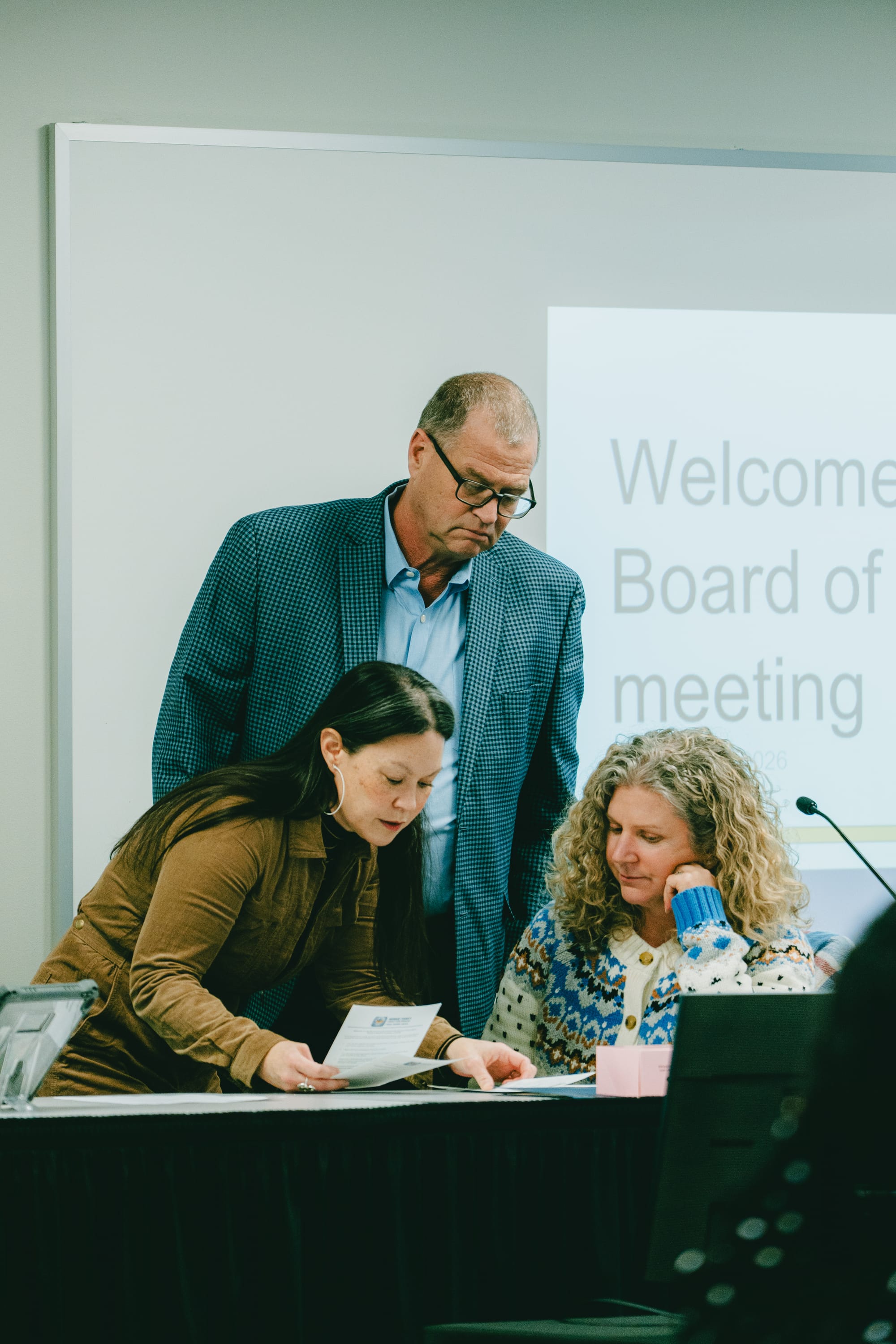
Left: MCCSC superintendent Markay Winston and board president Erin Cooperman before the meeting on Tuesday. Right: Board members Ross Grimes, April Hennessey, and president Erin Cooperman before the meeting on Tuesday. (Kelton O'Connell, Jan. 27, 2026)



Comments ()