
MCCSC could hold March 24 hearing on possible sale of former Herald-Times building
MCCSC could hold a March 24 hearing on selling the former Herald-Times building, as the board weighs options of sale, renovation, or delay. Survey responses were split between school-related uses and selling.
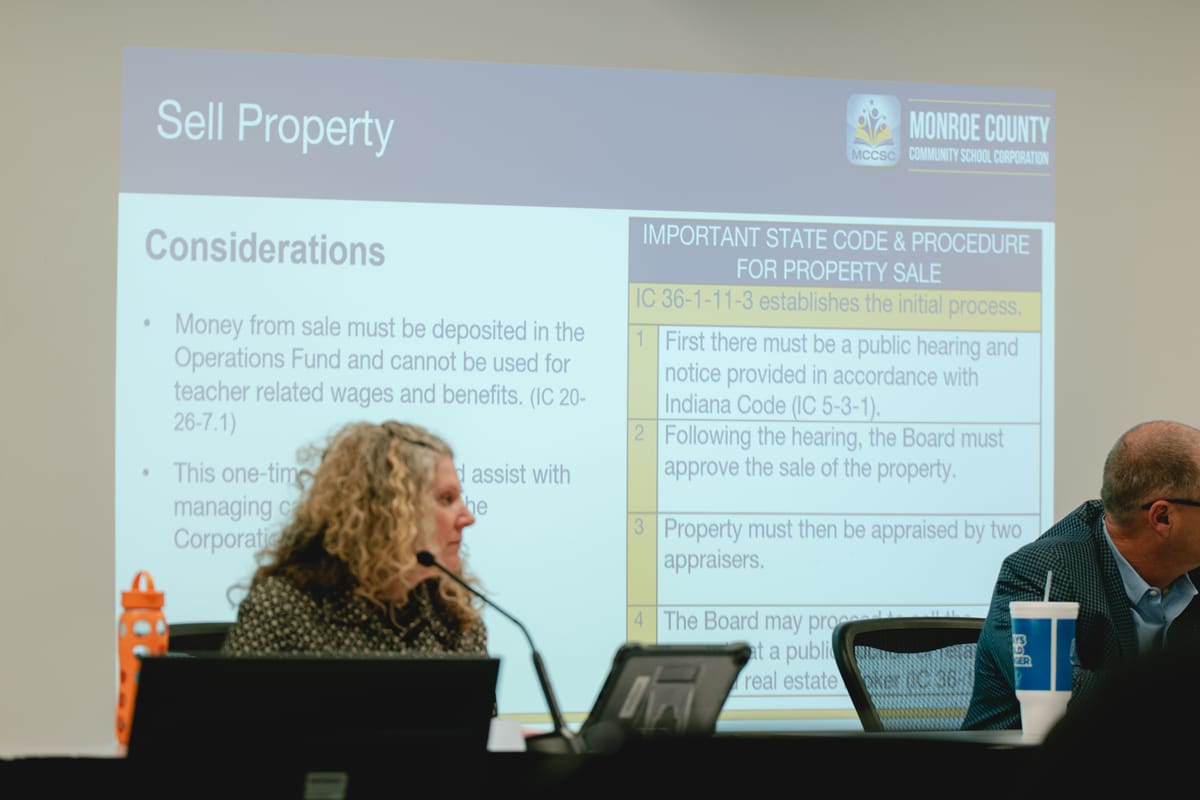
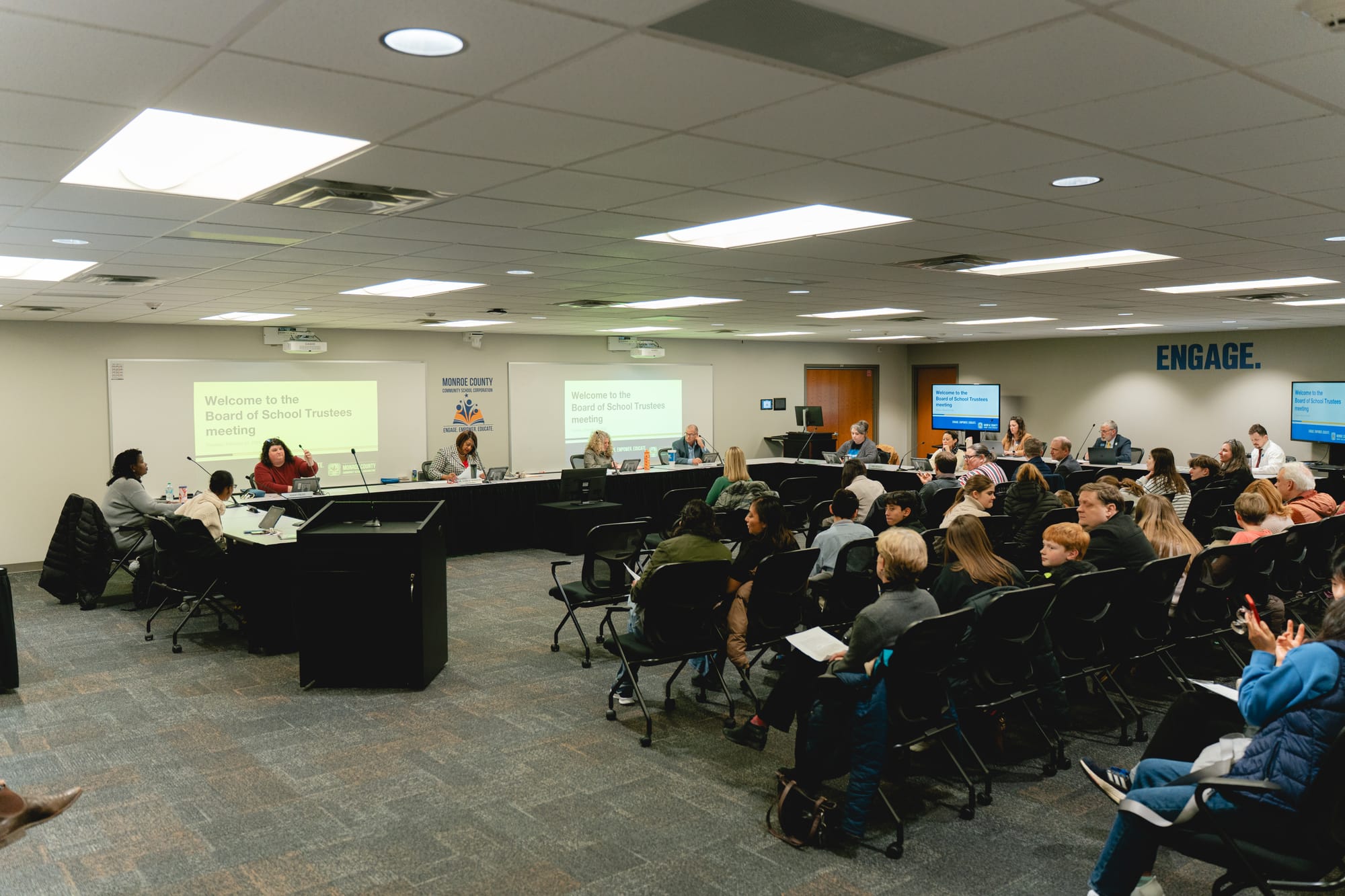
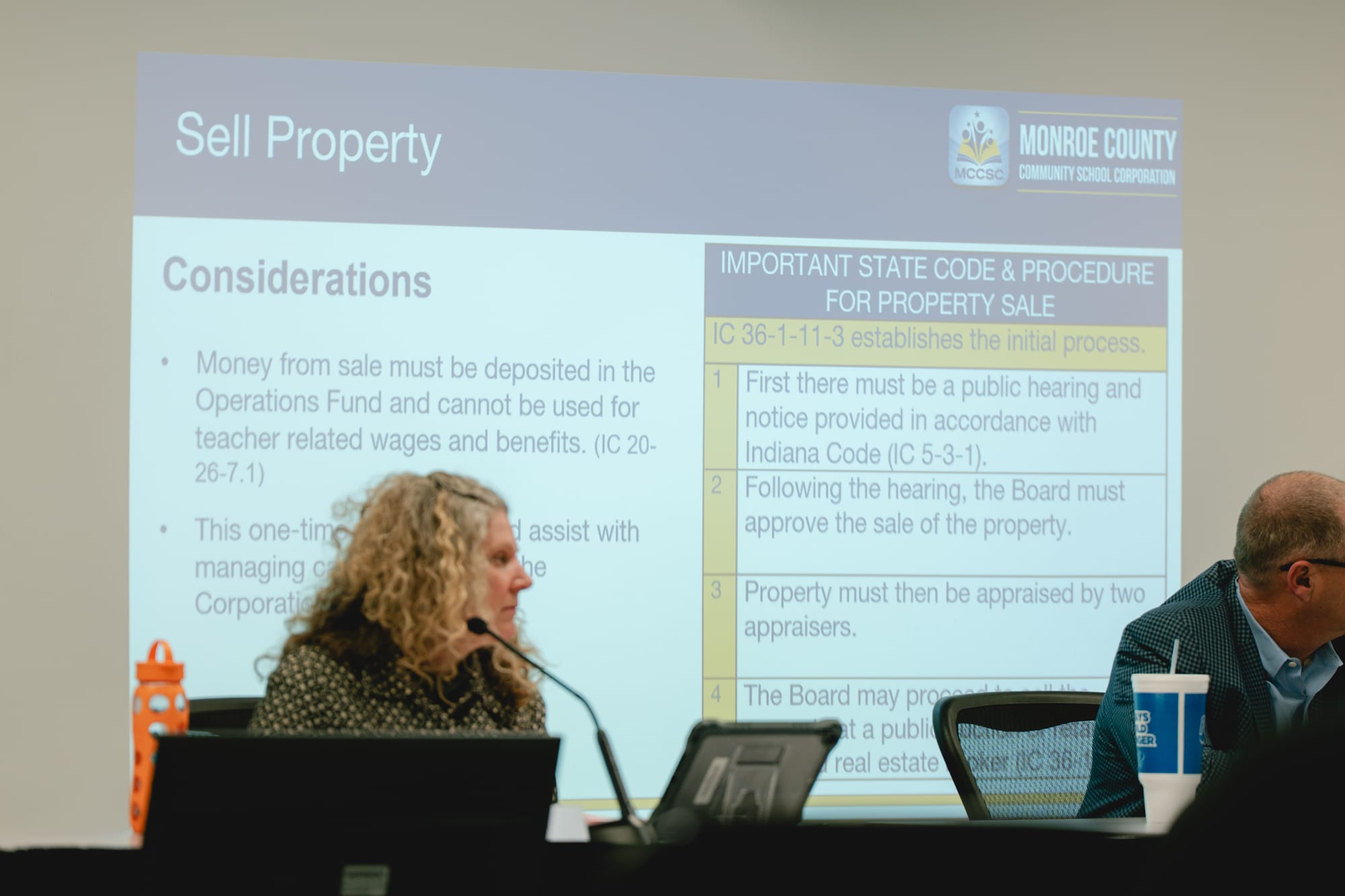

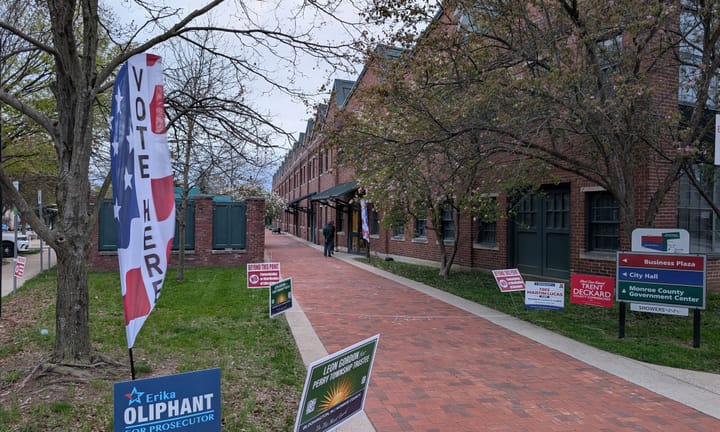
Left: MCCSC board president Erin Cooperman is seen in front of a slide with the procedure for a school corporation to sell a property. The property in question, the former Herald-Times building, was purchased by the corporation in 2022. Right: MCCSC assistant superintendent of human resources and operations presents community feedback to the school board. View the full slides from the meeting here. (Kelton O'Connell, Feb. 24, 2026)
A public hearing on the possible sale of the former Herald-Times building, now owned by the Monroe County Community School Corporation (MCCSC), could come as soon as the next regular meeting of the school board, which is set for March 24.
It’s far from decided that selling the building is the choice that the board will make. But it’s one of three options in the mix, after the board got a briefing from the administration at its Tuesday (Feb. 24) meeting, about community feedback on possible uses of the H-T building. The other two options are to delay any action or renovate the building.
MCCSC purchased the former H-T building in 2022 for just under $3 million.
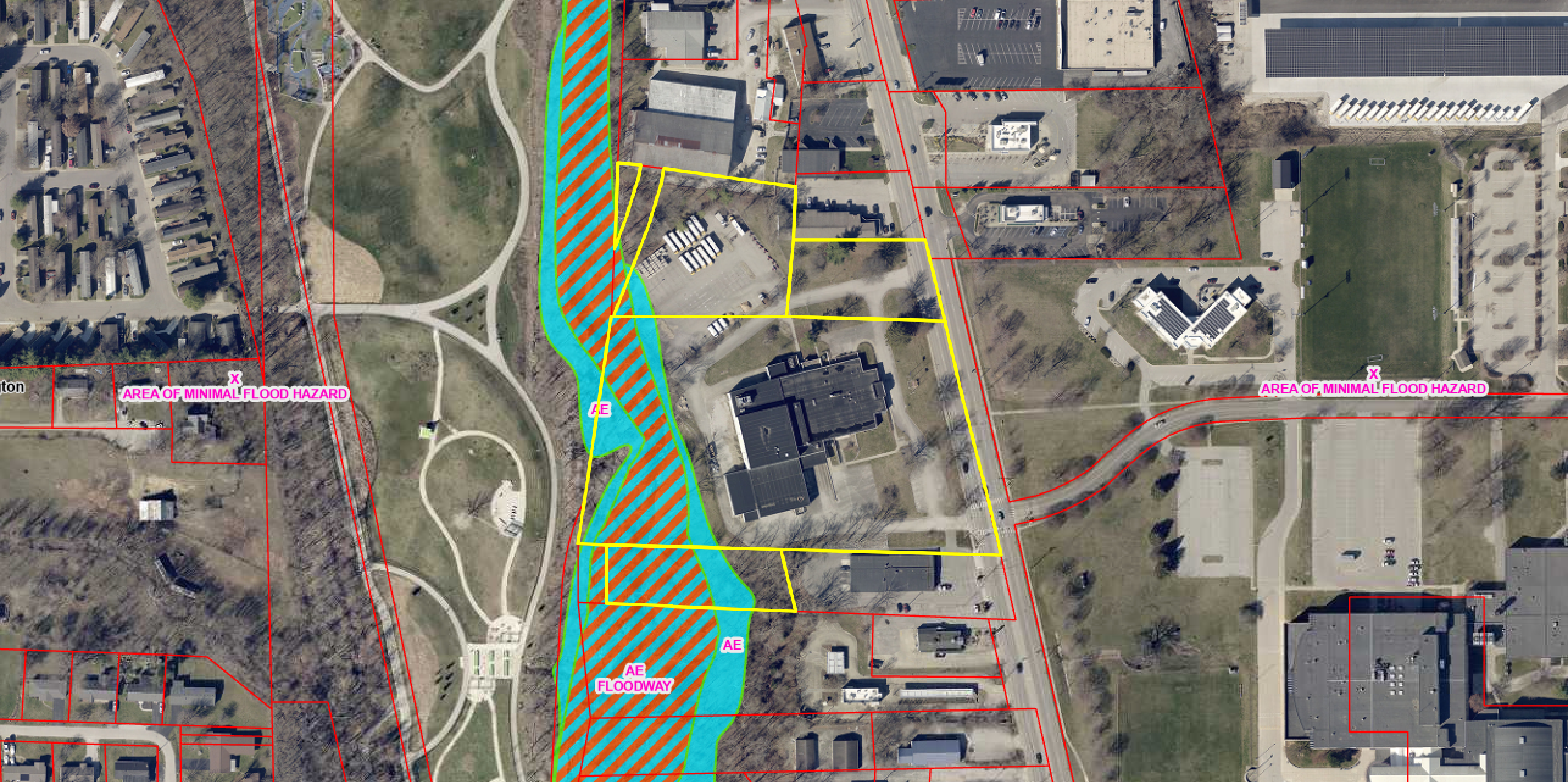
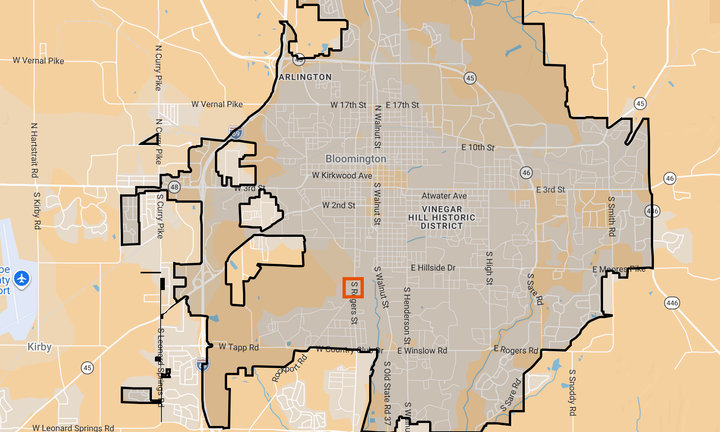
The building is located at 1900 S. Walnut St., which is across the street from Bloomington High School South and near the MCCSC administration building. It was purchased during the tenure of former superintendent Jeff Hauswald. According to the district, the property is currently being used for material and equipment storage, as well as bus parking.
The property had an assessed value of about $1.4 million in 2025. It is zoned for commercial use.
In November 2025, the school board directed district administrators to collect community input on how the district should proceed. In January, MCCSC did that in two ways: an online survey and a community forum.
The online survey collected 404 responses, according to a presentation at Tuesday’s meeting from assistant superintendent of human resources and operations Jeffry Henderson. The in-person public forum drew four public commenters. The district analyzed the 408 total comments for the board.
According to Tuesday’s presentation, more than half of the total responses came from parents and guardians of current MCCSC students. MCCSC employees made up 16%, and current students made up 2%.
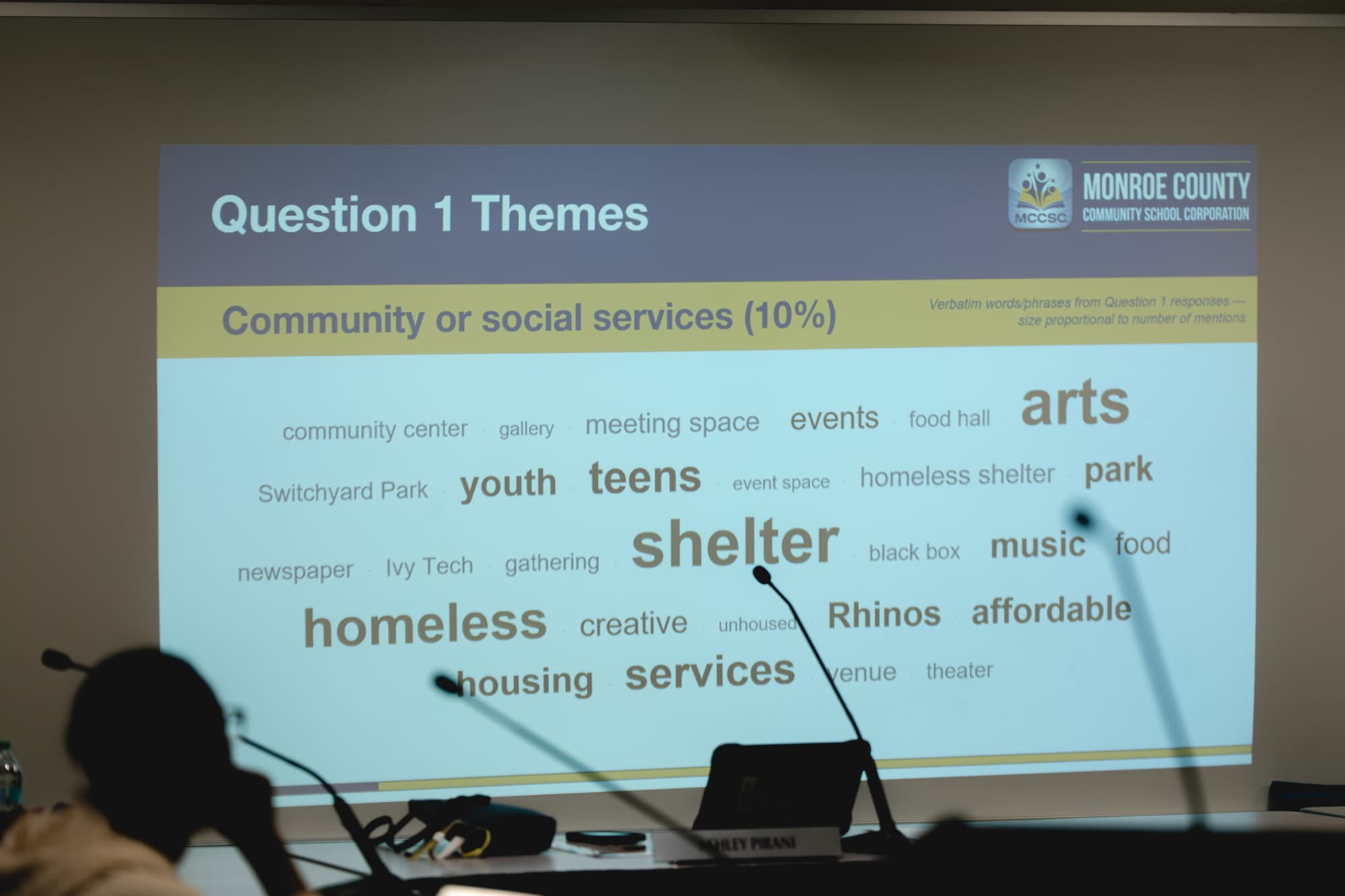
Henderson told the board that 40% of comments were in favor of selling the property. About 10% said to use the building for what he called “community or social services,” which could include an arts or music facility, a homeless shelter, or other venue. About 18% of comments suggested the building be used for educational programs, such as a science, technology, math, and science (STEM) center, while another 14% said it should be used for sports facilities, such as an indoor gym.
Remaining categories included “administrative or operational usage” at 7%, career and technical education at 6%. The remaining 5%, Henderson said, couldn’t be neatly organized into categories.
Board president Erin Cooperman asked Henderson if she was right in understanding that the “community or social services” category referred to uses outside the typical scope of a school corporation. Cooperman put it like this: “I’m thinking I would sort of lump those together, that 40% [suggesting to sell] and that 10% [suggesting community services] into … suggestions that the building be used for something not related to the schools.”
Henderson said he agreed that many of the ideas under the community services category “are not the direct responsibility of a public school corporation to provide.” He said, “We’re not typically building homeless shelters and providing housing services to the community.”
Board member April Hennessey summed up the breakdown as a roughly even split between using the property for a school-related purpose and selling it.
Besides asking about the building’s best use, the survey also asked community members what factors the school board should weigh as it considers options for the property. Only 261 (64%) respondents answered this second question. Financial concerns were mentioned in 95 comments. Others mentioned supporting students, families, teachers, and staff.
Another concern from 53 community comments was the cost of renovation. Henderson said that there are some concerns about the condition of the roof, even if the former H-T building continues to be used for storage.
After the meeting, Henderson told The B Square, “Really, the infrastructure of the entire building, if it were to be renovated, would need to be evaluated.” He said that could include the building’s electrical outlets and ductwork, among other things. He mentioned the “gigantic printing press” that is still inside the building as another cost: “If you were to renovate that space, [the press] would obviously need to be removed.” Henderson said there hasn’t been an evaluation or quote of the building’s current condition.
Henderson said the cost of renovating the building would be covered by MCCSC’s debt service fund, which, according to the district, pays for bonds and other long-term debt. Such bonds fund construction projects, such as an improvement to Bloomington High School North’s parking and athletic facilities, which the district announced on Monday (Feb. 23).
According to MCCSC, to sell property, the district is required to hold a public hearing and the school board must approve the sale. Two separate appraisals have to be obtained. Only after all that can the board sell the property—at a public auction or through a real estate broker.
Assistant superintendent Henderson reminded the board during his presentation that revenue from the sale of the property has to be deposited into the district’s operations fund, which isn’t used directly to pay teachers’ wages or benefits. Teacher pay comes out of the education fund.
But it is a regular occurrence for money to be transferred from the education fund to the operations fund. Last month, the board unanimously approved Resolution 2026-04, which allows the district to transfer up to $12.5 million from the education fund to the operations fund over the course of the calendar year.
The operations fund pays for transportation, building maintenance, utilities, and technology. If less money has to be transferred out of the education fund because the money is already in the operations fund from a real estate sale, that means more money would be available for teacher pay.
Board member Hennessey got confirmation from district chief financial officer Matt Irwin that the proceeds from the real estate sale could be transferred to the rainy day fund.
Board president Cooperman asked that superintendent Markay Winston schedule and post notice for a public hearing on a possible sale. Cooperman said the hearing should be held in order to give the board an option to sell.
Cooperman told The B Square that she hopes the hearing will be held on the same day as the next regularly scheduled board meeting, March 24. The hearing will include an opportunity for public comment. At the board’s meeting on the same day, she said, “We will have the opportunity to discuss—we can reach a conclusion at that point if we want to.”
Photos

Comments ()