
Monroe County election board weighs cuts to early voting hours, polling sites for 2026, as vote center debate simmers
Monroe County’s election board is preparing for 2026 under a tight budget. Thursday's meeting featured debate about whether to cut early voting hours and reduce Election Day polling sites. The debate over vote centers also resurfaced.
Indiana’s state legislature is focused on redrawing congressional districts for the state—to allow Republican candidates in the 2026 elections to prevail in all nine races, instead of just seven.
Meanwhile the work that local election officials are doing to prepare for the administration of the 2026 elections is in full swing.
At Thursday’s (Dec. 4) regular monthly meeting of Monroe County’s election board, the three members wrangled over early voting hours in 2026, got an update on the remodeling project for the Showers North building as an early voting location, and revisited a long-simmering argument about vote centers,
Early voting hours
The board’s discussion about early voting hours was based on the minimum hours required by state law. No final decision on early voting hours was made.
Monroe County clerk Nicole Browne outlined a proposal to scale early voting back to the minimum number of hours required by Indiana statute—from 8 a.m. to 4 p.m., Monday through Friday, matching regular clerk’s office hours. There woulds still be hours on the last two Saturdays hours in the 28-day early voting runup to Election Day, because those Saturdays are required under state law.
But that would still be a change from Monroe County’s traditional 8 a.m. to 6 p.m. Monday-Friday hours. Trimming two hours off the end of the voting time is “something that … gives me heartburn to even have to suggest it,” Browne said.
Browne put the blame on the Monroe County council, which during the 2026 budget negotiations, had cut allocations for overtime hours for many departments including the clerk’s office. The council had faced a deficit stemming from reduced revenues—a consequence of SEA 1, which was a bill passed in the 2025 legislative session that revamped property taxes and local income taxes.
Browne said about the possibility of reduced early voting hours: “With the council having removed money from the election budget, we do not have the money to run, or the staffing, or the overtime to run the kind of primary early voting hours that we are accustomed to.”
Under state law, the same location and hours used for the primary elections have to be used for the general elections. So a decision to include the traditional extra two hours for primary elections is at the same time a decision to include them for the general election.
Browne, a Democrat, serves on the board in her role as the elected county clerk. Browne’s proposal to reduce early voting hours got pushback from fellow Democrat the election board, Penny Githens, who asked: “Didn’t the county council tell you on more than one occasion that you could come back and ask for additional appropriations?”
Browne discounted the idea that the additional appropriation could be relied on, saying that the two liaisons from the county council to the clerk’s office—David Henry and Peter Iversen—had told her that next year’s budget is going to be even tighter than this year’s. Browne added that she did not hear anything from Henry or Iversen that guaranteed her that the money would be there if she asked for an additional appropriation next year.
Githens objected that ending weekday early voting hours at 4 p.m. would “disproportionately affect voters who rely on the flexibility of voting options, such as working families, students, seniors and those with transportation barriers.”
Election board chair Danny Shields, who is the Republican Party’s appointee to the board, pointed to the fiscal reality: “The issue is we have to pay the people that work those longer hours, and the council has not chosen to give the money to work those longer hours.”
At Thursday’s board meeting, there was no final vote on early voting hours. Board members and county election supervisor Kylie Farris agreed the next step would prepare a detailed presentation for the county council, including breakdowns of poll worker and overtime costs, with specific impacts on early voting.
Early voting location: North Showers
At the board’s regular meeting in November, a briefing was given by county fleet and facilities director Richard Crider about the remodeling project at the North Showers building for new space for early voting activity. The former NAPA Auto Parts building at 3rd and Walnut streets, which was used for the past few years for early voting, has been demolished to make way for the convention center expansion.
The construction contract with Strauser Construction Company is for $653,600, to be paid for out of the $6 million general obligation bond that was approved by the county council and the county commissioners a few weeks ago. The design work for the roughly 6,500 square feet of office space was done by Springpoint Architects under a $26,000 contract.
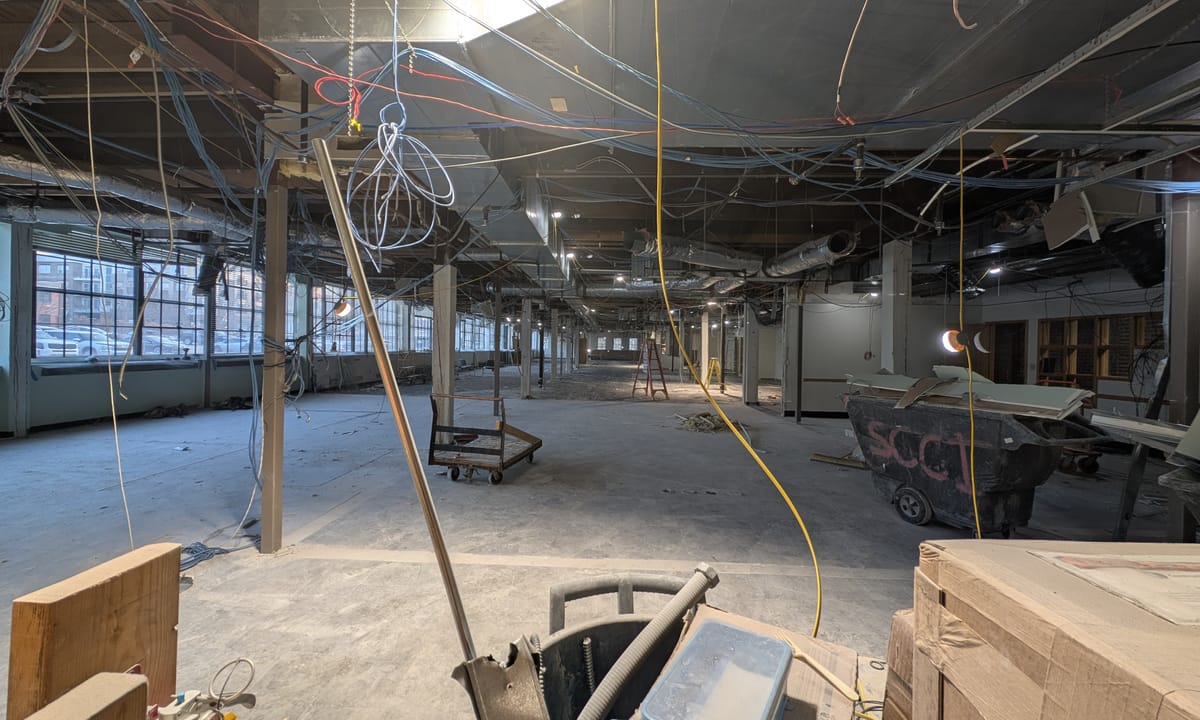
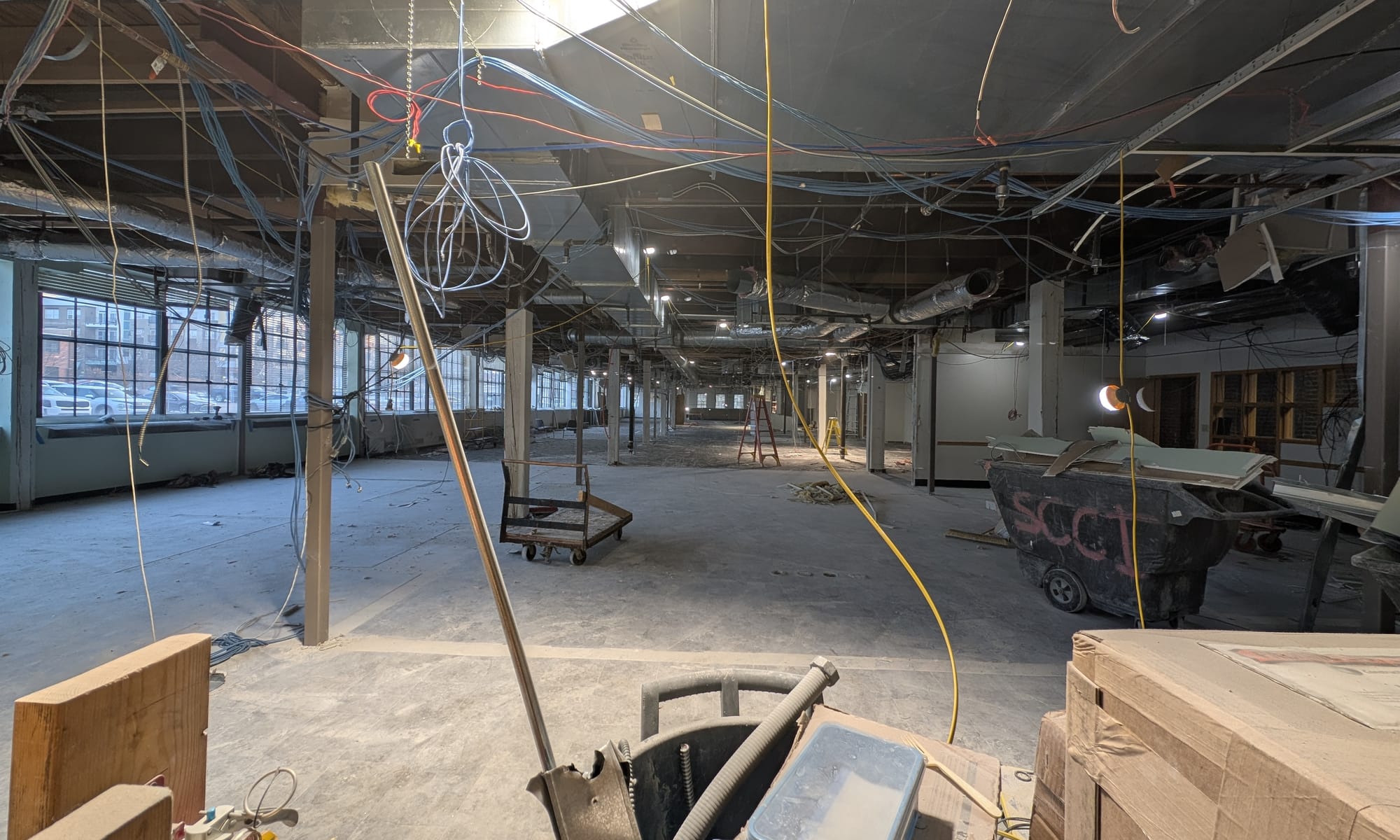
At Thursday’s (Dec. 4) meeting, Crider gave an update, reporting that the project is on schedule for early voting to take place there for the primary elections. He encouraged board members to look through the windows to get a sense of the new space, which he described as substantially larger and more functional than the previous setup.
Election Day: 22 vs. 29 polling locations
The board also discussed whether to operate 29 Election Day polling locations in 2026 as the board has done in the past, or if the numbers should be reduced to 22 locations as a cost-saving measure.
County election supervisor Kylie Farris presented staffing and cost scenarios for both options and said staff have been working to identify a 22‑site configuration that does not “disenfranchise anybody in the outer parts of the county” while avoiding overcrowding in the city locations. She estimated a savings of about $16,000 for the year by operating 22 locations instead of 29.
Browne said her preference is to keep 29 locations. Shields indicated a preference for more locations, but also said it was a matter of how many locations the county could afford.
The board did not approve a final list of polling locations on Thursday. Instead, board members directed Farris to contact the 22 baseline locations to confirm their willingness and availability. They agreed to revisit whether to add more locations, after a clearer picture of funding emerges from the county council.
Vote centers: Still off the table—for now
Thursday’s meeting also revisited Monroe County’s long‑running vote center debate, which Githens has resuscitated since she was appointed to the board in August. Vote centers are polling sites where any registered voter in a county can vote, as opposed to precinct-based sites like those used in Monroe County, where only votes from specific precincts can cast a ballot.
In May, the board voted 2–1 in favor of establishing vote centers for Monroe County. Even with that majority, dissent by Shields meant the vote failed, because under state law, establishing vote centers requires a unanimous vote of the board.
Githens pulled some specific details from a recent analysis by the Indiana secretary of state’s office comparing vote centers with precinct‑based locations. Based on that report, it’s possible that the General Assembly could consider legislation requiring all counties to use vote centers. Currently, 72 of 92 Indiana counties use vote centers.
Githens highlighted findings from the secretary of state's report that counties switching to vote centers: used about 19% fewer poll workers in the 2024 presidential election compared to counties that remained precinct‑based; used about 22% fewer poll workers in the 2022 midterm; and spent roughly $4.80 per voter in 2024, compared to $6.84 per voter in precinct‑based counties—a difference the study attributed largely to staffing reductions.
Githens said to Shields: “[Vote centers] provide convenience, they provide cost savings, and they help with recruiting, because we don’t need as many people in those different operations.” Githens added, “So again, I am in favor of vote centers, and I don’t see why there is a reluctance to move to them.”
Shields indicated that the Monroe County Republican Party leadership is not in favor of vote centers, and responded to the remarks from Githens by saying, “I’ll pass that on to my chair.” The GOP county chair is Cory Grass.



Comments ()