
Public art: Bloomington grants site access for Trades District soil tests, Lilly Endowment grant used
Bloomington’s RDC approved site access for geotechnical soil borings at up to 10 locations in the Trades District, clearing the way for early planning tied to a $16M Lilly Endowment CCC grant. The work will inform future public art and other district improvements, with no cost to the RDC.
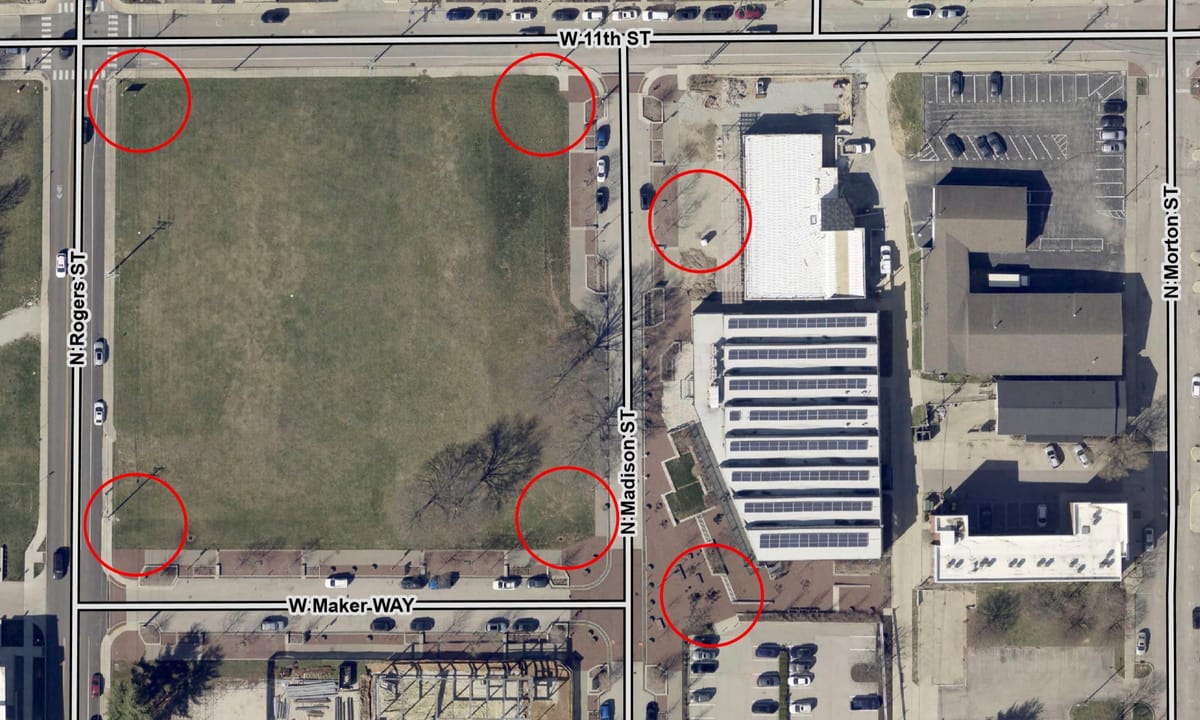
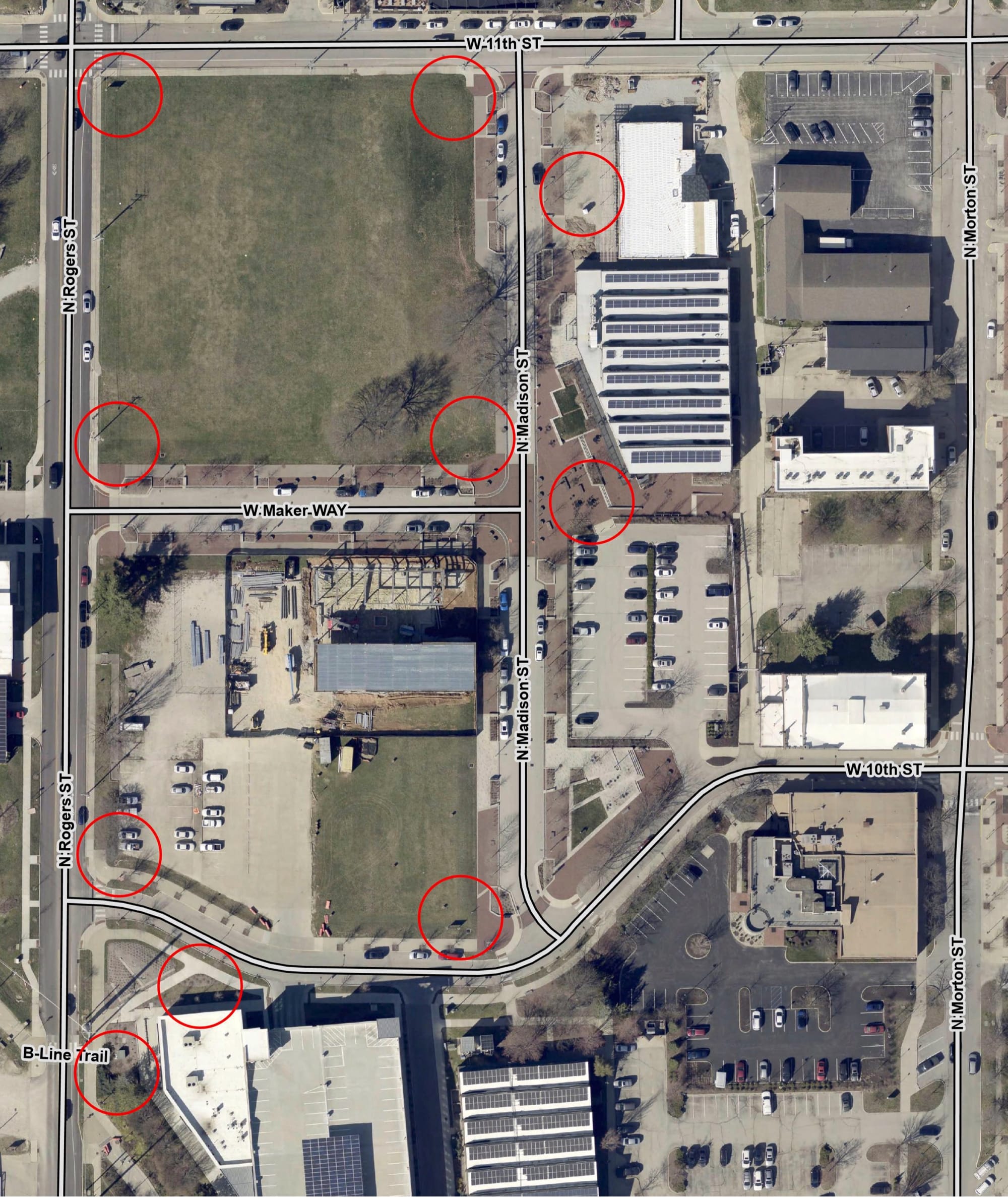
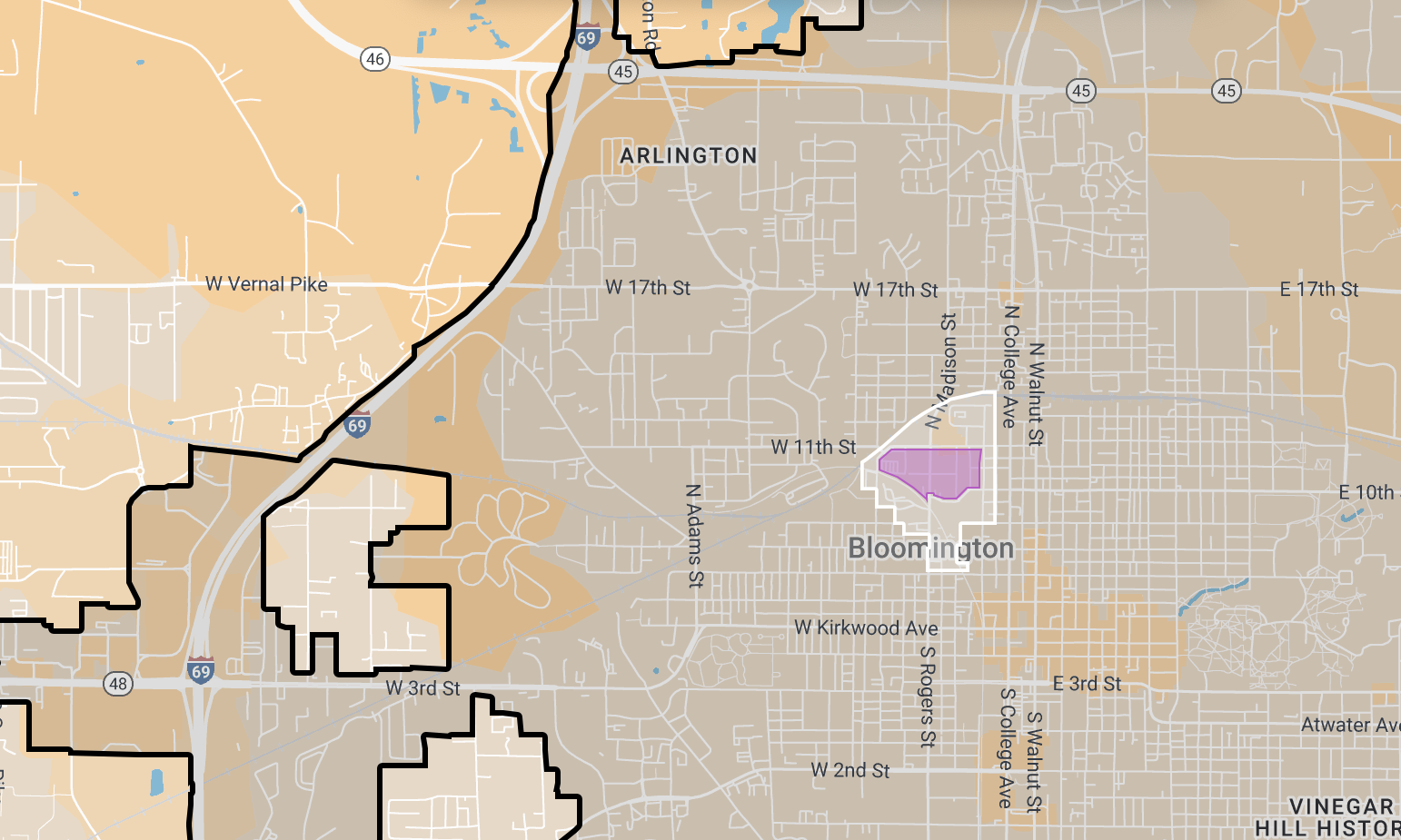
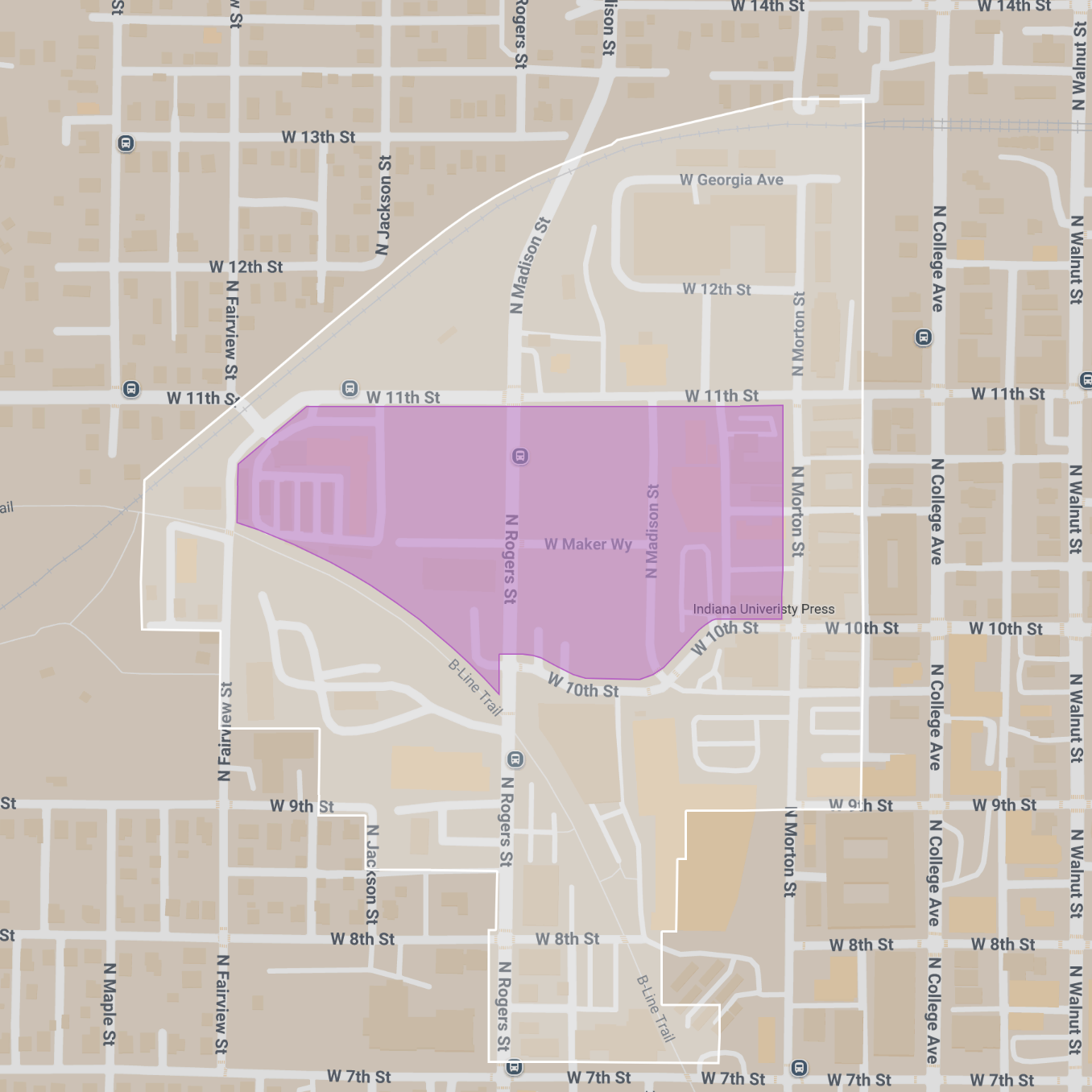
Left: Arial image from RDC meeting information packet with red circles indicating drilling locations. Middle and Left: The white area indicates the boundary of Bloomington’s certified technology park. The purple area is the Trades District. Maps by the B Square. [link to dynamic map]
In the next few weeks, residents might see drilling activity in the area north of Bloomington’s city hall building and south of 11th Street, between Rogers Street and Morton Street on the west and east.
That’s because on Monday (Jan. 5) Bloomington’s redevelopment commission approved a right-of-entry agreement allowing a consultant to conduct soil borings at 10 locations in the Trades District.
It’s tied to early planning work for public art installations that will be funded through a College and Community Collaboration (CCC) grant awarded in August 2024 by Lilly Endowment Inc.
The $16-million award was made to the Indiana University Foundation—with Indiana University, The Mill, and the city of Bloomington named as sub-award recipients. Not nearly all of the award is going towards public art or even to other sidewalk and lighting improvements in the Trades District.
Some of the grant is being put towards increasing the square footage of usable area inside The Mill’s coworking space. Some of the award is going towards funding tenant improvements at The Forge, which is the Trades District technology center that opened in late 2024. About $4.6 million of the award went towards purchase of remaining vacant parcels in the Trades District for The Mill, which is now tasked with overseeing the development of that now vacant land.
Monday’s approval allows Patriot Engineering, a professional engineering and environmental firm, to go onto RDC-owned property within the Trades District—to conduct geotechnical testing at up to 10 potential sites. The work is intended to determine soil conditions and foundation requirements before any public art is designed or commissioned. The Trades District is a smaller area inside Bloomington’s roughly 65-acre certified technology park.
It was Nick Blandford, project manager with the city’s economic and sustainable development department, who presented the item to the RDC on Monday. Blandford’s position is funded by the CCC grant. Blandford told RDC members the borings will be funded entirely by the CCC grant: “There will be no cost to the RDC—everything with this work is being funded by the grant.”
The geotechnical work is being done before artists and final designs are selected, in order to flag any unsuitable locations or engineering constraints in advance. “This is proactive early work,” Blandford said. He added, “It’s really just a matter of identifying whether there [are] any sites that we need to take completely off the board, or if there are any specific limitations to sites that we need to make the artists aware of in advance while we’re working on their concepts.”
Artists have not yet been selected or contracted through Indiana University, Blandford said.
RDC member Randy Cassady framed the work as essential due diligence saying it is “extremely important to make sure … our art isn’t falling over.” While 10 potential locations are being evaluated through soil borings, Blandford said only three major public art installations are planned.
The grant from Lilly Endowment is supposed to be used to attract employers and jobs, accelerate development, and support placemaking efforts in the Trades District.
After the RDC meeting, Blandford told The B Square that the public art component is only one part of a broader CCC-grant funded improvement effort envisioned for the Trades District. It also includes wayfinding, sidewalks, and lighting aimed at improving safety and accessibility.
Blandford said the goal of the public art effort, as well as the other improvements, is to make the Trades District welcoming to the broader community, rather than isolating it as a tech-only area.
The RDC resolution granting site access was approved unanimously.
The right-of-entry period runs through the end of March, which means residents, visitors and people who work in the area could see drilling activity in the district in the coming weeks.

Comments ()