
RDC clears path for closing on Trades District hotel real estate deal, project history reviewed
Bloomington’s RDC prepared for a final procedural step toward closing on a Trades District hotel site, authorizing officials to sign documents through April 10. The routine move comes as a 160-room project, approved earlier this year, advances toward a $1.2M closing.
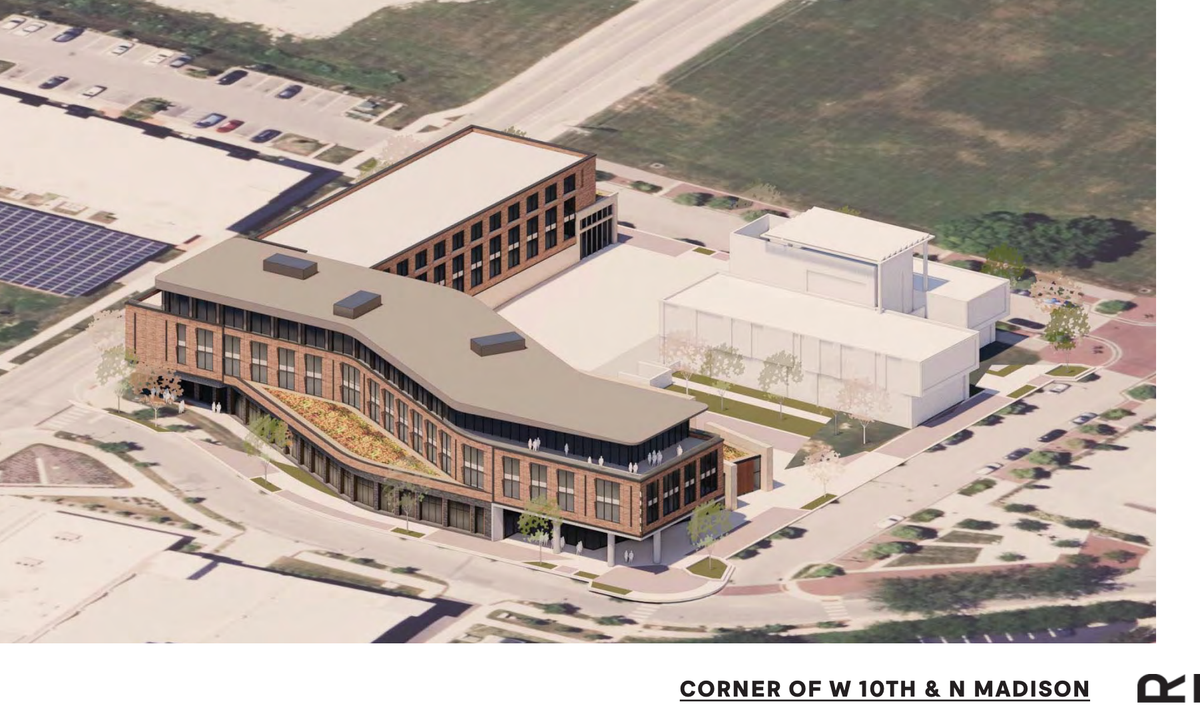
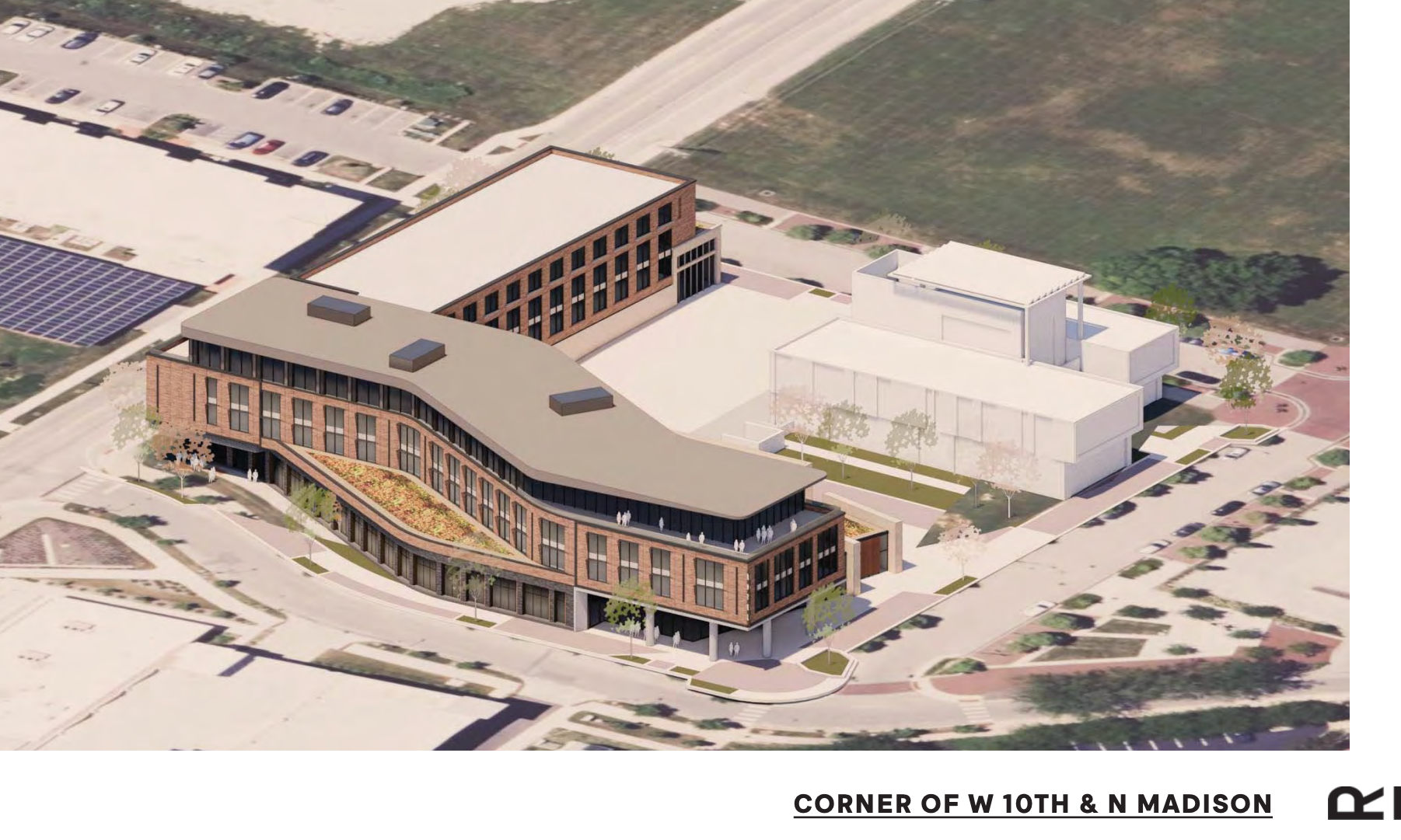
Bloomington’s redevelopment commission on Monday (March 16) took what appears to be its final procedural step before closing on the sale of city-owned vacant land for a long-planned hotel in the Trades District.
Commissioners approved a short-term resolution authorizing designated officials to sign closing documents on the commission’s behalf—a move framed by corporation counsel Margie Rice as a technical requirement to satisfy the title company and avoid delays if specific officers are unavailable.
The authorization, originally set to expire March 31, was extended to April 10 at the meeting to provide a cushion around the anticipated closing date. The measure allows the RDC’s president, vice president or secretary to execute documents, with executive director Anna Killion-Hanson also included as a backup.
Rice described the resolution as “short-lived” and procedural—“something in writing [the title company] can rely on”—with no independent policy significance.
But the brief item was a chance to recount some of the history of the project. The initial agreement was approved in November 2024, which at the time included Pure Development as a party. When that agreement expired without a closing, a revised agreement for the $1.2-million purchase was given a greenlight by the RDC in June 2025.
On Monday, RDC member Randy Cassady zeroed in on wording in the resolution recounting the project’s earlier agreements, which included Pure Development as a partner alongside Alluinn IU.
Cassady said his understanding was that Alluinn is no longer working with Pure, and he asked whether including the firm in the resolution’s recitation of background could create complications, given that a different entity is now expected to complete the deal. Rice said it would not.
The “whereas” clauses, Rice said, are descriptive rather than operative—providing historical context but carrying no legal effect. What matters, she said, is the resolution’s final section, which delegates authority to sign closing documents.
“The ‘whereases’ are not binding,” Rice told commissioners, adding that the description of prior agreements remains factually accurate, even if the development team has changed. Cassady indicated he was satisfied with that explanation.
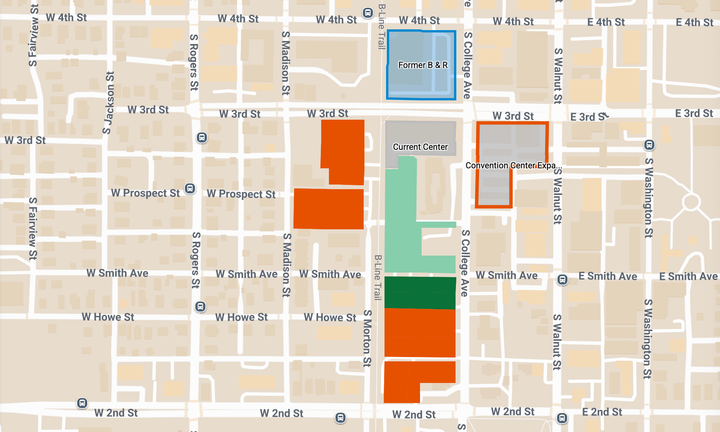
It was in mid-January this year, when Bloomington’s plan commission approved the hotel’s site plan for a roughly 1.5-acre parcel bounded by Maker Way, 10th Street, Madison Street and Rogers Street.
Because the property is zoned mixed-use downtown—Showers Technology (MD-ST), where hotels are permitted, the commission’s role was limited to reviewing the site plan rather than rezoning.
Plans call for a four-story, full-service boutique hotel with roughly 160 to 170 rooms, about 5,000 square feet of meeting space, ground-floor restaurant and retail uses, and a rooftop bar and patio. The building’s lower level would feature masonry and glass with limestone accents, with upper stories clad in glass and metal panels.
No on-site parking is proposed. Instead, guests would rely on the city-owned garage across Rogers Street. During the hearing, CEO of The Mill, John Fernandez, said the project would purchase a block of parking permits at market rates under an agreement with the RDC. The Mill is involved, because of its contract with the RDC for promotion and development of the Trades District, which is a 12-acre portion of a larger area that forms Bloomington’s certified technology park.
Fernandez said the hotel would complement the garage’s existing demand patterns—adding overnight use to a facility that is more heavily used during the day—and would help support multi-day business activity tied to the Trades District and The Mill.
Several design elements had already been addressed through variances granted by the Board of Zoning Appeals, including relief from façade stepback requirements and the city’s minimum landscape-area standard, replaced by a combination of plaza space and green roof features.
The plan commission approved the project with 11 conditions, covering utility approvals, lighting plans, public infrastructure improvements and coordination with Bloomington Transit on a potential bus stop.
That transit condition drew some discussion. Dustin Eggink, with Ratio Architects, raised concerns about placing a bus shelter directly adjacent to the hotel’s main frontage, while Fernandez questioned the practice of attaching open-ended requirements dependent on decisions by other agencies—in this case, Bloomington Transit. Plan commissioners ultimately left the condition intact.
Before the site plan was considered by the plan commission, Bloomington’s city council had approved the vacation of an alley in May 2025, on a 7–1 vote, to accommodate the footprint of the hotel.
The alley was a platted, but has not ever functioned as an alley. Dissenting on that vote was councilmember Matt Flaherty, who contended that the Trades District should have been platted with a full grid of alleys.


Comments ()