
Slow down for deer on the move: Fall brings bigger crash risk to Bloomington roads
October and November are peak months for deer collisions as mating season sends bucks running across roads. DNR estimates put Bloomington’s deer population at roughly 2,258. With Monroe County deer crashes rising from 169 in 2024 to 185 in 2025, drivers are urged to slow down, especially at dusk.
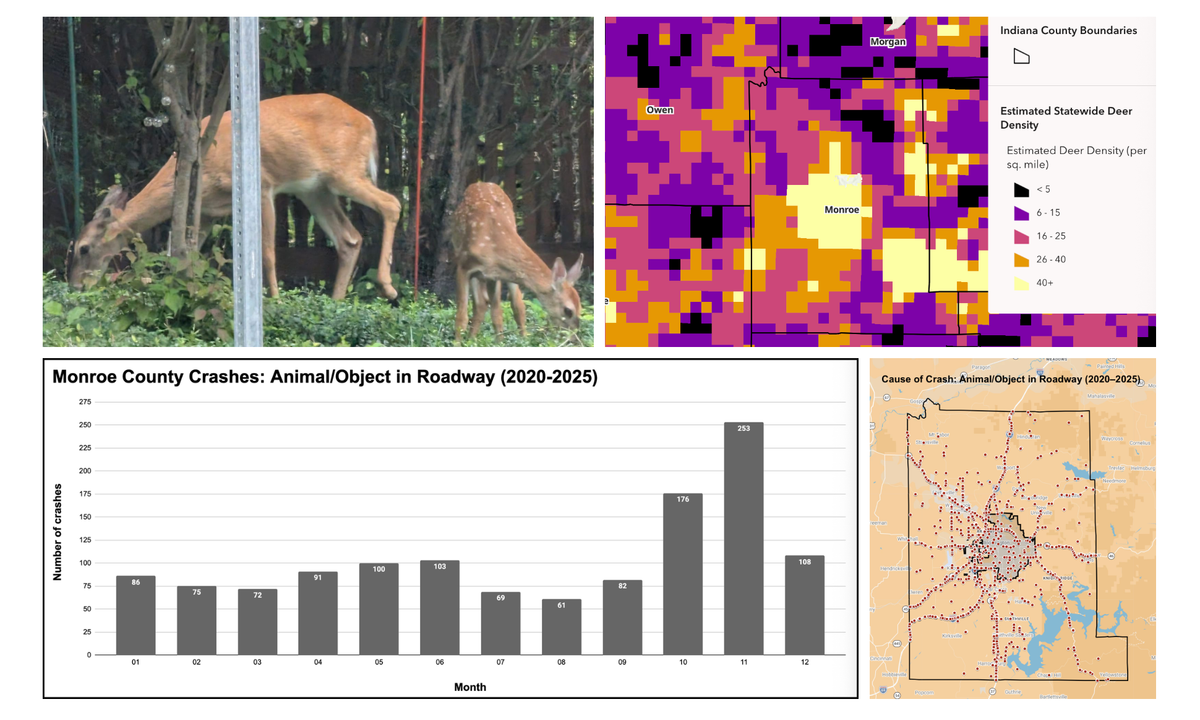
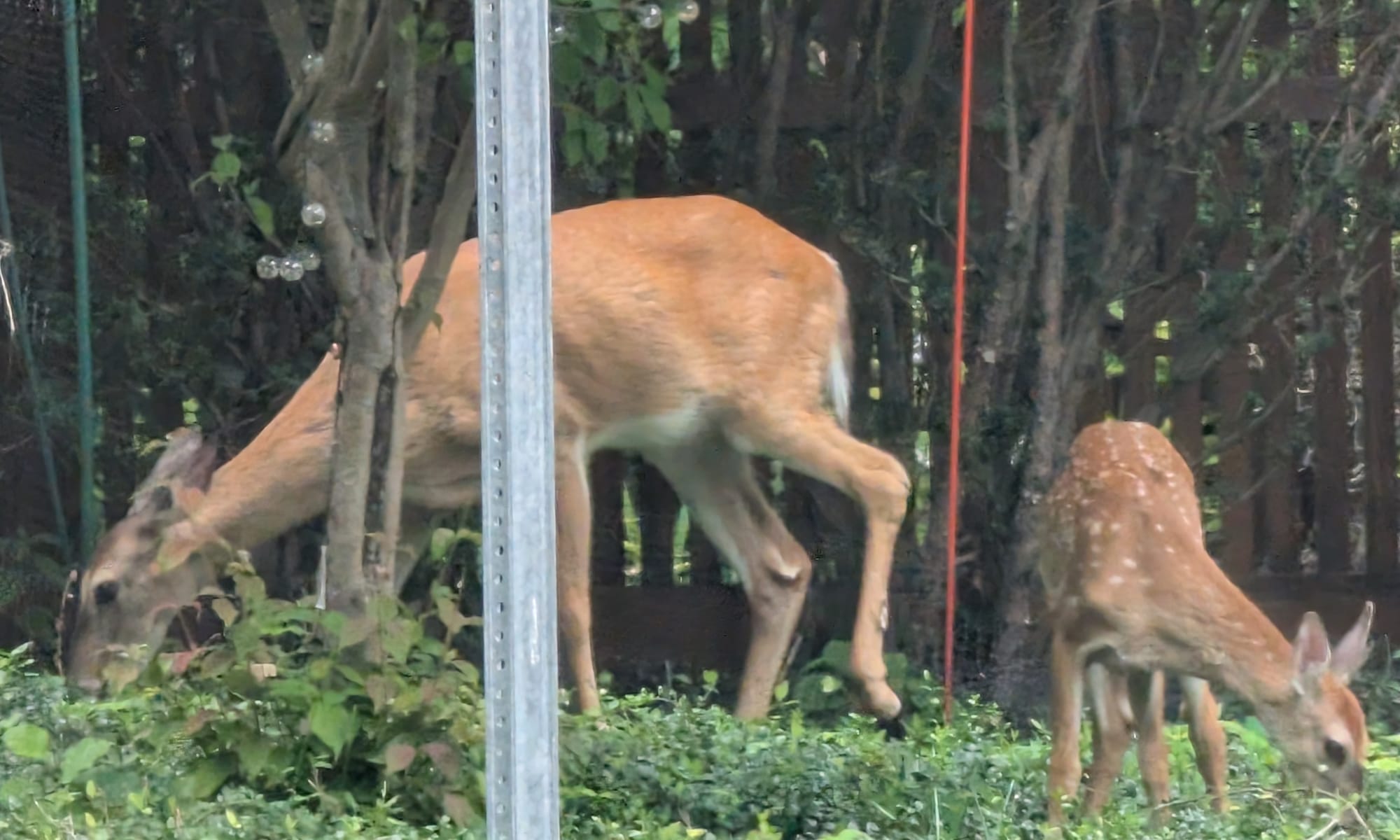
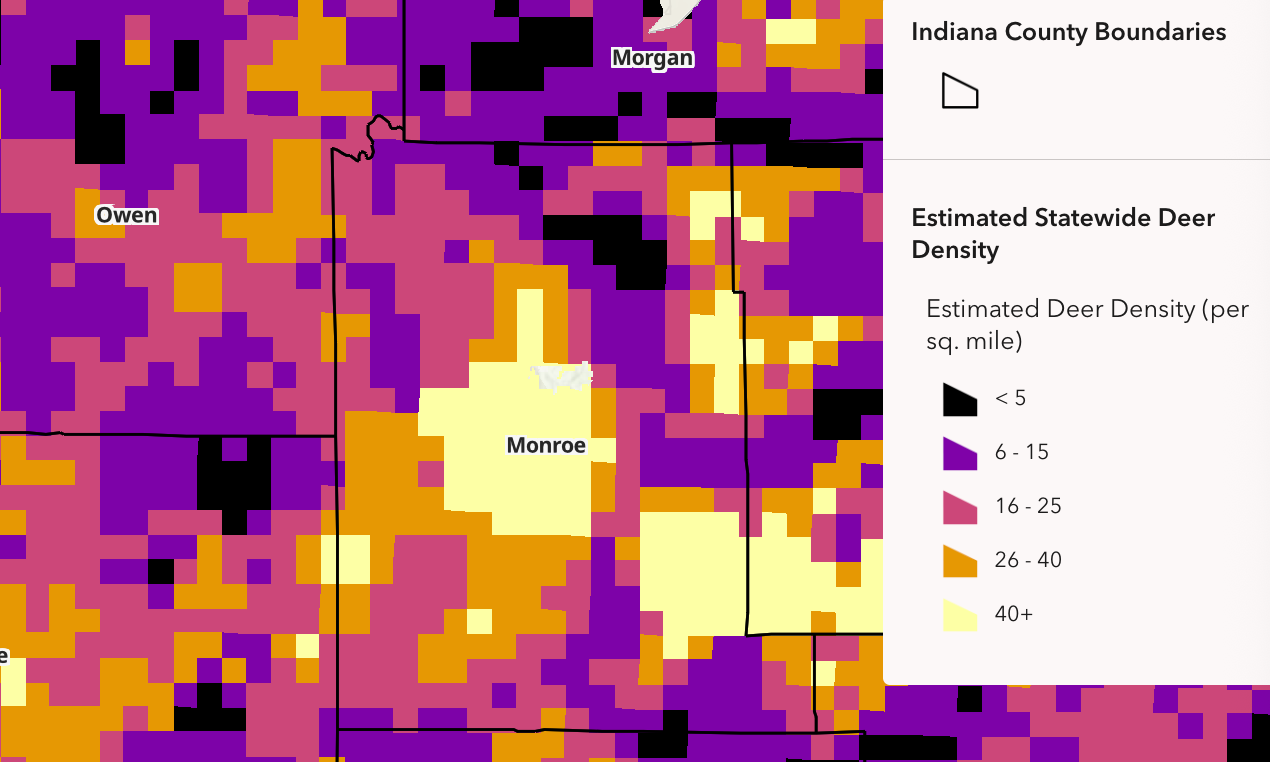
Left: Doe and fawn grazing at 2nd Street and Ballentine Road. (Dave Askins, Aug. 2, 2026) Right: Deer density for city of Bloomington was measured at more than 40 per square mile. [Department of Natural Resources dynamic map]
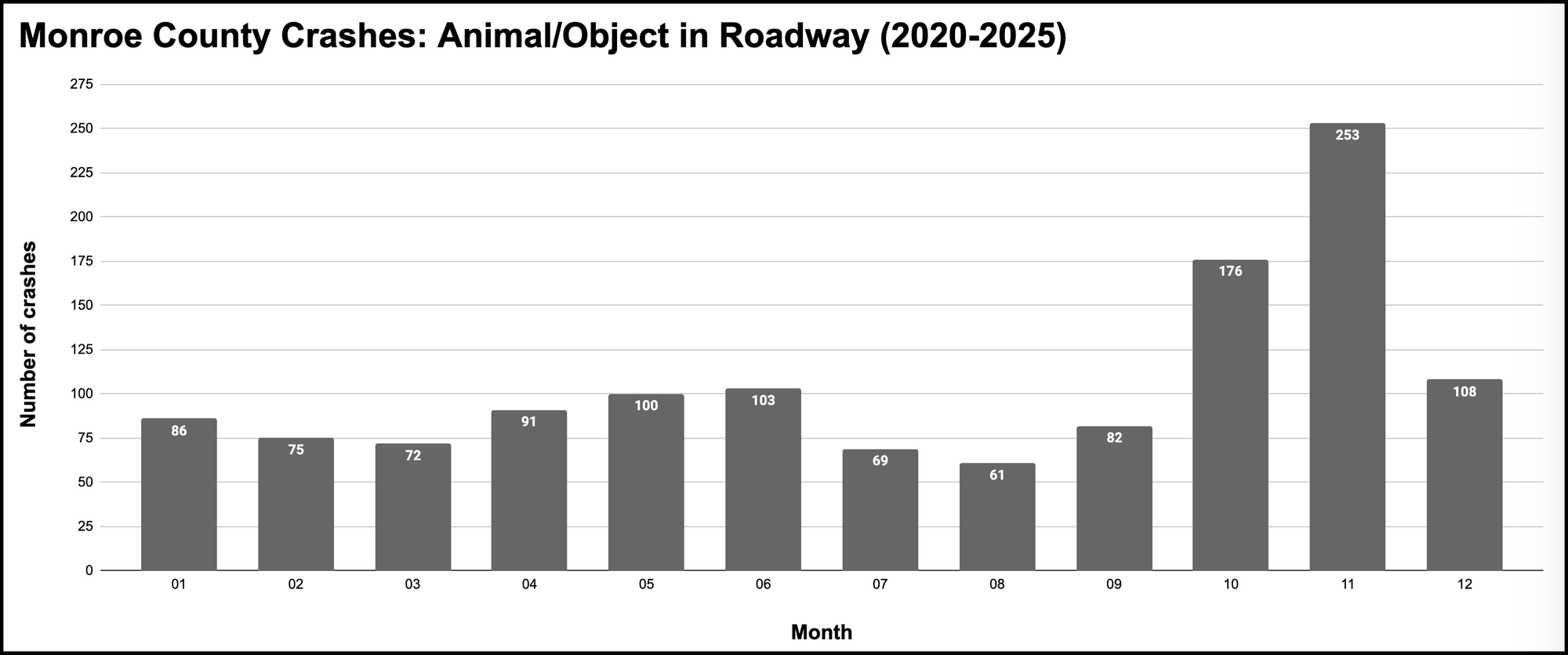
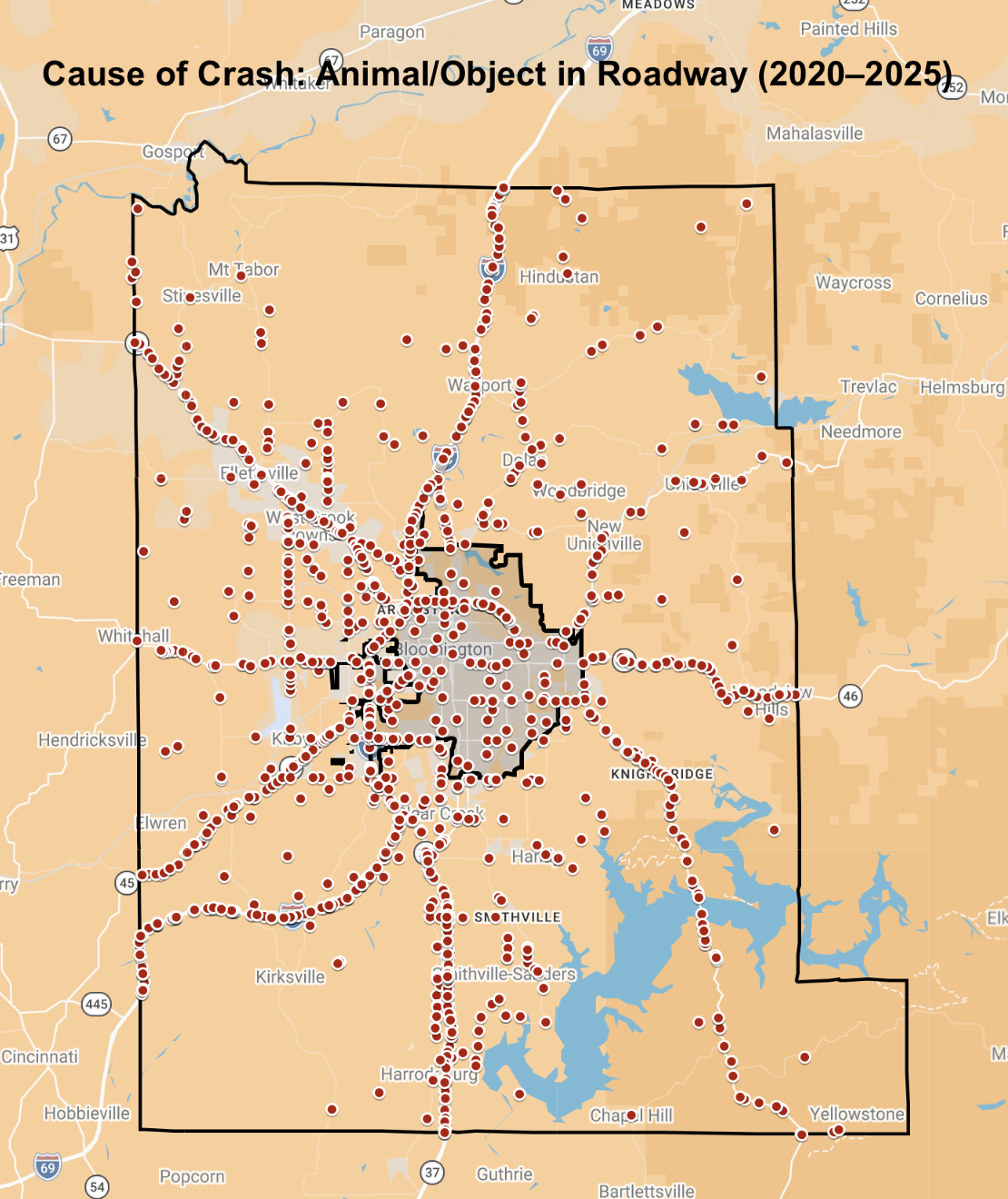
Chart and map by The B Square with data from Bloomington’s crash dashboard. [dynamic map]
Fall in Bloomington means persimmon pudding, IU football, changing leaves, and ... a bigger chance of hitting a deer while driving.
The basic advice is the same as always: Slow down, then slow down even more, especially in the hours between 6 and 10 p.m.
October and November are the peak months for deer-vehicle collisions in Indiana. The reason is the rut, the mating season for white-tailed deer, when bucks travel more in search of does and are less cautious about crossing roads. The Indiana Department of Natural Resources advises motorists to slow down, particularly around dawn and dusk, when deer are most active.
For Monroe County, the DNR pegs Nov. 8 as the average peak date of the rut. But that’s not a direct biological measure. The agency calculates the date by averaging the annual peak day for deer-vehicle collisions since 2003. So collision data is used as an indicator of breeding activity.
Crashes with deer are not just a rural phenomenon. The DNR’s deer information map puts most of the city of Bloomington in the densest population category of anywhere in the state, which is more than 40 deer per square mile.
Bloomington’s geographic area covers 23.23 square miles. A density of 40 deer per square mile across the city works out to 929 deer as city residents. But a more detailed estimate in the DNR’s 2025 white-tailed deer report puts the citywide density at 97.2 deer per square mile. Multiplying that figure by Bloomington’s area gives an estimated 2,258 deer within city limits. The DNR used a model-based estimate using earlier camera-trap research and drones, not a count of individual deer.
During Bloomington’s Aug. 24 departmental budget presentations to the city council, councilmember Dave Rollo asked animal shelter manager Virgil Sauder about the possibility of establishing a more comprehensive count of the city’s deer population. Sauder said the city had worked with the DNR on deer surveys during the spring. He described a preliminary density estimate of roughly 90 deer per square mile.
Sauder agreed that a broader survey would be worthwhile but said his department’s workload could make it difficult to organize. Rollo cited concerns about vehicle collisions, tick-borne illnesses and damage to backyard food gardens.
According to DNR figures, Monroe County recorded 169 deer-vehicle collisions in 2024, increasing to 185 in 2025.
A separate roadway-crash dataset hosted by the city of Bloomington doesn’t classify crashes just for deer. It includes the broader category of an animal or object in the roadway. For animals or objects in the roadway, the 2024 and 2025 numbers for Monroe County are 205 and 237.
Comparing figures on deer crashes from Indiana DNR over the last half dozen years shows that deer account for roughly three-quarters of crashes classified as involving an animal or object in the roadway. That makes the animal-object category a useful indicator of deer-related crashes, even if it’s not precise.
The DNR offers several recommendations for avoiding collisions:
- Slow down, especially around dawn and dusk and where roads pass through wooded areas.
- When one deer crosses the road, watch for others. Deer often travel together.
- Use high beams at night when conditions permit.
- If a deer appears in the road, brake instead of swerving into oncoming traffic or off the roadway.
- Wear a seat belt and leave enough distance between vehicles to allow time to react.
If you crash into a deer, the DNR recommends moving the vehicle to a safe location, contacting police. Don’t get close to an injured deer, because they can behave unpredictably.
The most straightforward precaution is simply: Slow down.

Comments ()