
Stinesville town board votes 2–1 to ratify ICE agreement, but holds off on spending $122,500
Stinesville’s town board voted 2–1 to ratify its police department’s ICE agreement, signed months earlier without board approval. The board left $122,500 in federal funds unspent while seeking answers about repayment obligations. Monroe County commissioners filed suit challenging the agreement.
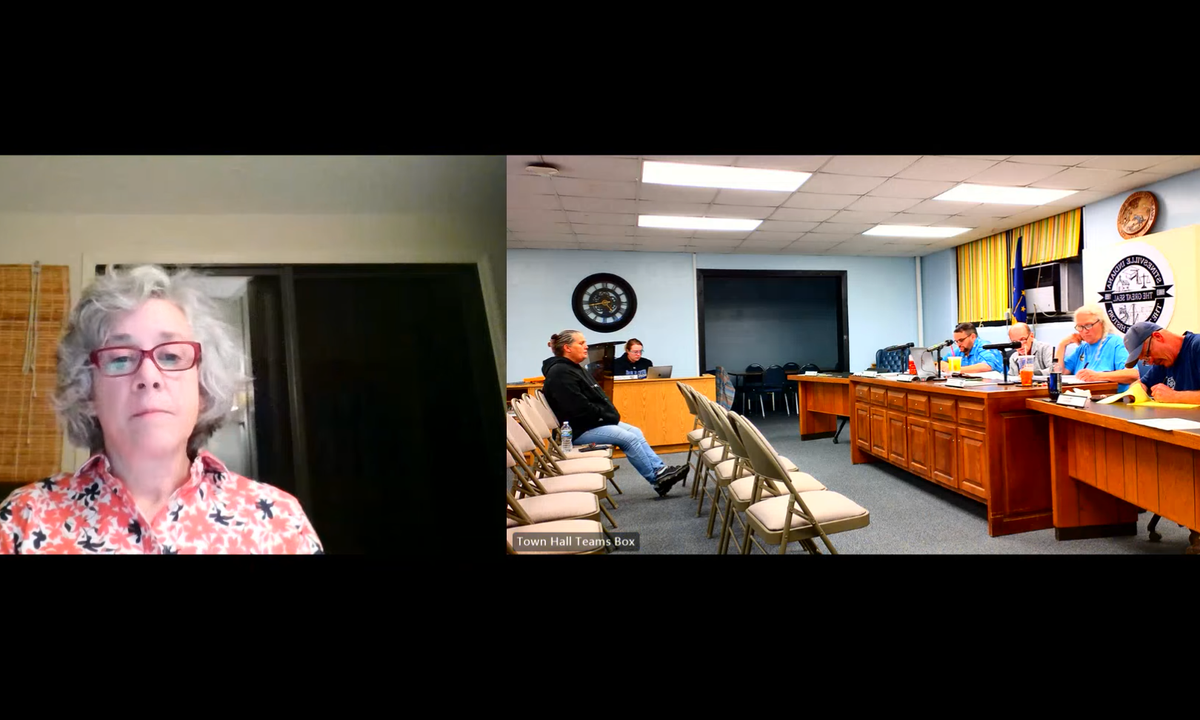
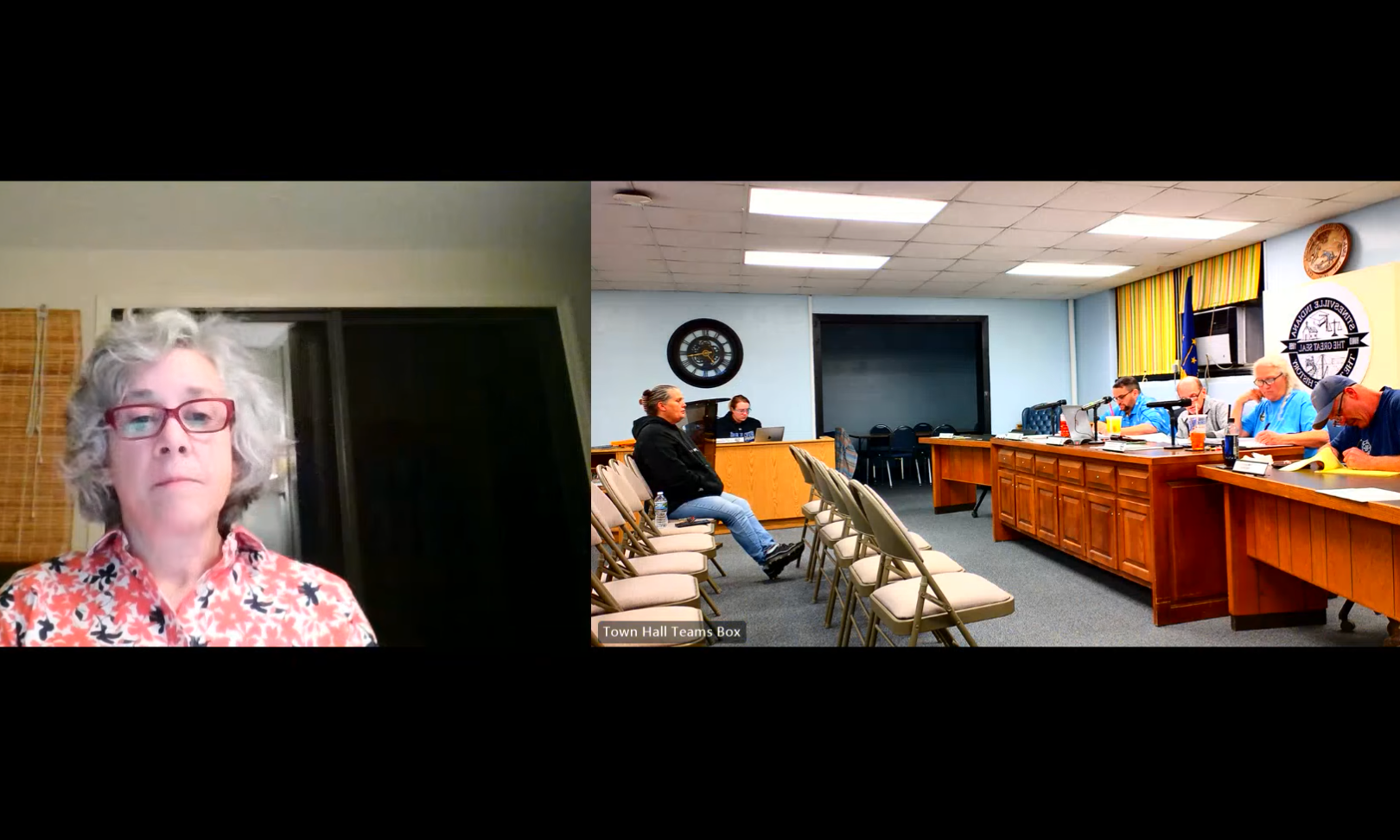
The Stinesville town board voted 2–1 on Tuesday (Nov. 10) to ratify an agreement between the town’s police department and U.S. Immigration and Customs Enforcement (ICE) for Stinesville police officers to provide assistance to ICE.
The board’s vote was a response to a question that had been pending for months about whether the town’s elected officials would authorize participation in federal immigration enforcement.
Board president Scott McGlocklin and member Richard Carter voted in favor of ratification. Board vice president Kimberly Cunningham voted against it.
The vote formally endorses an agreement that had already been signed on behalf of the police department without the board’s approval. It also comes after Indiana attorney general Todd Rokita and U.S. Sen. Jim Banks urged the town in separate letters to continue its participation.
But the board stopped short of giving police chief Shane Pittman a clear go-ahead to spend $122,500 in federal money the town has already received. Board members want written assurances about whether the federal government could demand repayment if Stinesville later withdraws from the program.
The decision was made during a meeting that included a lengthy discussion of immigration enforcement, the town’s police staffing needs and a disagreement between Stinesville’s attorney and Indiana’s attorney general over what state law permits.
In a lawsuit filed earlier on Tuesday (Nov. 10), the same day as the town board meeting, the Monroe County Board of Commissioners asked a judge to declare Stinesville’s agreement with U.S. Immigration and Customs Enforcement (ICE) invalid.
The lawsuit contends that the agreement was invalid when it was signed without town board approval and that subsequent ratification cannot necessarily cure that defect. The complaint asks the court to determine the legal effect of any subsequent ratification, while leaving open the possibility that Stinesville could lawfully authorize participation going forward.
The commissioners are also asking the court to prevent Indiana Attorney General Todd Rokita from pursuing penalties against them over a resolution calling for public review of the agreement. The B Square might report separately on the lawsuit.
Town attorney also disputes Rokita’s legal opinion
The agreement in question is part of ICE’s 287(g) program, which allows federally trained and certified local police officers to perform certain immigration-enforcement functions under federal supervision.
Stinesville, a town of 203 people according to the 2020 census, entered the program earlier this year. Pittman, then the deputy chief, signed the agreement on Jan. 30. ICE countersigned it on Feb. 10.
The agreement was executed without a formal vote of the town board. Pittman has said he signed at the direction of the police chief at the time, with the chief’s knowledge and approval.
In September, the Monroe County commissioners adopted a resolution asking the town board to suspend participation, make the agreement and related correspondence public, receive public comment and formally decide whether to continue it. The commissioners based their request partly on Indiana’s Interlocal Cooperation Act, which sets procedures for agreements between governmental entities.
Rokita rejected that legal interpretation in a six-page letter dated Oct. 6. He concluded that police chiefs and town marshals can enter 287(g) agreements without prior legislative approval, that the Interlocal Cooperation Act does not apply, and that attempts by other governmental bodies to interfere with immigration-enforcement cooperation could violate Indiana law. Rokita’s letter warned that violations could result in civil penalties of up to $10,000 each.
Five days before Tuesday’s meeting, Banks sent his own letter to the town board and Monroe County commissioners, endorsing Rokita’s interpretation and urging the board to ratify the agreement. Banks also called on the town to release the federal funds to the police department, arguing that withholding the money would jeopardize public safety.
At Tuesday’s meeting, town attorney Darla Brown said she disagreed with Rokita and Banks. In general terms at least, it looks like Brown agrees with the legal position of the Monroe County commissioners.
Brown told the board that the Interlocal Cooperation Act explicitly includes agreements with federal agencies. She also pointed to the authority of the town board to oversee its marshal and to Indiana’s Open Door Law, which establishes a state policy that government decisions should be made openly. Brown said that town marshals do have independent authority under state law to carry out law enforcement duties. But she said that authority does not eliminate the board’s oversight responsibilities.
Brown also rejected Rokita’s contention that terminating the agreement would violate state laws protecting cooperation with federal immigration authorities. Brown distinguished between prohibiting officers from cooperating with federal authorities and deciding not to participate in a particular program that delegates federal immigration-enforcement powers to local officers.
She noted that the agreement itself permits termination, and that many Indiana police departments have never entered 287(g) agreements. Taking Rokita’s interpretation to its logical conclusion, Brown said, would mean that governments declining to enter such agreements were violating state law. “I just don’t think that’s true,” Brown said.
Brown concluded that the town could lawfully terminate the agreement, although she did not believe the board could prohibit its marshal from otherwise cooperating with federal immigration authorities.
Board members divided
Cunningham said she opposed participation in the program, even though she recognized that the federal money could help the police department. She said most of the Stinesville residents she had spoken with opposed the agreement.
Cunningham also contrasted Rokita’s intervention with earlier complaints from town officials about pressure from Monroe County commissioners. “I feel like I’m being bullied by the attorney general,” she said.
McGlocklin, who had previously criticized the county commissioners for what he considered interference in town affairs, described his decision as a difficult balance.
He said he disagreed with some of ICE’s activities but believed it would be preferable for immigration enforcement in the community to involve local police officers rather than federal personnel unfamiliar with the area. He also pointed to the department’s longstanding equipment shortages.
“Everybody’s always been buying everything out of their pocket, which is not right either,” McGlocklin said. “That’s something that we’re supposed to be supplying if we’re going to have a police department.”
Carter asked Brown whether terminating the agreement would actually prevent ICE from requesting assistance from Stinesville officers, or simply mean the department would perform that assistance without receiving federal funding.
Brown said that was a legitimate concern, although she could not say what assistance ICE might request without an agreement. After additional discussion, Carter said he would support ratification, based on his understanding of the limited way Pittman intended to use the program.
“I’m not really in favor of it,” Carter said, before explaining that he would still support the specific model of participation Pittman had described.
That gave the agreement support from two of the three board members, which is the simple majority needed for approval.
McGlocklin read Resolution 2026-07 aloud, which formally ratifies the agreement and authorizes the town marshal to complete administrative requirements and nominate officers for ICE training and certification. The resolution also directs that the agreement be recorded with the Monroe County recorder, forwarded to the Indiana attorney general and filed with the State Board of Accounts within 60 days.
On a voice vote it was approved 2–1 with Cunningham dissenting.
What the police department would do
Pittman told the board that participation in 287(g) would not mean Stinesville police officers going into homes to conduct immigration raids. “We’re not going out and serving ICE warrants and picking people up out of houses,” he said.
Instead, Pittman described occasional transports of people held at the Monroe County jail to other participating detention facilities, which he estimated would take about two hours.
He said participation would be voluntary for individual officers. Time spent on those assignments would be additional work, rather than counting toward an officer’s required hours serving Stinesville.
Pittman also described a traffic stop for speeding in town about two months earlier, during which he said the driver was found to lack lawful immigration status. He said the department had paused its participation in the program while the town board considered the agreement.
The written agreement, however, authorizes a broader range of immigration-enforcement functions than the transport work Pittman emphasized.
Under the Task Force model, officers who complete the required federal training and certification can be authorized to question people about immigration status, make certain immigration arrests, execute immigration arrest warrants, issue immigration detainers and transport people in custody. Those functions are subject to the agreement’s conditions and ICE supervision.
So the agreement establishes authority beyond the particular activities Pittman said he intends for Stinesville officers to undertake.
Federal money remains unspent
The board’s ratification vote did not settle what would happen to the money Stinesville has already received under the program. At its Oct. 6 meeting, the town board established a special fund to receive federal payments. The initial $122,500 had not been spent.
On Tuesday, Pittman explained that $100,000 of that amount was earmarked for police vehicles, with the remaining $22,500 intended for other equipment. He said he had not decided whether to purchase one new vehicle, multiple used vehicles or some combination. Buying several used vehicles could create maintenance costs the town would struggle to cover, he said.
Pittman also described continuing federal payments under the program. According to Pittman, the department would receive $7,500 per participating officer each quarter, along with reimbursement for qualifying hours spent on immigration-enforcement activities.
He said the quarterly money would go into the department’s fund for equipment rather than directly to officers. As an example of equipment costs, Pittman said he had received a quote of $30,000 for five Tasers under a five-year arrangement.
The possibility of having to repay federal money was McGlocklin’s main concern.
Attorney Darla Brown said the agreement permits withdrawal, but she did not know whether the town would be required to return some or all of the funding, if it terminated its participation. She distinguished that situation from the federal government ending the program itself. In that case, she thought it unlikely that funds already properly received and spent would be reclaimed.
The board discussed the prospect of Hamilton County’s incoming sheriff ending that county’s 287(g) participation, which could provide an example of how ICE handles the departure of a participating agency. Sheriff-elect Charles Hollowell has said he would support ending his county’s 287(g) agreement.
On Tuesday, McGlocklin proposed keeping Stinesville’s money unspent until the town could get a written answer from the Department of Homeland Security. Cunningham seconded that proposal, but the discussion appeared to continue without a clear recorded vote on the spending restriction.
Pittman objected to leaving the money untouched for an indefinite period. He said he had officers in training and continued to pay for some equipment himself, despite federal funds already sitting in the town’s account. “It’s hurting me because I’m bringing people on,” he said.
Pittman asked whether a written assurance from Homeland Security that previously awarded money would not be reclaimed could automatically authorize spending, without requiring another board meeting.
Brown said that could be accomplished through a motion adopted at the meeting. But the transcript does not show a subsequent vote establishing that conditional authorization.
The discussion ended with McGlocklin and Pittman agreeing that Pittman would seek written assurances from Homeland Security about whether the town could be required to repay the money.
Staffing ordinances postponed, Pittman’s frustration
The police department’s staffing needs also came up later in the meeting, when the board considered two proposed ordinances.
One would establish supplemental compensation for federal Homeland Security law enforcement duties. The other would establish authorized regular and reserve police staffing and appointment authority.
Brown, the board’s legal counsel, who was participating remotely, said she did not have the proposed ordinances in front of her. Board members agreed to put off consideration until December, so she could review them.
Pittman said at Tuesday’s board meeting that he had been asking for a staffing ordinance for a year and that the proposed legislation had been submitted months earlier. “This is a state required ordinance for hiring,” he said. He described the repeated postponements as disheartening.
Indiana state law requires a town’s legislative body to establish the number of deputy marshals by ordinance and set their compensation and terms of service.
In an early October email to The B Square, Pittman had described the department’s limited resources. He said officers frequently supplied their own equipment and that the town did not provide a street-legal patrol vehicle.
Pittman said he personally equipped a vehicle and leased it to the town for $1 a year, while paying its fuel, insurance, maintenance and operating expenses. He also said the department responds to calls in Stinesville, the surrounding township of Bean Blossom, and other areas when staffing and resources permit.
In that email, Pittman described the ICE program as a way to obtain equipment, training and outside funding without raising local taxes. He acknowledged concerns about civil rights and racial profiling, and said that if the town continued participating, he supported written safeguards, supervision, transparency and public accountability.



Comments ()