
Two Showers West tenants fight Bloomington’s bid to terminate leases; judge weighs city’s ‘inverse condemnation’ theory
Two Showers West tenants are fighting Bloomington’s effort to terminate their leases, after the the city declared their interests “inversely condemned.” The judge has to decide whether the city can end leases without formal eminent domain—or is bound by the contracts it assumed.
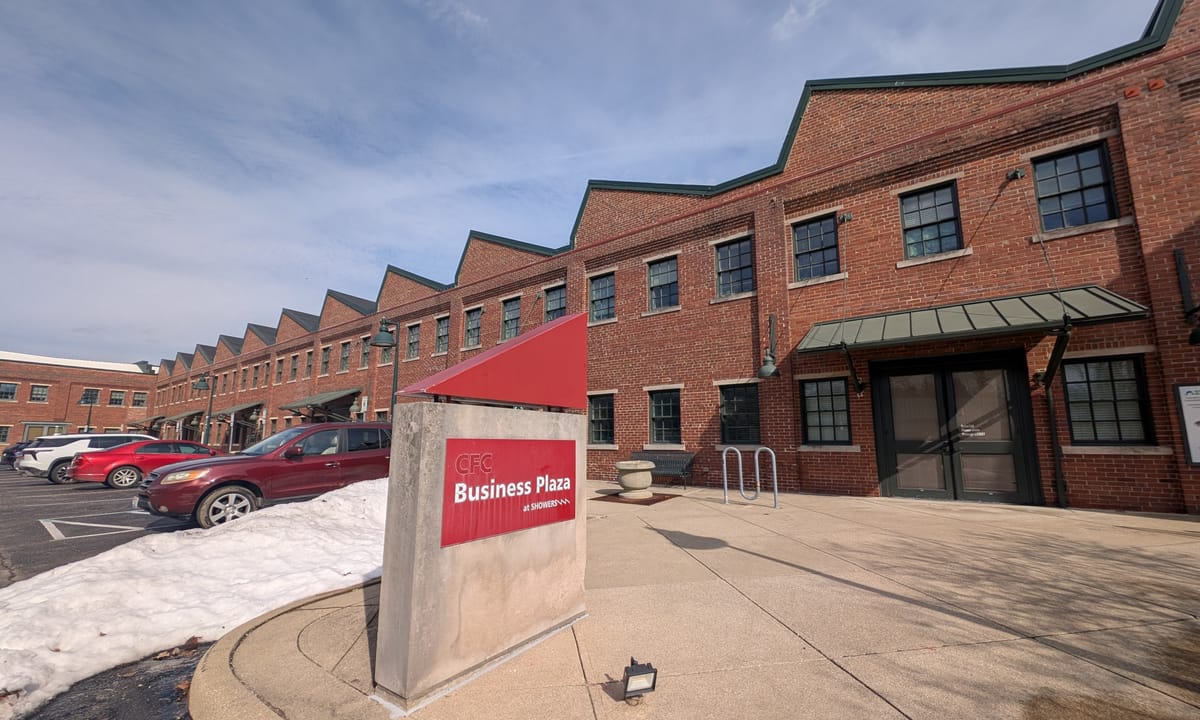
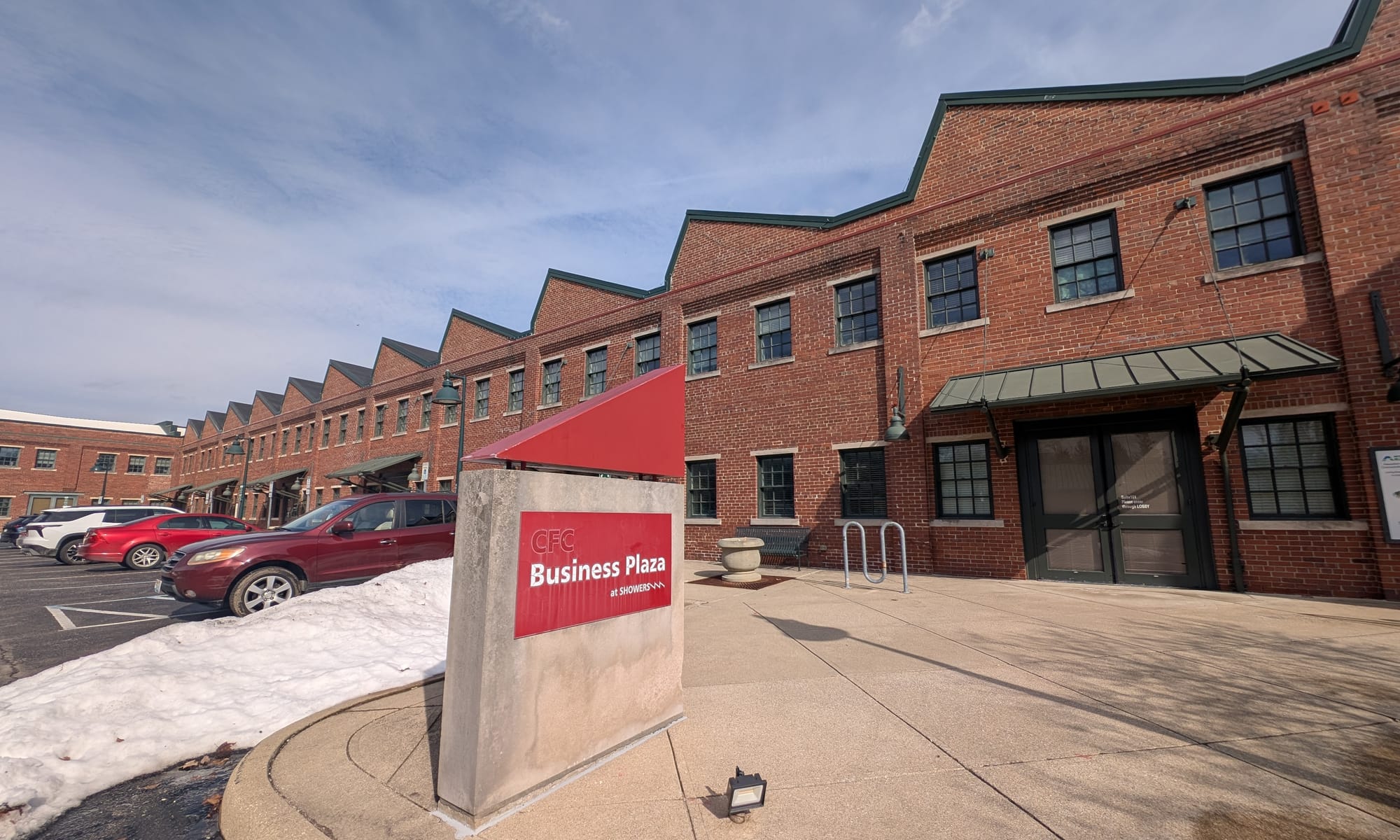
Two private tenants at Bloomington’s Showers West building are challenging the city’s effort to evict them, arguing the Bloomington redevelopment commission (RDC) cannot cancel their leases simply because it says it wants the space for government offices.
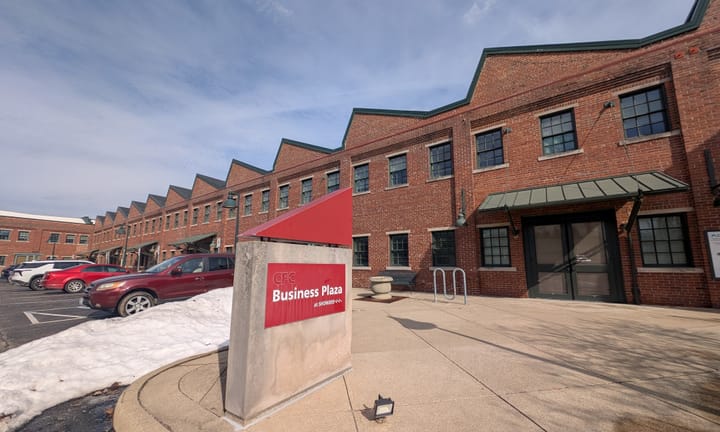
It’s not just a matter of the city government’s stated desire to use the space. Bloomington is under legal pressure to put the space to public use, based on the bonds that were approved by the city council in late 2022, to pay for the cost of acquiring the Showers West building. It’s is in the same historic former furniture factory brick complex as city hall.
Separate lawsuits filed by the Bloomington Board of Realtors and Warrant Technologies LLC were argued the same day (Dec. 9) last year in front of judge Kara Krothe in Monroe circuit court. In both cases, the parties agreed there are no significant disputed facts and asked for summary judgment, meaning the judge can decide the issue strictly as a matter of law.
The two tenants occupy different suites, but face identical termination notices and nearly identical legal arguments, which means the cases depend on the same question: Can the city treat its decision to repurpose a building for public offices as a “taking” that automatically ends private leases, even though it never filed a formal eminent domain case?
The timelines in the two cases are similar. Both tenants signed leases in 2021 with the building’s former private owner, CFC Properties. In early 2023, the RDC used bond proceeds to close on the deal for the Business Plaza at Showers and assumed the existing leases, without renegotiating terms.
Two years later, the RDC sent each tenant a notice terminating the lease effective Dec. 13, 2025. Neither tenant is accused of failing to pay rent or otherwise defaulting.
Instead, the RDC is relying on a clause in both leases that says the tenancy ends if the premises are “taken or condemned by any competent authority for any public or quasi-public use or purpose.”
Theory of the case: Government view
In its papers, the RDC acknowledges it did not use its eminent domain authority to condemn the Showers property when it bought the building. But the city’s attorneys argue that because the RDC still has condemnation authority inside a designated redevelopment area under Indiana state law, that it can still use the state law on inverse condemnation to end the leasehold interests of the tenants.
The wording of the law gives rights to “a person having an interest in property that has been or may be acquired for a public use without the procedures of this article.” That is, it’s not the government that is explicitly given a right under that part of the state law, but rather the person from whom the government has taken a property.
Inverse condemnation is typically invoked by property owners who claim the government has taken property without following formal eminent domain procedures. The statute allows those owners to seek compensation in court after the fact.
An example of an inverse condemnation case is one decided in 2022 by the Indiana Court of Appeals, which involved the operation of a dam by the Indiana Department of Natural Resources. In that case the court found that the DNR operated the dam in a way that caused the flooding of some farmland, which amounted to a “taking” of the land without proper eminent domain procedures. That meant the owners of the farmland could invoke the inverse condemnation clause to have their damages assessed.
In the Showers West case, the Bloomington RDC essentially turns that concept on its head. In the Warrant case, the RDC says that it had itself “inversely condemned the Warrant leasehold interest.”
The RDC’s position is that: the RDC is a governmental entity with condemnation power; Showers West is slated for city offices—a public use; the lease says it ends if the space is taken or condemned. So the RDC’s position is that the decision to take the space for government purposes itself constitutes a “taking” that automatically terminates the lease.
In short, the RDC says that there did not have to be a formal eminent-domain filing—just a declaration that the leasehold has been condemned and the tenant has to leave.
The RDC is is being represented by Bloomington’s corporation counsel, Margie Rice, and assistant city attorney Dana Kerr.
Theory of the case: Tenants
Both tenants argue that approach turns the law inside out in a way that is not allowed.
They stress that: the building was bought like any private real-estate deal; the deed made the purchase subject to existing leases; and the RDC stepped into the role of landlord.
Because there was no formal condemnation under eminent domain, the tenants say, the eminent domain clause of their leases was never triggered. And they argue inverse condemnation is just a remedy for property owners, not a tool the government can “invoke” to sidestep statutory procedures.
Warrant’s brief says the RDC “does not have the authority to condemn the Warrant Lease, directly or inversely,” and that the termination notice amounts to a straightforward breach of contract. The Bloomington Board of Realtors lawsuit relies on the same legal theory.
Warrant Technologies and Bloomington Board of Realtors are both represented by Thomas R. Malapit Jr., J. Eric Rochford, and Taylor C. Byrley of Malapit & Rochford.
Bond issuance background
Hovering behind the legal fight is a practical one. The Showers West purchase was financed with bonds issued for capital and public-safety purposes tied to city operations. At a Bloomington RDC meeting in June 2025 the city’s corporation counsel, Margie Rice, said the city’s bond counsel had advised that leasing the space to private tenants is not consistent with the public-use purpose of the bonds.
The late 2022 bond issuance covered the cost of the Showers West as well as other public safety projects, and came with a legal requirement that the building purchased with the money be put to a public purpose. That public purpose, as envisioned by then-mayor John Hamilton’s administration, had been to house the city’s fire department administrative offices and the city’s main police station.
The fire department was moved into Showers West. But Bloomington mayor Kerry Thomson’s administration, which took over at the start of 2024, opted not to pursue a move by the police department.
That eliminated the immediate urgency for tenants to leave, which stemmed from the practical need to make way for a specific city use. The view of the city’s bond counsel is that it does not count as a public purpose for the government to collect rent from tenants and use the proceeds of the rent for a public purpose.
What’s next?
Because the facts are uncontested, judge Krothe’s rulings will hinge on a question of law: Can the leases be considered terminated without a formal condemnation proceeding, or is the RDC bound by the leases it assumed when it bought the building, like any other landlord?
According to BBOR CEO Kristen Weida, the group of real estate professionals is still trying to negotiate a settlement ahead of a ruling by the court. (BBOR is now named Indiana Uplands Realtor Association.)
Other Showers West tenants in the same situation as Warrant and the BBOR have been able to negotiate settlements over the lease termination.
One tenant, Monroe County CASA, is set to move out, and has not yet gone to court over the lease termination. According to CASA executive director Tia Arthur, the nonprofit is set to move on March 16 to Fountain Square Mall, but is still negotiating with the Bloomington RDC over the amount of damages to be paid, for termination of the lease.
- Bloomington Board of Realtors, Inc. v. Bloomington Redevelopment Commission: 53C06-2508-PL-002258
- Warrant Technologies, LLC v. Bloomington Redevelopment Commission: 53C06-2508-PL-002257
Comments ()