
After 5 months, ruling still pending from highest court for Bloomington annexation case
Bloomington’s long-running annexation fight is half over. The city has lost in two west-side areas, while a constitutional case covering five other territories remains pending. A recent U.S. Supreme Court decision could shape an expected ruling soon.
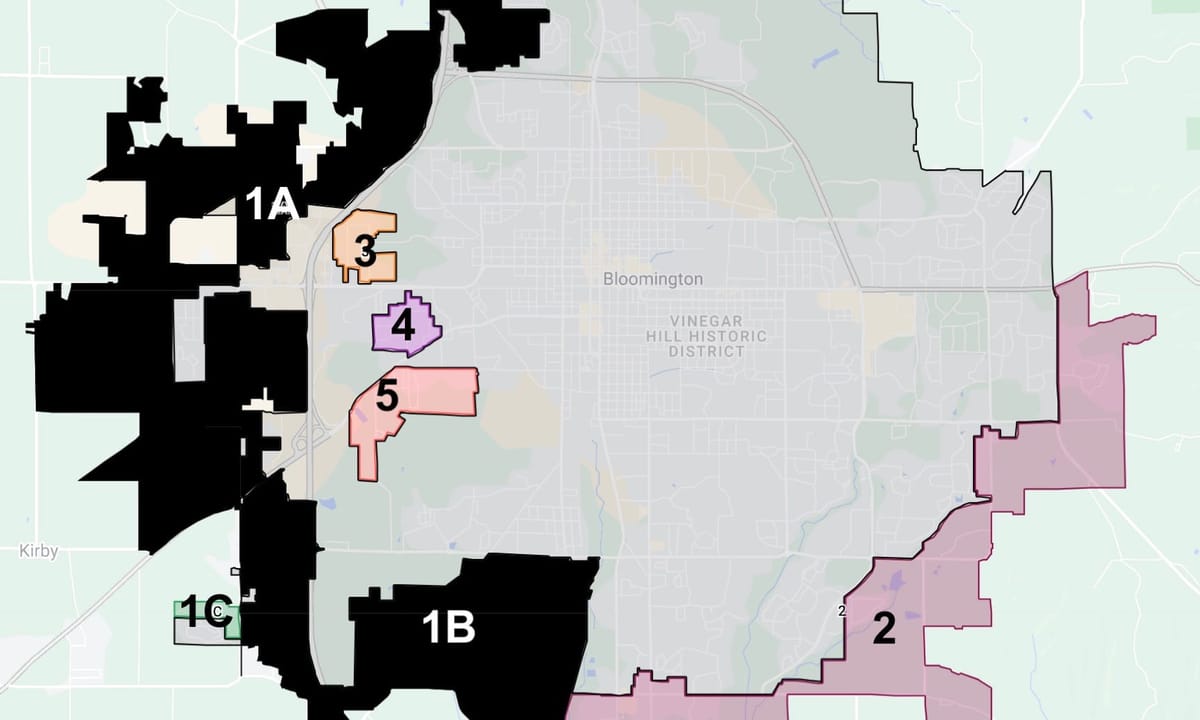
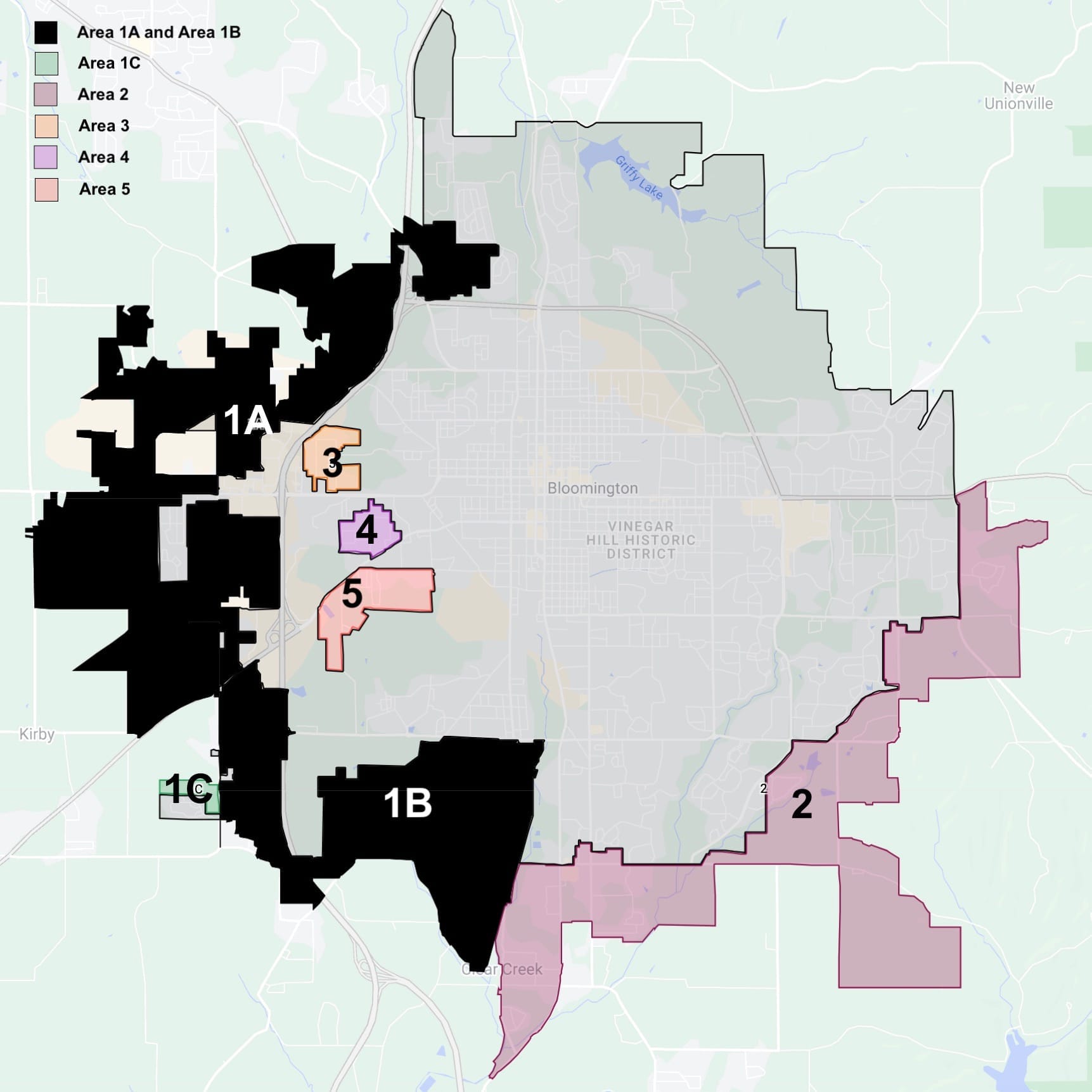
Next Tuesday’s State of the City address from Bloomington mayor Kerry Thomson could include at least a mention of one big setback for the city over the last year. That's a final decision in the courts against the city’s attempt, starting almost a decade ago, to annex two big areas west of the city. The only dust that has not yet settled for that case is the amount Bloomington owes in legal fees.
But the other big annexation case—a constitutional question that affects the other five areas the city wanted to bring into the city—is still pending. It would not be surprising if the constitutional case reached an end before next week. That’s based on the sheer amount of time that the Indiana Supreme Court has been considering the issue, after the local court and the court of appeals panel both ruled against Bloomington.
Nearly five months have passed since the state’s highest court heard oral arguments on whether to accept transfer in the constitutional case. The court has not yet ruled on whether it will take the case or allow the lower court’s decision to stand.
The basic question in the constitutional case is whether a 2019 law that retroactively voided annexation remonstration waivers unconstitutionally impaired existing contracts between landowners and the city of Bloomington.
Since the October oral arguments, the only news in the case came about three weeks ago, on March 5, when the state of Indiana filed a notice of additional authority. That means the state put another recent court case in front of the Indiana Supreme for its consideration.
The filing appears to be aimed at reinforcing one of the state’s main arguments—that the city of Bloomington cannot sue the state on constitutional grounds—because it is a political subdivision created by, and subordinate to, the state itself.
To support that position in its filing of additional authority, the state points to a March 4, 2026, decision by the U.S. Supreme Court in Galette v. New Jersey Transit Corporation. In Galette, the Court held that New Jersey Transit could be sued because it is not an “arm of the state.” In that case, the transit corporation is analogous to the the city of Bloomington in its constitutional annexation suit.
So the state is pointing to the Galette case not for its outcome, but for its reasoning. The state’s filing reminds the court of a point it made during oral arguments last year, when the state contended that Bloomington, a political subdivision of the state, can properly be considered part of the state for purposes of the constitutional contract clauses, even if the city is not entitled to sovereign immunity.
In the Galette case, the state’s filing contends, the U.S. Supreme Court makes a similar point, when it writes that a state-created entity that is not entitled to sovereign immunity still “can count as part of the state” for other purposes, such as standing or the First Amendment.
The Indiana Supreme Court’s pending decision on transfer will determine whether it takes up that question at all, or leaves the court of appeals ruling in place, which was made over a year ago.



Comments ()