
Bloomington council OKs fiscal plan for single-parcel voluntary annexation, but bigger votes loom
The Bloomington council unanimously approved a fiscal plan for annexing a single Cory Drive parcel but stressed it doesn’t necessarily support annexation or rezoning. Neighbors questioned missing cost estimates, and raised karst and “service island” concerns ahead of Dec. 17 votes.
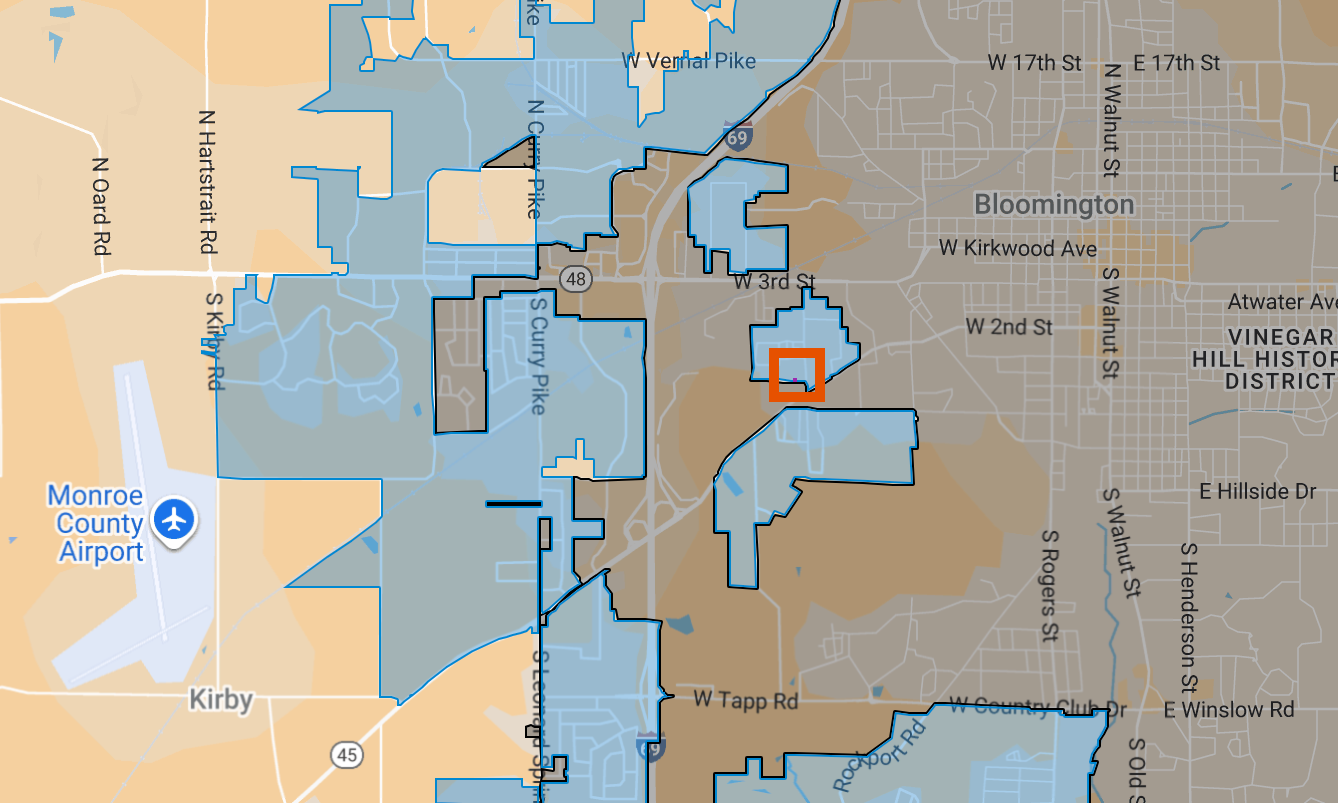
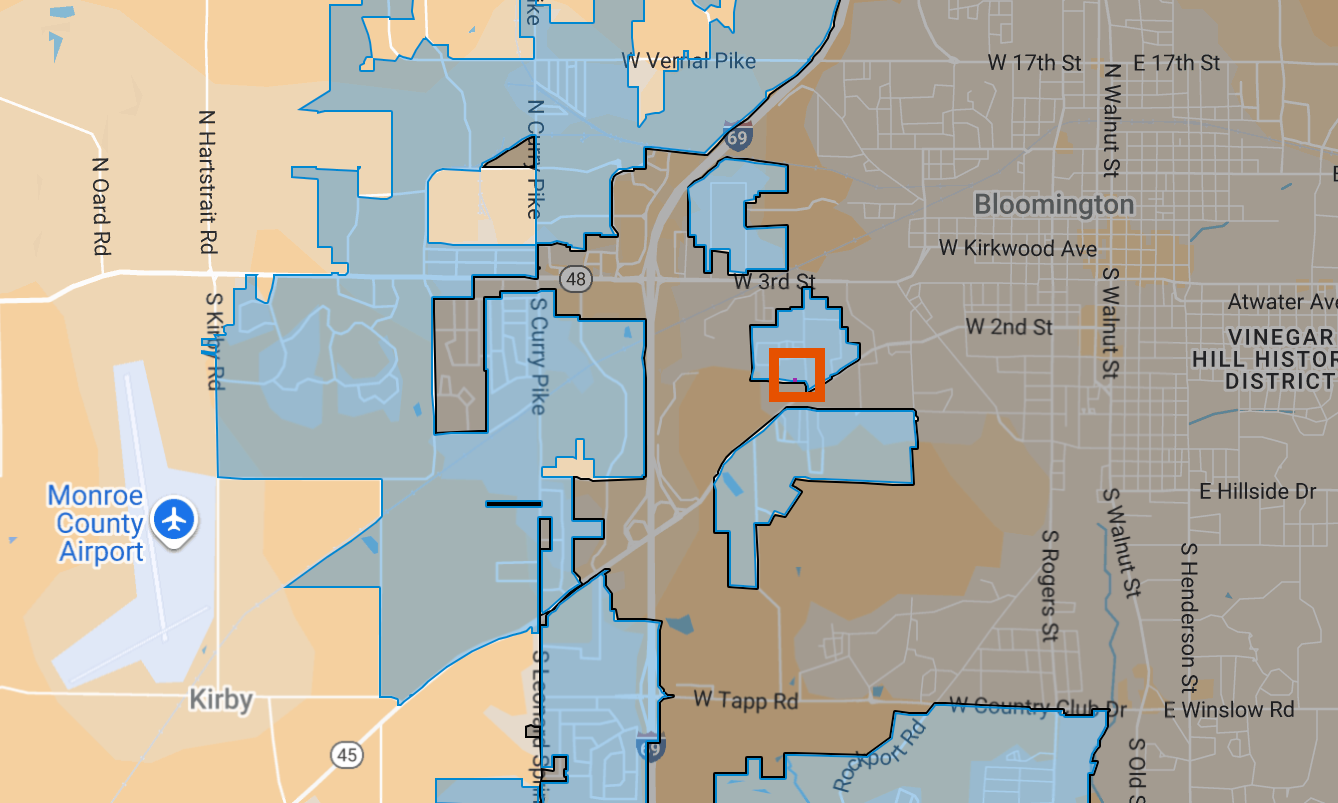
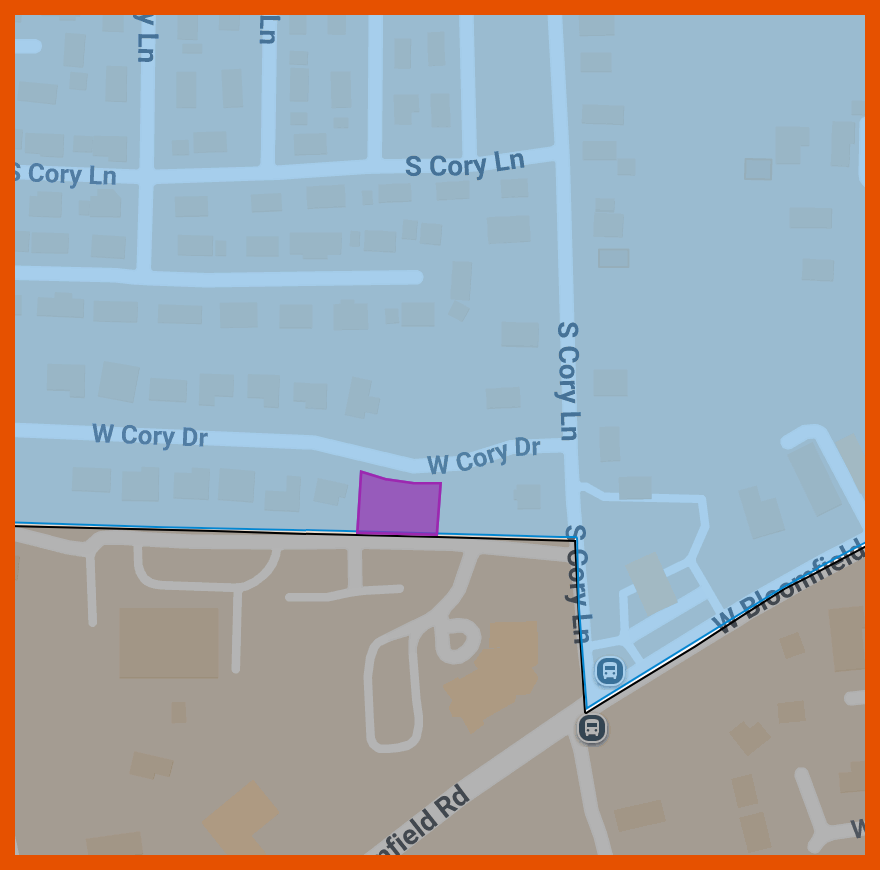
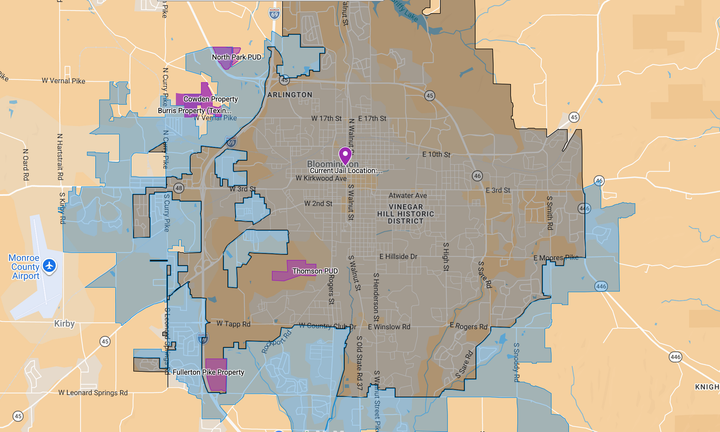
Maps by The B Square with information from city of Bloomington and Monroe County. The blue area is territory that the city of Bloomington tried to annex starting in 2017 and still the subject of litigation. [link to dynamic map]
In a unanimous 7-0 vote Wednesday night (Dec. 3), the Bloomington’s city council approved a fiscal plan for the voluntary annexation of a single parcel on West Cory Drive.
Councilmembers noted, however, that their green light for the fiscal plan should not be mistaken for support of either the annexation itself or a zoning change—both of which will see a vote at the council’s next regular meeting in two weeks, on Dec. 17.
Absent from the meeting were Sydney Zulich and Kate Rosenbarger.
The annexation petition is from the owner of a property at 2005 W. Cory Drive, who wants to build a duplex on the property. The property is in one of the so-called “islands” that the city of Bloomington has tried to annex through an involuntary process, and that is still the topic of pending litigation.
The Bloomington plan commission has already voted to recommend that the property be zoned as R2 (Residential Medium Lot). In the use table for Bloomington’s UDO (Unified Development Ordinance), duplexes are a conditional use in the R2 zoning district.
In addition to approving the fiscal plan, at Wednesday’s meeting, the council heard a first reading of both the annexation ordinance and the rezoning ordinance. The votes on those ordinances are expected in two weeks, at the council’s final regular meeting of the year, on Dec. 17.
The fiscal plan, prepared by the legal department, assessed the potential impact of bringing the property into the city. “Predominantly, if not entirely, each department has considered the impact that it might feel having a single parcel annexed into the city, and … none of the directors saw any fiscal impact that's of any real substance,” said assistant city attorney Chris Wheeler, who presented the plan.
Not all residents were convinced the fiscal plan met the statutory requirement that it include “cost estimates of planned services to be furnished to the territory to be annexed,” because there were no detailed cost figures in the plan.
During public comment, Paul Post, who introduced himself as both a resident and city police union member, took issue with the lack of hard numbers: “I kept reading through [the fiscal plan]. I kept looking for numbers for each of the … departments … And there’s not numbers there. Just says, we have a department that exists and they'll take care of it. So … what I would like to see in a fiscal plan is an exact number that someone boiled down …”
The idea of hard dollar figures was picked up by councilmember Matt Flaherty, who asked Wheeler if he thought the plan’s general assurances—rather than itemized figures—were sufficient under Indiana law. Flaherty said, “I agree with you that the impacts will be nominal and quite minimal, but still, one could estimate.” Flaherty asked, “Is it your legal opinion that it's not necessary to do that based on state law...?”
Wheeler pointed to other Indiana municipalities that do single-parcel voluntary annexations that use similar wording in their fiscal plans, making general statements about no more than nominal cost.
Councilmember Isak Asare stressed that the approval of a fiscal plan was not the same thing as approval of the annexation itself: “Passing this fiscal plan does not mean that we're passing the approval to annex this place.” Councilmember Dave Rollo added, “This is not an indication of a decision on future rezoning.”
Councilmember Andy Ruff echoed Rollo’s concern: “Saying that, OK, this fiscal plan … looks good enough for me to vote yes, doesn't mean I'm going to support the subsequent legislation … related to this parcel.”
From the public mic, Jay Nelson, whose family owns the adjacent property, said approving the fiscal plan prior to ordering a geotechnical study of the property was premature. “At a minimum, no land use change should be approved without a full geotechnical and karst assessment by a qualified engineer.” Nelson’s comments came in connection with a potential karst feature on the property, which could impair any effort to develop it.
Also from the public mic, resident Leslie Ruiz who lives across the street from the property, warned, “Annexing the single parcel would create what is effectively a permanent service island,” suggesting such patchwork boundaries can complicate public safety responses.
The annexation ordinance itself, as well as the R2 zoning change, will be up for a vote at the council’s Dec. 17 meeting.
Comments ()