
Bloomington electric scooter ridership drops 82%, city prepares new licensing round
Bloomington scooter ridership fell 82% from 2019 to 2025, and the first half of 2026 saw an continued declining trend. Even so, the city plans to seek operators for another year and could revisit its $30,000 annual license fee and 30-cent charge for each trip
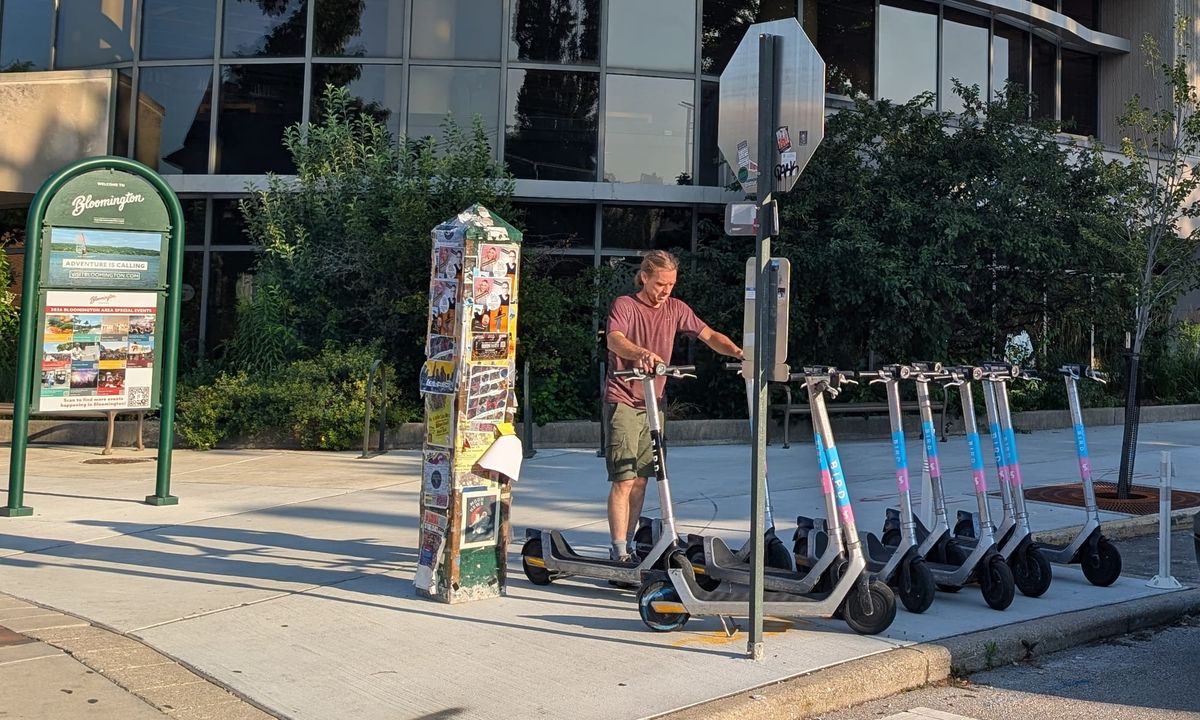
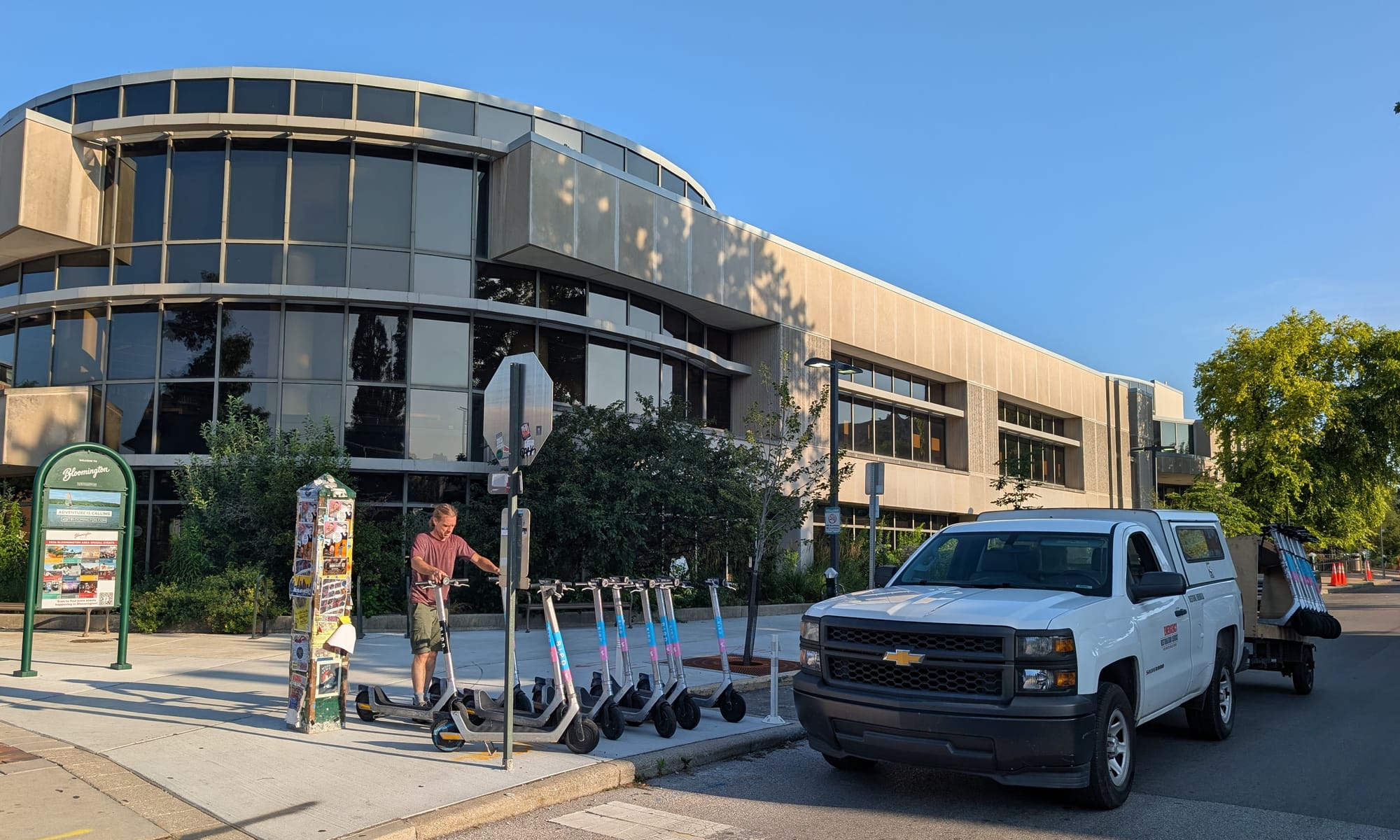
Even as rental scooter ridership in Bloomington has fallen dramatically since 2019, the city is preparing to seek operators for another year of deploying shared electric scooters.
The vehicles are deployed in designated parking corrals around town for rental through a smartphone app.
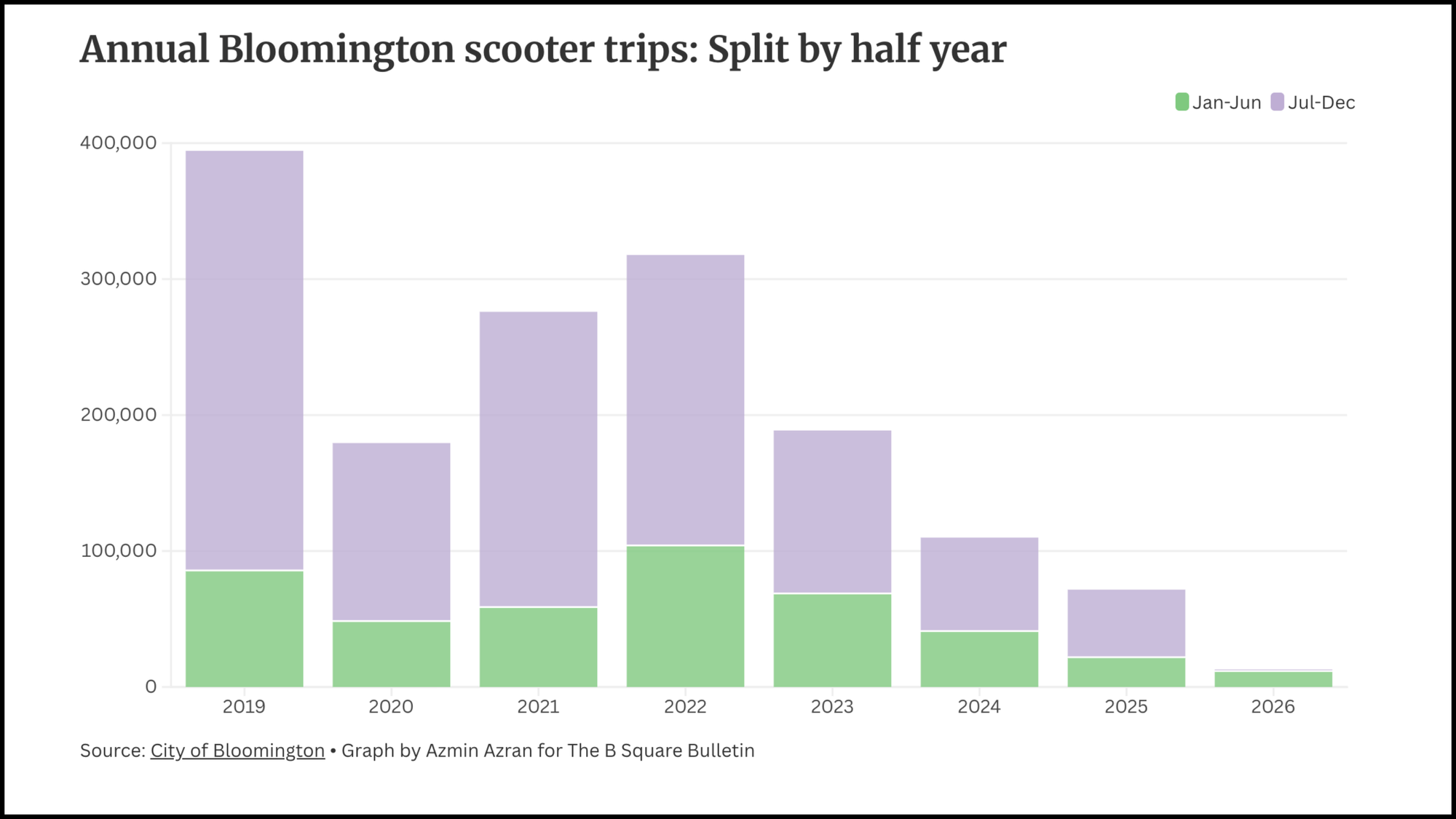
Based on a B Square review of city data, the total number of trips taken on rental scooters from any vendor in Bloomington has gone down by almost 82% from 2019 to 2025. In 2019, the first year at least partially covered by Bloomington’s B-Clear Open Data portal, 394,353 trips were made. That number dropped to 71,601 in 2025.
After the big drop in 2020 due to the COVID pandemic, there was a recovery in 2021 that continued an upward trend in 2022. That year, more than 300,000 trips were taken. But that number fell by more than 77% in the following three years.
The outlook halfway through 2026 looks much worse, with only 11,750 trips completed through June. This is the lowest number of trips recorded from January through June in any year since 2019, when data was not recorded until April and still shows 85,710 trips through June. This year’s first-half total is about half the 21,915 trips taken in 2025.
Looking at the data on a monthly level, in the most recently concluded month of June, riders took 4,037 trips on rental scooters in Bloomington. These figures represent the biggest trip total in any month this year, even as the town has emptied out after the end of the spring semester at Indiana University in May.
The data shows no trips between November 24 and March 18. That’s because the Bird scooter company, the city’s sole remaining vendor, didn’t put any scooters out on the street until mid-March. April, which was the first full month of Bird operations this year, saw 3,712 trips, followed by a dip in May down to 2,482.
That makes for an overall negative trend.
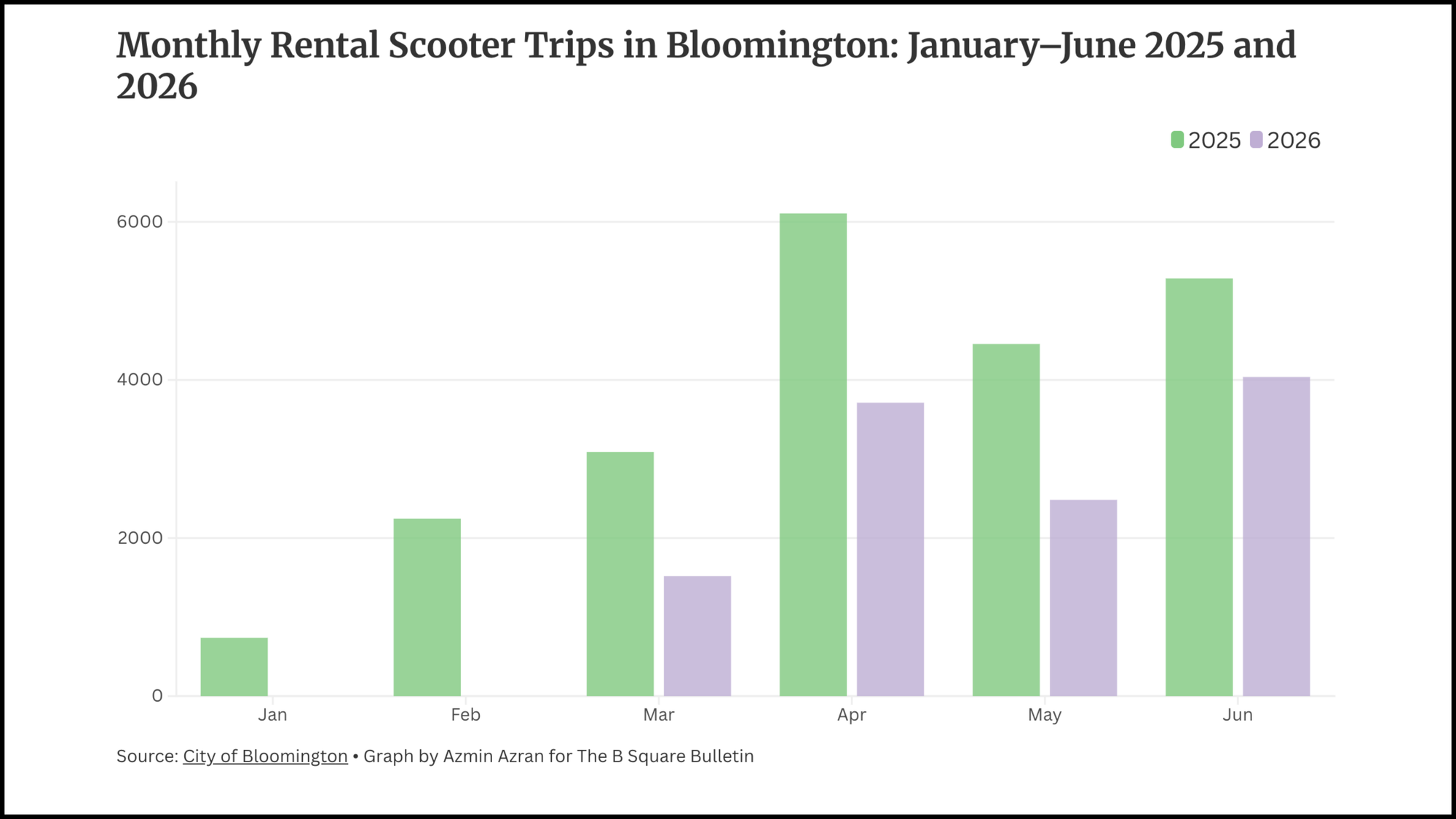
One big difference in the numbers comes from the fact that Bird, currently Bloomington’s sole provider of rental scooters, shut down services during winter 2025-26, instead of continuing operations like it did in 2024-25.
Shiraz Rosenthal, senior government partnerships manager at Bird, told The B Square: “Because summer and winter represent our lower ridership periods, we’re strategic about the overall fleet in Bloomington during those months. So we’ll reduce our fleet available and we’ll take that time operationally to maintain our fleet, refresh our vehicles so that they’re ready for peak ridership in the fall.”
Data from fall 2026 will help show whether that seasonal pattern continues. So far, fall has consistently been Bloomington’s strongest season for rental scooter use: August, September and October have ranked as the three busiest months every year since 2019, with ridership peaking in September in each of the past seven years.
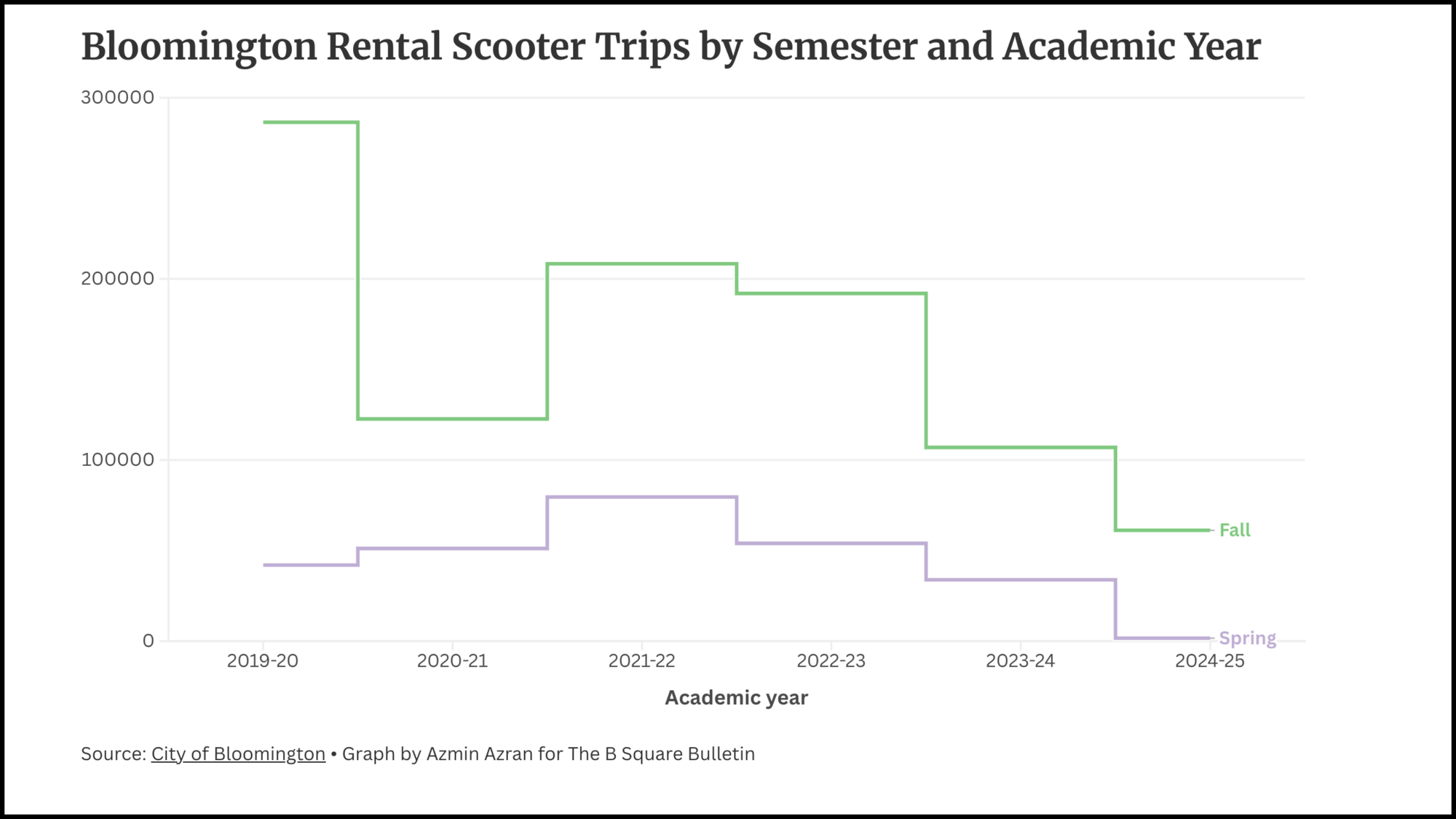
The clear general trend is that ridership is down. One possible reason behind that may be the fact that availability of the actual scooters has been reduced.
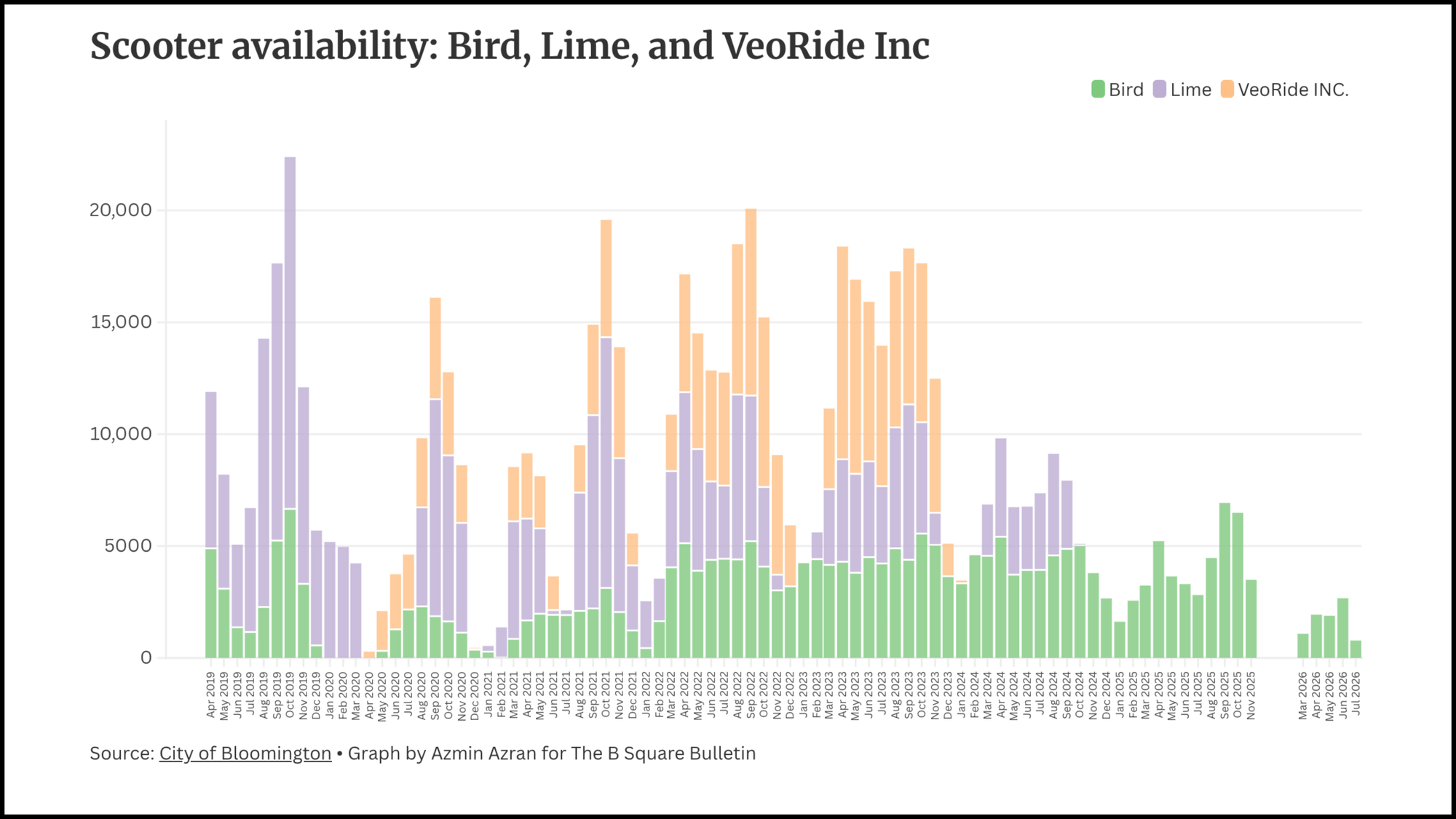
Right now, there is only one provider in a market that between 2020 and 2023 had three competitors: Bird, Lime and VeoRide INC. VeoRide left first in January 2024, followed by Lime in October of the same year.
The numbers show that when VeoRide left the market, Bird and Lime did not increase their combined availability to capture rides by VeoRide customers. In fall 2025, Bird boosted its availability, but that did not match the combined total of Bird and Lime in fall 2024.
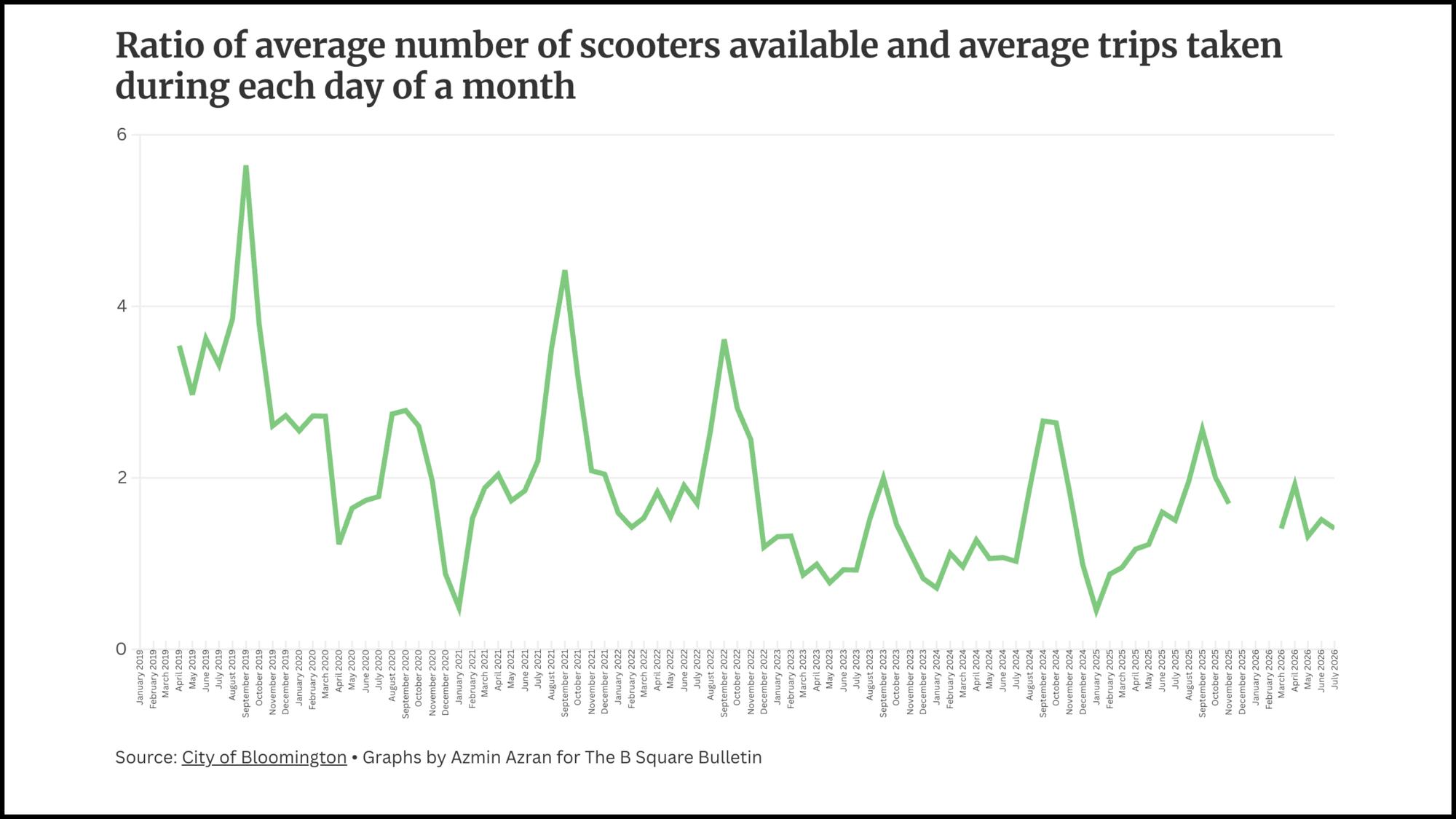
The downward trend in total rides isn’t explained just by the diminished number of scooters available. There’s a clear downward trend in the number of rides taken per scooter that is available out on the street for use. In 2019, and 2021 some months showed numbers approaching 4 rides per available scooter. In the last two years, it’s rare in a month for that statistic to get over 2 rides per scooter. That seems to indicate a decline in actual demand for rental electric scooters.
The apparent decline in demand is something Bird wants to change in the future. “I think that there’s definitely a desire to take on more ridership, perhaps ridership that existed before,” said Rosenthal.
“So moving forward, one of our goals is to increase that percentage and get more people riding, riding our service in a subscription-based model that is more affordable and accessible for not just regular IU students, but also local commuters.”
Rosenthal also described some of Bird’s plans for Bloomington in the near future, which may include test rides, vehicle demonstrations, and possibly a larger fleet.
“One of the things that we’ll be doing in this upcoming year is a little bit more engagement as well. We’re hoping to expand the fleet, but we’re also hoping to promote rider safety more often. So we’ll be doing that both on campus at Indiana University Bloomington, as well as in the community,” she said.
One way to attract customers to any service faced with dwindling usage is to offer better prices.
In fact, Bird’s license for 2025 included provisions for discounts for “low-income residents, senior citizens, students with Pell Grants, and employees of pre-approved community-based organizations and nonprofits”.
This discount, called “Community Pricing” provides 50% off all trips for those who qualify, according to Rosenthal.
“It helps increase accessibility for the service. And it’s something we push out to all of our riders,” she said.
Jane Kupersmith, who is Bloomington’s economic and sustainable development director, told The B Square she expects to consult with the city’s legal department next Tuesday (July 21) and issue a request for proposals during the first half of August. The city could review its license fees before then, including the annual $30,000 annual amount, and the current 30-cent charge per trip that Bird now pays the city.
Based on last year’s schedule, a recommendation on scooter licensing could be considered for approval by Bloomington’s board of public works in early September.

Comments ()