
Candidate’s write-in bid blocked by Monroe County election board, court challenge planned
Monroe County’s election board voted 3–0 to bar Joe Davis from running as a write-in candidate for clerk under Indiana’s “sore loser” law. Davis argues the restriction violates constitutional rights of candidates and voters and says he will seek review in circuit court.
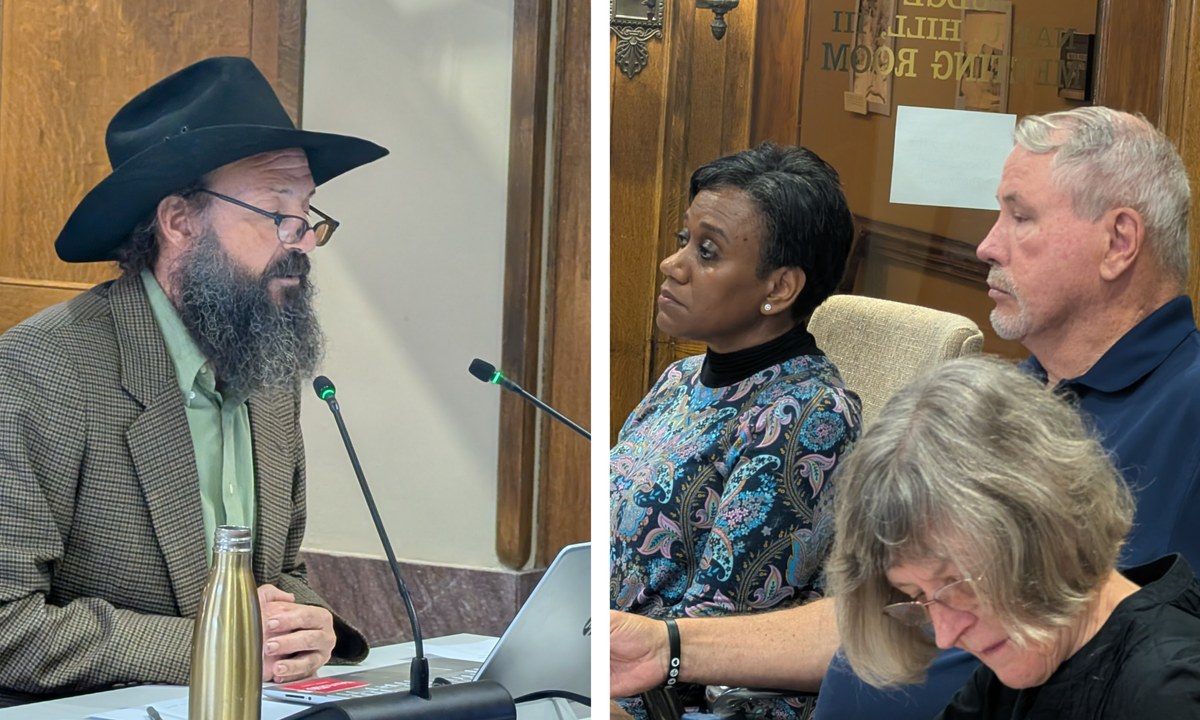
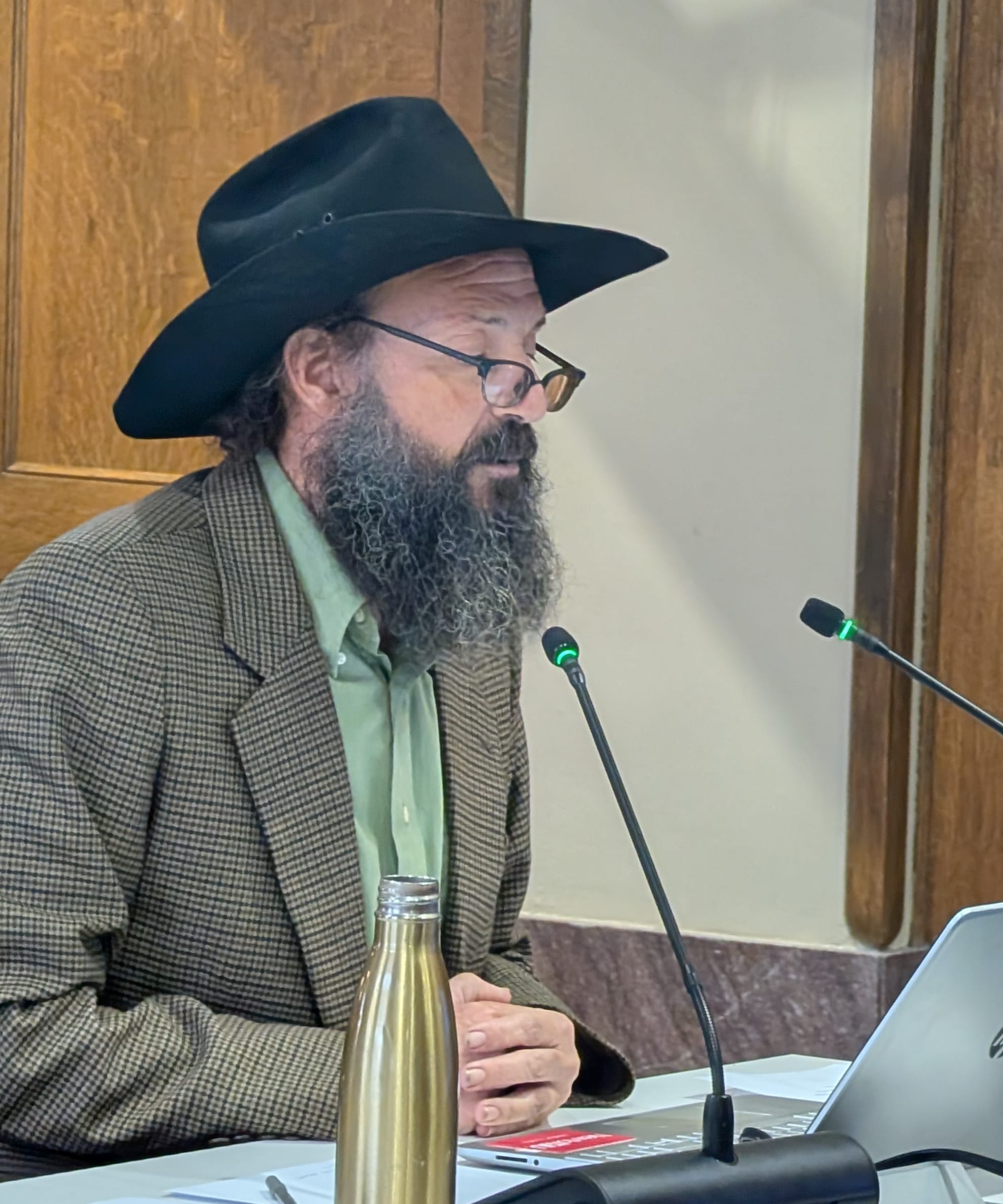
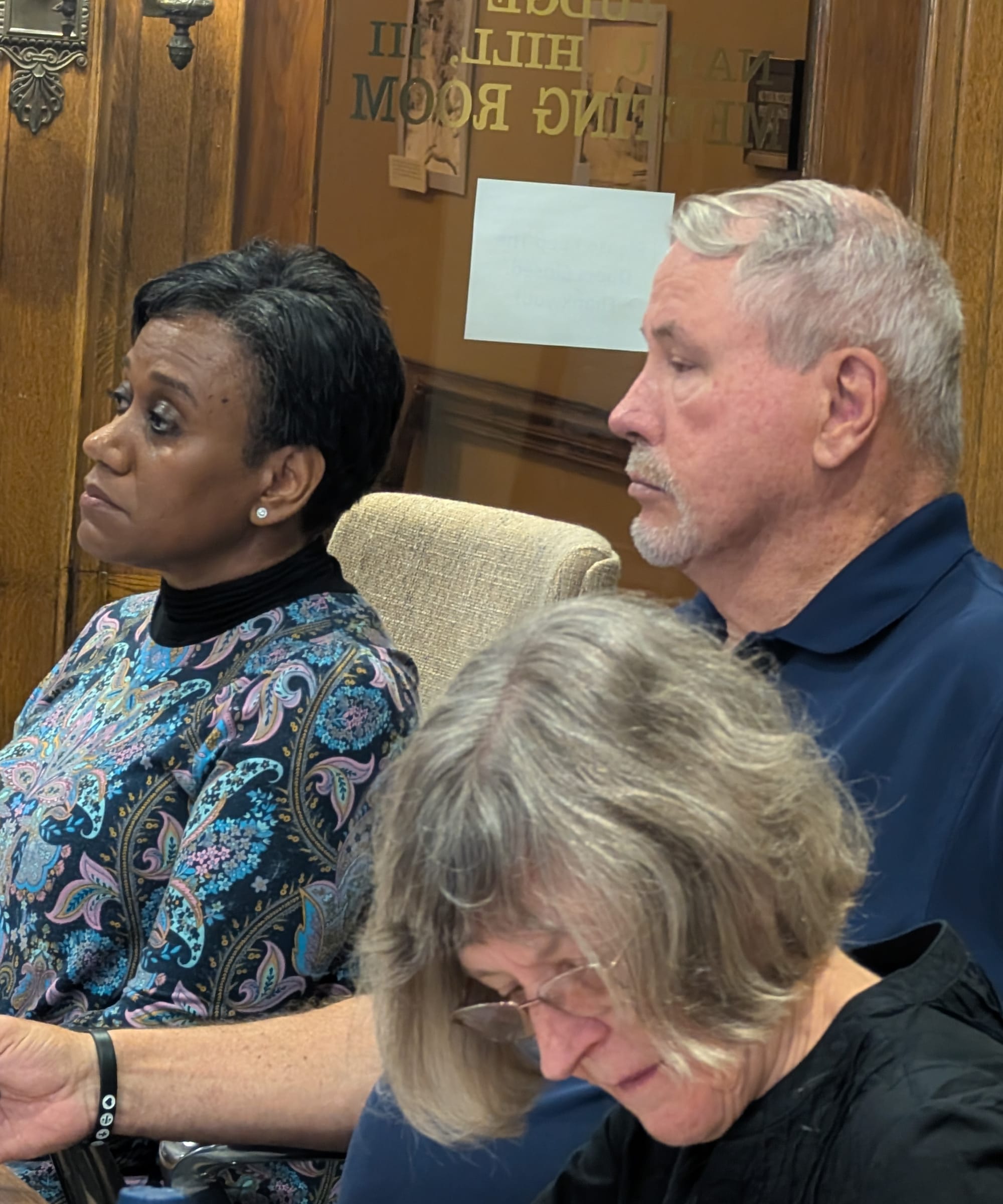
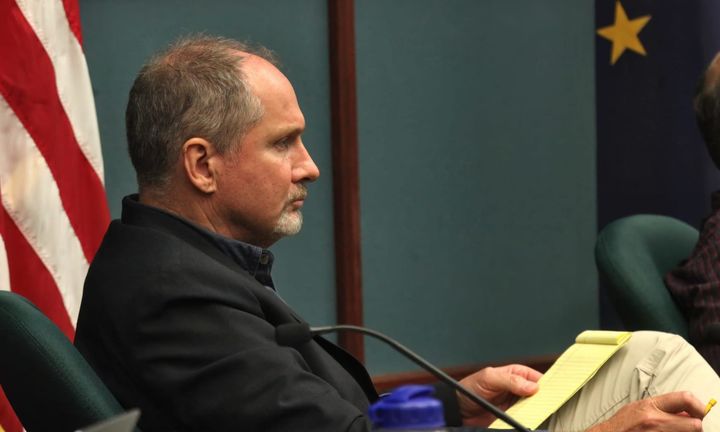
Left: Joe Davis. Right: Monroe County election board members Nicole Browne, Danny Shields, and Penny Githens. (Dave Askins, Aug. 12, 2026)
Joe Davis will be asking the Monroe County circuit court to review Wednesday morning’s (Aug. 12) unanimous decision by Monroe County election board to keep him from running as a write-in candidate for county clerk in November.
For the board, Davis’s situation was a straightforward application of a state law that bars candidates defeated in a primary from seeking the same office in the ensuing general election. The law is sometimes called the “sore loser” law. Several states have a similar prohibition. Five people filed challenges against Davis’s candidacy.
Davis, who finished the Democratic Party’s primary for clerk held this spring, did not dispute the wording of the law or the facts. Instead, he argued that applying it to his independent write-in candidacy would violate the U.S. and Indiana constitutions.
“I accept the result of the May Democratic primary,” Davis told the board. “I am not asking this board to overturn that result.” He said the question was whether the state could also prevent him from participating independently in the general election. [copy of Davis’s formal written response]
Davis’s constitutional challenge is based on the idea that Indiana’s “sore-loser” law infringes on his First Amendment right to political association and the right of voters to support him. There are also Fourteenth Amendment equal-protection concerns that could be raised based on the idea that the state law treats different categories of people differently—those who lost a primary and those who didn’t.
The board rejected the constitutional arguments as more appropriate for a court to decide instead of an election board.
Election board chair Danny Shields said the board’s job was to apply the statute, not decide whether the statute is constitutional. He told Davis that if he wanted to remain a candidate, he could seek an injunction in court.
Shields put it like this: “If you wish to file suit somewhere to be put on the ballot, that same constitution you’re talking about gives you that right.” Davis told The B Square that he expects to make his filing in the Monroe County circuit court by the end of this week.
The five challenges to Davis’s candidacy were combined into a single hearing, because they all raised the same issue.
Davis cited federal and state constitutional protections and court decisions requiring election restrictions to be weighed against burdens on candidates and voters. He argued that the Indiana law imposed a particularly severe burden because, unlike some ballot-access restrictions, it left him no alternative route into the general election.
Davis also insisted on getting a written ruling that would spell out the factual and legal basis for the board’s decision. Davis said he expected to seek court relief quickly because ballot preparation is approaching. He was especially keen that the written decision of the board mention the fact that he had raised the constitutional questions at Wednesday’s hearing.
The board’s written decision included the following:
Mr. Davis raised objections to removal of his option as a write-in candidate and application of Indiana Code 3-8-1-5.5 based on the 1st and 14th Amendment of the United States Constitution and Article 2, Section 1 of the Indiana Constitution.
After a recess for county attorney Jeff Cockerill to prepare the written decision, the board voted 3–0 to approve it.
Wednesday’s ballot-eligibility case is separate from complaints about Davis’s conduct during primary voting. On June 4, the election board voted to refer two such complaints to the Monroe County prosecutor after allegations involving electioneering, campaign signs and interactions with voters. That proceeding concerned possible election-law violations, not whether Davis could appear as a November candidate.

Comments ()