
Bloomington’s parking consultant: Raise rates, use plate readers, shift ticket appeals from clerk
A consultant’s study recommends a broad overhaul of Bloomington’s downtown parking system, including $1.50-an-hour core rates, doubled garage rates, pay-by-plate kiosks, license-plate-reader enforcement, shorter evening hours, and changes to fines and appeals.
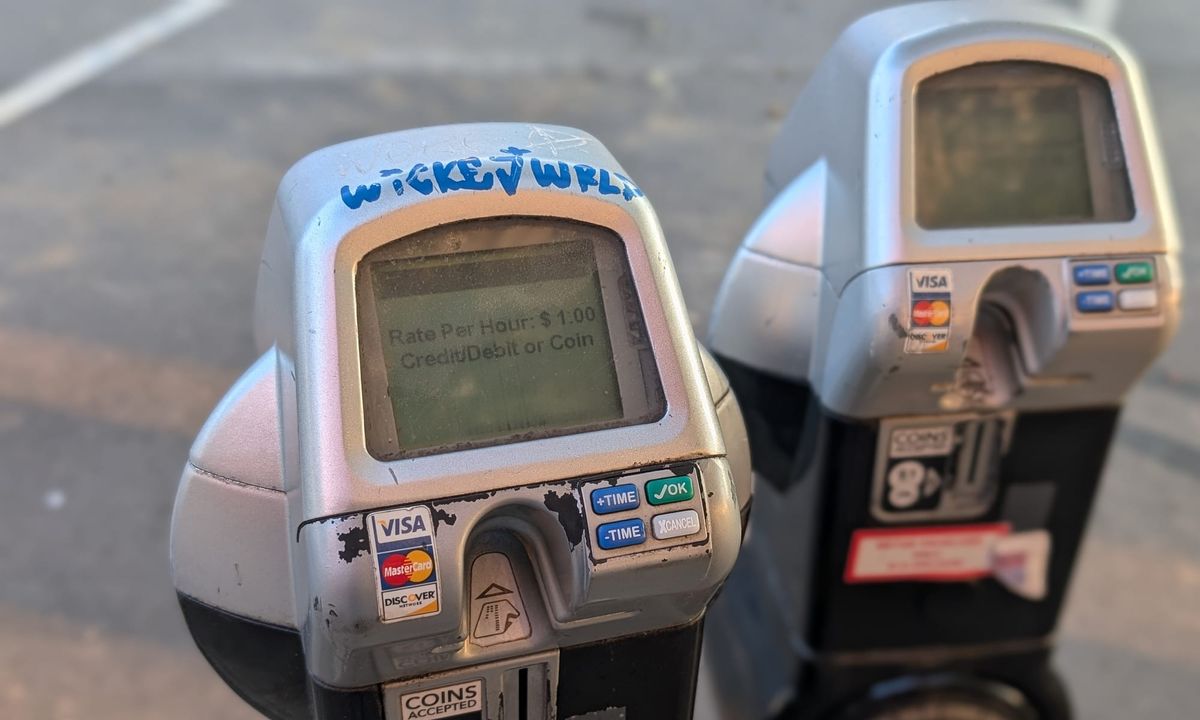
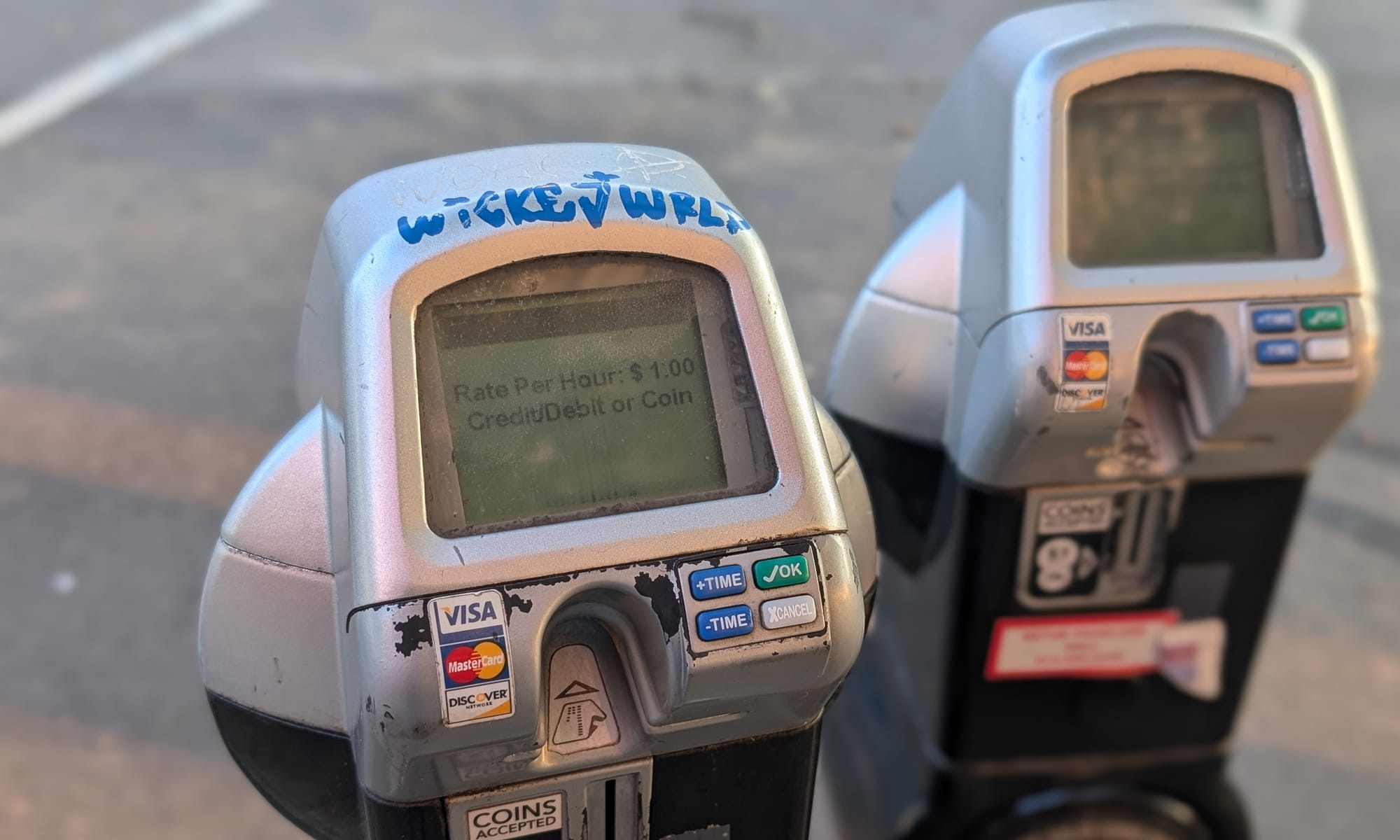
When the city of Bloomington’s communications team last Wednesday invited residents to test two different parking kiosks, the announcement framed the exercise as a chance to try out new payment technology recommended in a consultant’s study.
What the news release did not mention is that the parking study behind that technology recommendation also recommends charging a lot more to park downtown.
If the city follows through on all of the consultant’s package of changes, the city will soon be collecting $1.50 an hour from motorists who park in metered spaces instead of the $1 an hour it currently charges. Walker Consultants also recommends a series of rate increases that would result in a rate of $2.25 by 2035.
The 172-page report covers more than just recommended rate increases. It recommends a broad overhaul of Bloomington’s parking system: higher on-street and garage rates, fewer single-space meters, pay-by-plate kiosks, license-plate-reader enforcement, shorter evening enforcement hours, a new parking brand and a shift of parking-ticket appeals out of the city clerk’s office and into the parking services division.
The headline recommendation for drivers is the rate increase. Bloomington’s current on-street parking rate is $1 an hour across downtown, a rate that Walker says has not changed since paid parking was implemented in 2013. Walker recommends replacing that uniform rate with a two-zone system: $1.50 an hour in the high-demand core, defined as metered areas north of 3rd Street and south of 7th Street, and at least $1.25 an hour in lower-demand zones south of 3rd Street and north of 7th Street.
The same demand-based approach to pricing would apply to surface lots. Walker recommends setting Lots 1, 3 and 5 at $1.50 an hour and Lot 6 at $1.25 an hour. The city’s garage rate, now 50 cents an hour, would double to $1 an hour. Walker also recommends updating city code so annual garage permit-rate increases continue beyond the current schedule, which goes only through 2029.
Walker gives two basic reasons for increasing rates. For on-street parking, the consultant says the low hourly rate does not do enough to discourage long-term use of spaces that should turn over for short-term visitors and downtown customers. For garages and lots, the study says current rates are too low to cover operations, maintenance, technology and long-term capital needs.
The report claims that off-street rates have not been adjusted in “more than a decade,” while the average cost of goods and services has increased 37% since 2016.
While the hourly garage rate has remained static at 50 cents an hour, along with the hourly on-street rate at $1 an hour, the garage permit rate was changed through an ordinance passed by the city council in December of 2018, about seven and a half years ago. That put the city on a schedule of annual increases to the monthly garage rate of $4, which means annual increases of $36 a year. This year the rate for 24/7 access is $119 per month.
The kiosk testing announced by the city fits into one of the report’s most expensive recommendations: replacing Bloomington’s more than 1,400 single-space meters with multi-space pay stations. Walker says the existing single-space meters are beyond their expected service life, and that a kiosk system would reduce the number of physical devices the city has to maintain.
The technology change would also set up a major enforcement change. Under the current system, the time that is paid physically at a meter is visible to enforcement staff, while the time paid by a driver who pays through the ParkMobile app is invisible. That means enforcement staff have to check both the physical meter and license-plate/payment information before confirming a violation. Walker recommends moving to mobile license-plate recognition, with city vehicles equipped with cameras that capture plates as they pass parked cars. Vehicles flagged as possible violations would still be manually checked before a citation is issued, according to the study.
The study includes at least one recommendation that probably counts as welcome news for drivers: Paid-parking enforcement would be reduced by one hour in the evening, from the current 8 a.m. to 9 p.m. schedule to 8 a.m. to 8 p.m. Walker says Bloomington’s current evening enforcement hours are later than peer cities and that downtown dining and entertainment demand typically peaks by 8 p.m. The report says ending enforcement earlier could also reduce staffing costs.
Parking fines would be restructured rather than simply raised at the start. For standard violations, Walker recommends a $25 fine if paid within 48 hours, a $30 standard fine and a $45 fine after 14 days. The report’s 10-year schedule would raise those amounts over time, reaching $39 for a standard violation, $34 for prompt payment and $58 after 14 days by 2035 and 2036.
The report also recommends moving all citation appeals from the city clerk’s office to the parking services division. Walker describes the current system as splitting responsibility between two departments: Staff working under parking services issue tickets, while the city clerk’s office handles appeals. That split, the report says, can lead to inconsistent policy implementation and customer frustration, for example when someone first goes to the parking services office at the 4th Street garage and is redirected to City Hall or to the online appeals process.
Walker says the clerk’s office often has to communicate with parking services to understand the facts behind a citation, while parking services already has the relevant data in its reporting systems. The report says moving appeals into parking services would create a clearer process and give the division more oversight and control. Any adjudication beyond the appeals process would be escalated to the courts, according to the recommendation.
Off-street rate increases, shorter enforcement hours, new garage equipment and a parking-system brand are described in the report’s summary table as short-term recommendations. On-street rate changes, the transfer of appeals to parking services, and license-plate-reader enforcement are listed as mid-term recommendations. The multi-space meter (kiosk) conversion is listed as a short-term item with an estimated cost of more than $500,000. The license-plate-reader and digital-permit conversion is estimated at $100,000 to $500,000, as is replacement of the garage equipment.
Walker frames the changes as part of a broader shift in parking management, not just a revenue measure. The study recommends a parking services mission statement focused on customer service and safety; recurring public reporting on parking occupancy, maintenance response times, revenue per space, revenue allocation and compliance rates; and a communications campaign to explain where to park, how to use the system and what the rules are.
Overall, Walker recommends transitioning the parking system to what it calls an “ambassador approach,” focused more on compliance than punishment.
At least some of the changes recommended by Walker will need approval from the city council. According to the city’s website, Bloomington city councilmembers were sent the parking study on June 15. That’s after the council’s summer break started, which this year goes from June 11 to July 22.
Parking meter revenues go into a separate fund, with expenditures from that fund regulated by state law. In 2025, Bloomington’s parking meter fund saw about $2.8 million in receipts and ended the year with a balance of about $8 million. Work done by Walker under its $65,000 contract was paid for from the parking meter fund.
Campustown / Downtown
Hours: Bloomington and all five peer cities enforce paid parking Monday through Saturday.
Walker recommendation for Bloomington: The recommended street rate is $1.50 /hour in the high-demand core and $1.25 /hour in lower-demand zones.
Walker recommended fine structure for Bloomington: $25 if paid within 48 hours; $30 standard fine; $45 after 14 days.
* Ames: The first expired-meter violation is a warning. Walker uses $10, the fine for a second violation, for its comparison.
† Garage rates: West Lafayette and Iowa City offer the first hour free.
‡ Ann Arbor: A $10 discount is available if the citation is paid by the end of the next business day.
Added July 16, 2026: The following table comes from numbers provided by Bloomington city controller Geoff McKim, who pasted them into a comment. Comments in Ghost, which is the B Square’s publishing platform, do not support any kind of rich formatting. McKim provided the spreadsheet to The B Square, and it has been converted below to an HTML formatted version.
Parking expenses, revenue and fund balance
City parking fund figures by fiscal year. Dollar amounts are shown to the nearest dollar, except the year-end fund balance.
Note: The 2026 figures are as of July 6, 2026. An em dash indicates that no figure was provided in the spreadsheet.

Comments ()