
Bridge needs lower 5-ton limit, repairs—but who pays: Monroe County or Bloomington?
Monroe County officials say a deteriorating 27-foot bridge near Lower Cascades Park is Bloomington’s responsibility, while the city disputes that claim. Inspectors found severe structural problems and recommended lowering the bridge’s weight limit from nine tons to five.
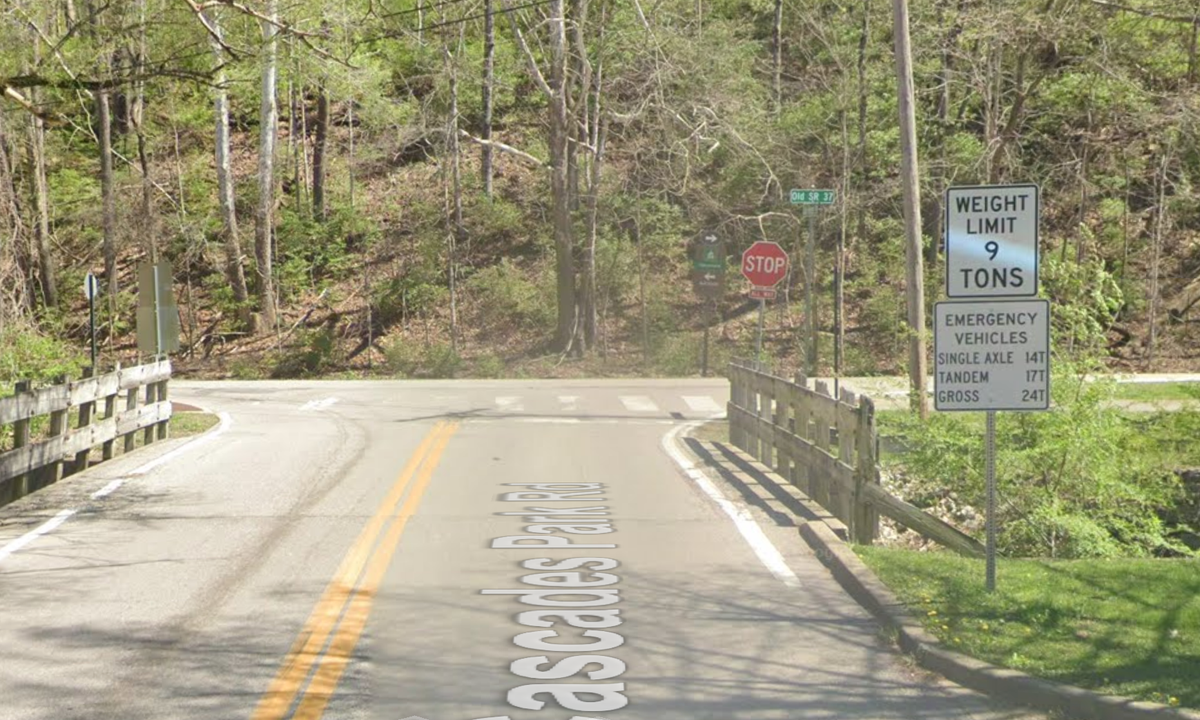
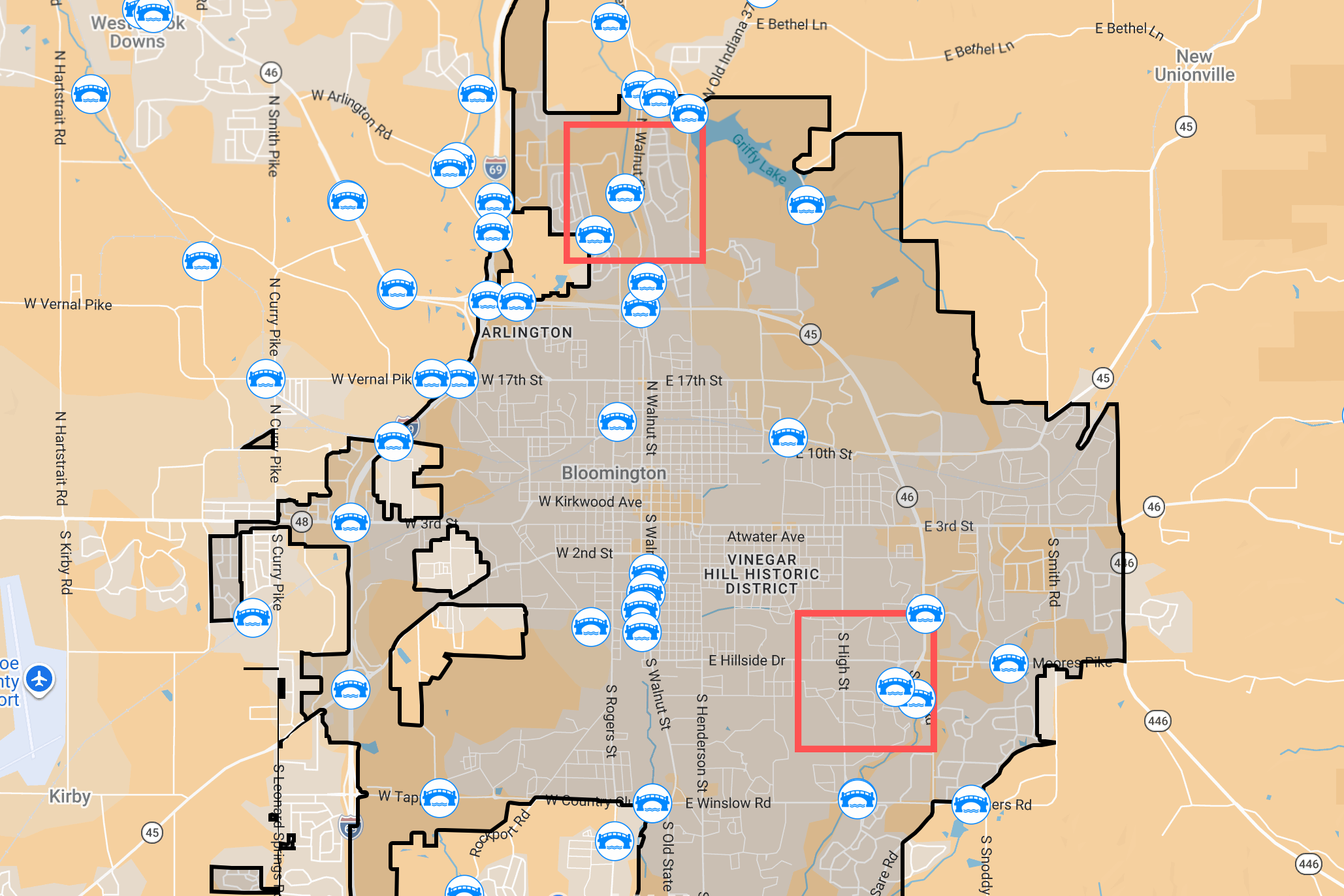
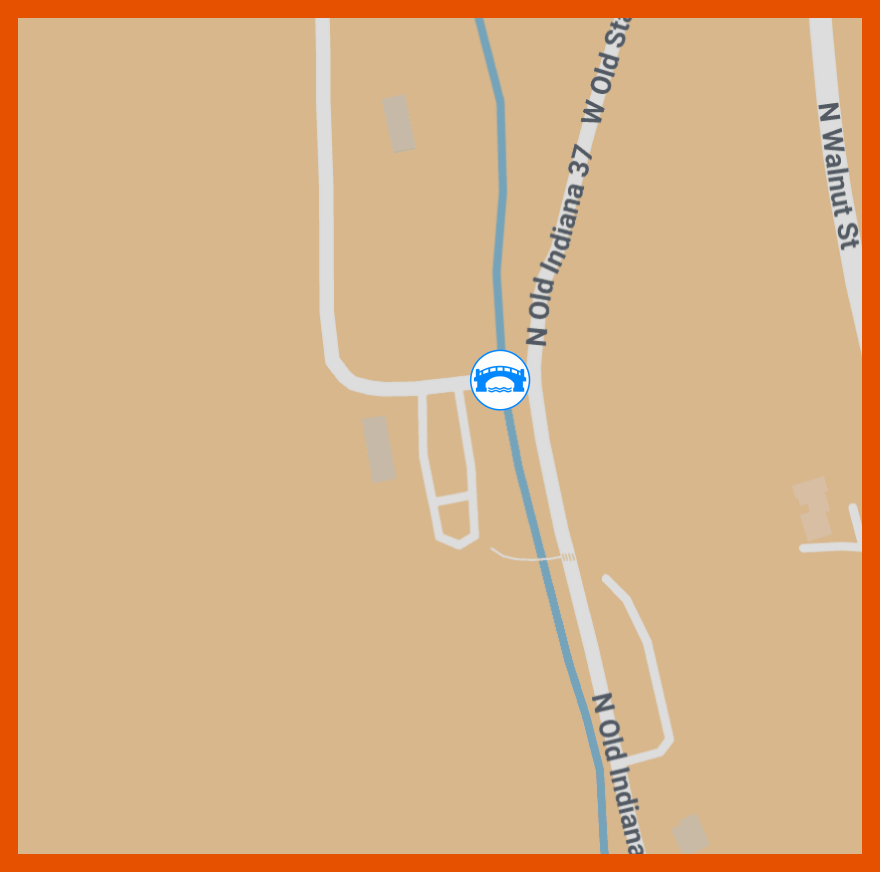
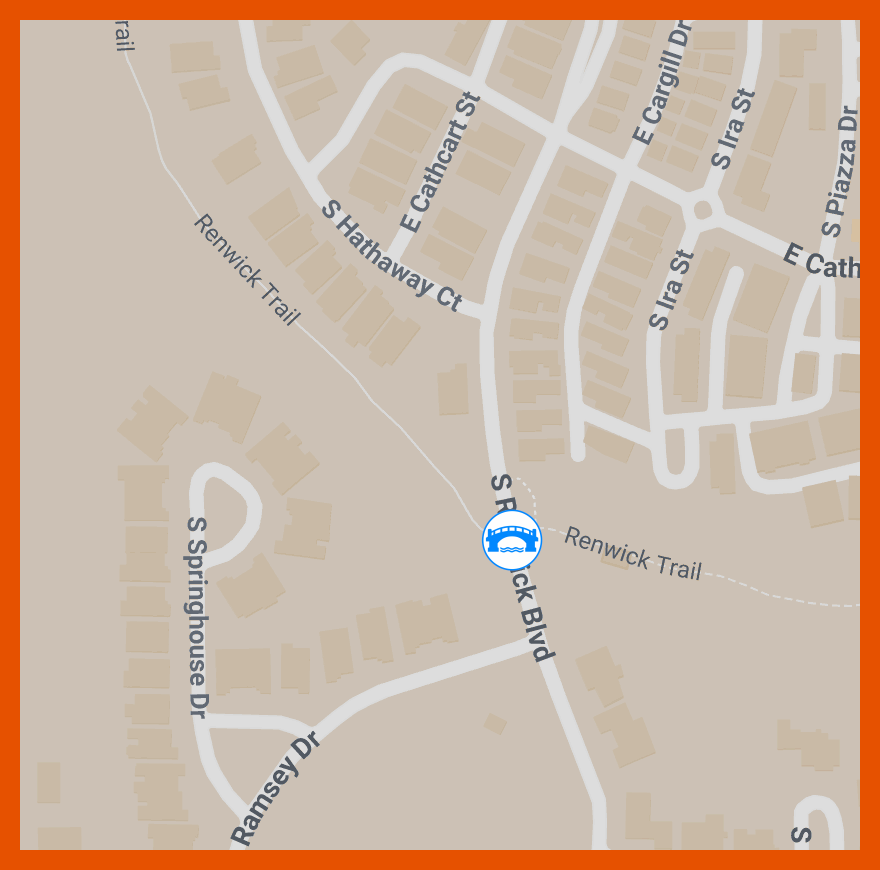
Maps by The B Square. The placemarks are for all the bridges inside Monroe County that are included in the National Bridge Inventory (NBI), maintained by the Federal Highway Administration.
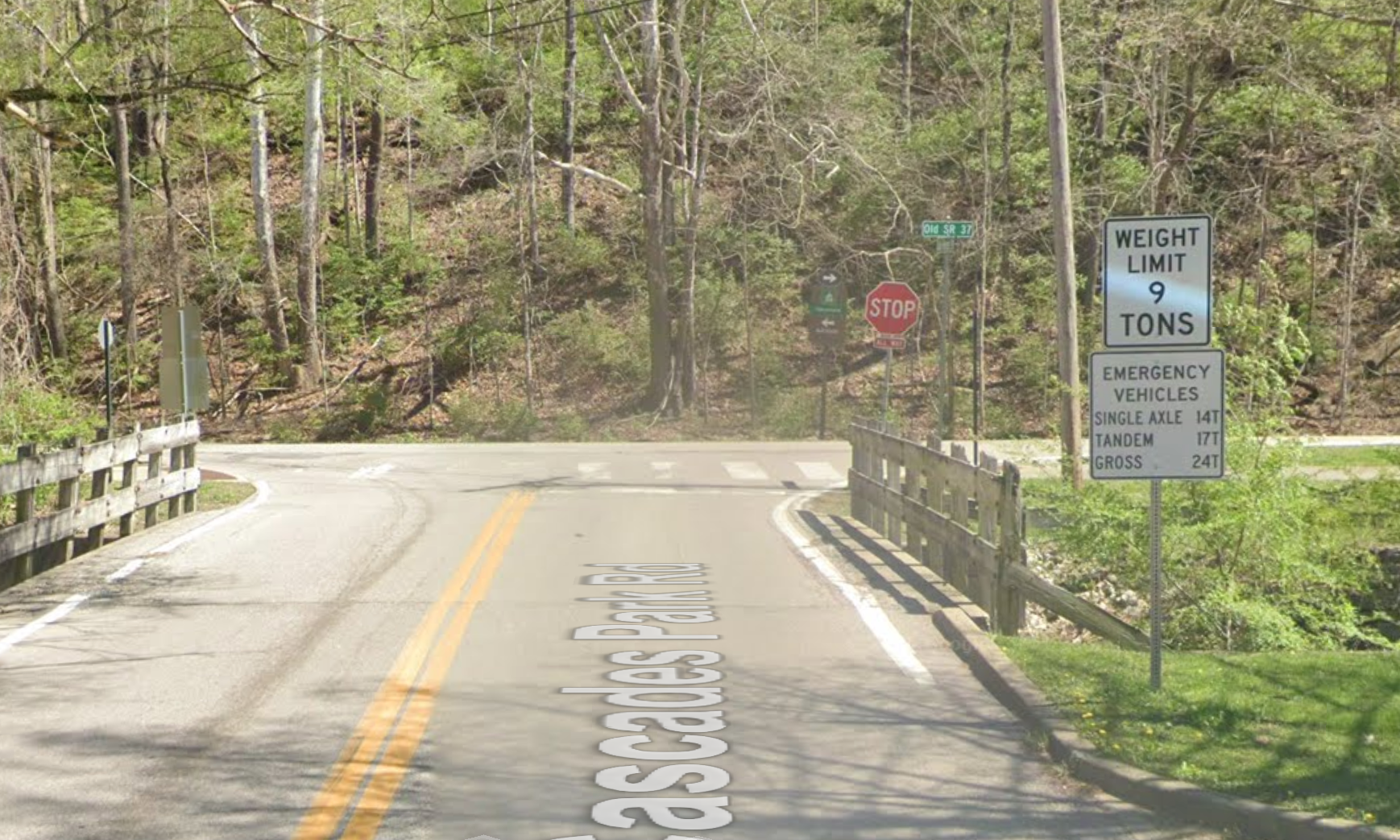
The city of Bloomington and Monroe County government are currently hashing out whose responsibility it is to maintain, repair, and possibly completely rebuild a 27-foot bridge on West Club House Drive next to the Lower Cascades Park on the north-west side of town.
On Thursday, the board of commissioners approved a resolution telling the city of Bloomington that the bridge is not part of the county’s responsibility. The resolution also passes along the recommendation from a recent inspection that the posted weight limit of nine tons be reduced to five.
[Updated on May 15, 2026 at 3:29 p.m. In response to the action by the county commissioners, the city of Bloomington announced that it is closing Club House Drive leading to the bridge. The city’s news release on the topic makes clear that the city of Bloomington is not accepting responsibility for the bridge, and that its action to close the road doesn’t mean acceptance of responsibility.]
The inspection report says the bridge has “widespread major rotting” in its timber railings, a beam with a “major spall” and seven severed support strands, failed retaining walls leaning toward the creek, exposed footings from scour erosion, and deterioration serious enough that engineers recommended reducing the bridge’s load limit to just five tons.
While the county did perform the inspection, it was made clear that it only did so with the understanding that the city would not be inspecting the bridge, and letting it remain uninspected “could affect future grant awards” to the county.
During Thursday’s regular meeting of commissioners, which took place at 10 a.m. at the usual Nat U. Hill room at the Monroe County courthouse, county attorney Jeff Cockerill presented the motion to the commissioners.
“We don't have the authority or responsibility under state code to do anything with [the bridge inspection]. So we want to make sure the city knows they are the underlying property owner. They own everything around this bridge,” Cockerill said. He continued: “We don't have it in our inventory, so we really don't have any authority to get on the road to do anything with it, but we want to make sure the city knows about this inspection, with the hope that something gets worked out.”
Commissioner Julie Thomas clarified the county’s position: “This is, in essence, almost like a legal notice, but we don't want the city to construe the fact that we did the bridge inspections as we're taking the bridge. It's not our bridge. It's not in our inventory,” she said.
Highway Director Lisa Ridge spoke about the inspection and explained what needs to happen next. “[The inspection] showed that the bridge does need to be reposted at a lower weight limit. Probably the next option would be closing that road. So we sent the bridge inspections to the city of Bloomington. The bridge technically needs to be posted with the new weight limit within a 30 day time period. That is the end of May,” she said.
The City of Bloomington does not agree with the county’s legal position about the bridge.
In emailed correspondence with the county last week, assistant city attorney Christopher Wheeler wrote to Cockerill and laid out the city’s position: The city’s responsibility for bridges within its boundaries, as defined by Indiana Code, excludes the West Club House Drive bridge.
“The City believes in good faith that the County is responsible for these bridges, as it has been historically. If your inspection has found safety issues, we trust your judgment to close the bridge and ask that you notify us of the timing,” Wheeler wrote in the email.
The specific section of state law that seems to be the source of this confusion is I.C. 8-17-1-46.
The relatively new section of state law, which was enacted in 2025, defines which government units have responsibility for bridges that are not part of the state highway system and are located inside the city limits within a county. The responsibility is divided based on the length of the bridge. Counties have to take responsibility for bridges longer than 20 feet, while cities take those that are shorter.
However, for a county to be responsible, one of two other criteria must be met. Either the bridge has to have been inspected by the county before Jan. 1, 2024, or the bridge has to have been added to the county inventory by the county executive after Dec. 31, 2024. Monroe County says it did not inspect the bridge before Jan. 1, 2024, and has not added it to the county’s inventory.
This is where part of the disagreement between the county and the city lies. In his email, Wheeler, representing the city’s position, wrote: “The county’s argument rests on lack of documentation of previous inspections. It would be understandable if the county cannot locate possibly decades-old records proving that it had inspected the bridge at any time in the past.”
On the other hand, county attorney Cockerill, during Thursday’s meeting, said, “Our understanding is that [the city] had done the inspections up until 2024 due to their small structure inspection process, and for some reason, it went from a small structure to a bridge, someone determined that around that period of time.”
Even though the bridge clearly didn’t get longer through the passage of time, it’s possible that more precise measurements were made, given that the bridge’s length affects who is responsible for paying to fix it. There’s a second bridge, near Renwick Trail, that is mentioned in Thursday’s resolution, where the same sticky jurisdictional situation applies as for the one on Club House Drive.
One way to analyze the situation, Cockerill told The B Square, is that the state law doesn’t definitively assign responsibility for this particular bridge to either the city or the county government.
Either way, the weight posted on the Club House Drive bridge is currently nine tons. The county inspection recommends it be lowered to five tons, while also recommending that the major work is to replace the superstructure due to condition and load capacity.
The county and the city must now figure out who will foot that bill.

Comments ()