
Monroe County election board sends complaints about candidate for clerk to prosecutor
Monroe County’s election board voted Thursday to send two complaints against clerk candidate Joe Davis to the county prosecutor, after hearing allegations about campaign signs, electioneering in the polling chute, and voter intimidation. Davis denied wrongdoing.
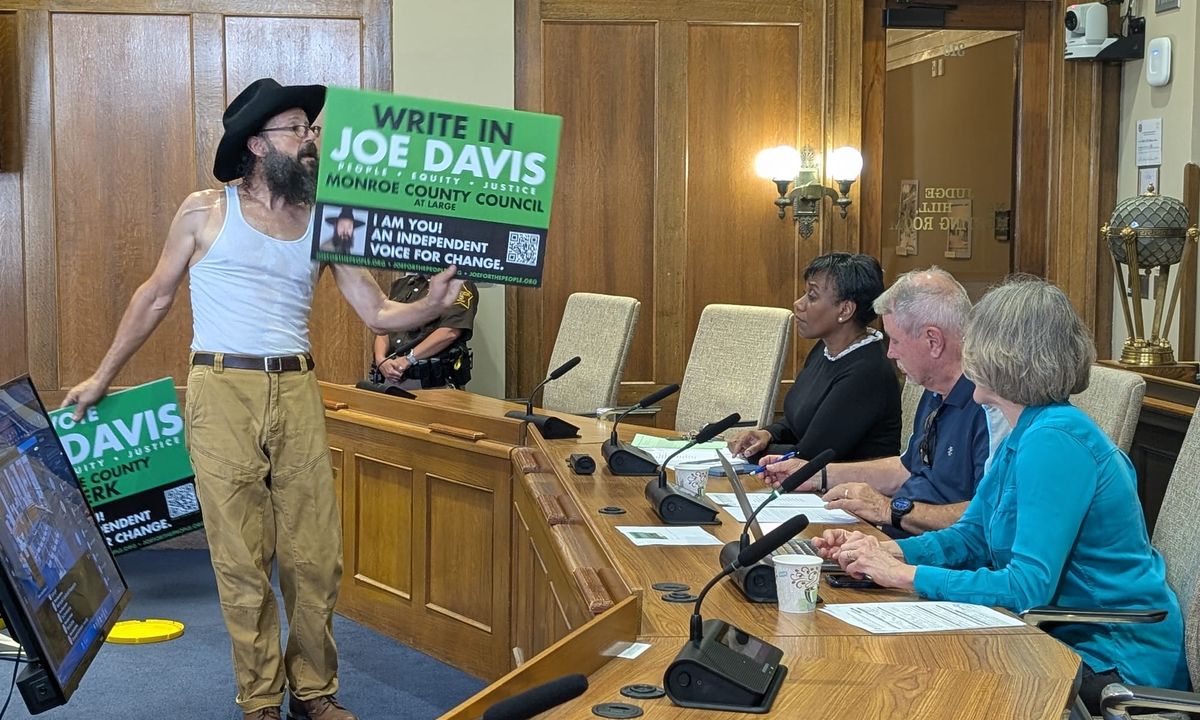
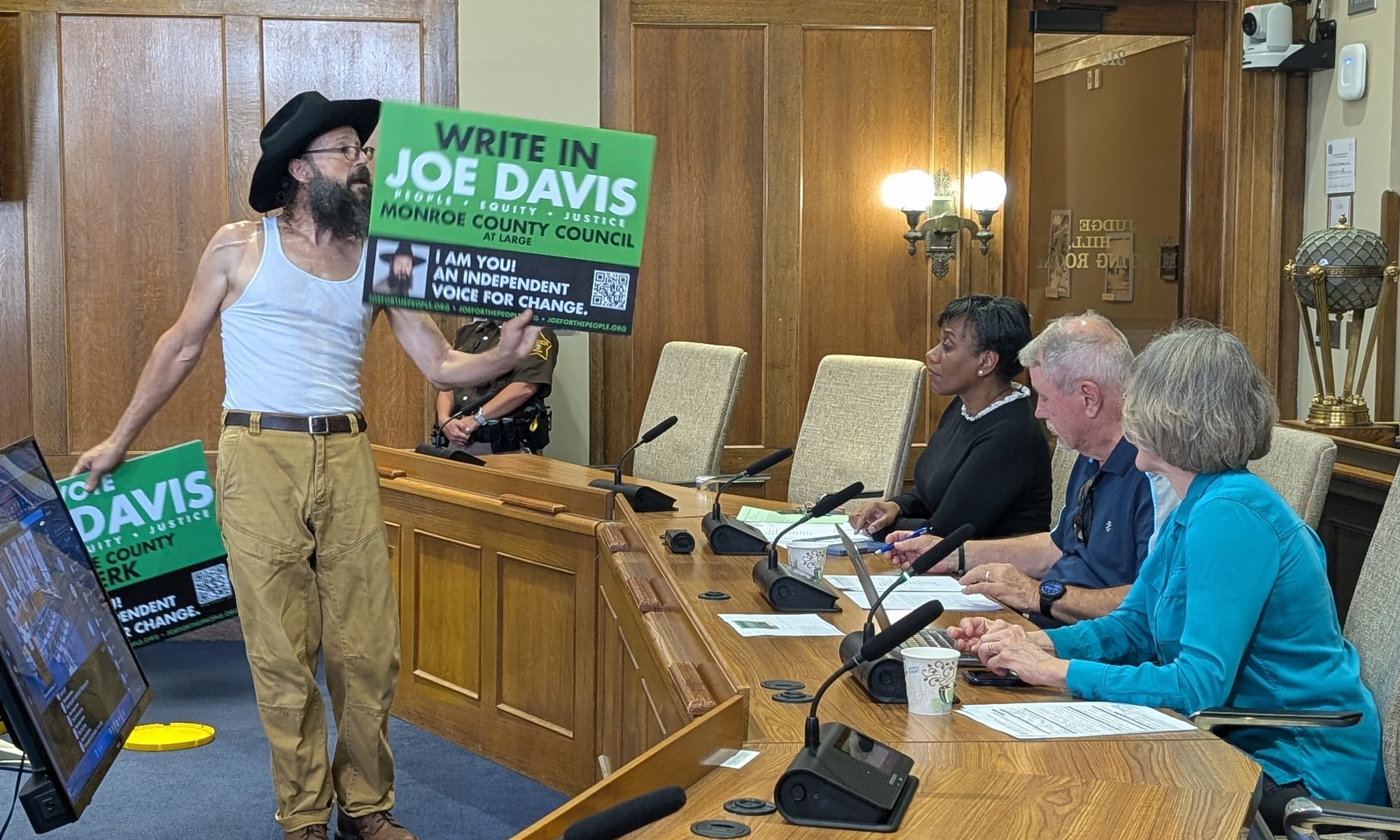
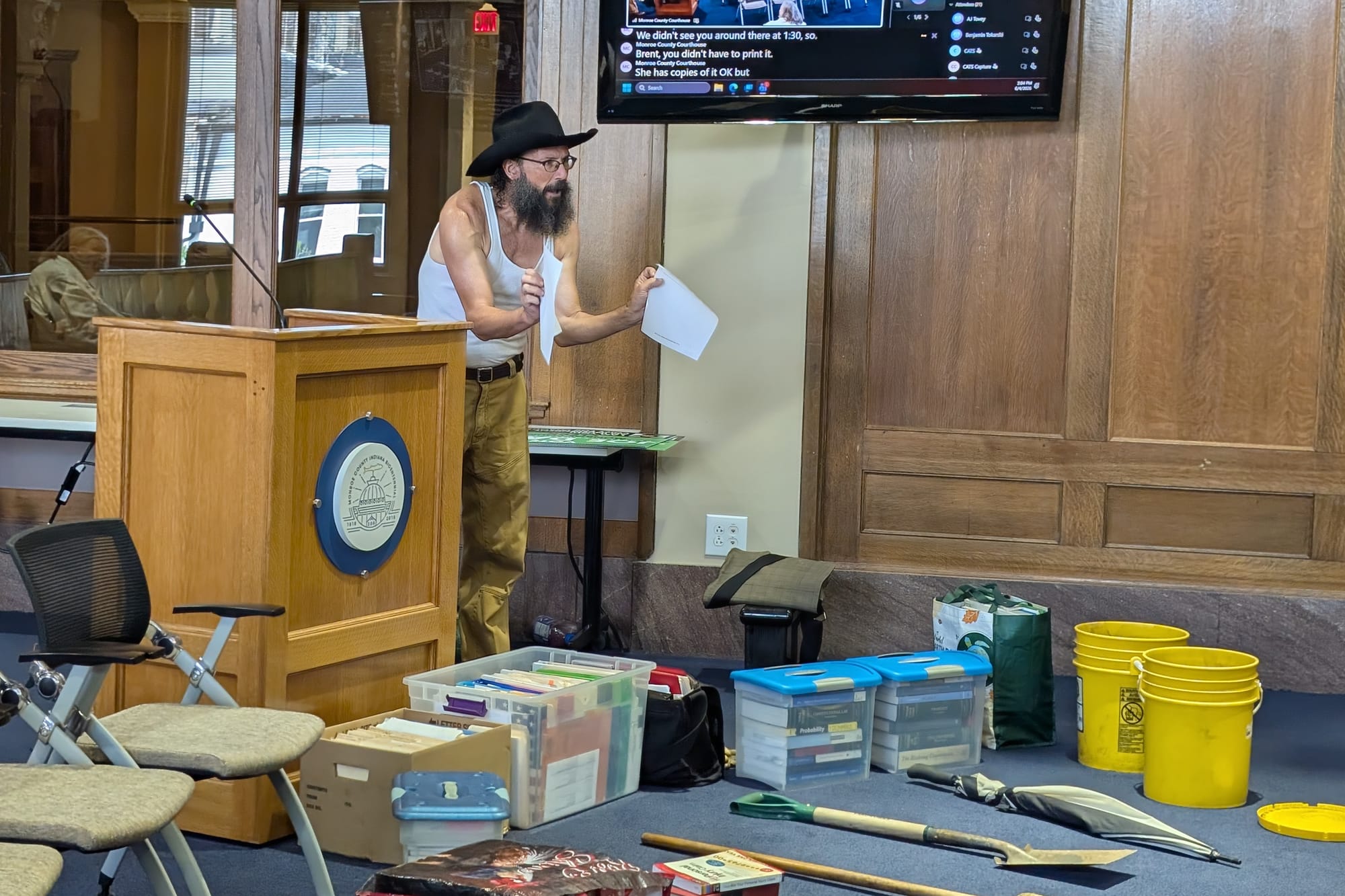
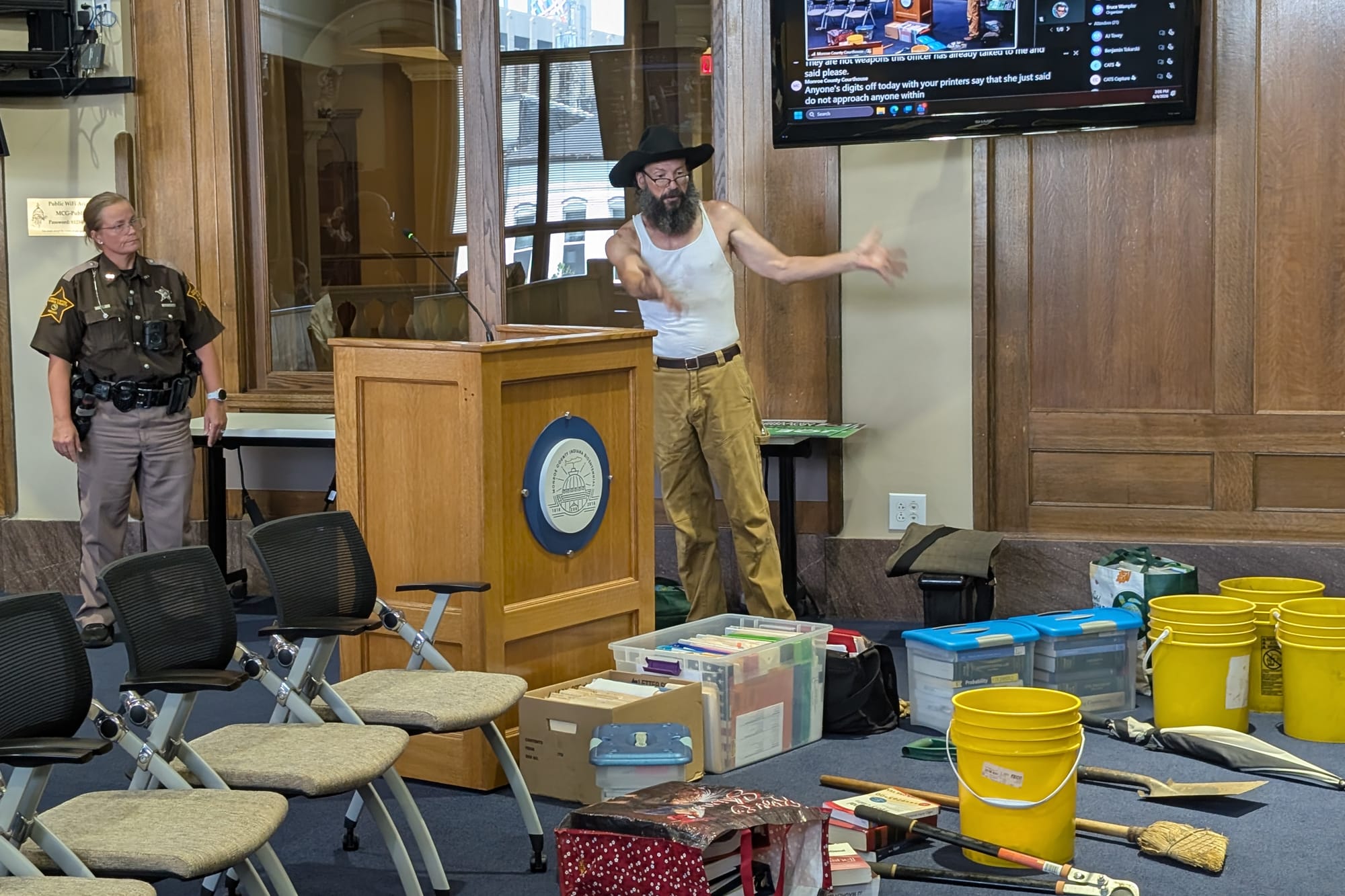
Left: County attorney Molly Turner-King clarifies state election law. Middle and Right: Joe Davis assembles his exhibits for display to the Monroe County election board (Dave Askins, June 4, 2026)
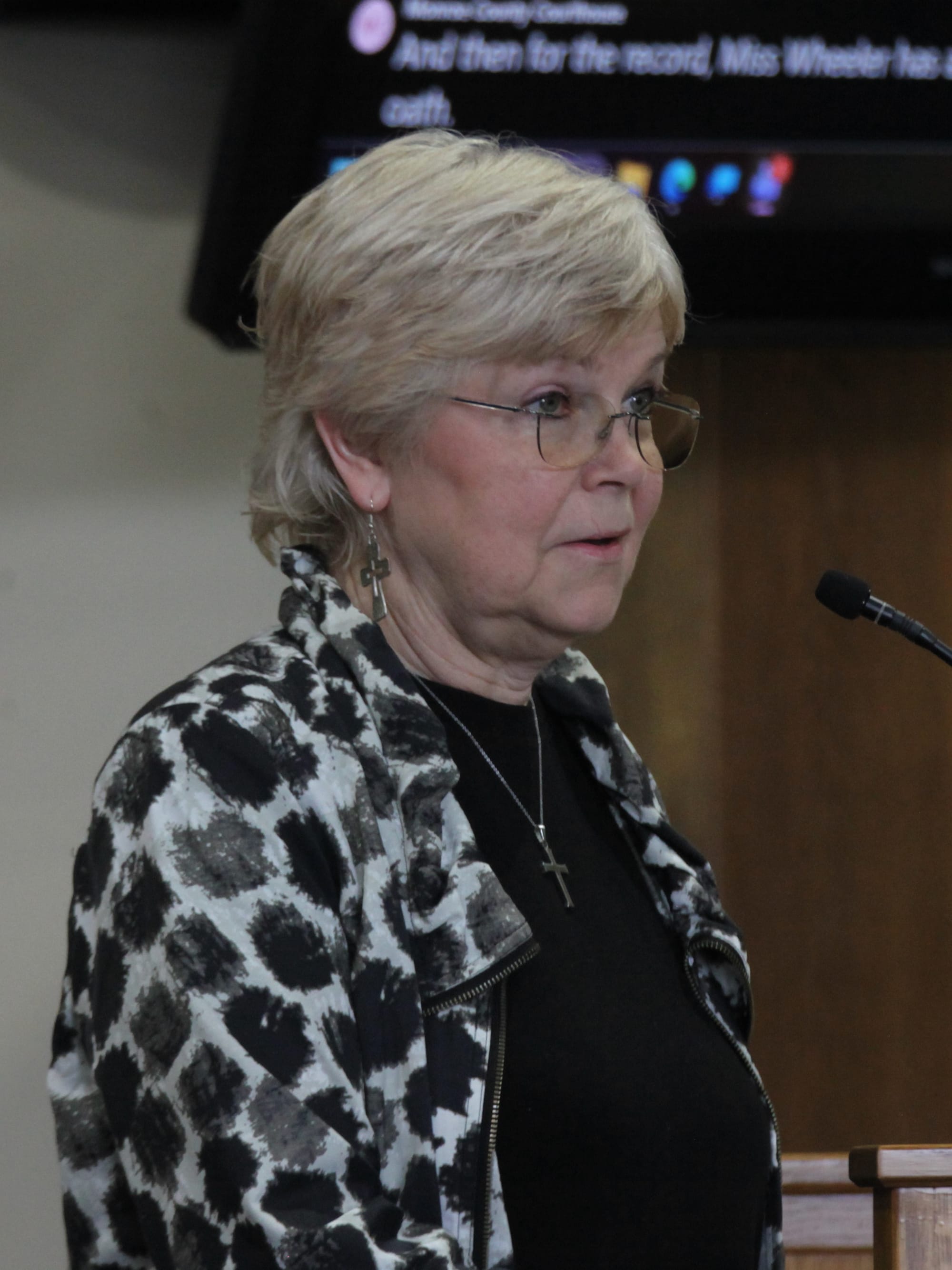
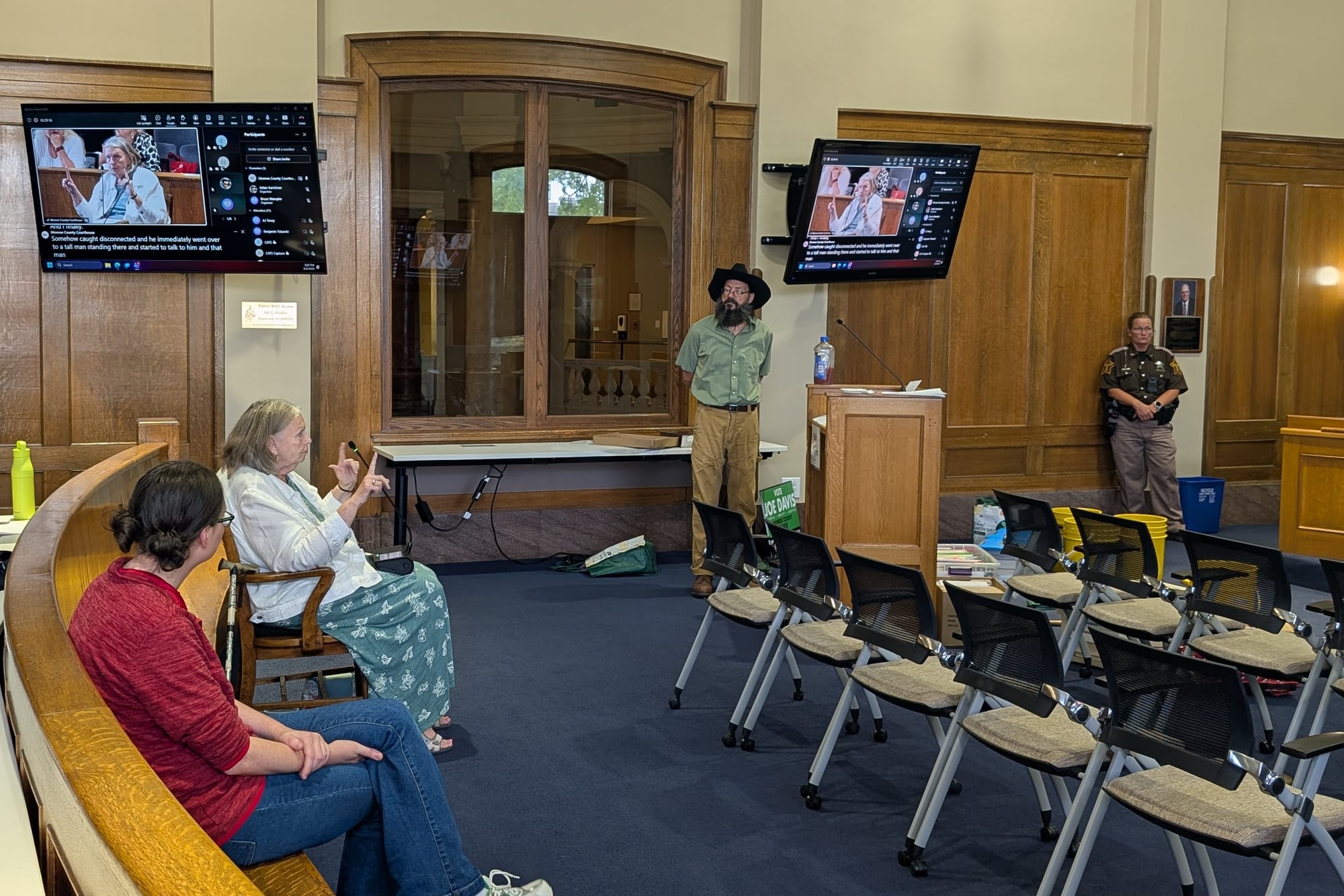
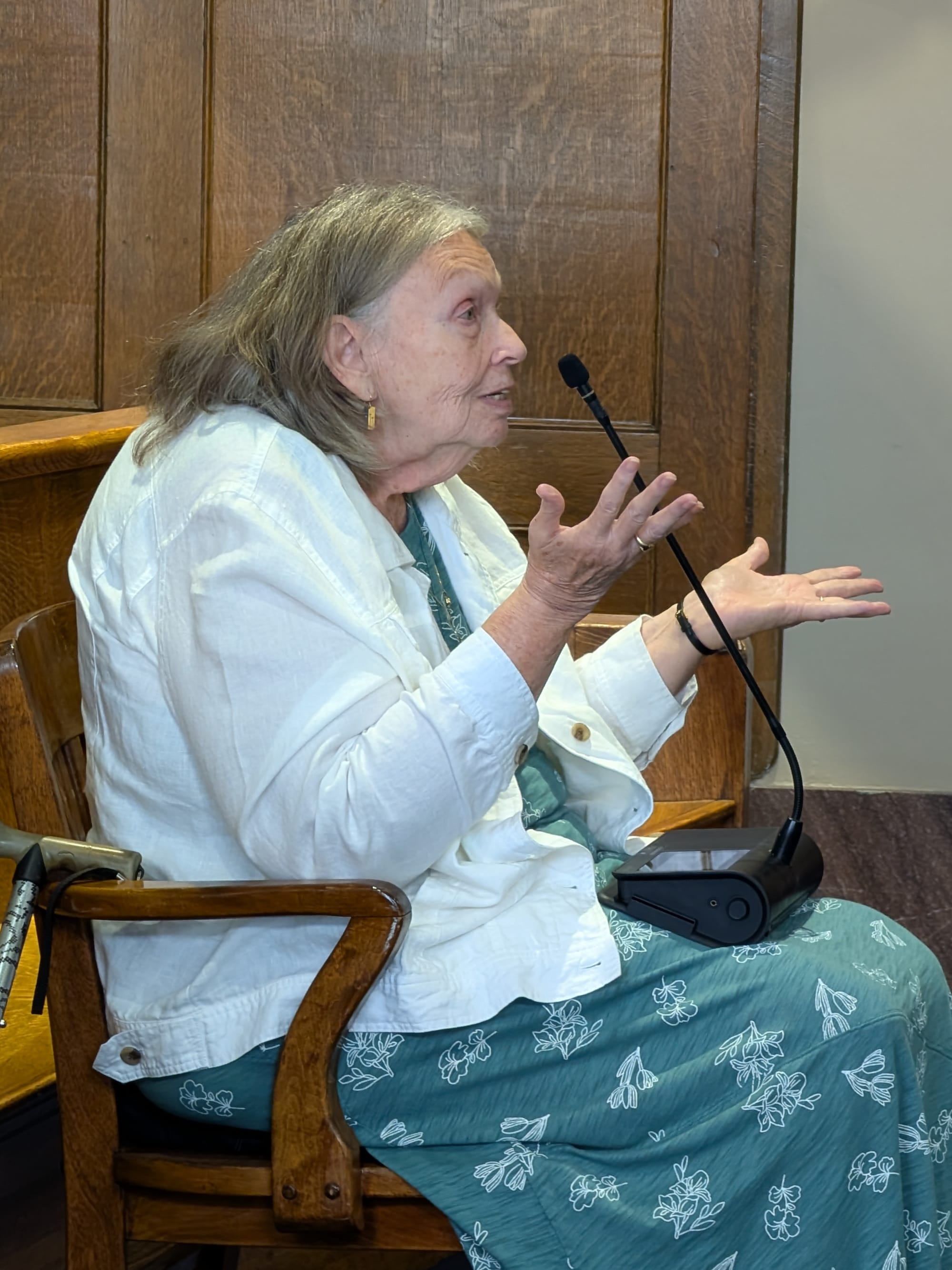
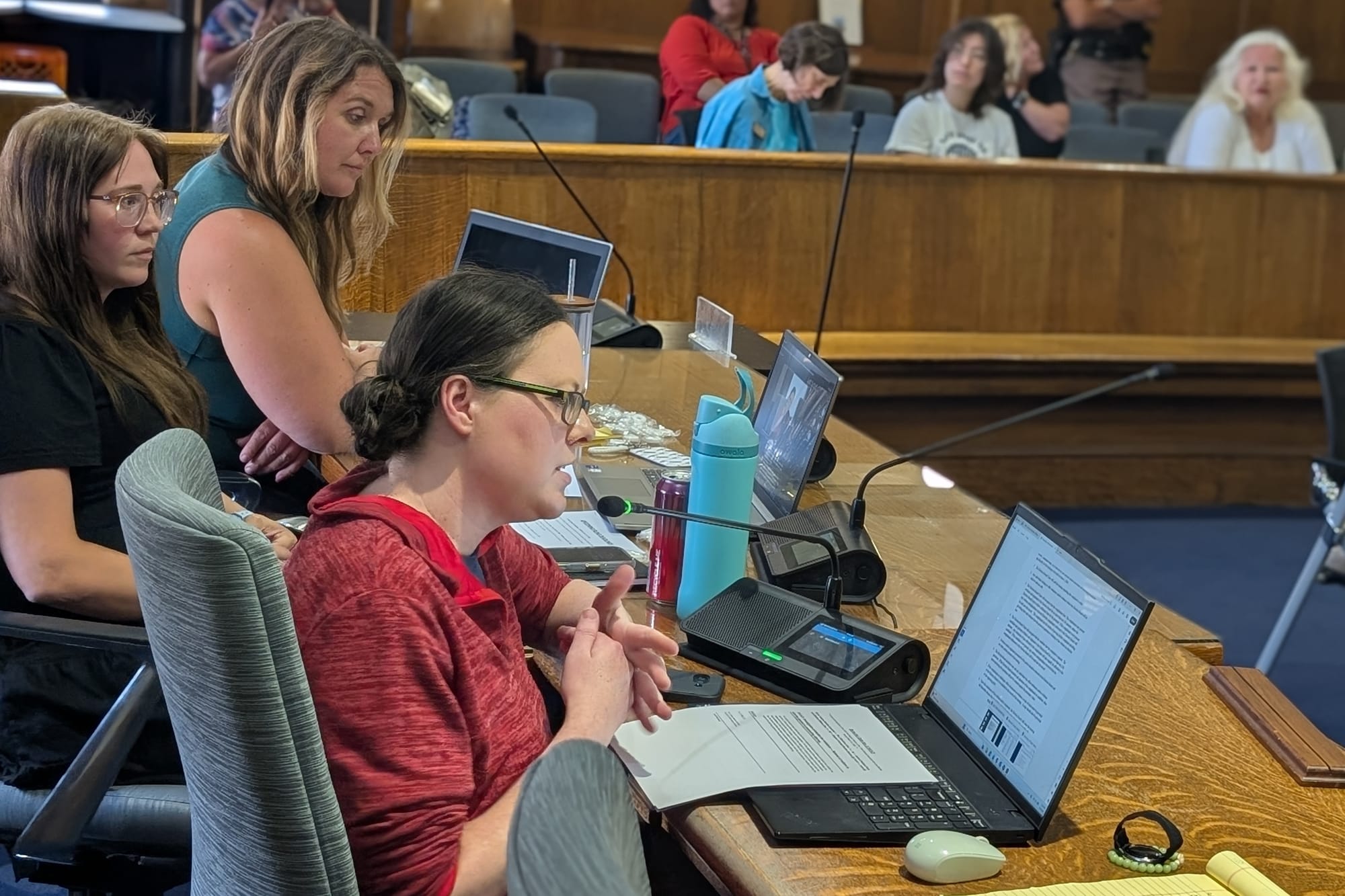
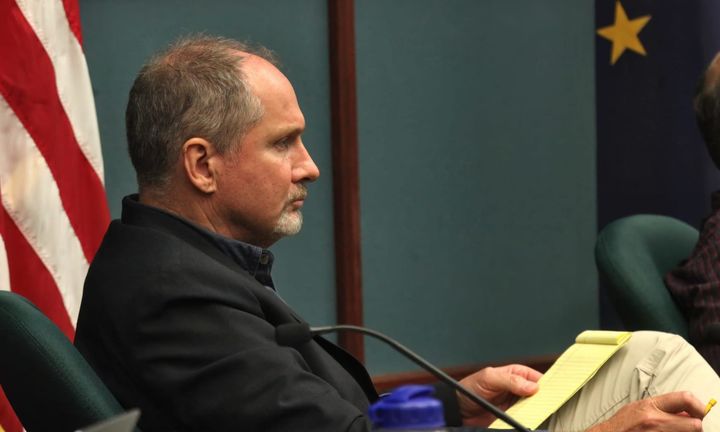
Left: Karen Wheeler testifies. Middle: Carol McGarry testifies as Molly Turner-King (seated, red top), Joe Davis (standing) look on. Right: Carol McGarry testifies. (Dave Askins, June 4, 2026)
Monroe County’s election board voted Thursday (June 4) to send two separate complaints about county clerk candidate Joe Davis to the county prosecutor. The board concluded there was “substantial reason” to believe he violated state election laws during the May primary’s early voting period.
In the race for the Democratic Party’s nomination for clerk, Davis came third in a three-way race, getting 21% (2,549) of the vote. The winner, Tree Martin Lucas, got 47.7% (5,774) and second-place finisher Tanner Branham received 31.3% ( 3,787). Both Martin Lucas and Branham attended Thursday’s hearing.
The three‑member board consists of Nicole Browne (county clerk), Danny Shields (Republican Party appointee), and Penny Githens (Democratic Party appointee). They unanimously agreed to forward both complaints to the Monroe County prosecutor under IC 3‑6‑5‑31, which governs investigations of alleged election law violations. The prosecutor may in turn refer the matter to the Indiana State Police.
The first complaint, filed by Karen Wheeler, a former Monroe County election supervisor, alleged four categories of violations: campaign signs lacking the required disclaimer; electioneering inside the “chute” (the 50‑foot zone leading to the entrance of the polls); following voters after they cast ballots; and potentially misleading claims by Davis that he was a “practicing jurist at law.”
The second complaint, from voter Carol McGarry, alleged that Davis’s approach to her on April 30 as she arrived to vote was intimidating and amounted to electioneering too close to the entrance.
Davis, who ran in the Democratic Party’s primary for Monroe County clerk and says now that he is attempting an independent run in the fall, denied any legal wrongdoing. He told the board he was trying to clean up the early voting site, improve access for voters, and deliver a fast campaign pitch that emphasized his court experience and his plans to improve accuracy in the clerk’s office. He apologized to McGarry “if you felt intimidated” but maintained that, out of a thousand people he spoke with, she was the only one who complained.
The board stressed that Thursday’s hearing was not a trial, but a screening step required by state law. That step is to decide whether the evidence presented should be referred to the prosecutor. After extended back‑and-forth with Davis about timing, points of procedure, and his desire to cross‑examine witnesses, the board ended the presentations and moved into their own deliberations.
Davis arrived about 20 minutes into the hearing, which started with the board’s adoption of the procedures, and the hearing of Wheeler’s complaint. When he arrived, Davis asked for more time to bring all of his exhibits, which included a shovel, a broom, several 5-gallon pails with dirt, books, and files. Davis also asked for time to review the procedures that had been adopted. Davis complained that the 10-minute timer was on a screen that was not in his immediate field of view.
At one point, Davis exhausted the patience of Shields, who was presiding over the hearings as chair of the election board:
I’m sorry, sir, this poor, poor me stuff is not wearing well with me. I mean, I appreciate what’s happening here, but I’m like: Everybody in here was here at 1:30, OK? You chose not to be, for whatever reason. You know, I go back to some people saying: On time is 10 minutes late. And you make your own choice with that, but you’re truthfully to me, you’re not helping your case right now. You’re just not.
The board adopted written hearing procedures drafted by county attorney Molly Turner-King, on advice from the Indiana Election Division. Those rules required witnesses to be sworn, capped each side’s presentation at 10 minutes (not counting board questions), and barred direct cross‑examination between complainants and candidates.
Turner-King then summarized Wheeler’s April 28 complaint, which accused Davis of posting signs without a proper “paid for by” disclaimer, entering the chute to interact with voters, following voters after they had cast ballots, and misrepresenting his credentials.
Under oath, Wheeler told the board she saw Davis daily during early voting, because she works in the county government building. She said Davis entered the chute repeatedly, followed voters as they approached and came back from the entrance, and sometimes stood so close to car doors that people inside would be unable to get out without asking him to move. She also said his claim to be a “practicing jurist at law” was confusing and potentially misleading.
Election supervisor Kylie Farris, also sworn, testified that she had in‑person conversations with Davis about his conduct, then contacted the Indiana Election Division for guidance and, on the first Saturday of early voting, issued a formal written notice telling him he was “not doing things that he was allowed to be doing.” Farris said she also notified the relevant party chair, as advised by state officials.
On the legal framework, Turner-King cited three key statutes: IC 3‑14‑3‑16 makes electioneering within the polls or the chute a Class A misdemeanor; IC 3‑14‑3‑15 addresses unauthorized persons entering or remaining in the chute; and IC 3‑11‑8‑16 limits who may remain within the chute area except for the purpose of voting. Githens, who said she had reviewed state law on disclaimers that morning, stressed that signs must clearly state “paid for by” in a minimum font size and sufficient contrast, and on every sign face visible to the public.
Davis was not present when the hearing on Wheeler’s allegations started. Turner-King told the board he had been notified by certified mail on May 15 and had picked up videos and photos submitted with the complaint. As Turner-King was about to recommend closing the record, Davis arrived, and the board briefly recessed.
When the board reconvened, Davis objected that he had not seen the procedures before they were adopted, asked to have time added his 10‑minute clock, and resisted coming to the lectern to be sworn in, as he was moving his 5-gallon pails, books, and tools in front of the lectern for display to the board. Shields asked the sheriff’s deputy in the room to remove the tools, which he said could be “construed as weapons.”
After some back-and-forth, the tools were allowed to stay. After finally taking the oath, Davis used his allotted time to argue that he had simply been cleaning up a hazardous, debris‑strewn approach to the building, to defend the disclaimers on his signs as compliant, and to justify describing himself as a “practicing jurist at law” based on years of pro se litigation and self‑study.
He also accused Wheeler, Githens, and the winner of the primary, Tree Martin Lucas, of forming a “whispering cabal” to undermine his campaign as he gained support. Davis more than once asked for additional time and the right to question his accusers directly. Relying on the adopted rules, the board refused those requests
In deliberations on the Wheeler complaint, Turner-King reminded board members that state law allows them to take no action, issue an admonishment, or refer a matter for investigation. Shields said that, at minimum, the question about whether Davis’s signs met disclaimer requirements should be decided by someone other than the board, like the prosecutor or state investigators.
All three members ultimately agreed there was enough in the record, about disclaimers on the signs, presence in the chute, post‑voting contact with voters, and credentials claims to warrant referral. They voted unanimously to forward Wheeler’s entire complaint to the prosecutor.
The board then opened a separate hearing on McGarry’s complaint. McGarry, a long‑time voter and former poll worker, testified that on April 30 she parked in a handicapped space and, after she got out of her car, Davis “latched himself onto me” and began talking “quickly and at length” about his background and criticisms of the clerk’s office as she walked toward the east entrance.
McGarry said she repeatedly told him she did not want to talk, but that he kept pace with her around the corner of the building up to near the steps. She described feeling “trapped” and called his behavior inappropriate and intimidating.
Farris told the board that McGarry’s was one of several complaints her office had received about Davis’s interactions with voters and that, once informal conversations did not change his behavior, she began asking complaining voters to put their accounts in writing.
Responding, Davis recited the short campaign script he said he was delivering that day and insisted he did not speak negatively about the clerk’s office, only about how he would improve accuracy. He apologized to McGarry “if you felt intimidated” but said he had talked with perhaps a thousand voters and that she was the only person to complain. He again suggested her complaint had been encouraged by the same small group of local party figures he blamed for Wheeler’s filing.
In a second round of deliberations, Turner-King read from IC 3‑14‑3‑21.5, Indiana’s voter intimidation statute, which makes it an offense to intimidate, threaten, or coerce someone for voting or attempting to vote, or for helping others vote.
Shields noted that the line between “annoying” and intimidating conduct is partly in the eye of the beholder and depends on “life experiences,” and said that was another reason to let the prosecutor weigh the facts. Githens said she remained especially concerned about interference with a voter’s ability to reach the polls without feeling harassed.
On Githens’s motion, the board voted unanimously to forward McGarry’s complaint to the prosecutor for further investigation.
King said she would send the prosecutor both complaints, along with all written exhibits and videos, plus photographs of the signs and other items Davis had brought. Davis kept his materials after agreeing that they could be photographed.


Comments ()