
Federal court declines to block Indiana ICE-detainer law before July 1 effective date
A federal judge denied Monroe County sheriff Ruben Marté’s request for a preliminary injunction to block Indiana’s new ICE-detainer law before July 1, citing the political subdivision doctrine. The constitutional challenge remains unresolved, with Rokita’s dismissal motion still pending.
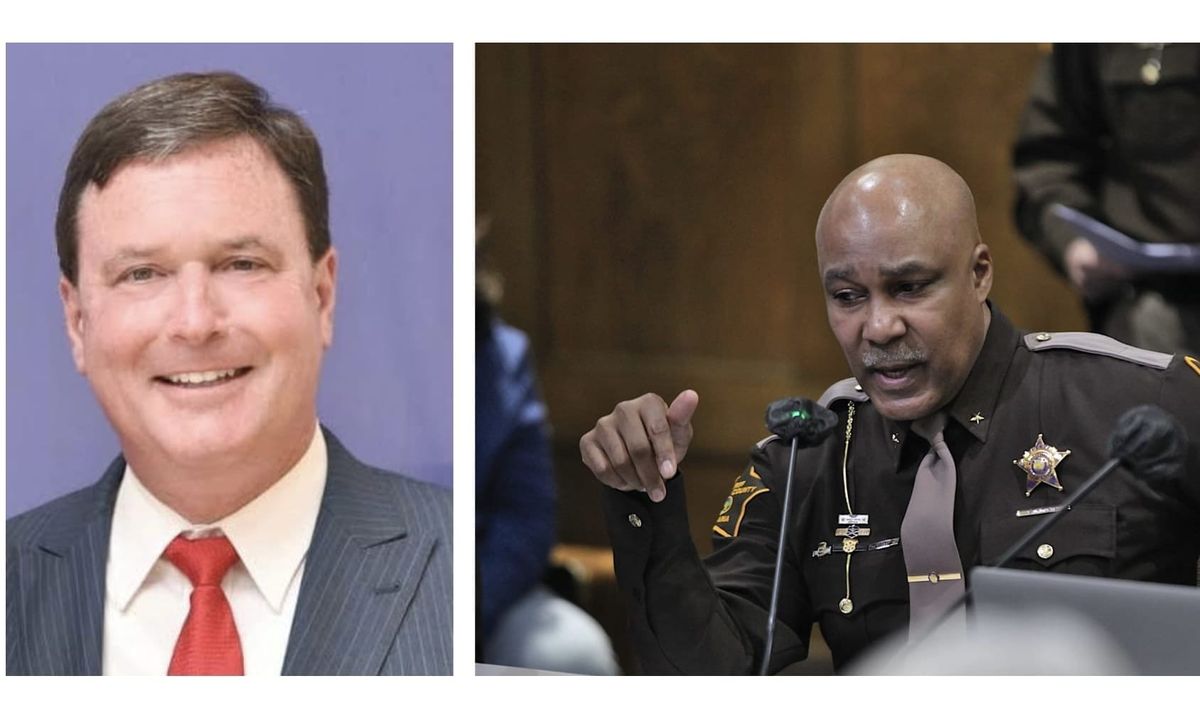
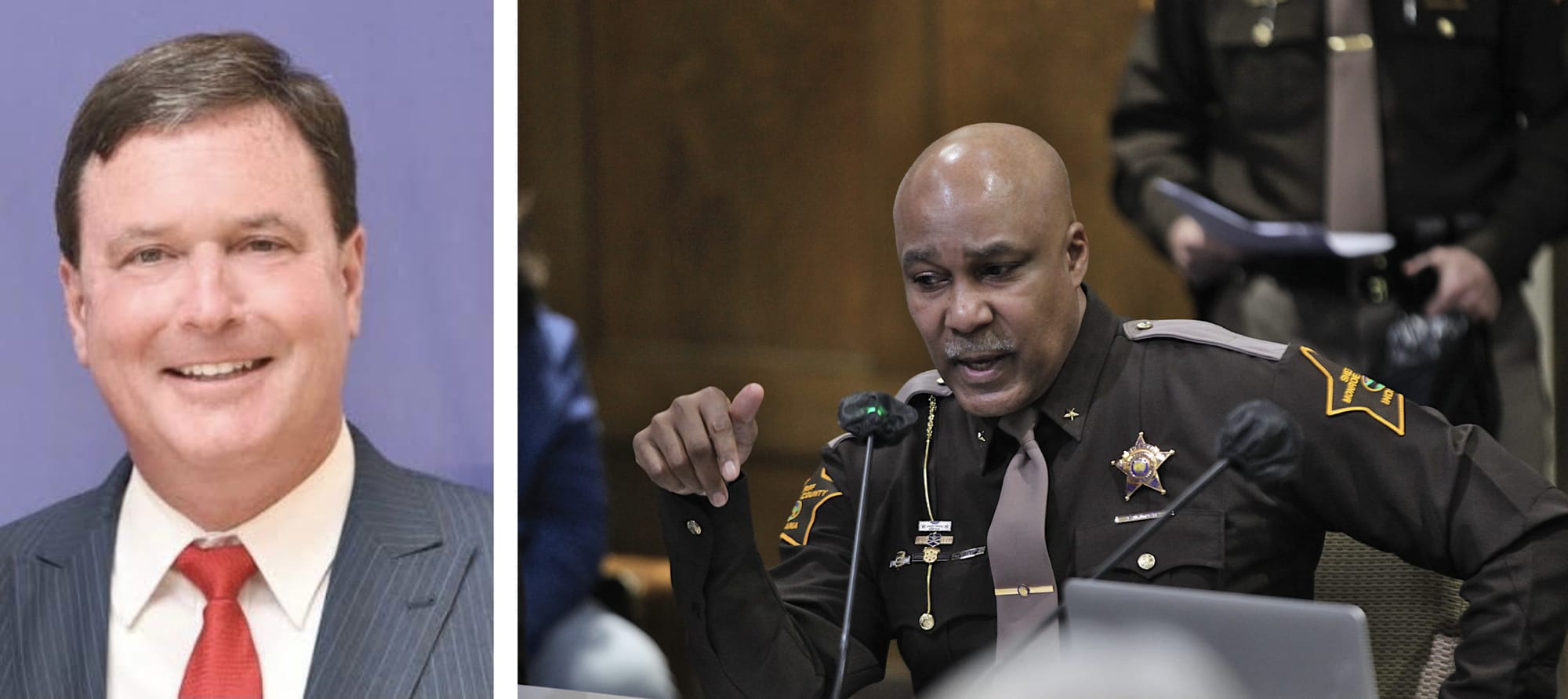
A federal judge has issued an order denying Monroe County sheriff Ruben Marté’s request to block enforcement of a new Indiana immigration-enforcement law before it takes effect July 1.
The ruling does not decide the central constitutional question in the case: Can a county jail hold someone after their release date solely because the U.S. Immigration and Customs Enforcement (ICE) has issued a civil immigration detainer request that is not backed by a judicial warrant?
Instead, the U.S. District Court for the Southern District of Indiana denied Marté’s request for a preliminary injunction, because the court concluded that it appears to lack jurisdiction under what is known as the “political subdivision doctrine.”
That doctrine generally prevents federal courts from resolving constitutional disputes between a state and one of its own political subdivisions. In practical terms, the court treated Marté’s lawsuit as a dispute between the state of Indiana and a local arm of Indiana government.
The immediate effect of the June 18 order is that there is currently no federal injunction preventing enforcement of the challenged provision of Senate Enrolled Act 76, which is set to take effect July 1.
SEA 76 requires a law enforcement agency like the sheriff’s office, that has custody of someone who is the subject of an ICE detainer request, to give notice to the judge handling person’s case, record the detainer in the person’s case file, tell the person they are being held on the detainer, and “comply with all requests made in the immigration detainer request.”
The law also allows a person who is the subject of a detainer to challenge it on two grounds: that they have been misidentified, or that they are a U.S. citizen and therefore not subject to removal. An intentional violation of the law can carry a civil penalty of up to $10,000.
Marté’s lawsuit challenges the part of the law requiring compliance with ICE detainer requests. Marté argues that once a detainee is otherwise entitled to release, continuing to hold that person solely on an ICE detainer is a new Fourth Amendment seizure of that person that must be independently justified. Marté argues that a civil immigration detainer, standing alone, does not provide the kind of judicial warrant or probable cause needed to justify that seizure by local law enforcement.
That position is reflected in Monroe County sheriff’s office policy MCSO-012, which directs officers not to hold someone past their release date based solely on a non-criminal or administrative ICE detainer request unless it is accompanied by a judicial warrant.
Marté filed a motion for a preliminary injunction to prevent enforcement of the law when it becomes effective on July 1. [Rokita’s brief opposing preliminary injunction] [Marté’s brief replying to opposition]
In addition to opposing the preliminary injunction, attorney general Todd Rokita has filed a motion to dismiss Marté’s federal case. The state’s filing says the sheriff’s office is a political subdivision that cannot sue the state in federal court, that Marté lacks standing, that the federal court should abstain because of a related case already pending in Monroe County circuit court, and that the Fourth Amendment does not categorically prohibit local law-enforcement officers from honoring ICE detainers.
Rokita’s office also argues that Marté’s lawsuit is a facial challenge to the law, meaning the sheriff must show that the challenged provision is unconstitutional in all its applications. The attorney general says Marté cannot meet that standard, in part because the state contends ICE detainer requests can be supported by probable cause of removability and can be accompanied by administrative warrants. [Marté’s brief opposing motion to dismiss]
Marté’s response to the motion to dismiss says that none of the attorney general’s threshold arguments should keep the federal court from considering the constitutional issue. Marté says that he faces a clear choice between complying with what he believes is an unconstitutional state law and exposing his office to state enforcement penalties. He also says that the political subdivision doctrine should not bar the case, because Marté is an elected public official with independent law-enforcement responsibilities.
Arguing on the merits of the case, Marté says SEA 76 would require local law enforcement to detain people without a judicial warrant, without probable cause that they committed a crime, and without an “individualized” local determination that continued detention is lawful. They also say the law’s limited challenge process, which involves misidentification or U.S. citizenship, does not fix the Fourth Amendment problem.
The federal court’s June 18 order did not resolve those arguments on the merits.
The order instead focused on the political subdivision doctrine. The court wrote that the doctrine bars federal courts from adjudicating a what it calls an “intramural dispute” between a state and one of its subdivisions. The court also noted that the doctrine would not prevent individual detainees from bringing their own constitutional challenges if they are held on ICE detainers. But the court concluded that Marté, as sheriff, had not shown he was entitled to preliminary injunctive relief in federal court.
That leaves the federal case hanging for now. The preliminary injunction has been denied, but the case itself has not yet been dismissed. Still pending is Rokita’s motion to dismiss the lawsuit. Marté filed his opposition to that motion on June 16. The court’s preliminary-injunction ruling seems to indicate that it views favorably at least one of the attorney general’s dismissal arguments, but the court has not yet entered a final ruling on the motion to dismiss.
A related Monroe County case is also still part of the legal landscape.
Rokita sued Marté in Monroe County circuit court in July 2024 over the sheriff’s immigation enforcement policy, claiming that it unlawfully restricts cooperation with federal immigration enforcement. That case is pending before special judge Luke Rudisill.
But the state case has been paused, in legal terms “stayed” until July 20 while the federal constitutional challenge moves forward. Rokita has asked Rudisill to reconsider that stay and allow the state-court case to resume.
The federal court’s denial of preliminary relief could increase the pressure on the state case, because the federal court has now said that the dispute between Indiana and one of its local governmental units may be better worked out in a state court or through the political process, rather than through the federal courts.



Comments ()