
Judge pauses Rokita’s lawsuit against Monroe County sheriff, as fight over ICE detainers shifts to federal court
A special judge has paused Indiana AG Todd Rokita’s lawsuit against Monroe County sheriff Ruben Marté over immigration-enforcement policy, while a separate federal constitutional challenge to SEA 76 moves forward. Rokita is now asking the local court to unpause the lawsuit.
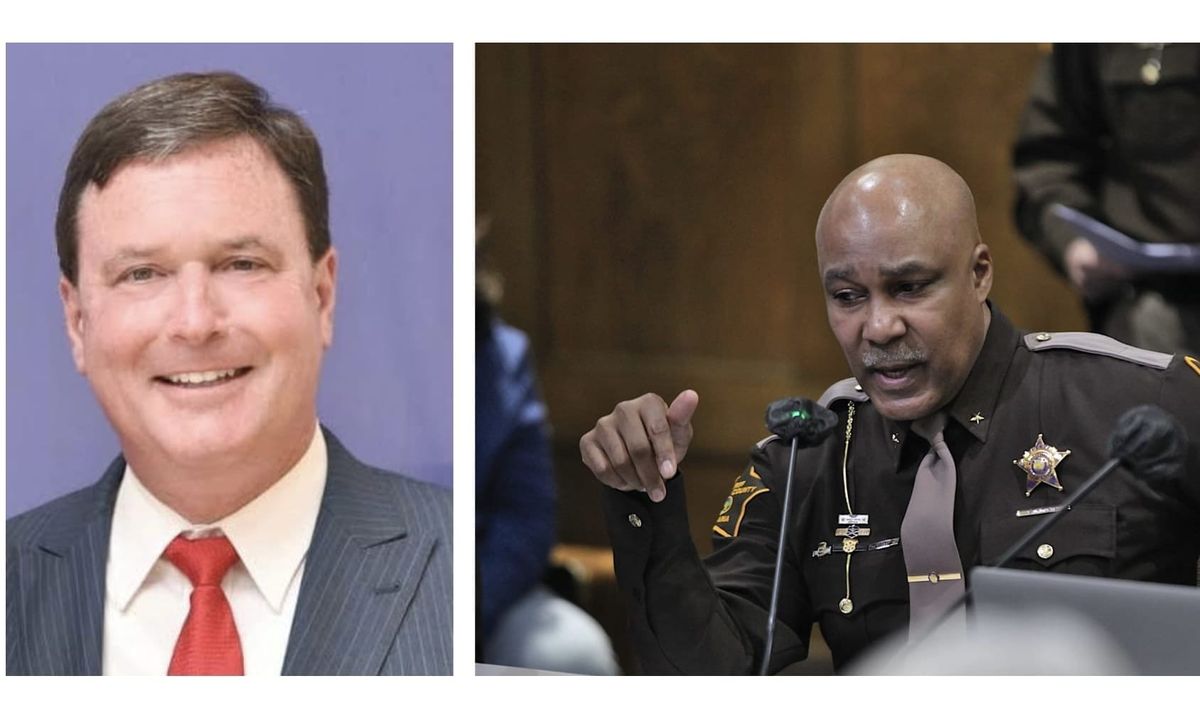
A special judge appointed in a Monroe County case has put on hold Indiana Attorney General Todd Rokita’s lawsuit against sheriff Ruben Marté over the sheriff’s immigration-enforcement policy, while a related federal constitutional challenge proceeds in U.S. District Court.
But the attorney general is now asking the county circuit court to reverse its own decision and resume the case.
The backdrop of the local case pending in the county’s circuit court is Marté’s recently filed federal lawsuit against Rokita, which challenges part of Senate Enrolled Act 76 (SEA 76), a new Indiana law requiring local law-enforcement agencies to comply with detainer requests from U.S. Immigration and Customs Enforcement (ICE).
Marté contends that complying with detainer requests that are not backed by a judicial warrant would violate the Fourth Amendment’s prohibition on unreasonable seizures. The most recent substantive activity in the federal case is Marté’s motion for a preliminary injunction to block enforcement, before SEA 76 takes effect on July 1.
The case in the circuit court dates back to July 2024, when Rokita sued Marté over the Monroe County sheriff’s office policy known as MCSO-012. The attorney general argues that the policy unlawfully restricts cooperation with federal immigration enforcement. The case has been pending in Monroe County circuit court under special judge Luke Rudisill.
On April 11, attorneys for Marté filed a motion to stay proceedings, which asked Rudisill to pause the local case while the federal litigation moves forward. The filing claims that the new federal lawsuit is likely to resolve what Marté contends is the key remaining question in case. That question is whether holding someone solely on the basis of an ICE detainer request violates the Fourth Amendment.
The motion for a stay also says that after Gov. Mike Braun signed SEA 76 into law, Marté revised the sheriff’s office policy to comply with most of the new statute, leaving the detainer issue as the central unresolved question. The April 11 filing also indicates that Marté intends to seek a preliminary injunction in the federal case, before the relevant provision of SEA 76 takes effect on July 1. The request for a preliminary injunction was filed on April 30.
On April 20, Rudisill granted the stay. The order did not include the court’s reasoning, which is not unusual.
The next day, Rokita’s office filed a motion to reconsider, asking Rudisill to reverse his order granting a stay. The attorney general says that the constitutional issue has already been extensively briefed in the Monroe County case, including in cross-motions for summary judgment that are already pending before the court.
According to the AG’s filing, pausing the state case while the federal case proceeds would “waste, not conserve, judicial resources” and would delay resolution of the key dispute, because the federal case had barely begun at the time the stay was ordered. The AG also says that Indiana courts are fully capable of deciding federal constitutional questions, including Fourth Amendment claims.
Rokita’s filing asking for reconsideration frames the case as a matter of public safety and state authority, saying that: “Hoosiers have a special interest in the speedy resolution of this case and the vindication of the duly enacted State law at issue.” The filing contends that Marté’s office has released individuals subject to ICE detainer requests and cites one example where a released person allegedly later committed assault.
Marté’s legal team responded on April 22 with a filing opposing the request for reconsideration, urging Rudisill to leave the stay in place. The sheriff’s lawyers said that SEA 76 substantially changed the legal landscape, after the parties had already completed much of their summary judgment briefing.
According to Marté’s opposition to reconsideration, the “sole remaining issue of contention” is now the federal constitutional question that is also at the center of the separate federal lawsuit. The filing also says the federal court could provide broader relief by declaring the new detainer provision unconstitutional and blocking its enforcement statewide before it takes effect on July 1.
Rokita then replied on April 30 to Marté’s opposition, followed by an amended version on May 1. In those filings, Rokia says that Marté’s side is effectively assuming that the federal court would decide the constitutional issue in the sheriff’s favor. Rokita also says in the filing that he intends to seek dismissal of the federal lawsuit on preliminary grounds, before the court ever reaches the merits of the Fourth Amendment question.
The latest filings also reveal that in the county circuit court case, settlement discussions on some claims not involving the Fourth Amendment had begun before the stay was entered. The attorney general says those discussions stopped once the stay was granted. According to the AG’s filing, Marté’s side informed the state that it did not plan to continue settlement discussions while the stay remains in effect.
All of this means that the local Monroe County case is now paused, unless Rudisill grants the motion to reconsider and lifts the stay he previously ordered.
Meanwhile, in the separate federal lawsuit filed by Marté, in the U.S. District Court for the Southern District of Indiana, the most recent substantive action came on April 30, when Marté filed a motion for a preliminary injunction, to block enforcement of SEA 76 before it takes effect on July 1.




Comments ()