
Monroe County commissioners vote to end Flock contract, remove six license plate cameras
Monroe County commissioners voted 2–0 to end the county’s Flock Safety contract and remove six license plate readers, accepting a possible $3,000 removal fee. Commissioners cited concerns about misuse of data in Flock’s nationwide system. Sheriff Ruben Marté supports the move.
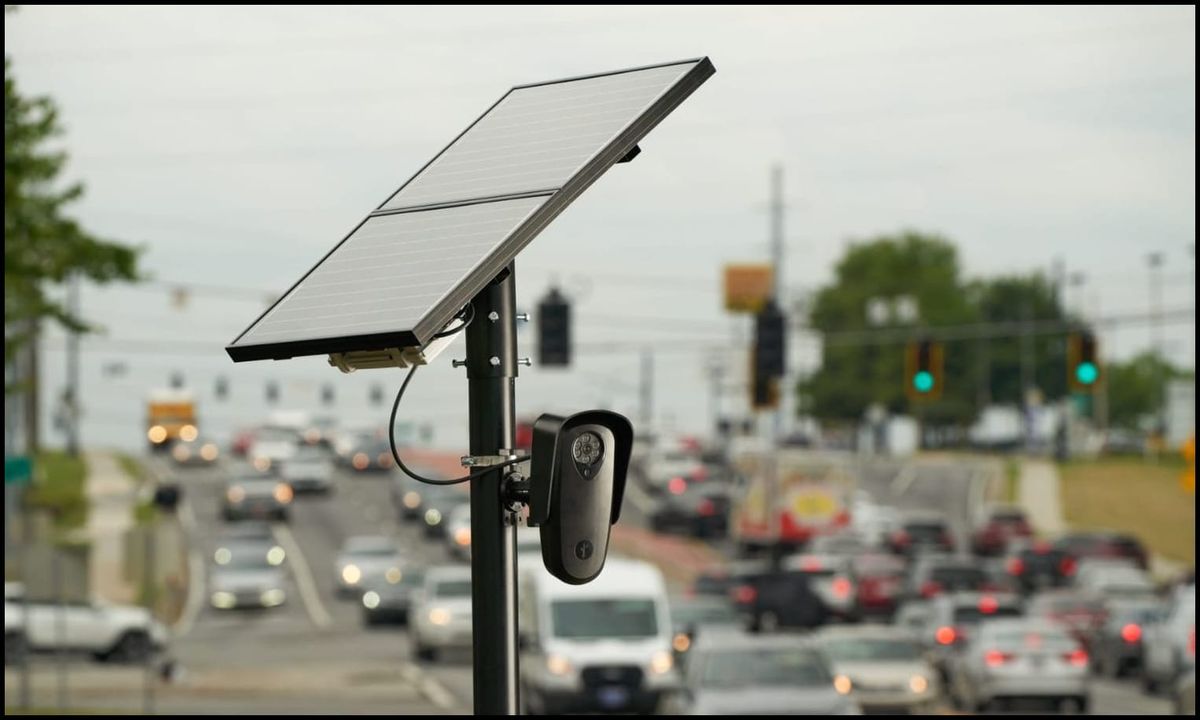
Monroe County commissioners voted 2–0 Thursday to terminate the county government’s relationship with Flock Safety. The commissioners having the company’s six automated license plate reader (LPR) cameras removed.
That means they are choosing to accept a $3,000 removal charge, rather than let the agreement continue through September 2027, when it would expire unless renewed.
Commissioner Julie Thomas made the motion to approve the termination letter dated July 23. Jody Madeira gave what she called an “enthusiastic second.” Lee Jones was absent from the meeting.
Thursday’s decision ends the agreement the commissioners approved nearly five years ago. That was a $16,500 accord for six Flock cameras to be placed at high-traffic locations around Monroe County.
When the original agreement between Monroe County government was approved in 2021, county officials said the cameras would help the sheriff’s office respond to Amber Alerts and investigate cases involving known license plate numbers. The proposed locations had not yet been selected, but officials were considering Indiana Department of Transportation rights-of-way.
The system was described at the time as one where the county would not routinely receive or maintain a list of every license plate recorded by the cameras. Instead, the sheriff’s office could enter a plate number associated with an Amber Alert or an investigation and receive information about whether the vehicle had passed one of the cameras. Flock said its footage was by default deleted automatically after 30 days.
Thomas said Thursday that the cameras had served some of the public-safety purposes they were designed for. She said they had helped find missing people, investigate crimes and identify people believed to be coming into the county to “do nefarious things.” “It has a role,” Thomas said.
But Thomas said reports about the use and misuse of information in Flock’s nationwide system had changed the balance for her. “The way the data has been abused, and we’ve seen national stories about this, is terrible,” Thomas said.
County attorney Jeff Cockerill said residents had asked commissioners to review the county’s contract. The original agreement, approved in September 2021, had a two-year term and automatically renewed for additional two-year periods, he said. The current term would ordinarily run through September 2027.
Ending the agreement early could require the county to reimburse Flock up to $500 for removing each camera. For six cameras, that works out to $3,000.
“I think it is $3,000 well spent,” Madeira said. Madeira credited residents who had pressed Bloomington officials over the city’s relationship with Flock. She was concerned about the implications of continuing the county’s agreement.
Thomas said Monroe County sheriff Ruben Marté supports ending the contract. She said she had discussed the issue with Marté and that he was “fine with terminating it.” The sheriff’s office confirmed to The B Square that Marté had conferred with Thomas and that Marté is in agreement that “terminating the contract was in keeping with the values of most Monroe County residents.”
“We’re not undermining [the sheriff],” Thomas said on Thursday morning.
Cockerill said the 2021 agreement requires Flock to remove its cameras within a “reasonable” time but does not establish a specific deadline. Thomas said the county would have to monitor the process. County administrator Angie Purdie said the removal invoice should give the county confirmation that the work had been completed.
Madeira asked whether the county could cover or “hood” the cameras while waiting for Flock to remove them. Thomas said the county should not alter equipment it does not own.
Bloomington’s Flock camera situation
The action by county commissioners on Thursday comes after months of controversy over the city of Bloomington’s Flock system.
An estimated 700 people gathered outside Bloomington city hall on Jan. 30 to demand that the city end its relationship with Flock. Demonstrators linked the cameras to concerns about immigration enforcement, privacy and the collection of information about people’s movements.
Bloomington mayor Kerry Thomson said during the protest that cancellation was “one of the options” the city was considering. On April 15, Thomson announced that Bloomington had not renewed an automated license plate reader contract that expired March 5. The announcement came six weeks after the expiration and one day before a city council deadline for the administration to provide information about the system.
The city said it was transitioning away from Flock while evaluating whether other products could provide investigative benefits with stronger privacy, transparency and oversight provisions.
Bloomington’s inventory included 11 permanently mounted license plate reader cameras, four permanently mounted video cameras and four mobile trailers equipped for license plate reading, video and gunshot detection.
The city said its system captured images of vehicles and plates on public roads but did not use facial recognition or include vehicle-registration information such as names and addresses. Searches were supposed to be connected to active case numbers, and data was generally retained for 30 days unless preserved as evidence.
The April announcement did not immediately make clear when all Flock equipment would stop operating or be removed. An email from Thomson to city councilmembers indicated that the cameras would continue to be used temporarily at least through the Little 500 weekend in late April.
Responding to a question from The B Square on Thursday, the Bloomington mayor’s office said about the city’s Flock license plate readers (LPRs): “All LPRs have been removed, and the contract with Flock has been canceled, as promised during the mayor’s report to the city council …”
The statement from the mayor’s office added, “Other kinds of security cameras will be replaced, and those contracts will not be renewed … ”
The mid-April report to the city council came after a news release announcing the city had allowed at least one of its contracts with Flock to expire. Around the same time, a memo from Bloomington chief of police Mike Diekhoff was sent to the city council on the topic of Flock cameras.
In a June 5 news release, the Solid State Democratic Socialists of America working group called for documented proof that every Flock device had been removed. The group also called for city council approval of future surveillance-technology contracts. From the Solid State DSA news release: “While some Flock ALPR cameras have apparently been removed, Bloomington residents have no way to verify that all cameras have been removed, …”
The contrast in the wording of the statement from the mayor’s office on Thursday, between LPR Flock cameras and “other kinds of surveillance cameras” is part of the concern outlined in the Solid State DSA news release: There are other Flock contracts for devices and services that are not specifically dedicated license plate reader cameras.
At Thursday’s meeting, county commissioner Thomas encouraged Bloomington officials to make sure the city’s remaining Flock equipment is physically removed. “And so I do hope and I encourage the city of Bloomington to proceed with that portion of their contract termination with Flock because there are still cameras out there, and you can find them online,” Thomas said.
Thomas said she would prefer locally controlled technology that could preserve the public-safety benefits of the cameras, including locating vehicles connected to Amber and Silver Alerts.
“It’s hard to say, ‘Well, we don’t want that protection. We don’t want that ability,’ because of the things this company has done,” Thomas said. “So it is unfortunate.”


Comments ()