
Bloomington Flock camera contract expired March 5, mayor reveals non-renewal 6 weeks later
Bloomington did not renew its contract with Flock Safety for automated license plate readers, mayor Kerry Thomson announced April 15—six weeks after the contract expired. The city says it is transitioning away from Flock while continuing to evaluate other vendors.
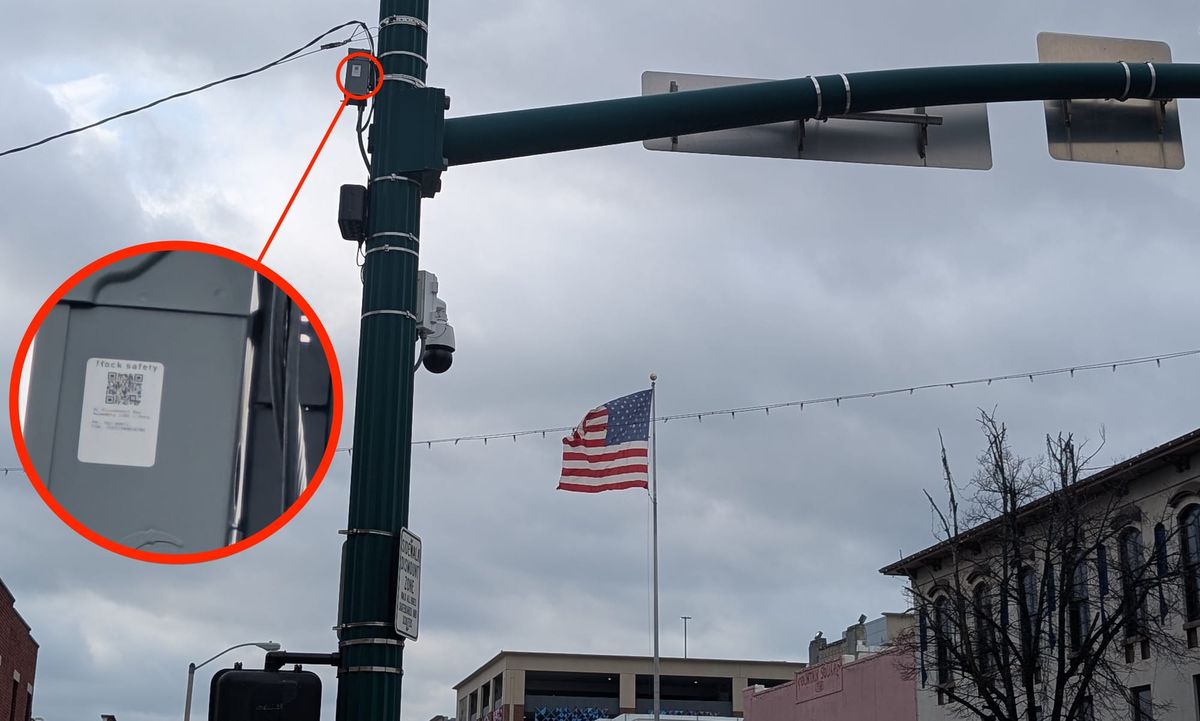
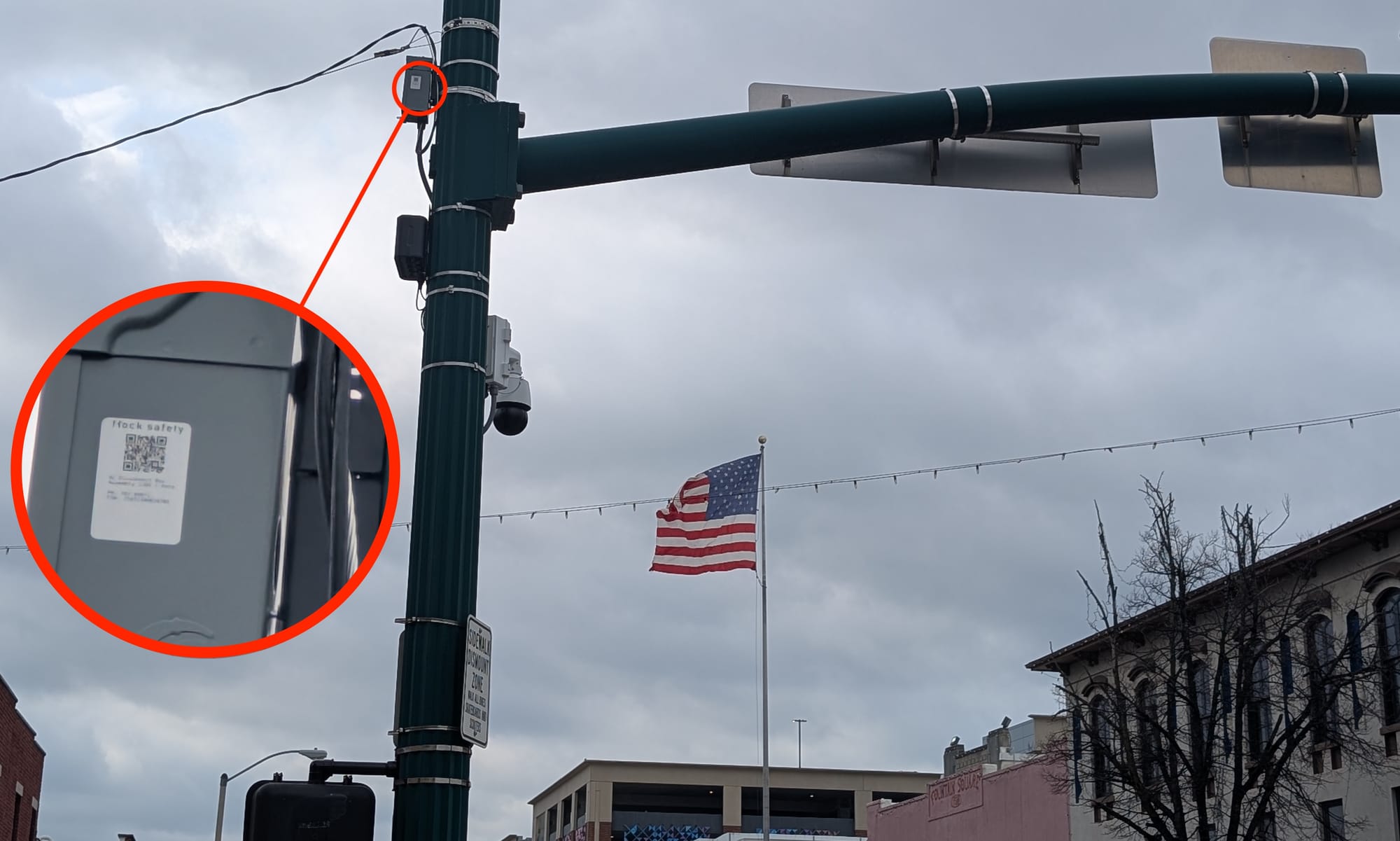
Bloomington mayor Kerry Thomson announced in a news release Wednesday evening (April 15) that the city’s contract with Flock Safety for automated license plate reader (ALPR) services was not renewed, after it expired six weeks earlier, on March 5, 2026.
A day before the contract expired, Bloomington’s city council adopted a resolution requiring the administration to brief councilmembers about the city’s ALPR system by April 15, the day Wednesday’s news release was sent.
After the city council’s work session Wednesday night, city council president Isak Asare responded to a The B Square question by saying he did not realize when the council passed its March 5 resolution, which he wrote, that the Flock contract expired the following day.
The cameras, with their automatic license plate readers (ALPRs), are networked with the data collected by other jurisdictions that use the devices. The information can be used by law enforcement agencies to help locate criminal suspects.
But civil liberties advocates warn that the system results in a large database chronicling the movements of ordinary residents, raising concerns about privacy, data retention, and potential misuse.
It’s not clear from the news release if Flock cameras are still in use by Bloomington, because it does not say the use of Flock ALPR cameras has ended, but rather that the city is “transitioning away” from it. [Added April 16, 2026 at 5:05 a.m An email message from the mayor to councilmembers, which was not sent directly to members of the press, indicates that Flock cameras are, in fact, planned to be used for an interim period at least through Little 500 weekend, which starts April 24. The email does not say when the interim period will end.]
The news release also states: “As part of the review, Mayor Thomson directed immediate steps to narrow and govern the system’s use during the transition period. Access to Flock data will be limited to Bloomington Police Department personnel only. There will be no outside data sharing.”
Mayor Kerry Thomson’s Wednesday announcement says the decision on non-renewal followed a “months-long evaluation” of the technology, and frames that evaluation as not triggered by the council’s resolution, saying it was “already underway” before the council’s action.
The news release does not say whether the city’s evaluation was underway before the Jan. 30 demonstration at city hall against ICE and Flock cameras, which drew hundreds of protestors, who called for the cancellation of the city’s Flock contract.
The news release indicates that the city’s nonrenewal of Flock’s contract is not a rejection of ALPR technology generally, saying that Bloomington will now assess other tools or vendors that might better balance public safety needs with privacy protections, transparency, and public trust.
Ahead of the April 15 city council deadline, Bloomington’s police department revised the general police order on the use of ALPR technology, by making explicit a strict prohibition against using the technology for reproductive healthcare or immigration investigations.
At the city hall protest in late January, Thomson said ending the contract was “one of the options” the city was considering as part of its review. Around that time, council president Isak Asare also said he favored ending the city’s relationship with the technology entirely.
After Wednesday’s city council work session, Asare told The B Square he is “grateful” the mayor, administration, and police department have been “very proactive” in responding to the concerns of residents and councilmembers about Flock cameras and related surveillance technology. He said he’s glad the city is “moving away from Flock specifically” and that the collaboration has “set a good baseline” from which the city can build a broader governance structure.
Asare stressed that the council’s resolution was intended to move toward a wider framework for governing surveillance and AI tools, not just to react to Flock. He said public-safety benefits from such technology are not without cost. He added that cities have a responsibility to navigate, not avoid, that tension. That’s especially true, he said, as new AI systems proliferate faster than most frontline staff or even developers can fully understand them.
Asked whether the council would still be working on an ordinance regulating the use of ALPR and similar technology, Asare said he has “every intention of doing that.” He said cities “should be thinking about how you govern technology” and that this responsibility remains “regardless of what happened with Flock.”
.
The Wednesday evening news release includes an inventory of equipment used by the city in its Flock program—11 permanently mounted license plate reader cameras, four permanently mounted video cameras, and four mobile trailer systems equipped for license plate reading, video recording, and gunshot detection.
According to the city, the Flock system used by Bloomington captures images of vehicles and license plates traveling on public roads, but does not use facial recognition technology and does not include driver registration information such as names or addresses. Searches must be tied to an active case number and are logged for audit every 60 days. Data is retained for 30 days unless it becomes evidence in a criminal case, according to the news release.
The city also cited several criminal investigations in which the system helped police identify suspects or recover victims, including a kidnapping case and homicide investigations.
The city’s news release says it will continue evaluating investigative tools that could support police work while meeting standards for privacy, transparency, and oversight.
Bloomington Police chief Mike Diekhoff is expected to present additional information about the city’s use of the Flock system at next week’s upcoming meeting of the city council, set for April 22.
[Updated April 17, 2026. The Bloomington Democratic Socialists of America Solid State Working Group has issued as news release in response to Bloomington mayor Kerry Thomson’s Wednesday night announcement.]
Documents now available through BloomDocs.org as of April 16, 2026 at 5:05 a.m:
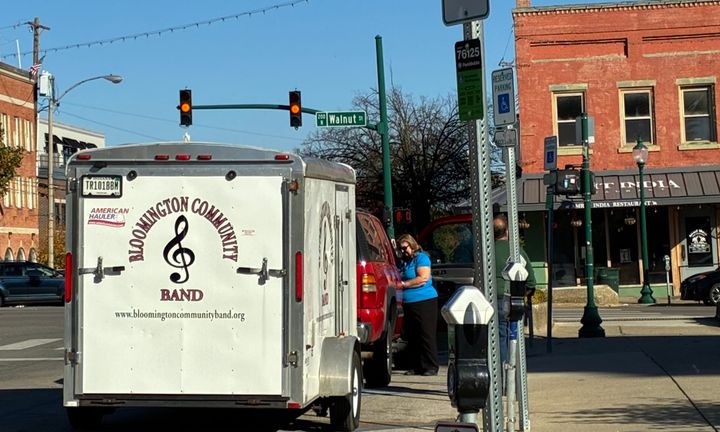


Comments ()