
Monroe County council again rejects raise for commissioners, citing 2% for employees
Monroe County councilors rejected an 18% pay raise for commissioners, citing modest raises for county employees and higher health insurance premiums. The council also voted to restart its personnel committee to explore a countywide salary study that could examine staffing and workloads.
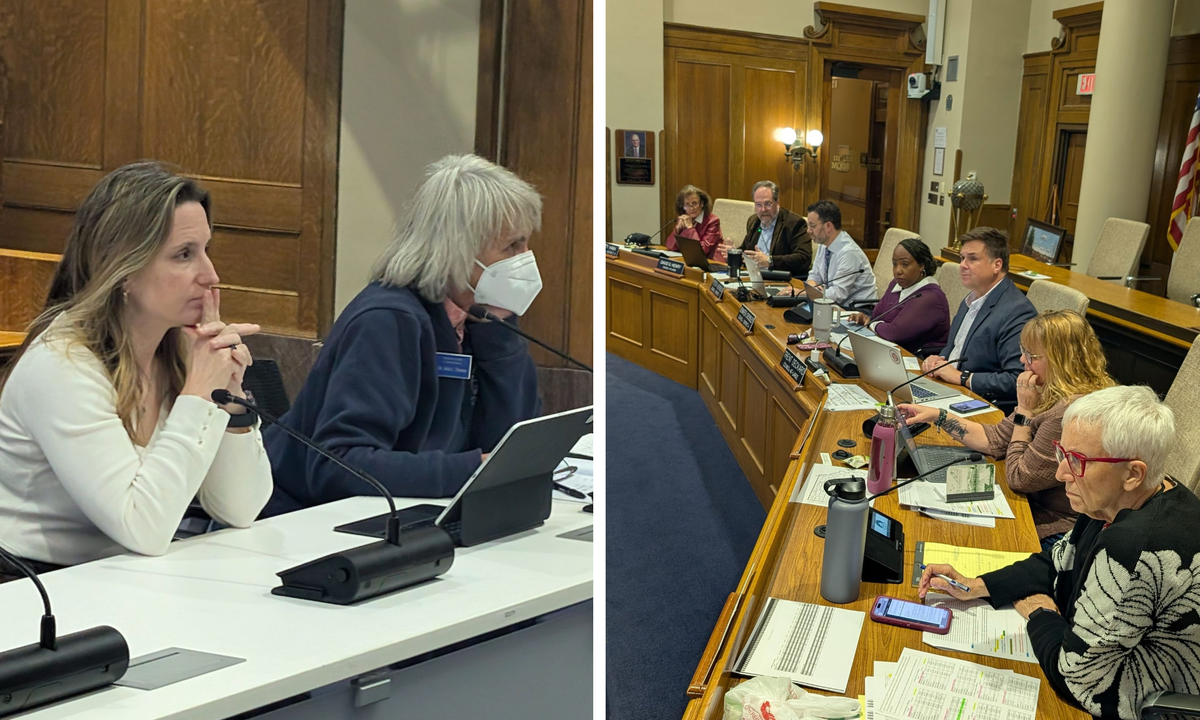
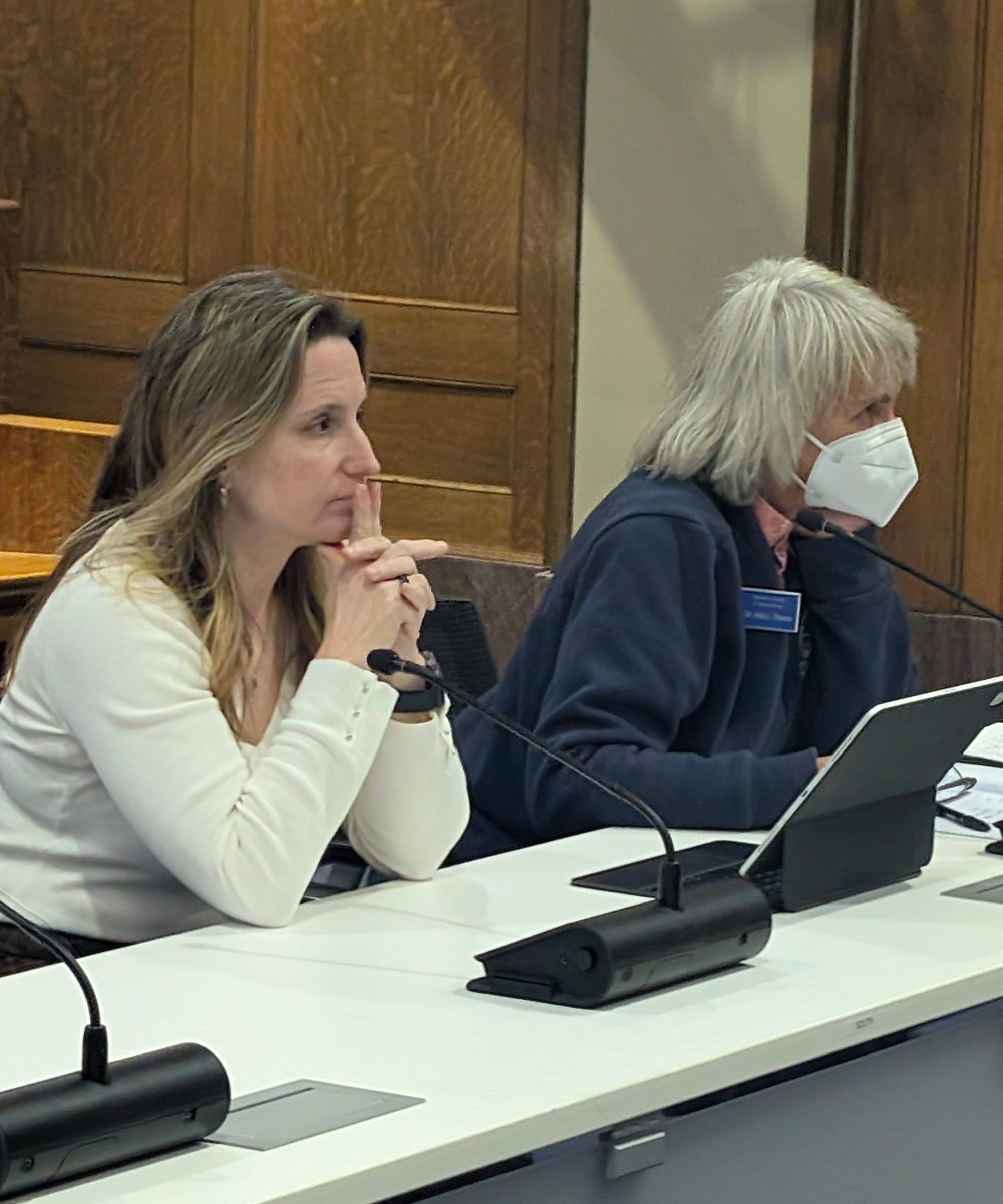
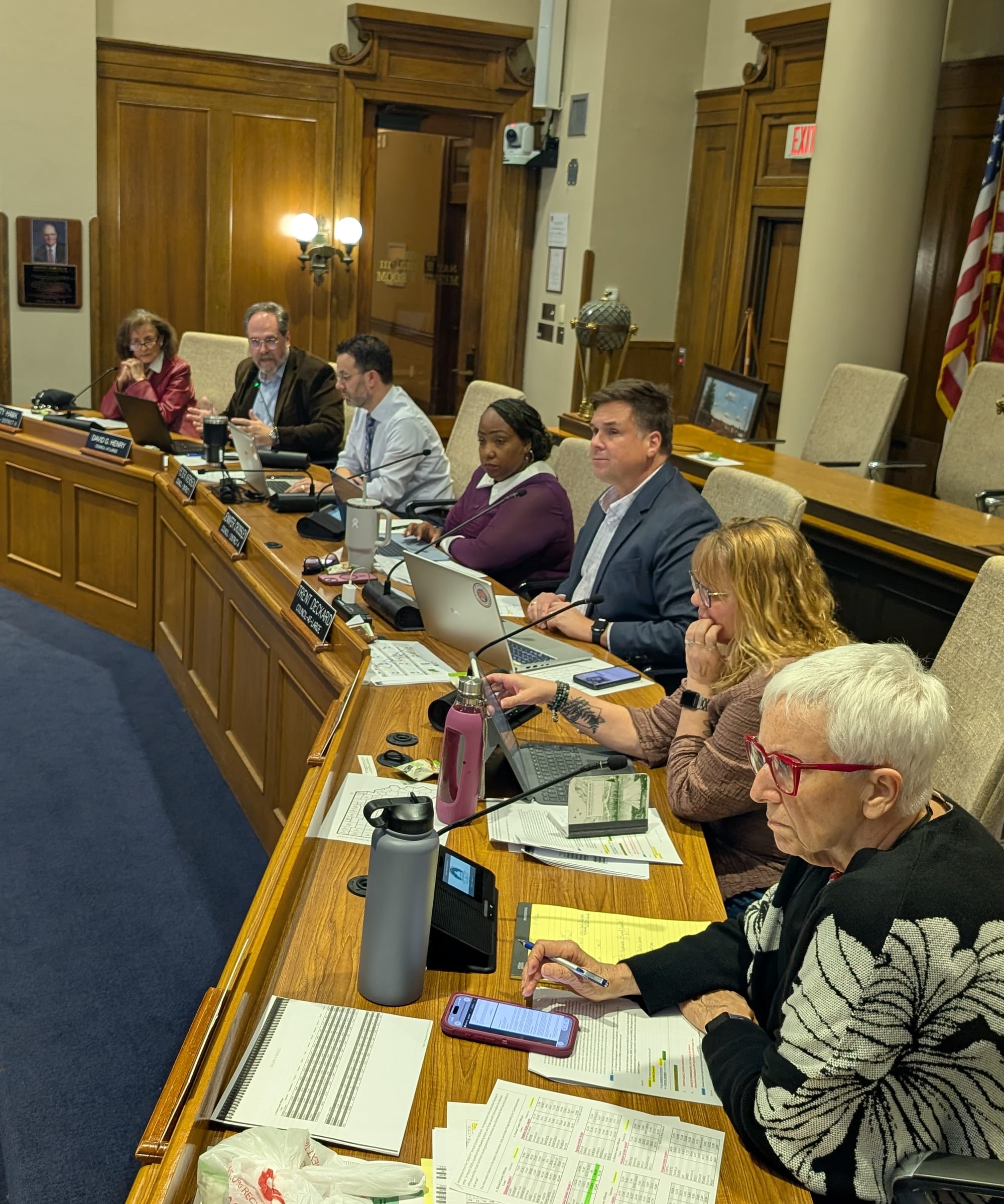
Left: County commissioners Jody Madeira (left) and Julie Thomas. Right: Monroe County councilors from back to front Marty Hawk, David Henry, Peter Iversen, Jennifer Crossley, Trent Deckard, Kate Wiltz, and Liz Feitl. (Dave Askins, Nov. 10, 2026)
Monroe County councilors on Tuesday (Nov. 10) rejected a request from county commissioners to raise their 2027 salaries by about 18%.
Councilors said they could not justify it in a year when other county employees will get a 2% raise and face sharply higher health insurance premiums.
No councilor voted for the increase, which would have raised each commissioner’s pay to $82,955 starting Jan. 1. That would have been instead of the $70,512 that is in the 2027 salary ordinance, which is 85% of the base salary that most other full-time elected county officials will earn. That includes the auditor, clerk, recorder, treasurer and, starting in 2027, the surveyor.
The commissioners had proposed to pay for the $12,443-per-person difference out of the county’s stormwater fund, instead of the general fund. Counting benefits, the cost for all three commissioners would have been about $45,500, according to figures commissioner Julie Thomas presented in October.
Tuesday’s request came three weeks after the council adopted the 2027 salary ordinance for elected officials on Oct. 20, when Thomas made a similar appeal and councilors made no change.
The proposal did not appear on Tuesday’s published agenda. Councilor David Henry moved to add it at the start of the meeting. But he dissented when the council took a voice vote on his motion. Henry later voted against the salary increase itself.
‘If the answer is no, we’d like to hear the reasons’
Thomas, who is president of the three-member board of commissioners and has served on it for nearly 14 years, told councilors the board wanted to “put this to rest.”
She described commissioners as both the executive and legislative branch of county government. They oversee departments ranging from highway and building to weights and measures, make appointments to boards and commissions, respond to emergencies, and review claims and payroll every week, she said. The commissioners office has gone a couple of years without an office manager or receptionist, she said, and the commissioners have not asked the council to fill the job. “We work together. We patch. We fill holes. We get things done,” Thomas said.
She recalled that when the council raised commissioner pay from around $36,000 to $46,000 for 2021, commissioners were told the raise was a “down payment.” That description came from then-councilor Geoff McKim, who is no longer on the council.
Thomas also pointed to the council’s decision this year to raise the elected surveyor’s salary to the full base amount. For several years, the surveyor had received 90% of the base, and commissioners 85%. Thomas said commissioners and the surveyor have been considered together in past salary discussions, and that she found it bewildering that commissioners remain outliers on the county’s salary grid.
“If the answer is no, we’d like to hear the reasons,” Thomas said.
Councilors give reasons
Councilors gave their reasons. Several pointed to the 2% raise for other employees. Others said Monroe County commissioners are already well paid compared with commissioners in similar counties.
Trent Deckard noted that he is in an unusual position. He will join the board of commissioners in January, after running unopposed in the Nov. 3 election for the District 1 seat. He said he would not accept the raise even if the council approved it.
Deckard noted next year’s salary of $70,512 is nearly double what commissioners were paid in 2020. “I think the compensation that we have done has been pretty fair from the taxpayers,” Deckard said. When he talks to residents, he said, they point to other problems in the county that need attention, not to pay for commissioners. If the commissioners office needs more staff, Deckard said, that is a conversation for budget time.
Peter Iversen said he was voting no on behalf of county employees who saw a 40% increase in their health insurance premiums, and residents who must decide which groceries to buy or check their bank balance before filling the gas tank. “We cannot be prioritizing the people at the top,” Iversen said.
Kate Wiltz said she was not convinced commissioners are underpaid, either compared with other counties or with other elected officials in Monroe County. The commissioner job is still considered part-time, she said, yet the current pay of more than $69,000 is more than she earns at her own full-time job. County councilors, who are paid 30% of the base rate, are the real outliers, Wiltz said, though she added she was not arguing for higher council pay.
Using stormwater money instead of the general fund made no difference to Wiltz. “It’s not about where the money is coming from. It is about equity around payment,” Wiltz said. She said she could not tell county employees the council had to stop at 2%, and then find a $12,000-plus raise for commissioners.
Council president Jennifer Crossley compared Monroe County with Indiana counties of similar population, including Clark, Delaware, LaPorte and Vigo. Monroe County pays its commissioners more than any of them, she said.
On Oct. 20, Thomas had framed the request as a matter of pay equity. Crossley rejected that idea. Other officials and departments that asked for raises this year brought data to back up their requests, Crossley said, and the commissioners had not. She compared herself to a math teacher who says, “Show me your work.”
Approving the raise while employees got 2% and faced higher premiums “would be tone deaf, and quite frankly wrong,” Crossley said.
Liz Feitl said that among Indiana counties with populations between 100,000 and 150,000, only one pays its commissioners more than Monroe County does. She said she had heard nothing new since the council last took up the question. “What makes this ask different?” Feitl asked.
Marty Hawk spoke against the increase but left the meeting before the vote. She pointed out that the county’s stormwater fee is paid only by property owners outside Bloomington and Ellettsville, whose residents pay for stormwater through their own utility bills. So rural residents would be paying for raises for commissioners who represent the whole county, Hawk said. She also noted that the 2027 salary ordinance had already been adopted.
David Henry did not speak on the item Tuesday. On Oct. 20, he said commissioner pay should be taken up in January, alongside a broader look at how administrative work is divided between the commissioners and the county’s full-time administrative staff.
Commissioner Jody Madeira sat with Thomas at the presentation table but did not address the council on the topic. The third commissioner, Lee Jones, did not attend the meeting.
Surveyor clarifies; public comment split
The elected county surveyor, Trohn Enright-Randolph, who has worked in the surveyor’s office since 2005, said during public comment that he wanted to clear up how his salary had come into the discussion.
His requests for higher pay were never about matching commissioner pay, Enright-Randolph said, but rather about the distinction state law makes between surveyors who are professionally registered and those who are not. He also said he has no outside employment, and that his office manager has always been a part-time position.
Enright-Randolph said he didn’t want to get involved in the salary requests of other elected officials.
Two residents also spoke. One was Sarah Ryterband, who recently resigned as the county’s health officer and who participated remotely, supported the raise. Ryterband said commissioners are on call around the clock and serve on many committees.
Another remote participant was Leigh Grundhoefer, who said that the board of commissioners is supposed to have “supposed to have three operational people.” That was an allusion to the fact that Lee Jones has been unable to attend many meetings this year, because she is undergoing cancer treatment. When the board has its three people next year, that would lighten the workload, Grundhoefer said.
Caden Smith, who spoke in person from the pubic mic, opposed the increase, saying commissioners have received several substantial raises in recent years, and that all elected officials are on call at all hours, not just commissioners.
Next: Possible countywide salary study?
Later in the meeting, the council voted 6–0 to let its personnel administration committee resume meetings, which have been paused since March 2025, so the committee can assess whether the county needs a countywide salary study and which firms might do it. The committee will report back to the full council.
Iversen, who chairs the committee, said the need for a study had never been clearer than on Tuesday, with “yet another department coming and asking for a raise.” The firm that did the county’s last study, in 2021, told him that nine other counties are already ahead of Monroe County in line, Iversen said.
At Henry’s request, councilors amended the resolution to identify staffing levels, how employee hours are used and departmental workloads as possible considerations for a salary study, in addition to compensation. The resolution continues the suspension of council consideration of requests for new positions, reclassifications and job-description changes that would increase county costs.
Whether elected official salaries will be part of a study has not been decided. But Crossley said the council could look at everything next year, “including possibly elected official salaries.”

Comments ()