
Monroe County election board accepts 33 provisional ballots, reviews error affecting Stinesville
The Monroe County Election Board accepted 33 of 147 provisional ballots from the Nov. 3 election. Board member Penny Githens questioned why the board wasn't involved when several Stinesville ballots were remade because they mistakenly included the Ellettsville public question.

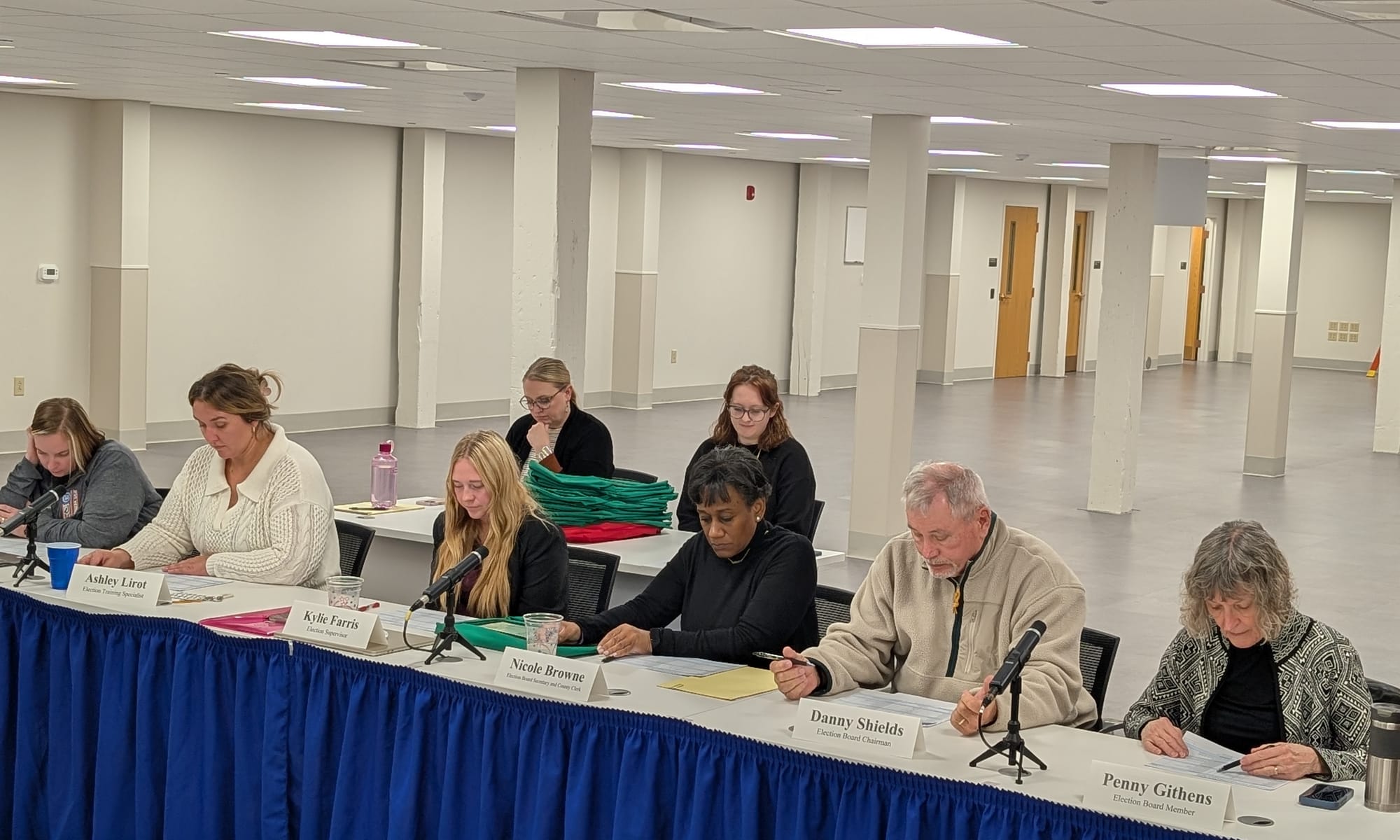
The Monroe County Election Board voted Friday (Nov. 13) to accept 33 of the 147 provisional ballots from the Nov. 3 general election. The remaining 114 ballots were rejected because voters did not meet registration, identification or other requirements.
A provisional ballot lets a voter whose eligibility can’t be confirmed at the polling place cast a ballot anyway. The ballot is set aside rather than counted or disqualified on election night. Election officials later check the the individual circumstances, and if the voter turns out to be eligible, the ballot is counted.
The 33 additional ballots accepted on Friday are not believed to have changed the outcome of any races or ballot questions.
The board met shortly after noon Friday at Election Central on Morton Street, following the midday deadline for voters to provide missing identification or otherwise resolve issues with their ballots. Updated election results had to be reported to the Indiana Election Division by 3 p.m. Friday.
The three-member board consists of Monroe County clerk Nicole Browne, Republican Party appointee Danny Shields and Democratic Party appointee Penny Githens. Election supervisor Kylie Farris described the circumstances of each ballot as the board opened the sealed ballot bags and worked through the list.
Most of the accepted ballots involved absentee ballots returned by mail with missing or mismatched signatures. In 22 cases, voters had resolved questions about signatures that did not match election records or envelopes that had been signed by someone else. Farris said some cases involved members of the same household signing each other’s ballot envelopes. It’s a common scenario for married couples who inadvertently swap their ballots.
Five additional absentee ballots were accepted after voters supplied missing signatures. One of those ballots, one was added to the review list during Friday’s meeting. That’s because the form supplying the voter’s missing signature had arrived after the list was prepared, but before the noon deadline.
Three ballots were accepted from voters who had been issued provisional ballots because they did not have identification when they voted. All three later provided the required identification to election staff.
The remaining three ballots accepted on Friday involved unusual registration circumstances.
One voter had moved out of Monroe County, but remained registered here after an attempt to register in another county was not completed before the Oct. 5 deadline. The voter returned to Monroe County to cast a ballot. After discussing the circumstances, the board voted to accept it.
Another voter, a student living in Monroe County, apparently had their voter registration inadvertently transferred to a Morgan County address after updating an identification card at the Bureau of Motor Vehicles (BMV). The board accepted that ballot, too.
A third voter had attempted to register at the BMV, but the registration had not reached Monroe County election officials. That voter provided a receipt documenting the registration attempt, which the board accepted as sufficient.
For the rejected ballots, recurring reasons included voters who were not registered in Monroe County, registration changes submitted after the Oct. 5 deadline, voters who cast ballots at the wrong polling location, and voters who did not supply required identification by Friday’s deadline.
The board worked through the ballots by polling location, checking the sealed envelopes against the prepared list.
After completing the review, the board recessed the meeting while election staff scanned the accepted ballots. When the board reconvened, it voted to accept the updated results.
Question about Stinesville ballots
Before the final vote, Githens raised a concern about how election officials had handled a ballot problem discovered shortly after the election.
The problem did not change the outcome of the referendum on the question of the Ellettsville–Richland Township government reorganization, which passed. It involved voters in Stinesville who had received ballots that included the public question, even though Stinesville residents were not eligible to vote on it.
According to a written timeline prepared by election staff, the problem was first noticed around 12:50 a.m. Wednesday, Nov. 4, as workers entered election results. They found votes recorded in the Bean Blossom 1-Town precinct split (inside Ellettsville town limits, but in Bean Blossom 1), even though that split had no registered voters.
An investigation that began at 8 a.m. Wednesday, the day after the election, found that three absentee ballots and 75 Election Day ballots had been provided in Stinesville using the ballot style with the reorganization question, according to the timeline. A review of the ballot print order confirmed that the county had ordered the correct styles for printing, but incorrect ballot styles had been supplied.
With Browne out of the office, election staff contacted chief deputy Tanner Branham and worked with the county’s election technology contractors to resolve the problem. The ballots were remade using the correct Bean Blossom 1-TS (Stinesville) ballot style, then scanned again. Results reports were rerun, the timeline says, and an updated file was sent to the county’s GIS department for its election results dashboard.
The corrected results were uploaded to the statewide voter registration system Thursday morning (Nov. 5), according to the timeline.
At Friday’s (Nov. 13) provisional ballot review, Githens questioned why the board had not been involved, after the problem was identified and the ballots were remade.
Browne said the ballots had been remade by a bipartisan team, following guidance from election officials and the county’s voting equipment vendor. The work did not require the presence or authorization of the election board itself, she said.
Browne stressed that the mistake had been corrected and that votes on the public question cast by voters who were not eligible to answer it were not counted. “Nothing nefarious happened,” Browne said.
Githens did not allege that ballots had been improperly altered to change votes. Her objection was to the procedure followed and the lack of election board involvement. “I just feel that it should have come to the election board,” Githens said.
The board’s next scheduled proceeding is a post-election audit on Dec. 4, starting at 11 a.m.

Comments ()