
Monroe County OKs $82K Scientia tax abatement tied to 30 new jobs
Monroe County councilors gave final 7–0 approval to a 10-year, $82,000 real-property tax abatement for defense contractor Scientia LLC, which plans to double its west-side facility and add 30 jobs with $2.3 million in new payroll.
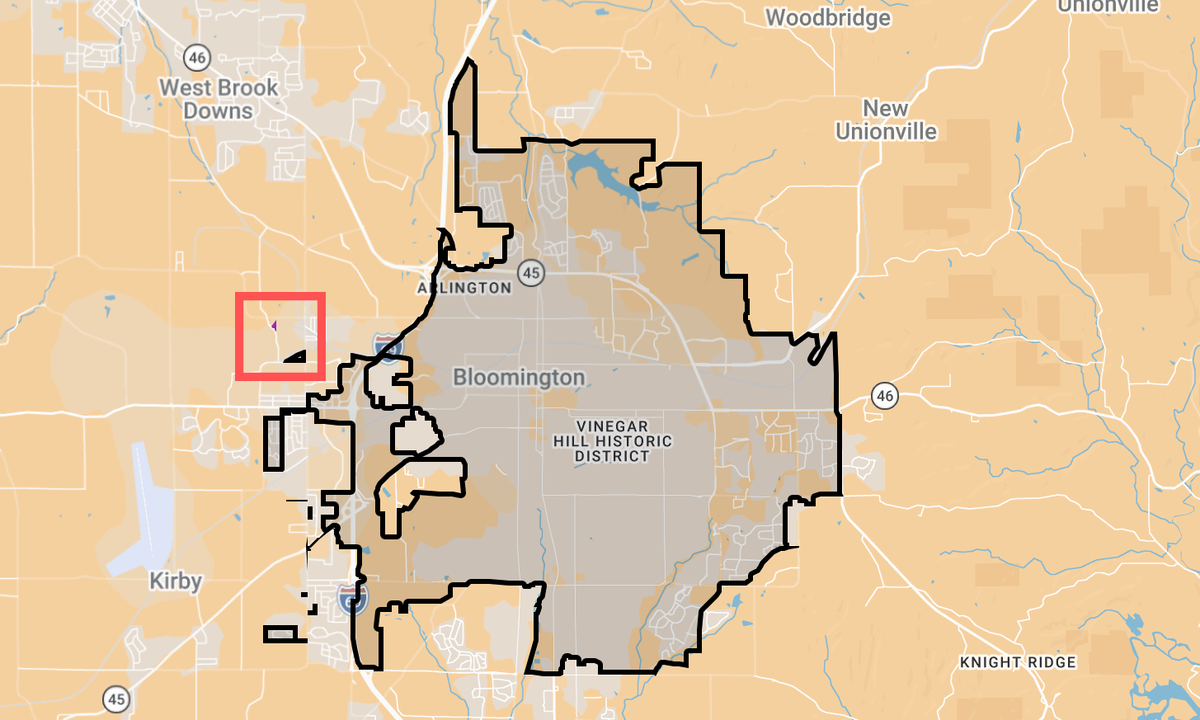
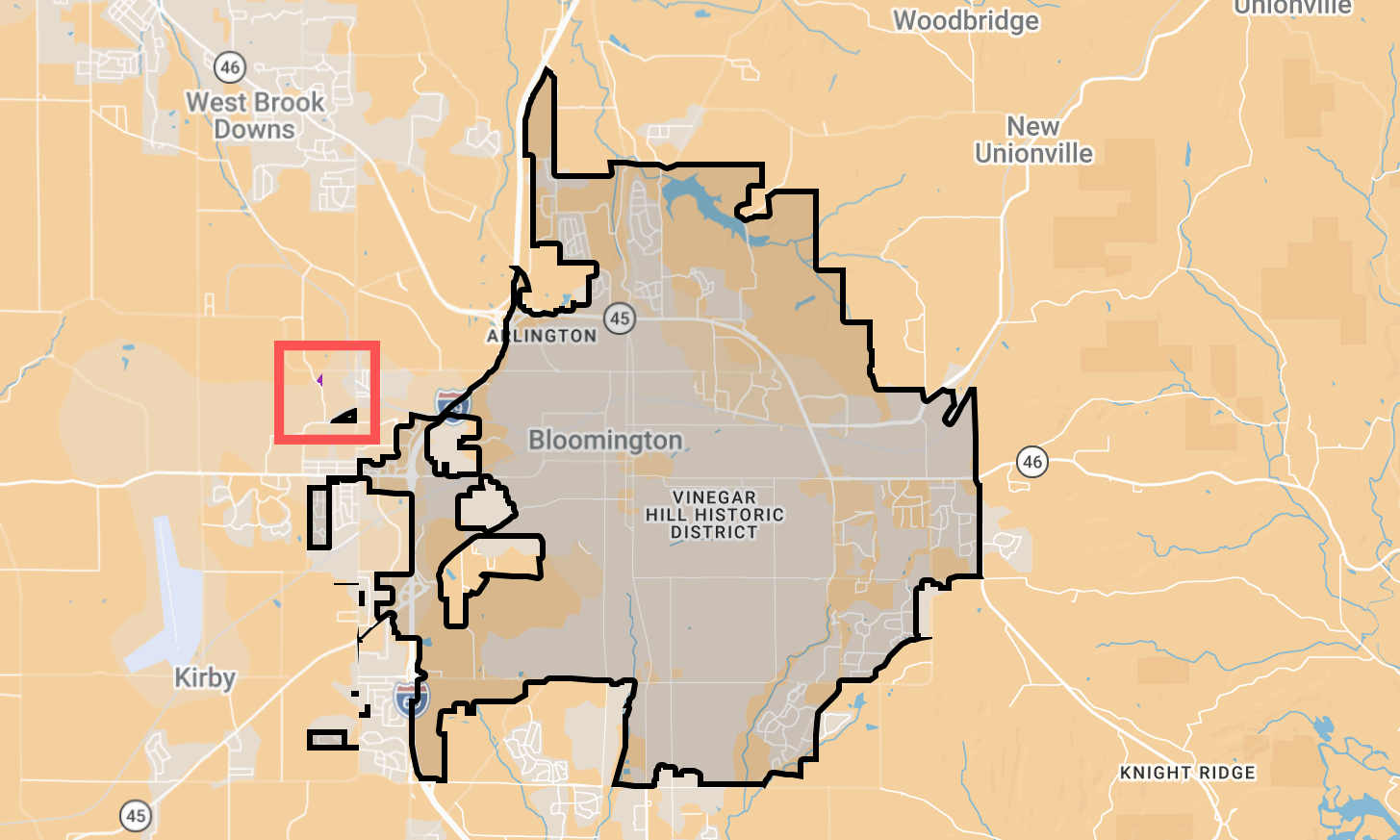
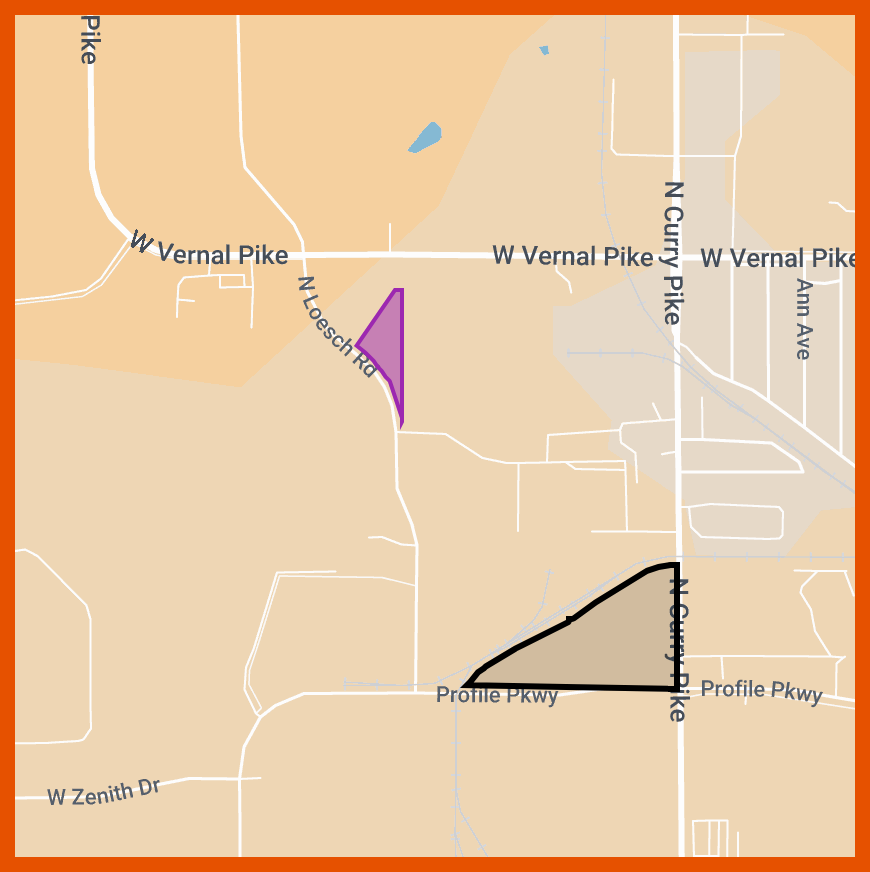
Maps by the B Square. [dynamic map] The purple-shaded parcel is where Scientia is located.
A request for a tax abatement from defense contractor Scientia LLC was given the second two required approvals from the Monroe County council at its Tuesday (July 14) meeting.
The company wants to use its 10‑year real-property tax abatement to help expand its west-side facility.
On June 23, the council had voted 6–0, with councilor David Henry abstaining, to give preliminary approval to the abatement request, which declared an economic revitalization area and set up the abatement schedule. Final approval came Tuesday on a unanimous 7–0 vote. Henry joined his colleagues after confirming he had no financial conflict with the company.
County attorney Jeff Cockerill told the council the abatement is limited to real estate improvements at Scientia’s existing site off Loesch Road, which is just south of Vernal Pike near the new YMCA on the west side. Earlier abatement materials had included both real and personal property, but Cockerill said the company’s equipment investment falls below the state’s $2 million threshold for personal property tax, which meant the company was asking only for a real estate tax abatement.
Cockerill put the value of the 10‑year phased abatement at about $82,000 total, or roughly $8,000 a year in foregone property taxes on the building expansion. In return, Scientia expects to add 30 jobs, with a total new payroll of about $2.3 million, on top of its current 40 employees and roughly $4.2 million in existing payroll. That puts the average wage for the new positions just over $70,000 a person. According to Scienta, their current employees earn an average of about $105,000 a year.
Cockerill framed the deal as consistent with a shift toward income tax as a primary revenue source.
At the council’s June 23 meeting, Scientia president Doug McDaniel described the firm as a high-tech defense contractor doing software engineering, systems integration, cybersecurity, and sensor and AI-driven “computer vision” work for force-protection and counter‑drone systems, with much of its work tied to NSWC Crane and the Army.
McDaniel said several employees, including himself, are former Crane staff. He read aloud part of a June 3 memorandum from the Army’s chief technology officer praising Scientia’s role in “Operation Jailbreak,” a sensor-integration effort designed to let the Army pull data from multiple vendor systems through a common interface.
McDaniel told councilors the company is doubling its size at the site because it has run out of space, and construction costs have come in higher than anticipated, making the abatement a factor in keeping the expansion viable.. Scientia currently has 39 employees, about 90% of them in Indiana and 74% in Monroe County, with an average tenure of about five and a half years. Five workers have been with the firm at least a decade, and three hold PhDs. Roughly half of the staff are Rose‑Hulman graduates, McDaniel said.
It’s hard to stay competitive in defense contracting because “the government wants to hire Albert Einstein but wants to pay him like a fast food worker,” McDaniel said. That’s why the firm leans heavily on benefits as well as wages. Scientia pays 90% of employee health insurance premiums, offers an employer 401(k) match at 4.5%, provides profit-sharing (about 9% of W‑2 wages last year), pays for short- and long-term disability, and grants 11 paid federal holidays plus continuing-education reimbursement, McDaniel said. Seven employees are members of the LLC, he said, as part of a strategy to hire and retain “the best and brightest” over the long term.
Council questions focused on the economic development rationale and on any external impacts of the company’s work. Asked by councilor Kate Wiltz whether there were environmental regulatory issues associated with Scientia’s operations, McDaniel said there were none. He described the business as “almost exclusively software engineering and cyber security,” with a lab of computers, servers and sensors but said there “no environmental concerns whatsoever.”
Wiltz also asked about the firm’s use of AI. McDaniel said Scientia integrates algorithms from other vendors for video-based computer vision so systems can alert human operators when they need to pay attention, rather than simply streaming raw data.
Several councilors framed the abatement as part of a broader west-side economic development strategy. Councilor Trent Deckard pointed to the Loesch/Vernal Pike area as “really ideal” for this kind of growth, noting that when the area was first zoned and prepared for employment uses “a lot of foresight and thought went into that when people were saying that’s out in the woods there, but now we see these things kind of coming together.” Councilor Marty Hawk, whose District 3 covers the west side of the county, told McDaniel, “We love you over there, so hope that you stay there and continue to create jobs and prosperity for the people.”
At Tuesday’s meeting, BEDC interim CEO Clark Greiner spoke during the public hearing, calling Scientia’s work “very critical to our troops abroad” and stressed that employees undergo rigorous security vetting given the nature of the contracts.
Henry used Tuesday’s meeting to explain his shift from abstention to support, saying he had done his “homework as a federal contractor” and confirmed he held no ownership interest or other financial tie to the company before casting a yes vote. Council president Jennifer Crossley and others tied the jobs announcement to ongoing concerns about housing supply, with Crossley saying she hoped the county could match job growth with more local housing so those wages stay in Monroe County.



Comments ()