
Police seek video after racist pepper-spray assault at greenhouse; market looks toward more growing sites
After a racist confrontation ended in a pepper-spray attack on a People’s Market volunteer, Bloomington police are still seeking the suspect. Market organizers hope the response also spurs local churches to use their land for greenhouses and other food-growing projects.
On Saturday morning (Aug. 1), People’s Market volunteers were inside Fellowship Hall at First United Church on East 3rd Street, distributing pre-ordered fresh produce during the market’s regular hours between 10 a.m. and 2 p.m.
Behind the church stands the greenhouse that supports that work. That’s where less than two weeks earlier, a racist confrontation ended with a pepper-spray attack on a Black woman who volunteers with the market.
Before pepper spraying her, the man directed repeated racist verbal abuse at her. The investigation by Bloomington police into the July 21 attack is still active.
The suspect was described by the victim as a young white male, roughly 17–20 years old with floppy brown hair, no facial hair, wearing a white T‑shirt, khaki pants, and a black backpack.
The investigation remained open as of Friday (July 31). According to Bloomington police, the detective working the case has obtained security camera video from two nearby businesses, but the footage did not show the person closely or clearly enough for identification. Police are still seeking video from a third business as the investigation continues.
But the People’s Market volunteers who operate the greenhouse on church property, do not want the response to the attack to end with just an arrest. Or with yet another community conversation about racism that produces no concrete result.
People’s Market is looking to make an invitation to churches across Bloomington to consider using some of their own land to grow food. The proposal could include greenhouses modeled on the 30-by-90-foot structure at First United, smaller growing facilities or other arrangements suited to each congregation’s property and capacity.
The goal is to connect conversations about racism and equity with work that directly helps people, according to People’s Market organizers.
Jada Bee, the 46-year old woman who was the target of pepper spray and racist slurs, said, “We don’t want to just leave it like so many other conversations that happen in this town and in this country, where we just talk and talk and talk and nothing actually happens.”
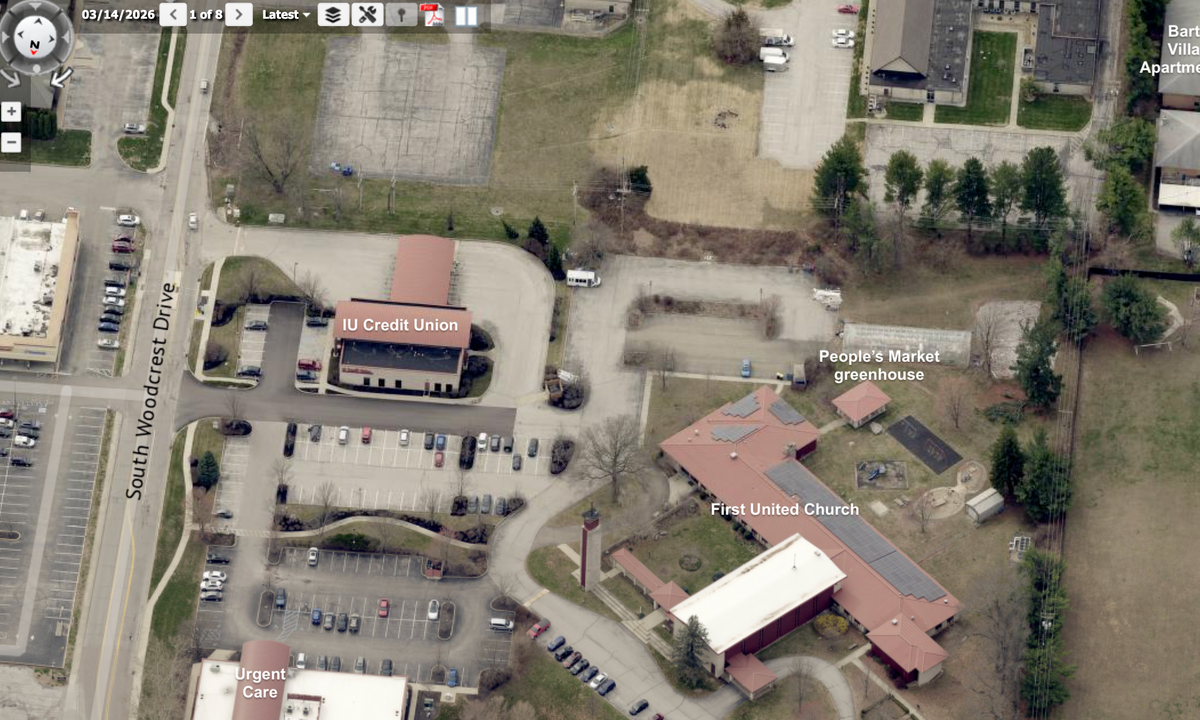
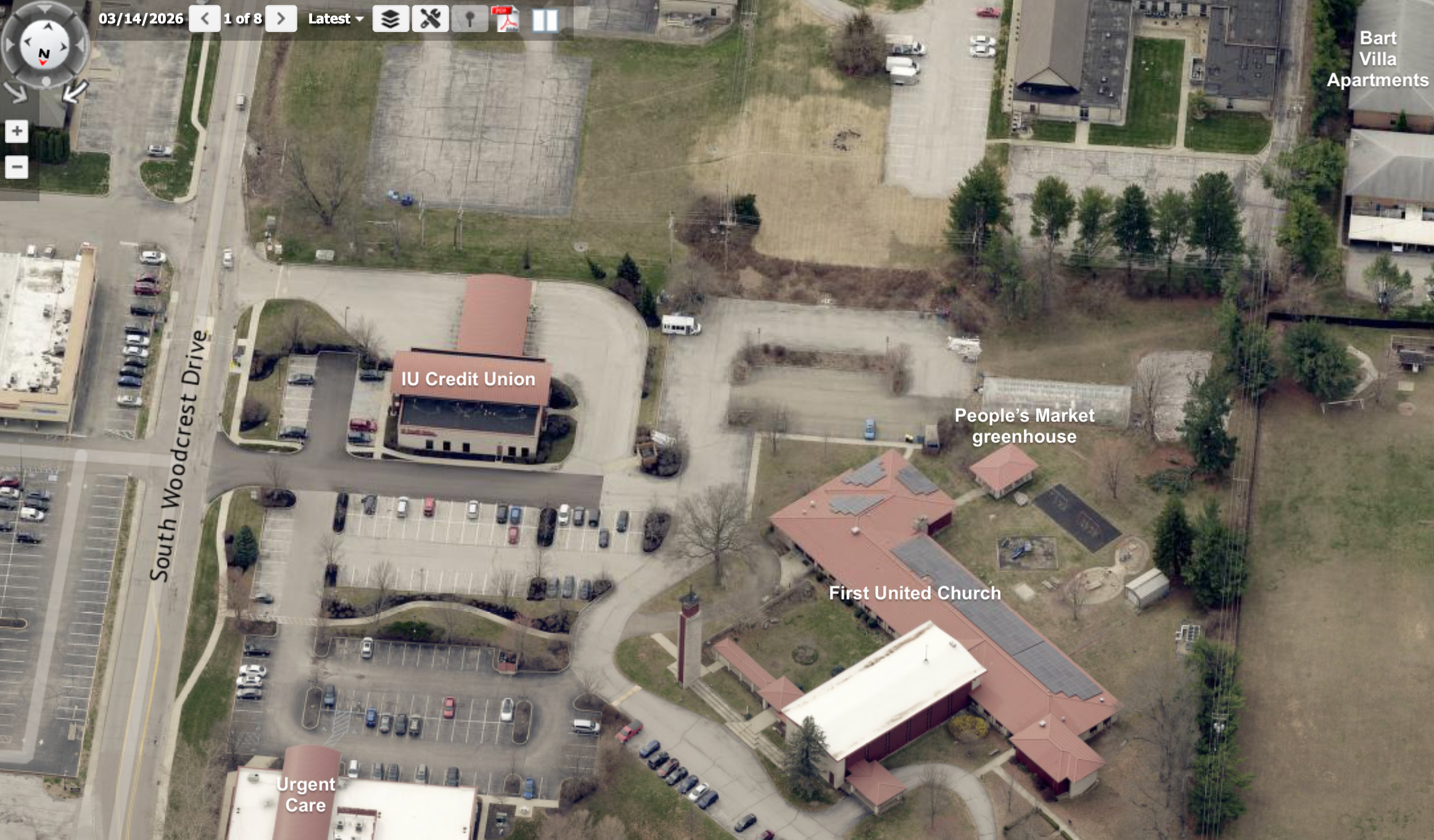
People’s Market greenhouse grounds
The 30-by-90-foot greenhouse stands behind First United Church, west of the Eastland shopping center and north of an apartment complex.
Responding to a B Square question, associate pastor at the church Shelli Yoder said, “The assault was deeply troubling, and our first concern continues to be the well-being of the person who was attacked and the safety of everyone who participates in the People’s Market.”
Yoder said the church has not made any decisions about installing security cameras, but is talking about how to make sure they maintain a “safe and welcoming environment to all community partners while remaining true to our mission.”
It’s not obvious from a map that there would be a heavily-used informal pedestrian cut-through from the west across the property. But a path is worn across the church property toward a hedge row and nearby apartments. People routinely walk through the greenhouse area.
When The B Square was out at the property last week for an interview, two people walked across from the east to the west. One offered by way of greeting, “Just passing through!”
That layout helps explain why an unknown person was passing close to the greenhouse at about 5:35 p.m. on July 21.
Jada Bee, a People’s Market cofounder, was working there because she had recently begun taking over some of the greenhouse manager’s duties after grant funding for that position ran out.
The police report for the incident says an officer was called to IU Health Urgent Care East at about 6 p.m. for a report of an assault that had taken place a half hour earlier. The police summary describes the suspect as a younger white man whose identity was unknown.
Jada Bee gave a more detailed description: a man possibly in his late teens or early 20s, wearing a white T-shirt and khaki pants and carrying a black backpack. He had brown, slightly wavy hair that fell loosely around his head and no visible facial hair, she said
Argument turns violent
Jada Bee said she was preparing to move compost near the greenhouse when she noticed the man approaching from the direction of the IU Credit Union.
She kept an eye on hims as he drew nearer. When he reached the greenhouse area, she said, he called her a “communist [N-word]-lover.” During the argument that followed, he repeatedly used the N-word and combined racist insults with attacks on communism and socialism, according to Jada Bee.
Jada Bee said she responded with “You know what? Fuck you, man,” and began walking toward him. As the argument continued, she told him, “Get your ass off church property, you need to go, get off church property right now!”
She said she maintained a distance of roughly 15 paces as the man moved backward toward the edge of the property. When he moved away, she followed. When he moved toward her, she stepped backward.
“I’m keeping my distance, because I’m not attacking,” Jada Bee said. “I’m not going to put my hands on anybody first.” At one point, the man warned that he would pepper-spray her if she came closer. Jada Bee said she challenged him to put down the spray and fight without it, but continued to keep her distance.
When the man had nearly reached the tree line and appeared to be leaving the property, she stopped trying to keep pace with him. “In my mind, I was like, ‘Oh, this is the end of it—he’s going,’” Jada Bee said.
She then told him that he had gotten his ideas from “your mommy and daddy and the internet.” At that, Jada Bee said the man removed his backpack, lowered his head and ran back toward her while spraying from a handheld canister.
As the spray reached her, Jada Bee raised her arms to cover her face. When he came close enough, she jumped and kicked him in the chest, knocking him backward onto the ground.
Jada Bee said she was unable to pursue him because her eyes were burning and her vision was blurred.
“This is the only time I have ever been in an interaction like this that it has turned violent,” Jada Bee said. “I’m 46 years old. I have been in plenty of situations where people are yelling racial stuff at each other, and then we all go our own way.”
About her reaction to being called the N-word, she said, “It's not just a word. It is an oppression of 400 years of slavery. It's an oppression of segregation afterwards. It's an oppression of police brutality and mass incarceration, and it's oppression of Black kids not coming home after hanging out with white friends.”
Jada Bee said it was a choice she made easily in the moment: “I just take it, I eat it. I have to live with that shame. That’s the one option. The other option is I fight back and stand up for myself.” She added, “I'm gonna choose me and my heritage and my people over that. ”
No one else was in the immediate greenhouse area when the assault occurred.
After the attack
After the man fled, Jada Bee stumbled toward her car and tried to rinse her eyes with water from a water bottle. She called her wife, who alerted friends. One friend, who had already planned to help out with greenhouse work, arrived within a few minutes and took her to IU Health Urgent Care East. The urgent care is just across the parking lot from the church. Staff members began flushing her eyes.
Another friend called police. Urgent care staff also arranged for an ambulance to transport Jada Bee to the IU Health hospital for additional treatment.
It was at the urgent care where a Bloomington police officer interviewed her while medical workers continued treating her.
The effects of the spray did not end when her eyes were flushed. Jada Bee wears her hair in locs. Because the spray had saturated her hair, she said she had to shampoo it nearly several times and then retwist it—a process that kept her working for several hours later that night. Even days later, she said, traces of the spray remained in her hair and were reactivated by sunlight and sweat.
“My head is still tingling from the pepper spray,” Jada Bee said during the July 24 interview.
Earlier racist harassment
The police summary says Jada Bee reported that the same man had previously “berated” other Black members of the church.
Jada Bee gave more detail to The B Square. She said the organization’s previous greenhouse manager was a Black African woman attending school locally, who had recently told her about two earlier encounters.
In one, a man used the N-word repeatedly toward the greenhouse manager in the presence of her four children, Jada Bee said. In another, the man shouted racist abuse at the children while their mother briefly left the greenhouse.
Jada Bee said the earlier harassment also included the same “communist [N-word] lovers” phrase used immediately before the July 21 assault. The previous greenhouse manager’s description also closely resembled the man who attacked her, Jada Bee said.
Jada Bee said she was first contacted by a police detective on July 23, two days after the July 21 assault.
Indiana’s bias law
The racist language used by the pepper-sprayer raises the question of how Indiana law addresses crimes motivated by bias.
Indiana’s law on the topic is in the section of the state statute that spells out the factors a judge may consider at sentencing, rather than as a separately named criminal offense.
The state statute allows a court to consider it an aggravating circumstance when a person committed an offense with bias because of a victim’s or group’s real or perceived “characteristic, trait, belief, practice, association, or other attribute.”
Another part of the state statute says those attributes include “color, creed, disability, national origin, race, religion, or sexual orientation of the injured person.”
Indiana state law also requires local reporting to the state. [Local agency bias crime reports from 2007 through 2015]
The Indiana State Police 2025 bias-crime report lists Bloomington’s police department (BPD) as a reporting agency with three BPD incidents for 2025 that include four offenses: two simple-assaults classified as anti-transgender, one simple assault classified as anti-gay male, and one case of intimidation classified as anti-LGBT mixed group.
According to a Bloomington police spokesperson, the pepper-spray attack won’t get classified as a hate-crime for purposes of required reporting, until the suspect can be located and additional evidence collected.
The Bloomington/Monroe County human rights commission offers another avenue where complaints about local hate-fueled activity can be filed.
That might be an option, Jada Bee says, but only if the police are not eventually able to identify the suspect. “We were hoping to have found him by now, but one way or another we’ll get it added to the data, because it’s important to keep track of,” she said.
From conversation to cultivation
As the police investigation continues, People’s Market is looking beyond the immediate criminal case.
Jada Bee said the assault happened not just at First United’s doorstep, but near the doors of several other religious institutions in the same part of Bloomington. People’s Market plans to invite those churches, and eventually congregations across the city, to discuss the connections among race, equitable access to food, and the use of institutional land.
People’s Market operates throughout the year with volunteers who distribute free food and provide weekly community-supported agriculture deliveries. Jada Bee said no one in the organization currently holds a paid position.
A grant had previously paid a greenhouse manager to tend plants specifically for food that would be given away. That funding has ended, leaving Jada Bee and other volunteers to absorb the work while the organization seeks money to restore the paid position.
The greenhouse at First United is intended to offer a model, not a centralized People’s Market operation that would have to manage every future site.
Jada Bee said the hope is for churches to develop projects themselves, using People’s Market and other organizations as partners. Food grown at those sites could be distributed through established community channels.
The 30-by-90-foot People’s Market greenhouse at First United was installed in 2024. It’s a large agricultural structure, but greenhouses are modular and come in smaller dimensions. A congregation would not necessarily need 2,700 square feet of extra land to participate.
Responding to a B Square question, associate pastor Shelli Yoder said, “First United has long believed that our property should be used in ways that serve our community. The People’s Market and greenhouse are tangible expressions of that commitment.”
Yoder added, “We hope this incident does not discourage congregations from using their resources to address food insecurity and build community. If anything, moments like this remind us why these partnerships matter and why they deserve the support of the broader community.”
The proposal could also involve schools and other community institutions. The common element would be a commitment to produce food and make it available to people who need it.
Jada Bee says the violent attack sharpened an existing discussion about whether institutions that speak about racial equity are willing to devote land, money and labor to work that produces a measurable benefit.
“We want action,” Jada Bee said. “We want steps to be taken that achieve goals that help people.”
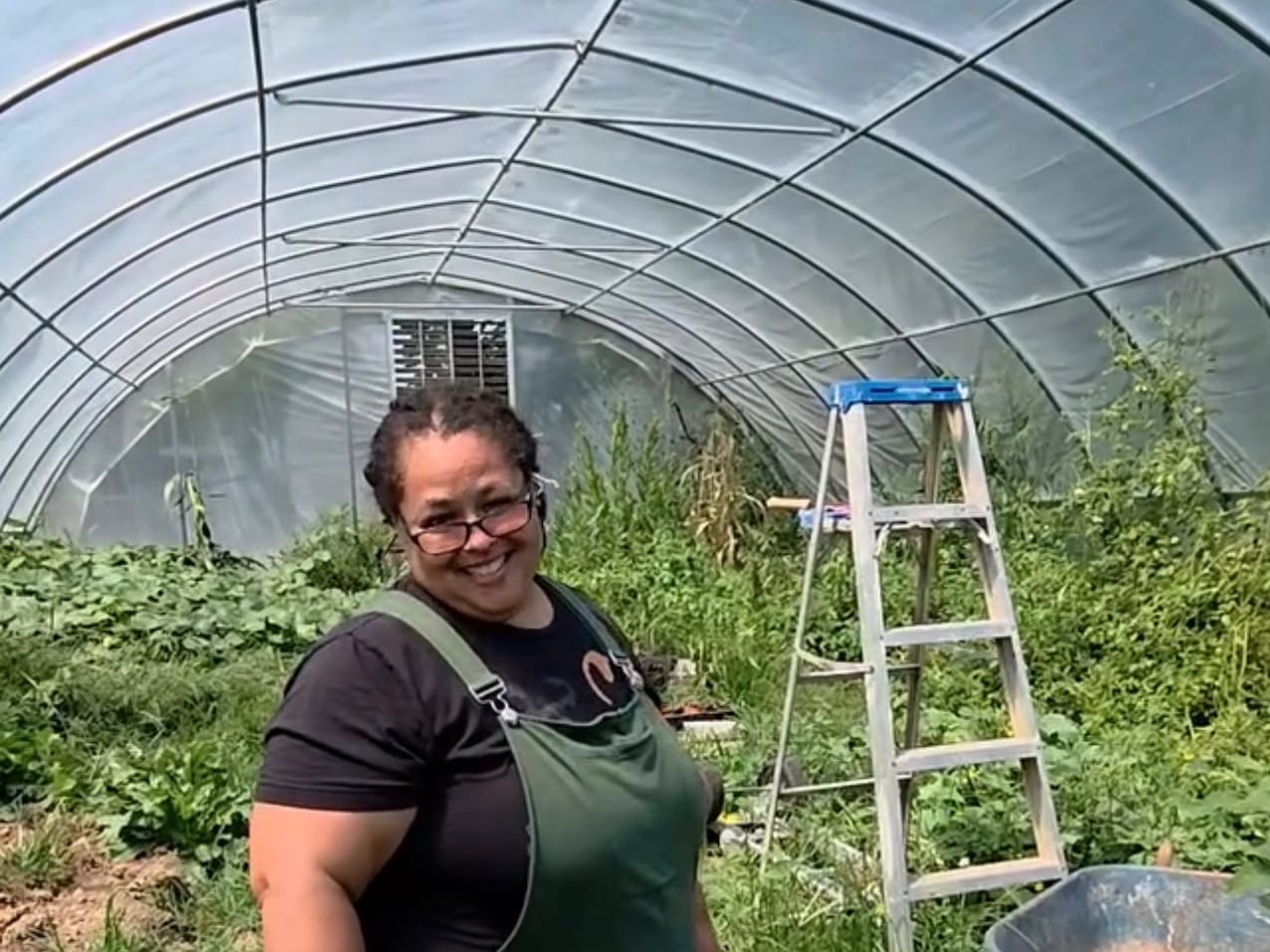
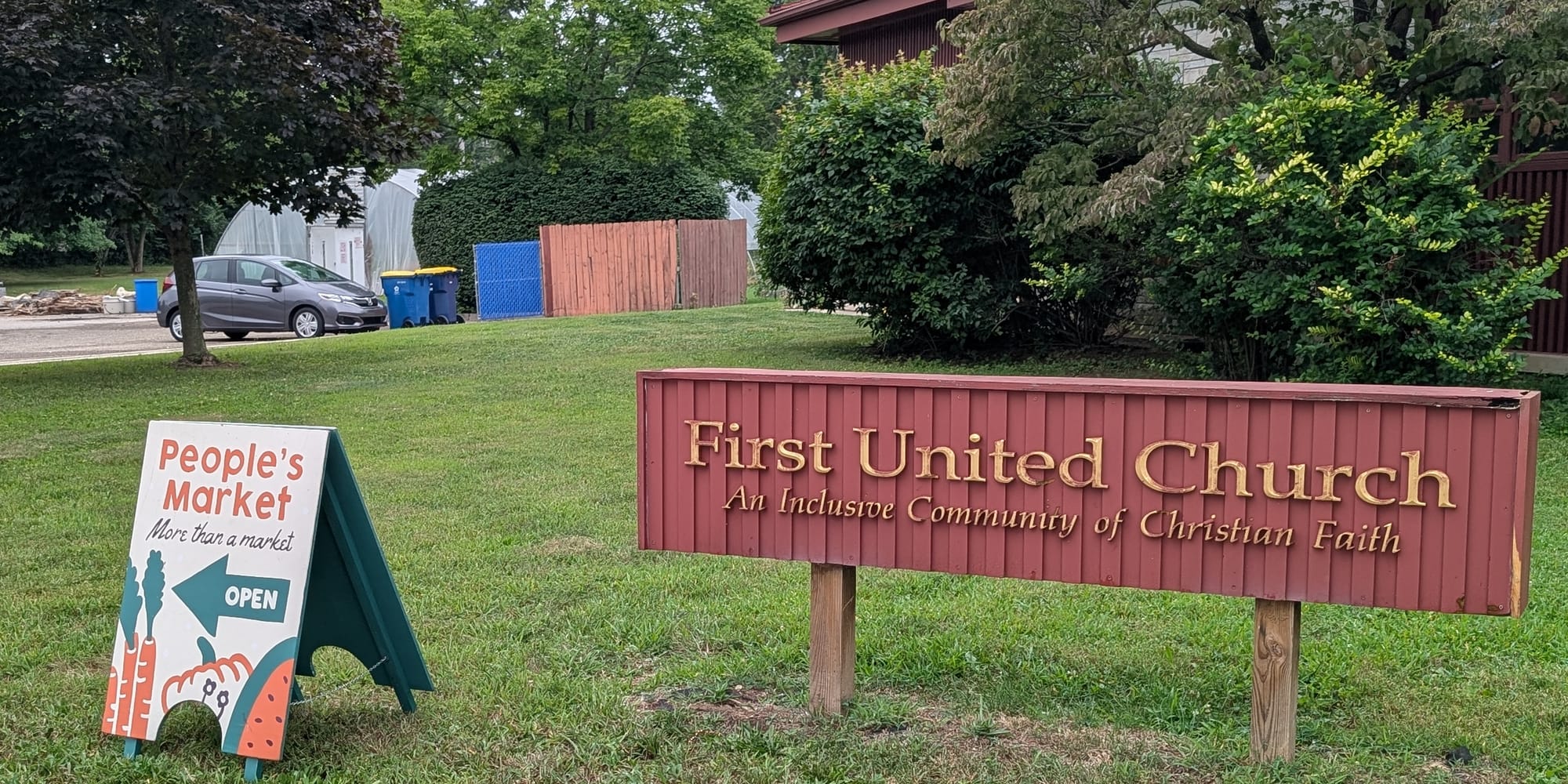
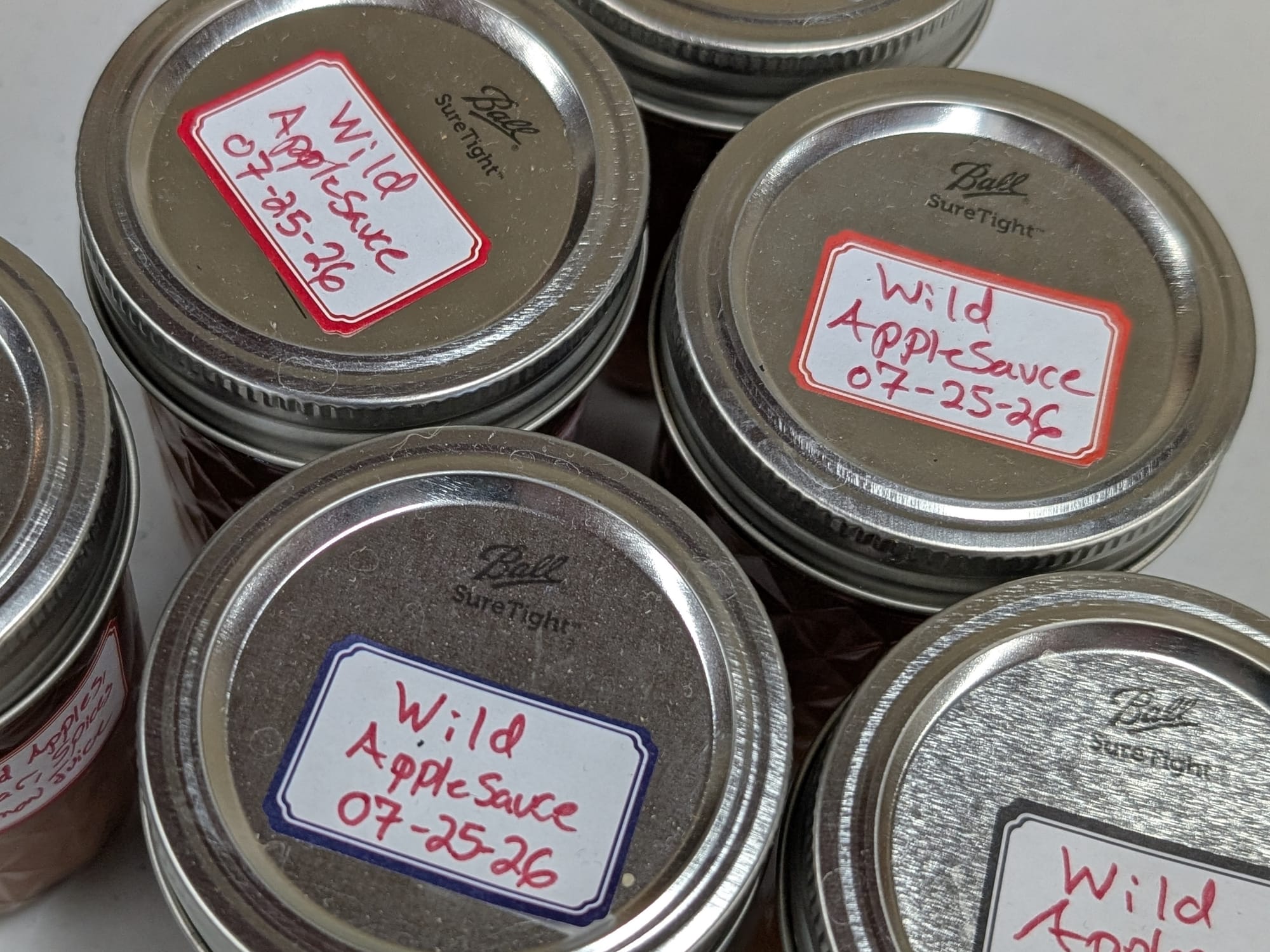
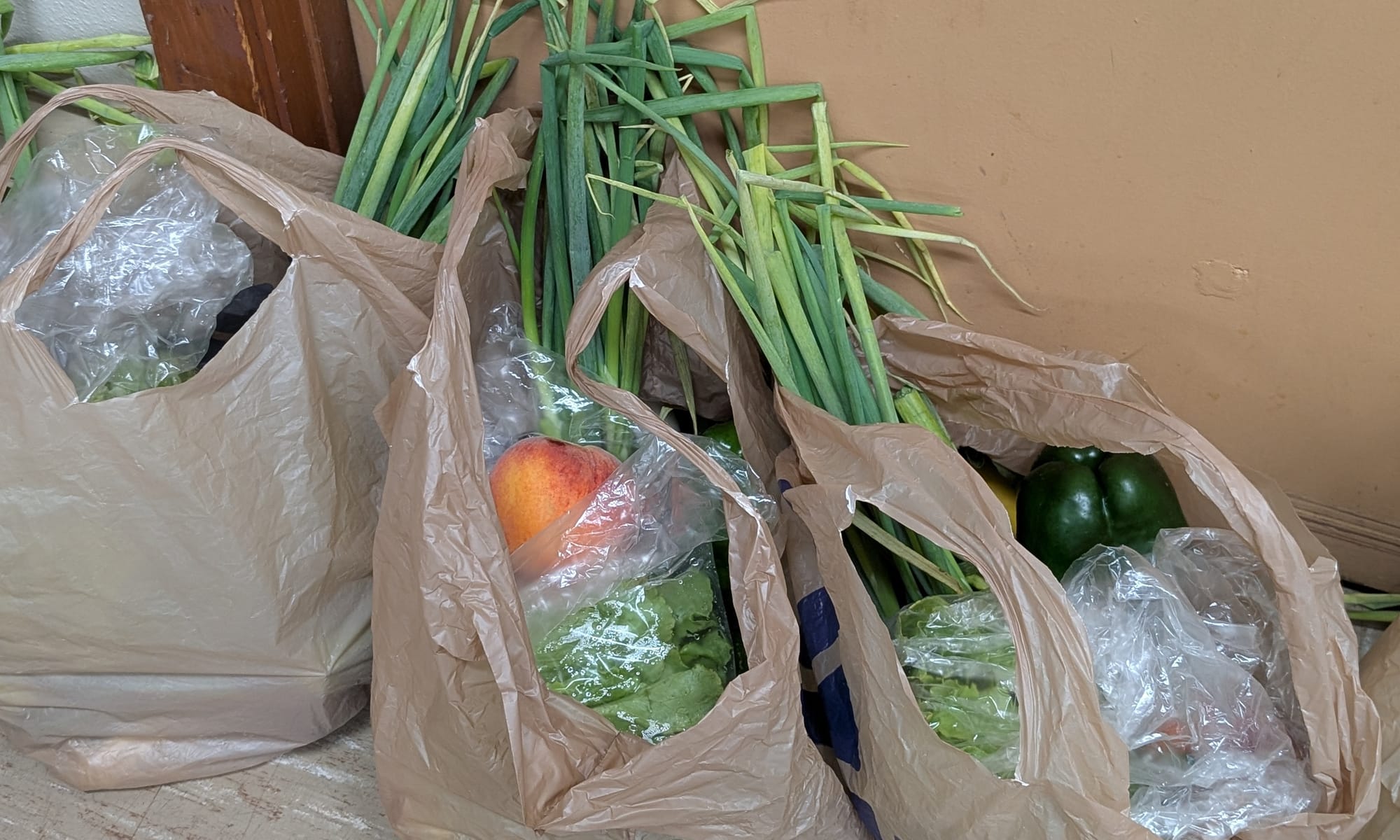
Upper left: Courtesy photo of Jada Bee in the greenhouse. Upper right: Behind the signs for First United Church and People's Market visible in the foreground is the greenhouse, in the upper left of the frame. (Dave Askins, Aug. 1, 2026) Lower left and right: Wild applesauce and pre-ordered bags of produced ready for pickup at the market. (Dave Askins, Aug. 1, 2026.)


Comments ()