
Bloomington caps big week for fire department with new operations center, funding for aerial truck
Bloomington's fire department opened a $7.95-million operations center Friday, completing a building program funded by 2022 bonds. Earlier in the week, the city council approved $2.5 million for a replacement aerial truck and three ordinances overhauling fire prevention rules.

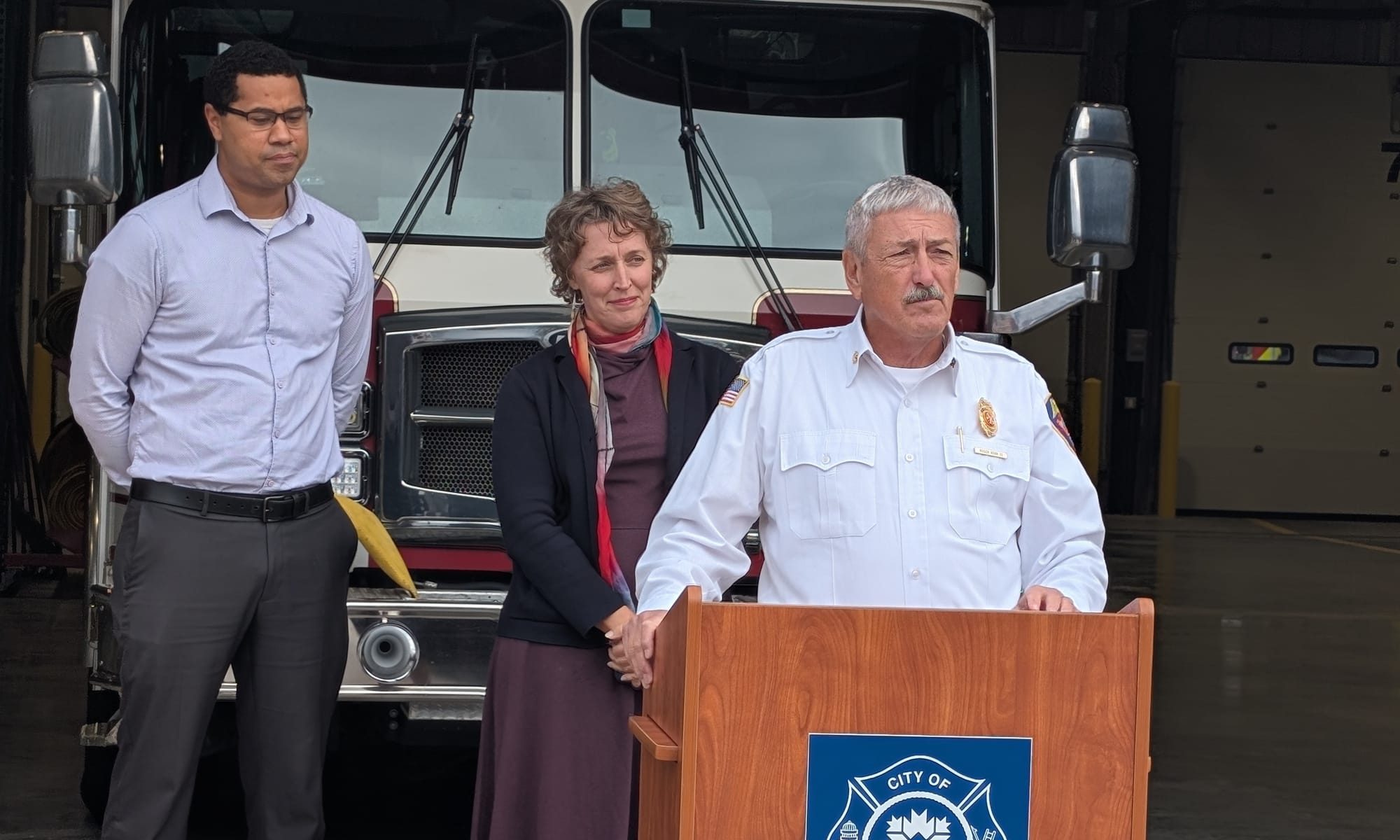
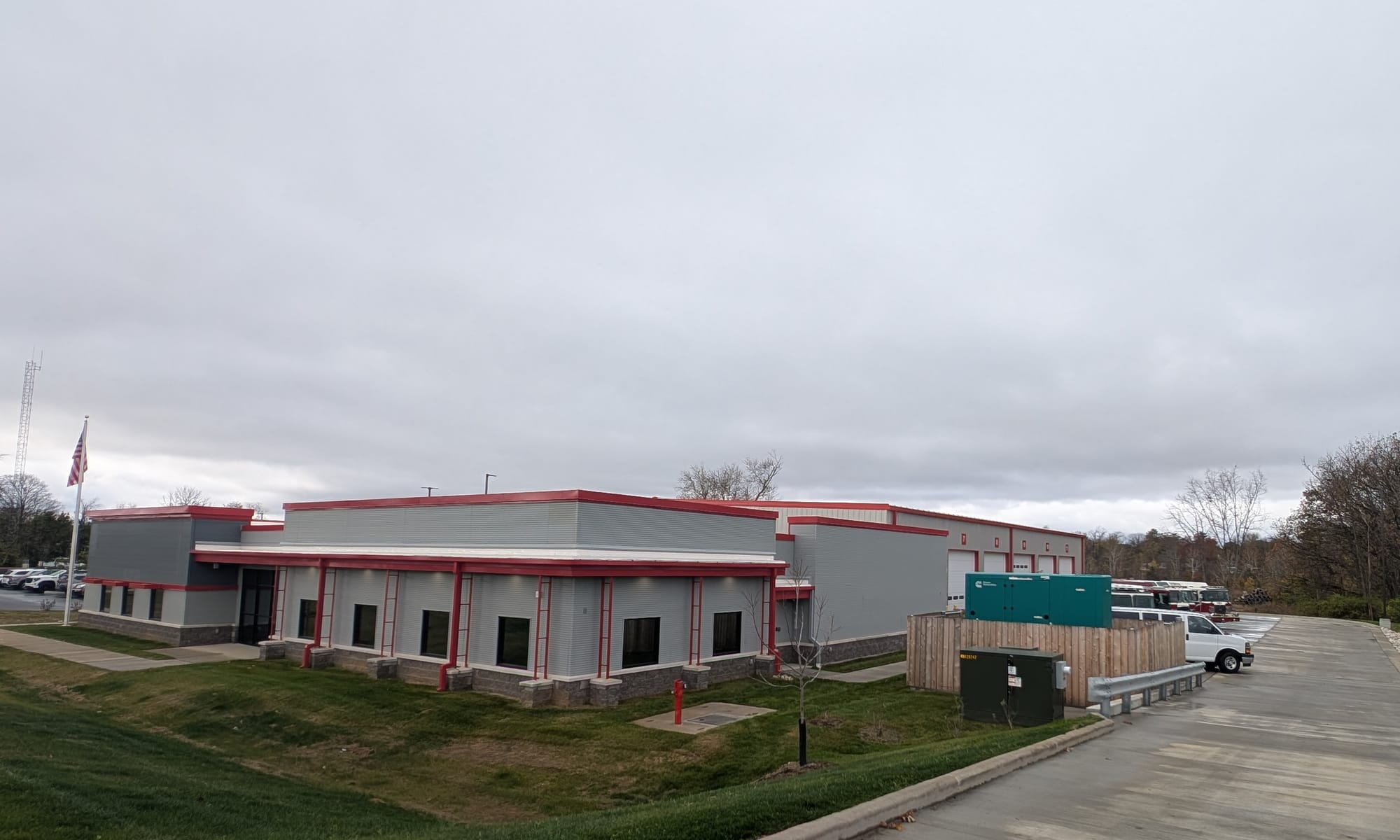
Bloomington’s fire department had a big week. Four fire-related actions were taken by the city council on Wednesday (Nov. 4), and on Friday morning firefighters and city officials marked the opening of a new $7.95-million operations center on South Walnut Street.
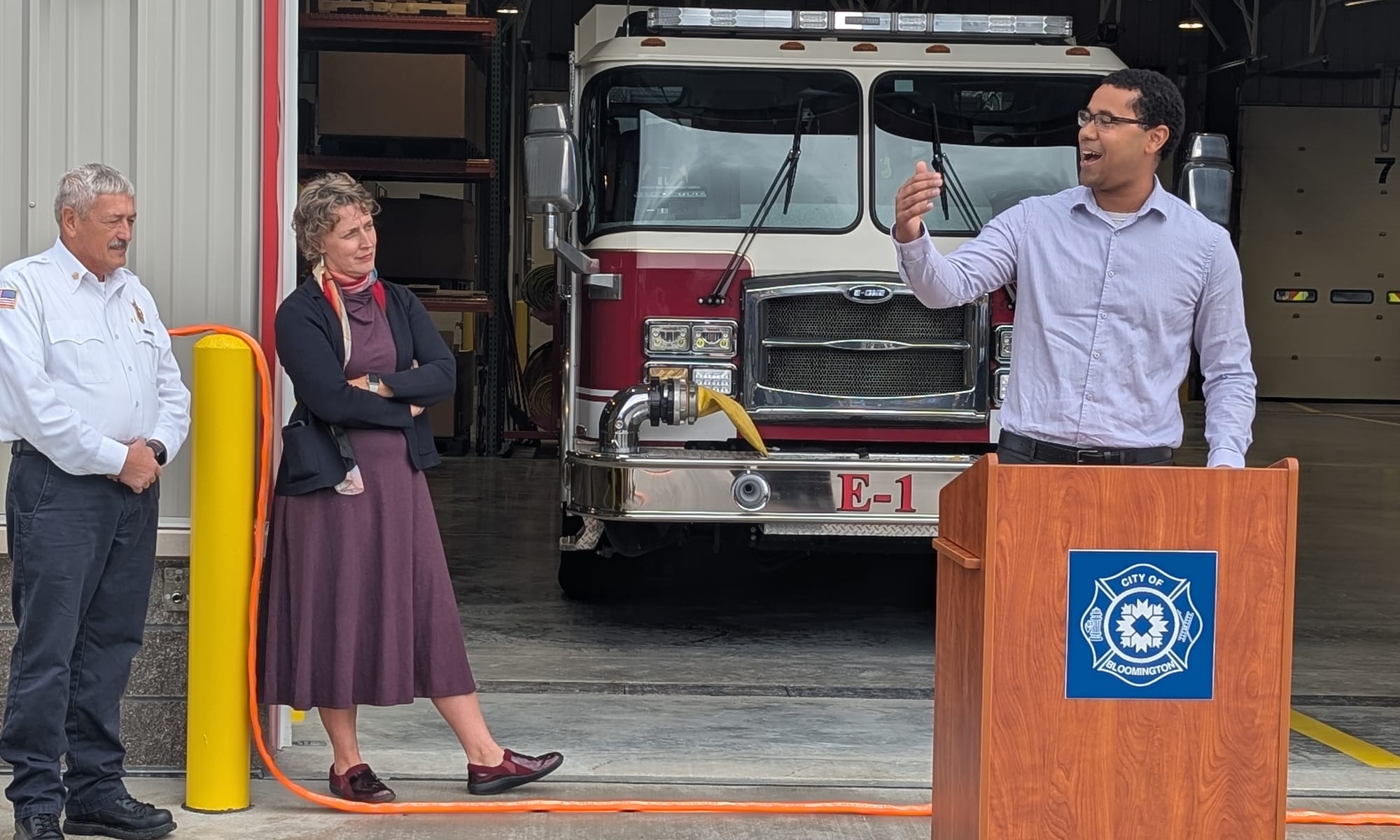
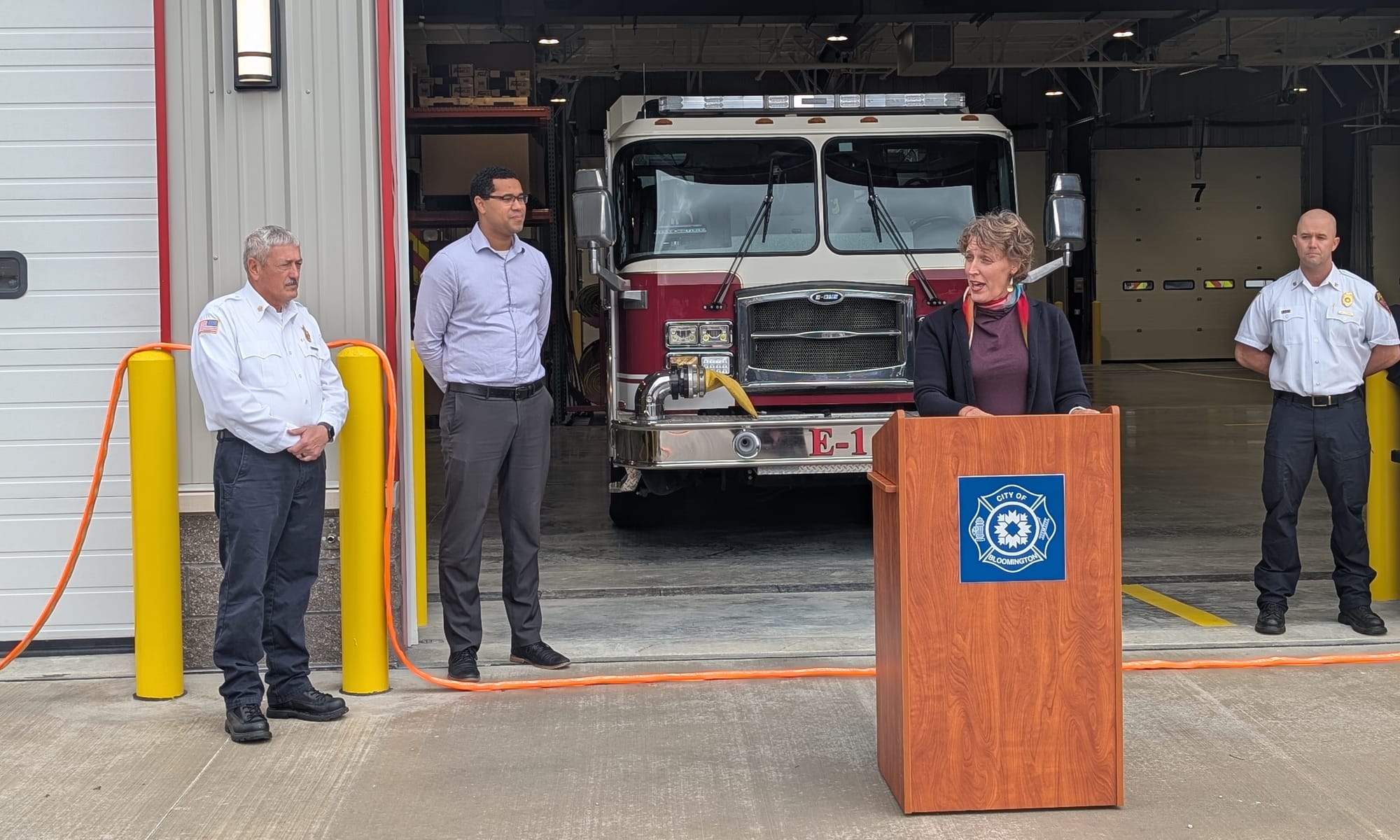
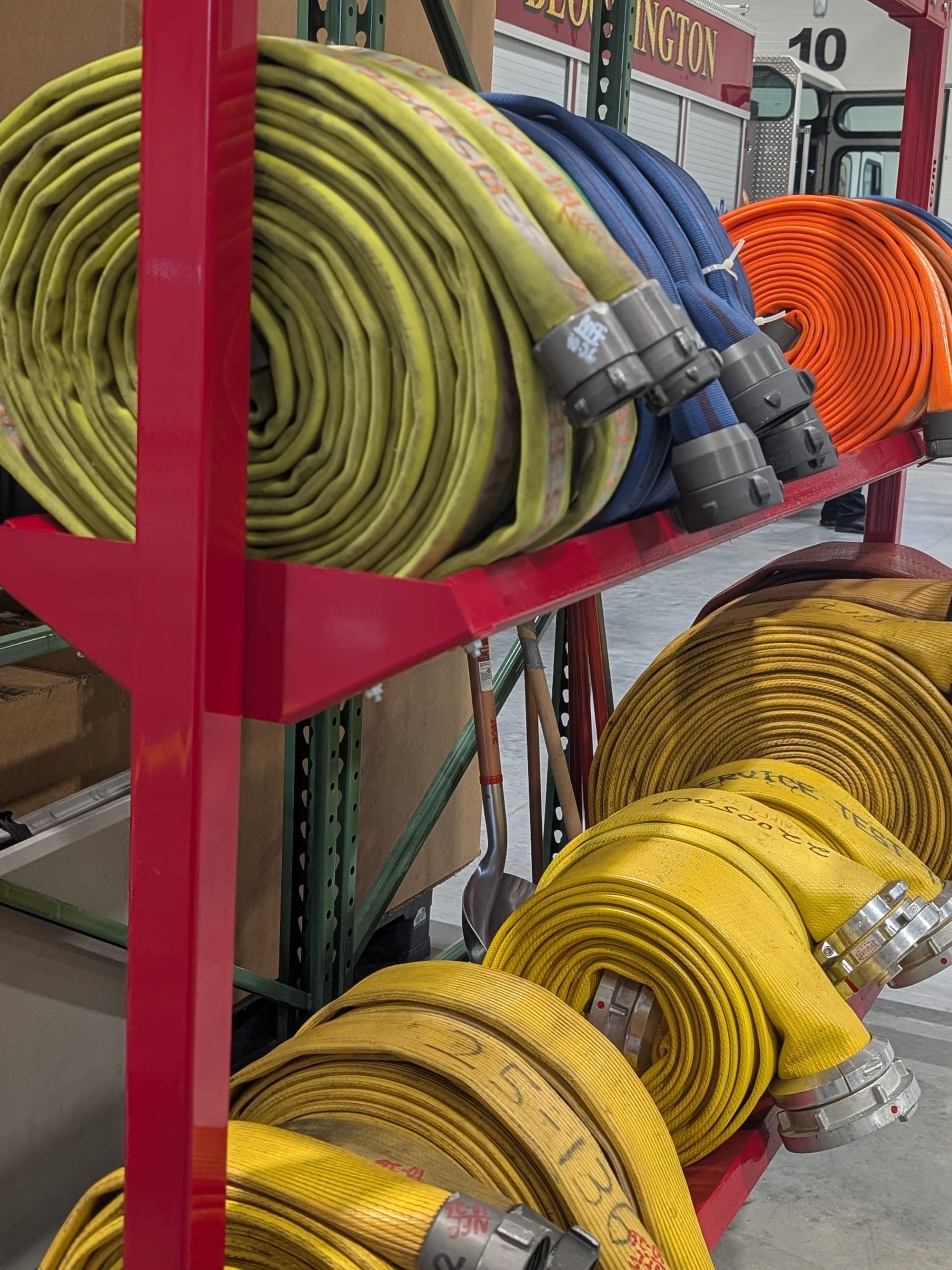
Instead of cutting a ribbon, the officials and firefighters uncoupled a length of fire hose stretched across the entrance to the new building.
Wednesday’s council actions included authorization of $2.5 million for a replacement aerial fire truck, as part of a larger $6.87-million general obligation bond package. The council also unanimously approved three ordinances overhauling the city’s nearly 30-year-old fire prevention regulations, expanding the department’s enforcement authority and establishing a dedicated fund for fire prevention programs.
The new 18,000-square-foot operations center on South Walnut Street is the last in a series of fire department capital projects financed by public safety bonds issued under former mayor John Hamilton’s administration in December 2022.
The original plans for those bonds also included relocating the Bloomington police department to Showers West, next to city hall. But mayor Kerry Thomson’s administration, which took office in January 2024, decided to prioritize completion of the fire department projects instead.
That history was reflected in a brief vignette at Friday’s ceremony, when Thomson turned to police chief Mike Diekhoff and told him, “Your turn is next!”
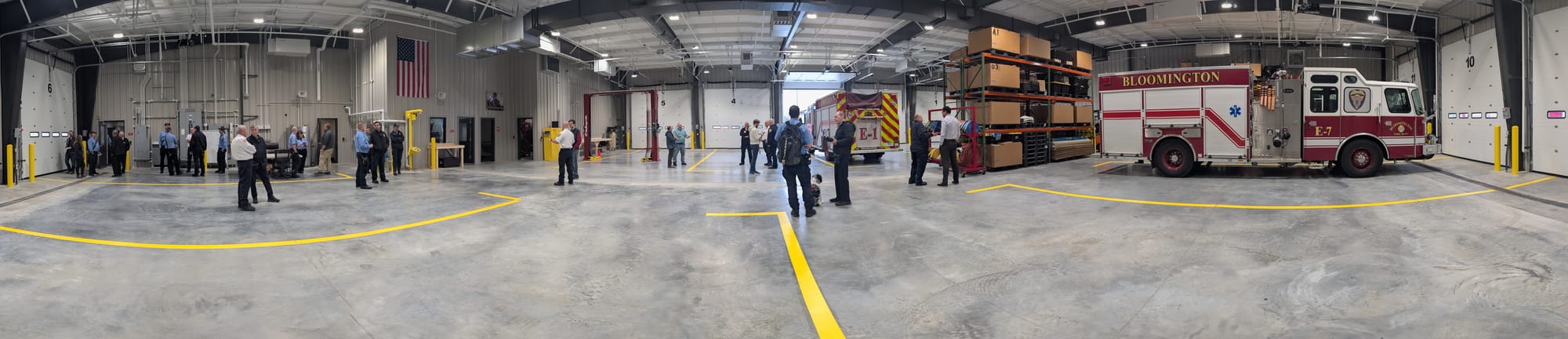
Inside the new operations center
Fire chief Roger Kerr opened Friday’s ceremony by thanking the contractors, city officials and department personnel who worked on the project, which consolidates equipment storage, maintenance and firefighter training under one roof.
Thomson described the opening as a significant investment in the preparation that takes place before firefighters respond to an emergency. “We frequently think about the moment we each call 911, and we don’t always see the moments that come before that, that allow our people to be ready to respond to that call,” she said.
Thomson said Bloomington firefighters logged more than 48,000 hours of training last year. The new facility provides dedicated space for that work, as well as equipment and systems designed to reduce firefighters’ exposure to hazardous materials.
City council president Isak Asare, who previously served on the city’s board of public safety, praised the department's work but stressed that the city's responsibility extends beyond equipment and training. “Our focus must also be on ensuring not only that you're the best prepared, but also that you have the best quality of life while serving this city,” Asare said.
In her remarks, the mayor also stressed that the project had been completed on time. Construction reached substantial completion on Sept. 11, according to assistant fire chief of operations Jason Zeeks, who gave The B Square a tour after the ceremony. The department has occupied the offices for roughly six weeks, while equipment and supplies were gradually moved into the building.
That schedule is consistent with the timeline described by deputy fire chief Max Litwin in June.
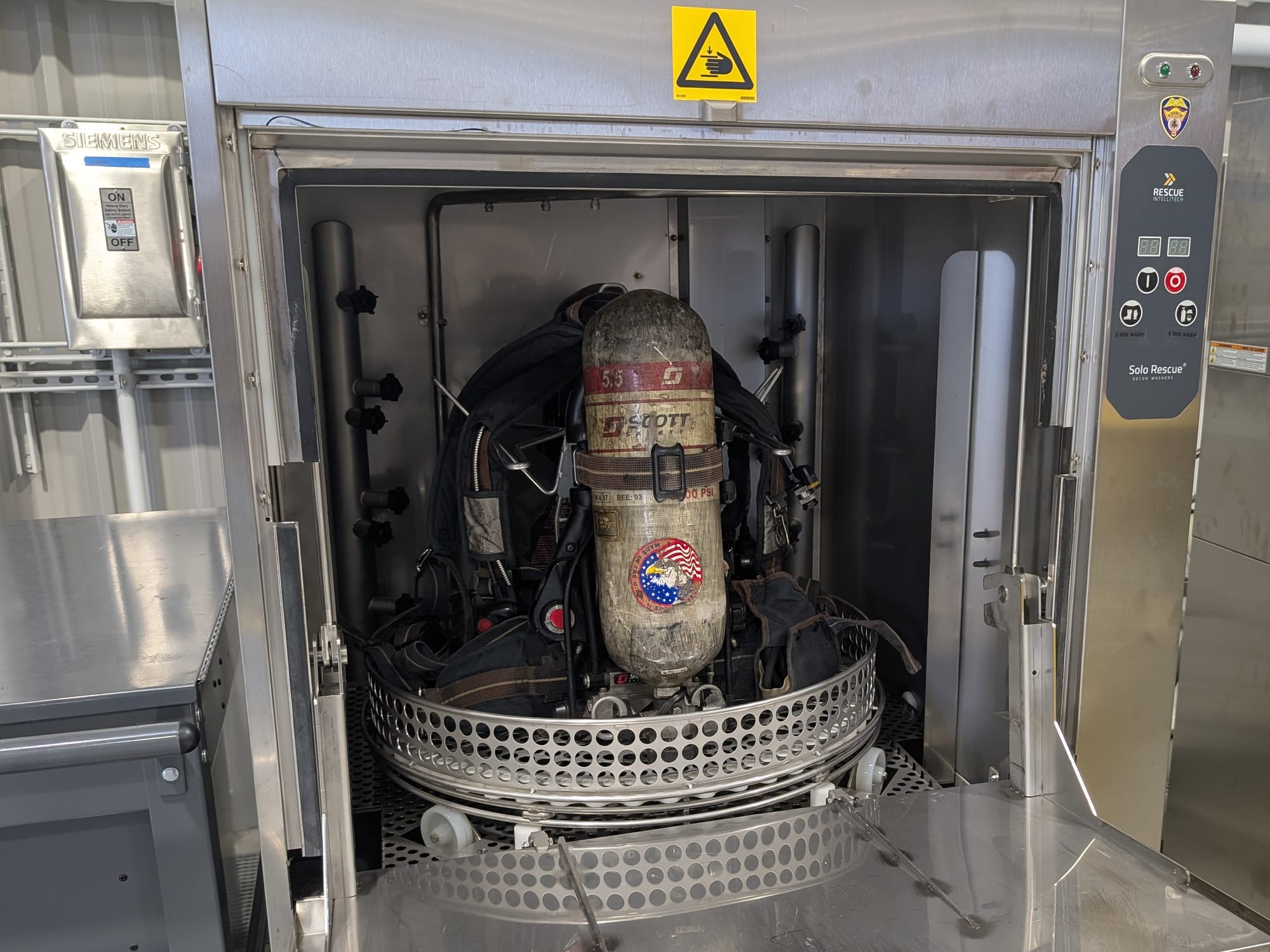
Zeeks showed visitors the building’s specialized equipment cleaning and drying facilities, which allow firefighters to decontaminate protective gear after responding to fires. A washer for hard equipment, including helmets, boots and air packs, can complete a cleaning cycle in about eight minutes. The building also has a new forced-air drying cabinet and mobile racks for drying protective clothing.
The new center also provides consolidated storage for spare protective gear, emergency medical supplies and backup firefighting equipment. Zeeks pointed to barcodes can be used to track turnout gear, including its cleaning and repair history.
The center’s proximity to the department’s existing training tower is another advantage. Firefighters can receive classroom instruction and then move directly to practical exercises on the training grounds. A new flashover chamber allows firefighters to train for dangerous conditions in which intense heat can cause combustible materials in a room to ignite almost simultaneously.
Separate classrooms also allow recruit training and continuing education for existing personnel to take place at the same time.
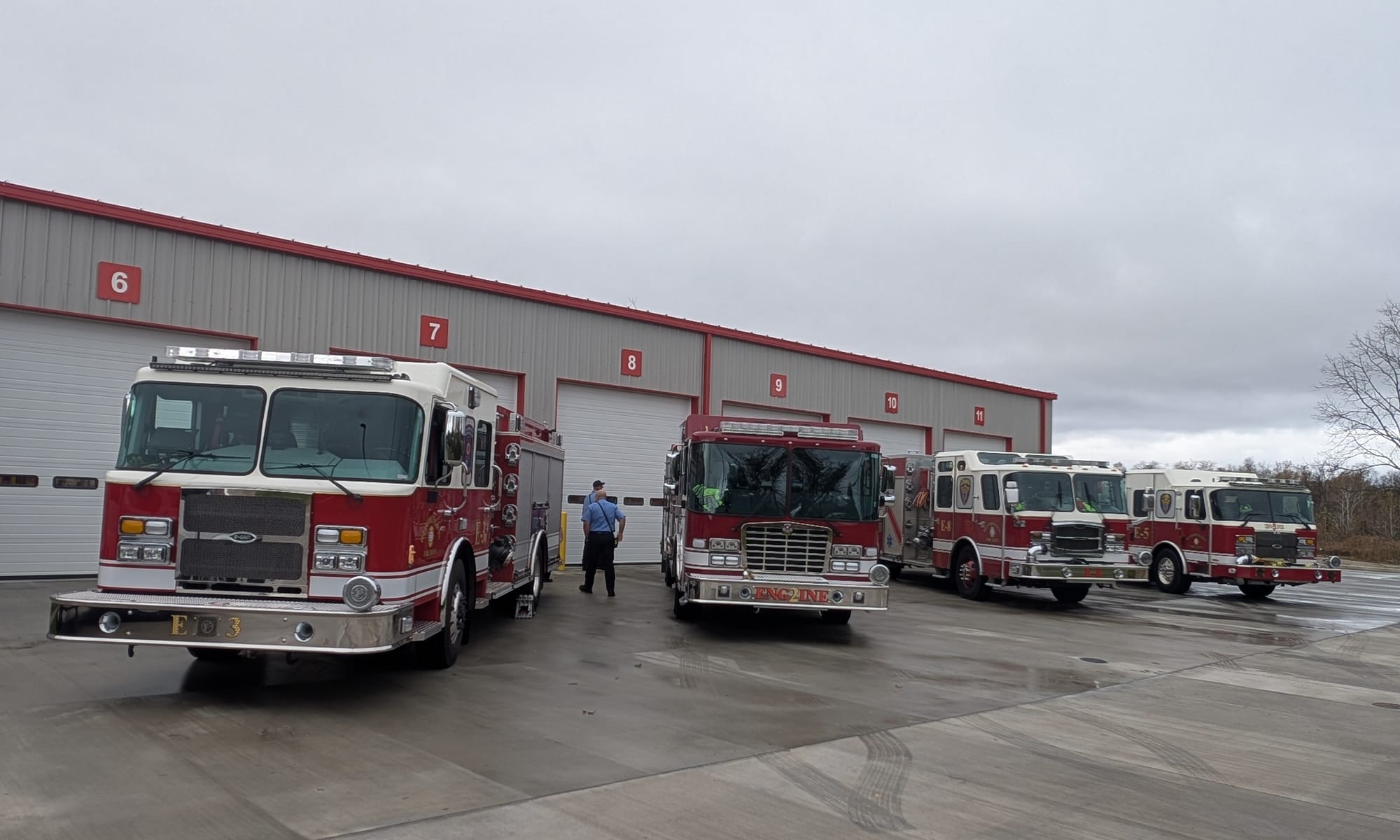
The building includes space for reserve fire apparatus and can function as a temporary fire station if another city station becomes unusable. That’s a capability the department could have used in June 2021, when flooding knocked its downtown Station 1 out of service.
The new building replaces roughly 6,000 square feet of rented space on McIntire Drive. Zeeks said the department expects to end its month-to-month occupancy of that building by the end of November.
The construction manager was Weddle Bros. Building Group, and the architect was MartinRiley. The board of public works approved an increase in the construction contract from $6.5 million to $7.95 million in May 2025, reflecting additional site work and other requirements.
Hamilton-era bonds, Thomson-era priorities
The operations center is the final piece of a public safety building program whose financing dates back to Hamilton’s administration.
In December 2022, Bloomington’s city council authorized up to $29.5 million in public safety bonds. The bond sale generated a little over $27 million, intended for several fire department facilities and a new combined police and fire headquarters at Showers West.
The city purchased Showers West for $8.75 million in early 2023.
But when Thomson took office in January 2024, the money was not enough to complete all the projects as originally envisioned, according to her administration. Cost estimates had increased, particularly for the logistics and training center, originally estimated at $2.5 million.
In February 2024, Bloomington’s redevelopment commission rejected construction bids for converting Showers West into a combined police and fire headquarters. Thomson said the available funding could not cover that project along with fire department improvements that were already underway or considered more urgent.
The result was a change in priorities for spending the remaining bond proceeds. Fire administration moved into a portion of Showers West, but the police department remained at its longtime headquarters on East Third Street.
Meanwhile, the city proceeded with the reconstruction and expansion of downtown Fire Station 1, renovations to Fire Station 3, and construction of the new logistics and training facility. Friday’s ceremony marked the completion of that series of fire department projects.
Fire prevention code gets an overhaul
The fire department’s busy week was not limited to construction and equipment.
At Wednesday’s city council meeting, members unanimously approved three ordinances. They had been developed over several years by the fire department.
The most extensive one repeals and replaces Title 18 of Bloomington’s city code, which governs fire prevention. The code had not undergone a comparable overhaul since 1997.
Fire marshal Jeff Yutmeyer told councilmembers the revision brings local requirements into closer alignment with Indiana’s current fire safety standards and establishes clearer procedures for inspections, violations, emergency orders and appeals.
The new provisions address a broad range of fire safety issues, including fire lanes, emergency access, water supplies, smoke detectors, open burning, fireworks, vacant buildings, emergency lighting and overcrowding at businesses and events. The ordinance also establishes updated inspection fees and penalties for violations, with fines of up to $2,500 for certain offenses.
Yutmeyer stressed that the fire department’s goal is compliance, rather than generating revenue. The initial inspection and first follow-up inspection generally would not carry a fee. Charges for reinspection would begin when inspectors have to return again because violations remain uncorrected.
The range of possible fines is intended to distinguish between relatively minor violations, such as a nonfunctioning exit sign, and more dangerous conditions, such as chained exit doors that could trap occupants during a fire.
The second ordinance approved by the council amends the city’s rules on false emergency alarms. It allows the fire chief or designated fire department personnel to issue citations for false fire alarms without having to call a police officer to issue the citation.
The third ordinance, establishes a dedicated fire department fund to receive money collected through the new fee and fine provisions. Litwin said the money could support public education, smoke detector installation, fire extinguisher training and other community fire prevention programs.
Litwin cautioned that the department does not anticipate collecting substantial revenue, because its objective is to correct unsafe conditions rather than impose fines.
Wes Martin, speaking on behalf of the political action committee affiliated with the local firefighters union, supported the fire code overhaul, saying it would improve safety for firefighters and residents.
All three ordinances were introduced and adopted the same night, after the seven councilmembers present unanimously agreed to consider them for immediate passage. Each was approved 7–0.
New fire truck included in $6.87-million bonds
The fourth fire-related council action Wednesday was approval of an ordinance that authorized up to $6.87 million in general obligation bonds.
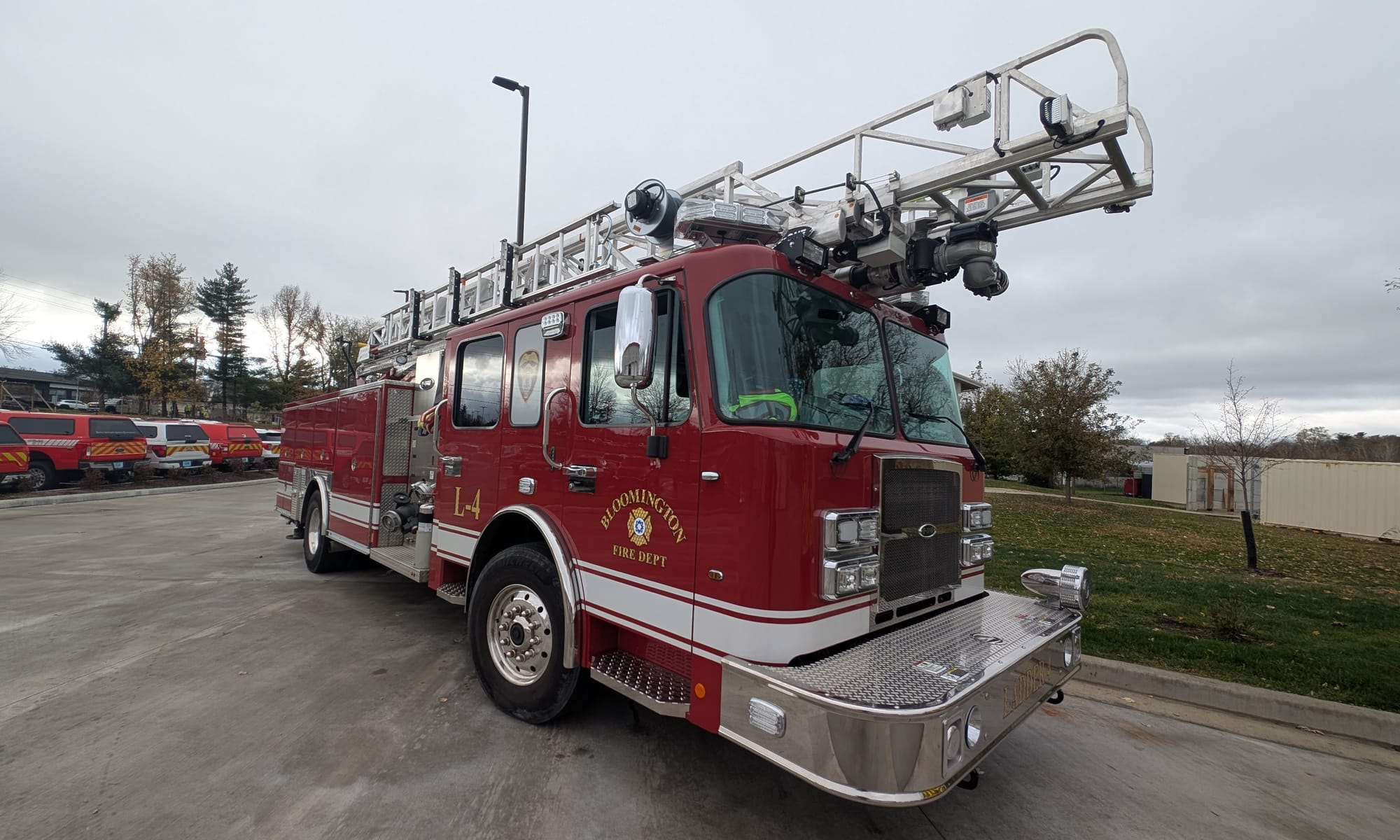
Of that amount, $2.5 million is designated to replace Bloomington’s only aerial platform fire truck, which has experienced increasingly lengthy periods out of service.
The remaining $4.23 million is intended for transportation improvements, including work on 10th Street, Third Street, sidewalks, crosswalks, bikeways and street lighting.
The bond ordinance passed 5–2, with Kate Rosenbarger and Sydney Zulich absent. Voting against it were Andy Ruff and Matt Flaherty, but for different reasons.
Ruff questioned the safety benefits of some of the city’s street designs, particularly curb extensions intended to slow traffic. He unsuccessfully proposed an amendment that would have preserved the fire truck funding while reducing the borrowing for transportation projects.
Flaherty supported the street safety investments but objected to what he regarded as the administration’s failure to honor previous commitments about the use of money authorized by the council. One example he cited was the handling of the earlier public safety bonds and the abandoned Showers West police headquarters project.
Dave Rollo expressed reservations about the transportation spending but ultimately voted for the bonds, supplying the minimum five votes required for passage.
The new bonds, which are expected to be repaid through property taxes over slightly more than six years, are separate from the 2022 public safety bonds that financed the new operations center.
Police headquarters next?
At Friday’s opening, Thomson’s remark to Bloomington police chief Mike Diekhoff about his turn coming next was more than a ceremonial acknowledgment.
“We have now expended this public safety bond, and we have expended it well because you deserve a great place for your department as well,” Thomson told the police chief. She added that her administration was working toward that goal.
The reference was to the earlier decision to complete fire department improvements rather than use the remaining 2022 bond proceeds to renovate Showers West for police.
The city is now pursuing a different location, which is the former Bloomington Convalescent Center at 714 S. Rogers St., southeast of the Hopewell redevelopment area.
On Sept. 14, Bloomington's redevelopment commission unanimously endorsed converting the building into a police headquarters and expressed willingness to consider issuing up to $30 million in bonds backed by tax increment financing revenues. The RDC took another step on Oct. 5, when it approved a request for proposals from architectural and engineering firms to design the conversion, with a $30-million construction budget ceiling. Proposals are due Friday (Nov. 6).
That RDC action did not authorize borrowing. The final project scope, design and financing still have to be established.
Even if it has not been continuous the whole time, Diekhoff and fire chief Roger Kerr have a professional history that goes back decades, including their simultaneous appointments as Bloomington’s fire and police chiefs in 2007. The two were also classmates in Bloomington High School North’s graduating class of 1983.
For Kerr and the fire department, Friday’s ceremony marked the completion of a multiyear program of building improvements. For Diekhoff and the police department, that next milestone is still somewhere in the future.









Comments ()