
Bloomington historic commission clears Seminary Pointe buildings for demolition
Bloomington’s historic preservation commission voted 4–2 Thursday to release demolition delays for two “contributing” Seminary Pointe buildings, removing a key hurdle to hotel development. CIB officials say demolition bids will cover the whole block, with work possible starting as early as Oct. 1.
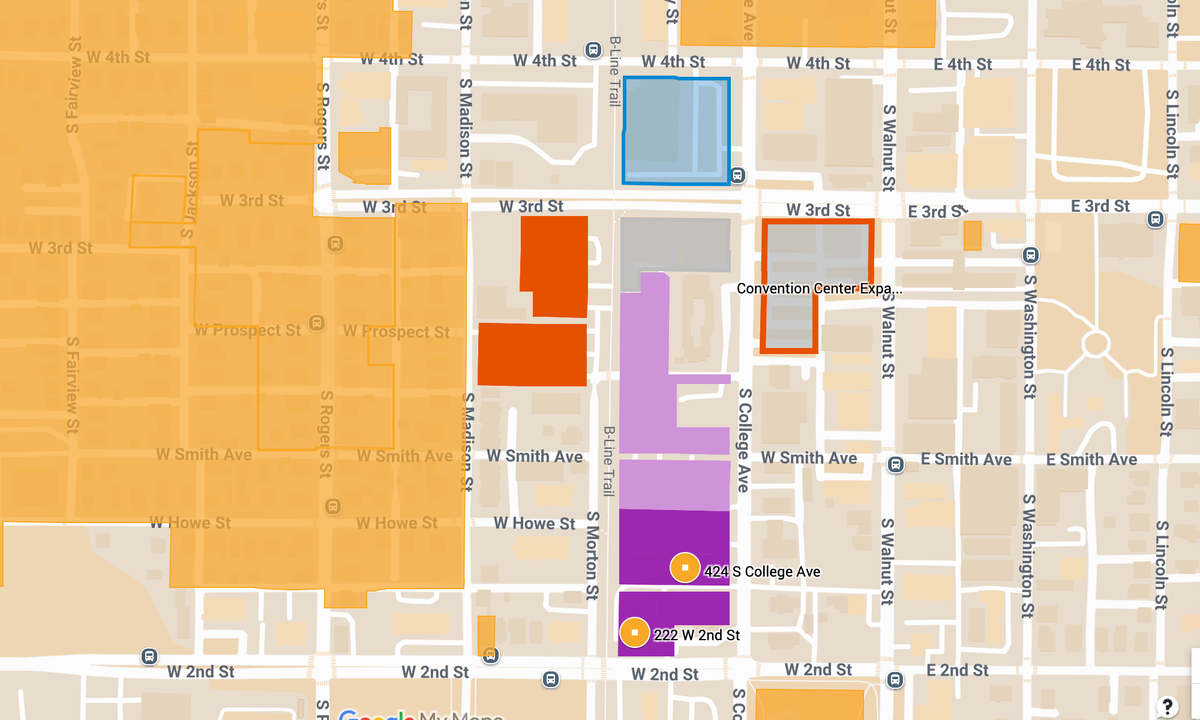
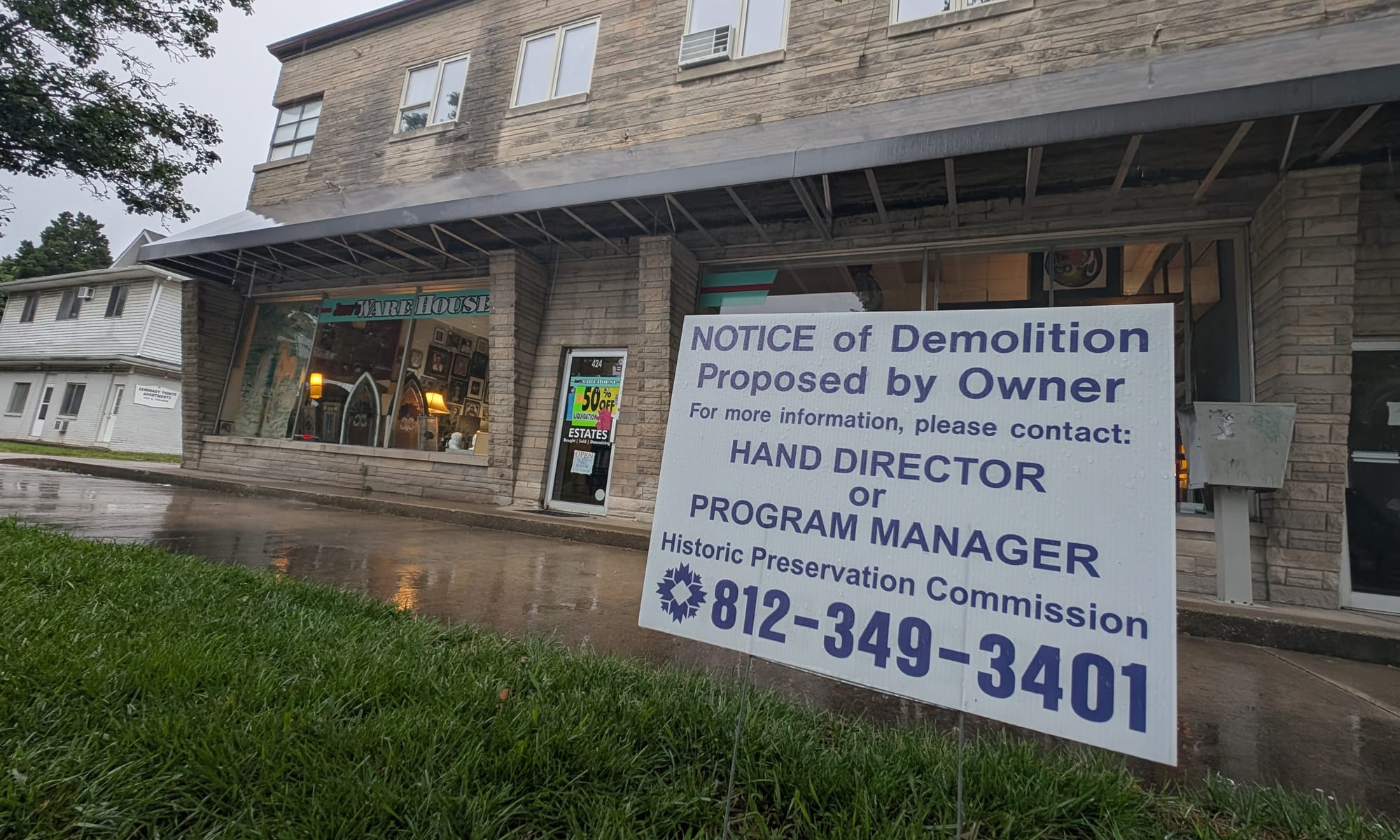
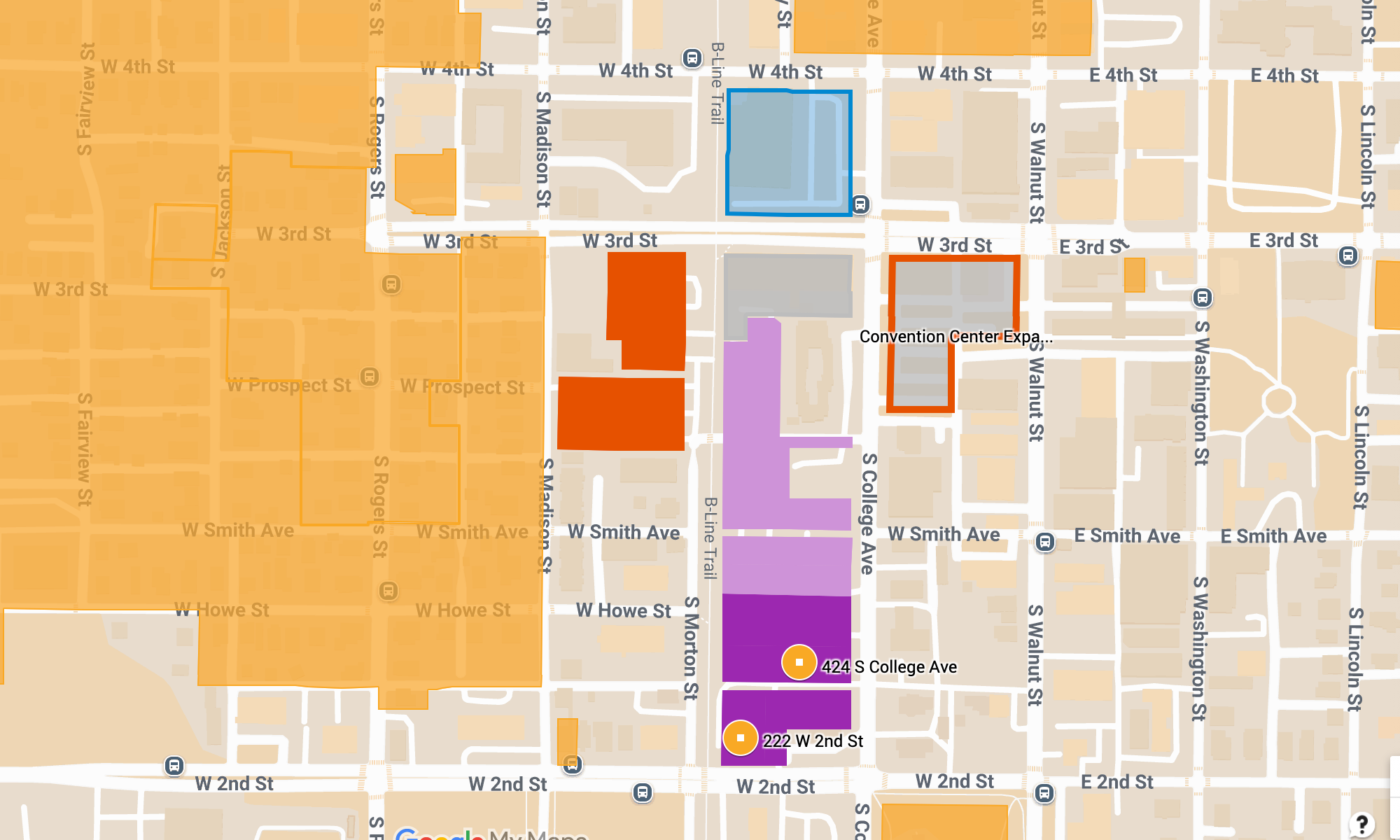
Left: Signs were posted on June 10, giving notice of the pending planned demolition of buildings on the Seminary Pointe block. Right: Land shaded with purple has been transferred by either the city or the county government to the Monroe County capital improvement board (CIB) to support the convention center expansion project. The gray area bordered in orange is the site of the convention center expansion. It’s the dark purple area that the CIB has targeted for a possible land swap for the blue square to the north, which is the College Square property, formerly owned by Bunger & Robertson. The dark yellow areas are historic districts. The 424 S. College and 222 W 2nd St addresses, indicated with placemarks inside the dark purple area, are listed as "contributing" in the city’s 2018 survey. Map by the B Square [dynamic map]
Action by Bloomington’s historic preservation commission on Thursday (June 25) cleared the way for possible demolition of all buildings on the Seminary Pointe block as early as Oct. 1.
On separate 4–2 votes, the commission “released” demolition delays for two buildings rated “contributing” in a 2018 survey: 424 S. College Avenue and 222 W. Second Street.
Both are part of the block south of the Bloomington Convention Center, and now owned by Monroe County’s capital improvement board (CIB), and site of a possible host hotel tied to the convention center expansion.
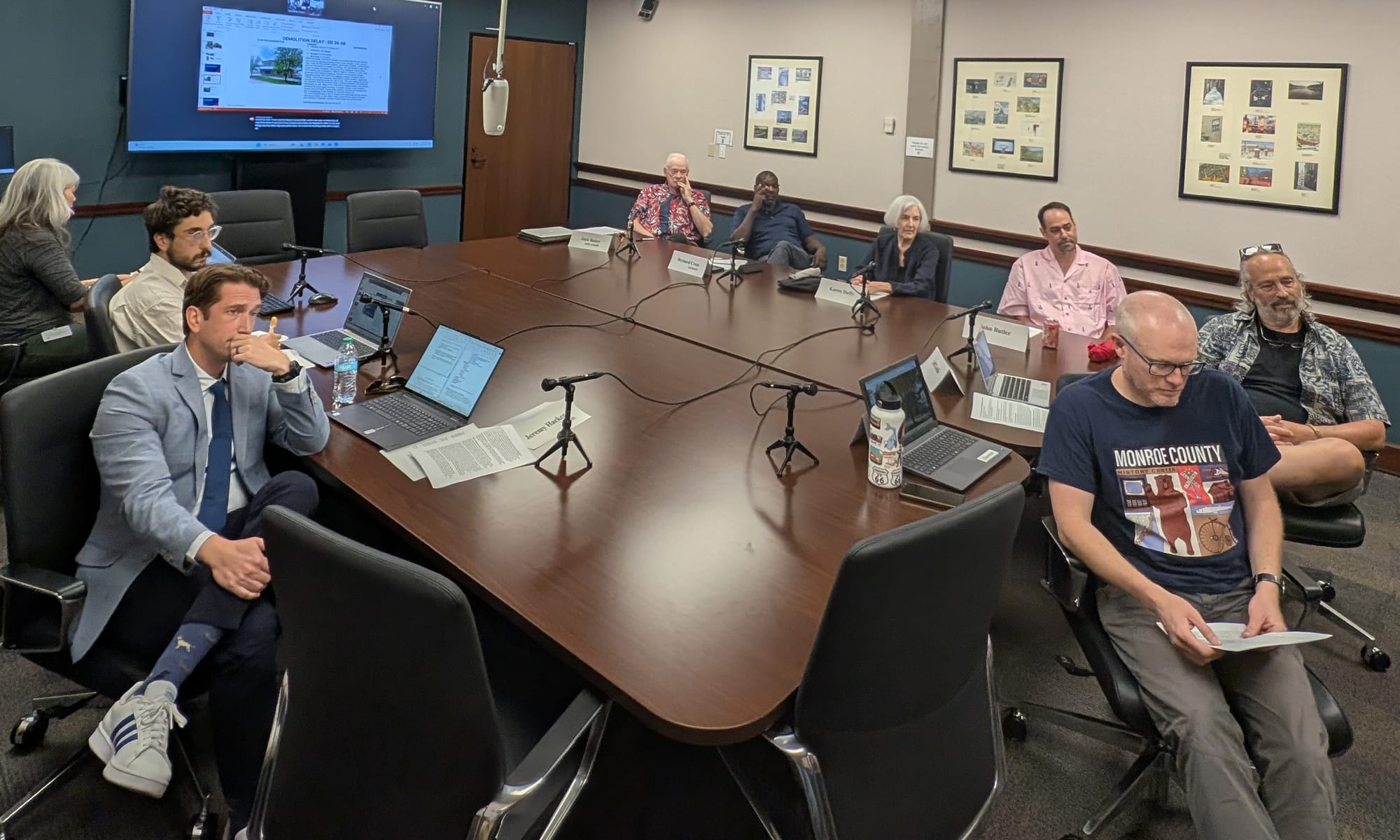
The votes ended the 90-day demolition-delay review for those two properties about two weeks after notices were posted on June 10. Voting to release both delays were Andrew Baker, Karen Duffy, Jeff Goldin and Jeremy Hackerd. Voting no were John Butler and Daniel Schlegel. Reynard Cross, who is a non-voting city council appointee to the HPC, was active in the discussion, weighing in for taking more time to investigate further.
The commission’s Thursday action does not itself order demolition. But it removes a key preservation-review obstacle for the two buildings that had triggered demolition delay because of their “contributing” status. That’s the lowest of the historic classifications, which also include “notable” and “outstanding.”
According to the CIB, two appraisals and a Phase I environmental study are expected by Tuesday (June 30). Residential tenant leases, along with the commercial leases for My Sister’s Closet, Friendly Beast and Bluetip Billiards, have been extended through Aug. 31. The lease for Jeff’s Warehouse, which had originally run through Feb. 28, 2027, has been renegotiated to end no later than Sept. 30. The CIB now plans to prepare demolition bids for all buildings on the block, with demolition possible as early as Oct. 1.
Thursday’s debate turned on the narrow question that the HPC is supposed to consider—whether the buildings had enough historic or architectural significance to warrant more review or possible local historic designation. Advocates for preservation of the “super affordable” housing and commercial spaces attended Thursday’s meeting in support of preserving the two buildings on their historic merits.
City historic preservation program manager Noah Sandweiss recommended release of both delays. For 424 S. College, the staff report described a 1955 commercial-residential building with modernist features, including metal corner windows, large picture windows, glass block and limestone piers supporting an awning. The report tied the building to Ralph O. Deckard, the Full-O-Pep autopart company, and mid-century worker housing.
For 222 W. Second St., the staff report described a two-story masonry commercial-residential building with rough-cut ashlar limestone storefront, large picture windows and older metal casement windows mixed with replacement windows. Sandweiss also noted more specific resident history for that building, including a Westinghouse engineer connected to patent work and an aspiring country singer tied to Bloomington’s music history.
Housing advocates urged the commission not to release the delays. Sarah Woolford, Habitat for Humanity’s housing solutions director, representing Bloomington Homes for All, asked the HPC to initiate Seminary Pointe as a conservation district, impose interim protection, and to send the matter to the Bloomington city council.
Amber Corr echoed Woolford’s sentiments. They said the buildings meet local criteria for economic and social heritage, because they were built as mid-century commercial buildings with worker apartments above and still provide unusually low-cost housing. They also pointed to architectural features including limestone storefronts, glass block, corner windows and postwar commercial design.
The request was tied to a broader Bloomington Homes for All proposal under which Avalon Community Land Trust would hold the land and a new Seminary Pointe cooperative would own and operate the buildings. Advocates have described the plan as a roughly $1.6 million rehabilitation proposal, with residential rents around $700 a month and a goal of serving households at about 45% of area median income.
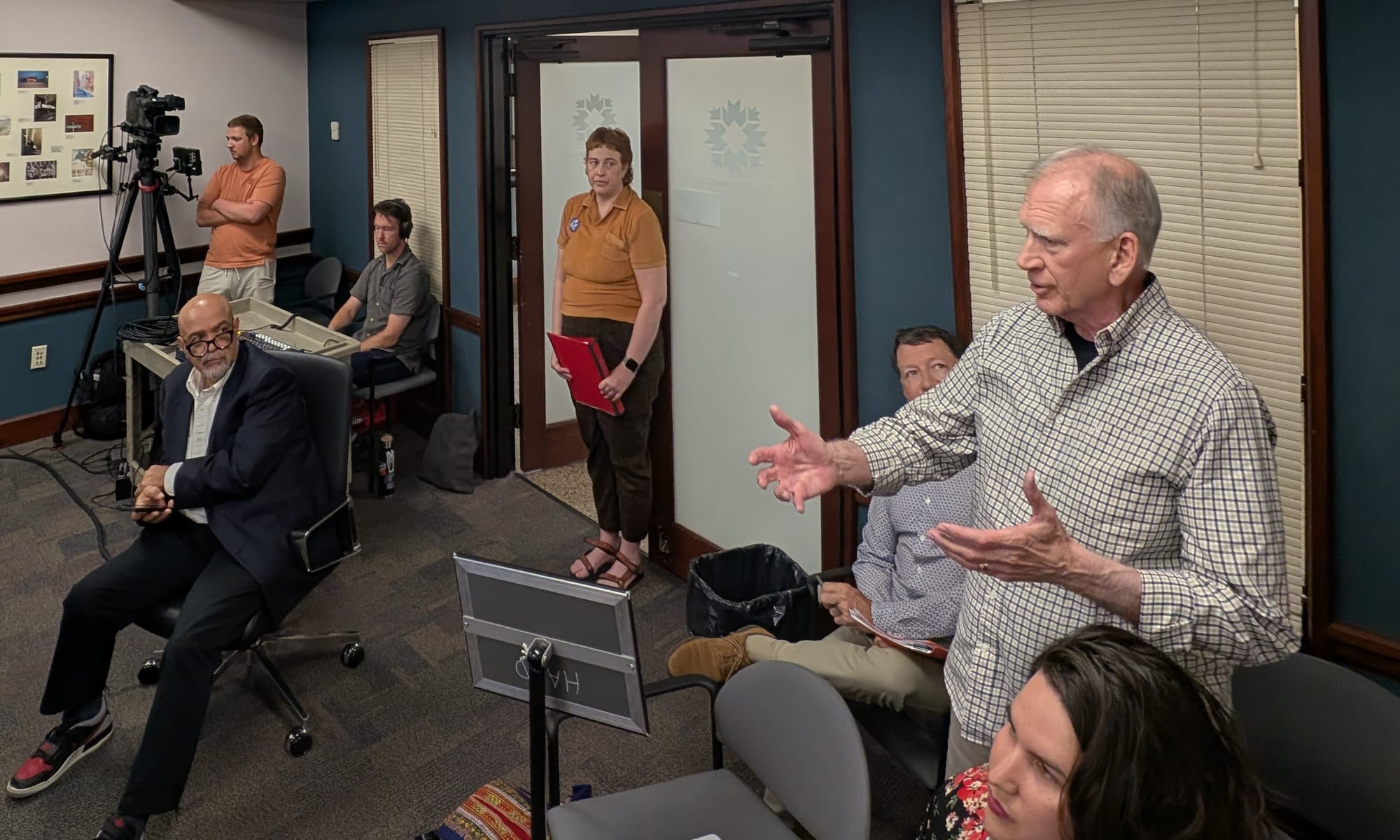
At Thursday’s meeting, CIB president John Whikehart told the commission he respects the advocates and their position. But he told HPC members that they were being asked by the advocates to solve a political and affordable-housing problem, not answer historic-preservation question, which is their responsibility.
Whikehart said the CIB had made five requests of the mayor and the Bloomington Redevelopment Commission to pursue the kind of land exchange they support, which could preserve Seminary Pointe for housing while allowing the CIB to use the RDC-owned College Square site for a host hotel.
“I’m beginning to feel like Lucy and the football and Charlie Brown,” Whikehart said, describing repeated failed attempts to pursue a land swap. “I made five attempts to kick this football, and all five times it’s been pulled out from under me.”
Whikehart said the CIB is not going to operate Seminary Pointe as affordable housing. “We are not a property manager,” he said. The question for the HPC, he said, was whether the buildings were historic under preservation standards—not whether the commission should become part of a political solution for affordable housing.
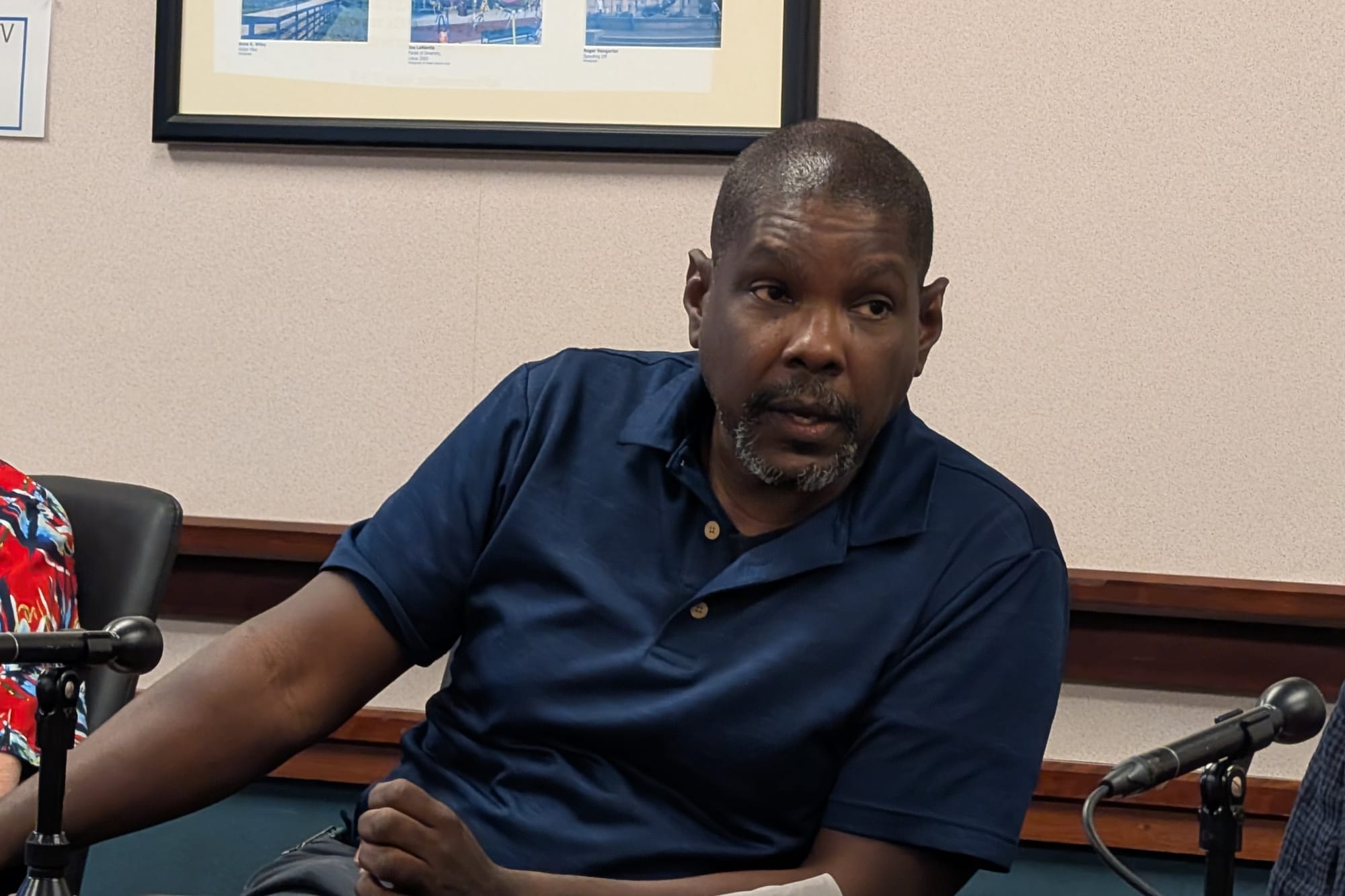
John Butler, who voted against release, said the commission should take more time to understand how rare the buildings are as examples of mid-century commercial architecture in Bloomington. He asked for an inventory of comparable 1950s commercial buildings, especially two-story examples.
“This is a moment in time, and this building exemplifies it,” Butler said about 424 S. College, pointing to its corner windows and storefront design. He said he wanted at least until the next HPC meeting for staff to research whether the building type is uncommon.
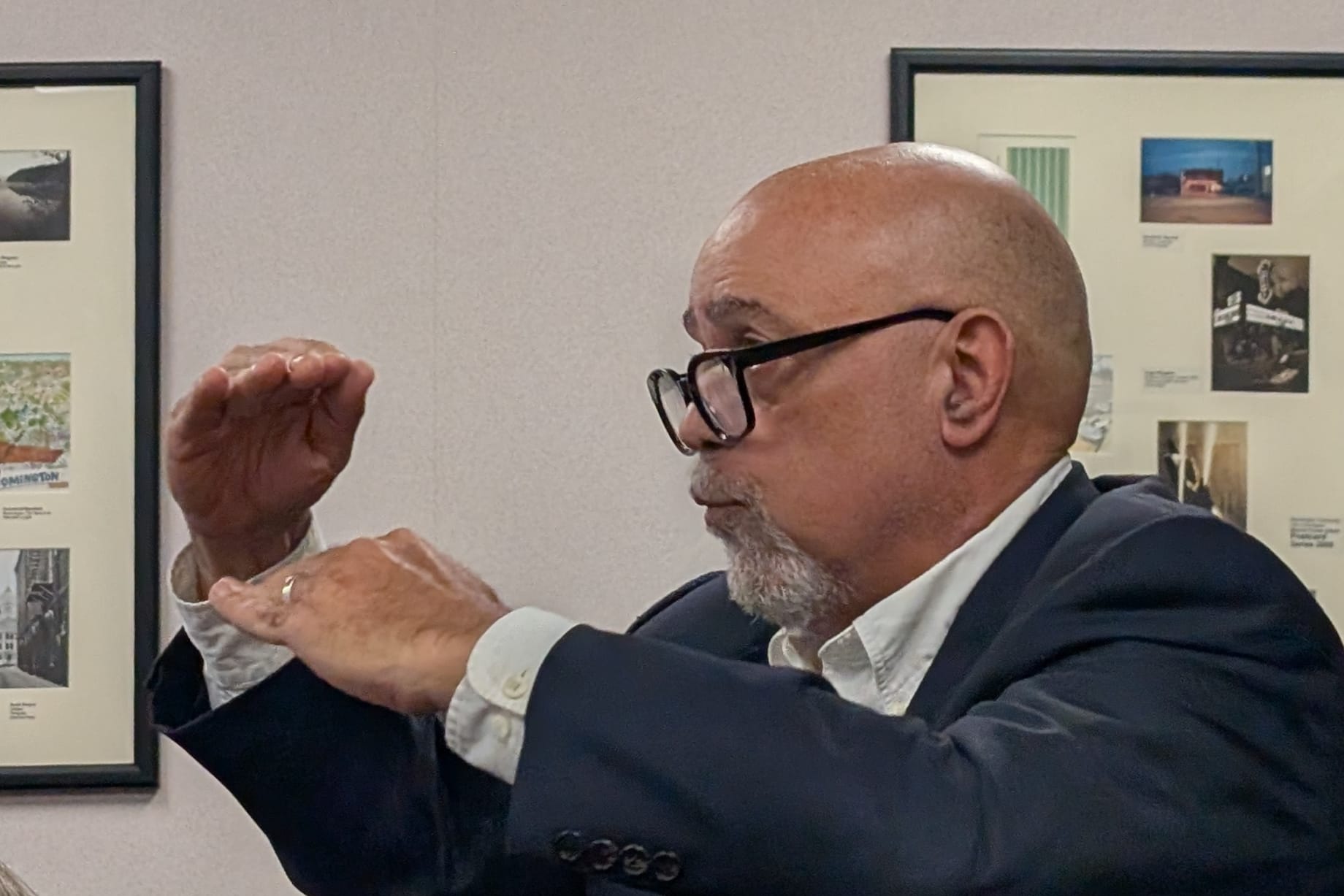
Daniel Schlegel also supported a short delay, saying two more weeks would allow the commission to gather more information before allowing a permanent loss. For 222 W. Second, he specifically said he wanted to know more about the patent-related resident history identified in the staff report.
Cross, though non-voting, also urged taking more time. He said that with most of the 90-day demolition-delay period still available, he saw no reason not to let staff and stakeholders develop a fuller record.
Commissioners who voted to release the delays said they were sympathetic to the housing arguments, but did not believe the buildings met the high threshold for historic designation.
Baker said he appreciated the work by the housing advocates and had been on the other side of similar preservation fights. But he said the commission had to apply historic-preservation criteria strictly, and he did not believe the buildings had enough historical significance to carry them through local designation.
Karen Duffy drew a similar distinction. She said the buildings are historical in the ordinary sense, but not significant enough under the legal standard the commission has to apply. Future use, she said, is not supposed to be part of the demolition-delay decision, she said.
Jeremy Hackerd, chairing the meeting, reminded members that the commission’s role is limited to the historical and architectural significance of the existing buildings, not the future use of the site. He said the staff reports and the rating of “contributing” did not justify holding up demolition.
The release votes come as the land-swap scenario appears increasingly unlikely. The CIB has issued a request for proposals for a host hotel on Seminary Pointe, with responses due June 30 and a possible preferred developer selection in July. The Bloomington RDC, meanwhile, has a separate public offering underway for College Square, the north-side site housing advocates and the CIB have both described as the preferred hotel location. The RDC’s public offering has a due date of July 20.
The city council voted on June 3 to support a possible land-swap approach even if the exchange were not equal in dollar value, citing preservation of affordable housing and local businesses as public benefits. But no agreement has emerged between the CIB and RDC.
Thursday’s two HPC votes mean that the historic preservation question, which could have slowed demolition of the two buildings, has been answered.

Comments ()