
Bloomington mayor hears split views on Kirkwood as veto deadline looms
Bloomington mayor Kerry Thomson heard 90 minutes of public comment Tuesday on a council-approved ordinance to close 5 blocks of Kirkwood Avenue to cars for 7 months a year starting in 2027. Speakers raised various points in support and opposition. Thomson has 10 days to sign or veto the ordinance.
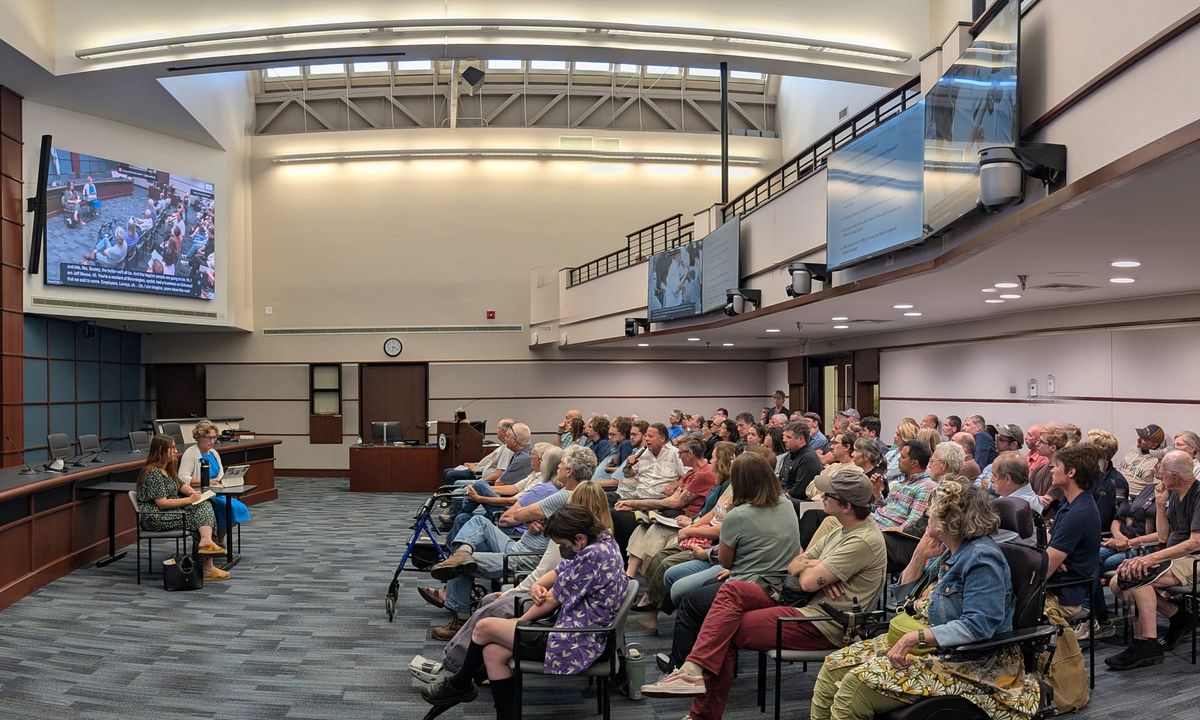
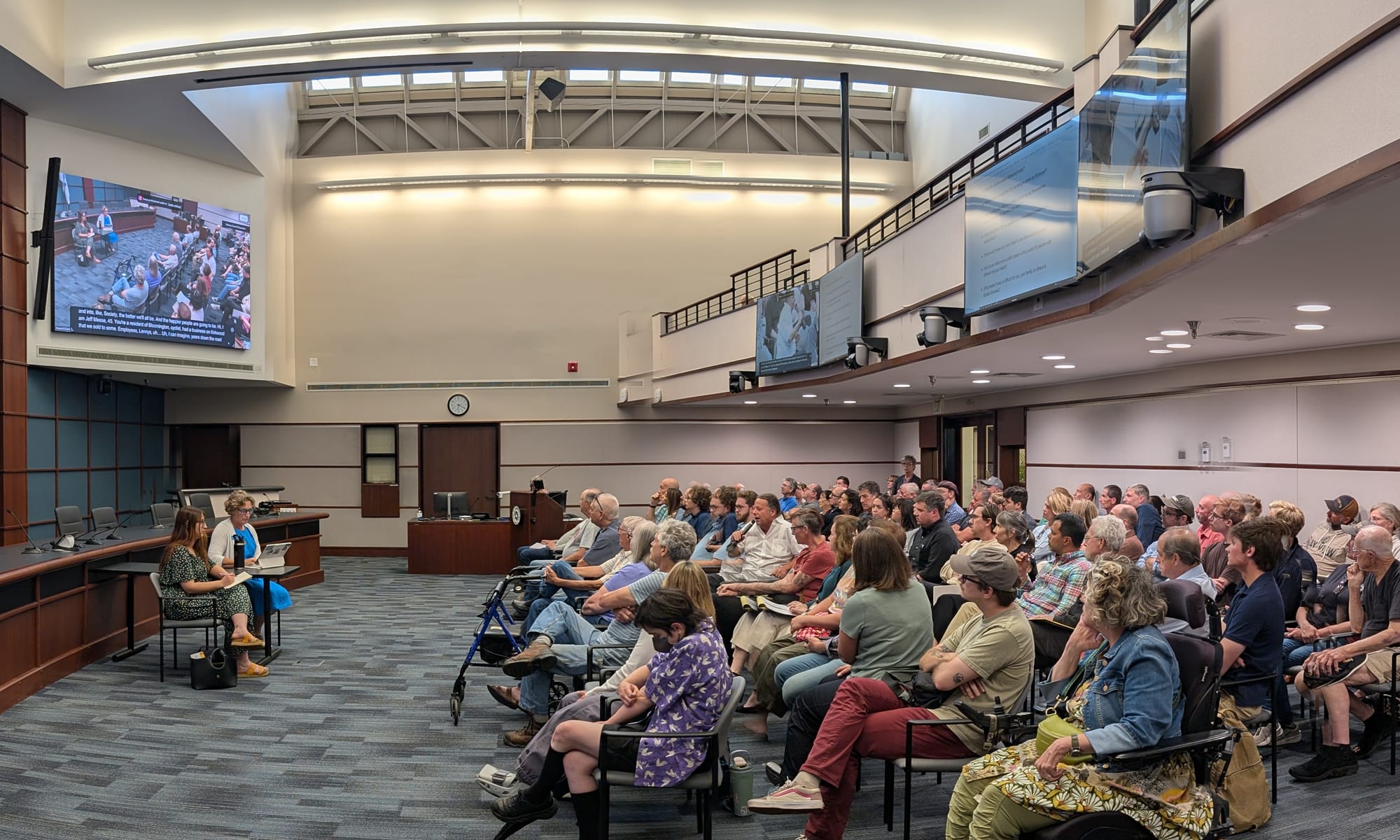
Bloomington Mayor Kerry Thomson spent 90 minutes Tuesday (June 16) listening to public commentary on an ordinance that has been approved by the city council and is currently awaiting her signature. Her signature, or potentially her veto, will help answer the question: Will Kirkwood Avenue be closed to car traffic for seven months a year, every year starting 2027?
The city council narrowly voted through the ordinance last week on a 5–4 vote. It codifies the seasonal closure of the iconic street to car traffic—from Indiana Avenue to Walnut Street—which has seen a similar closure most years since 2020. As enacted by the city council, the ordinance would take effect starting in April 2027.
Under state law, Thomson will now have to either sign the ordinance or veto it within 10 days of its presentation to her. City clerk Nicole Bolden confirmed to The B Square that the ordinance was presented to the mayor on Tuesday afternoon.
A press release on Saturday morning that announced Tuesday’s community conversation said that Thomson has not yet made a final decision on the legislation and is continuing to listen to feedback and hear perspectives.
She said as much at the beginning of Tuesday. “Tonight, I want to be clear, is about your ideas, and it’s about your experiences, but it is not about lobbying the mayor to do something. I am really interested in what your experience of Kirkwood is, and having this be a solution-oriented session,” Thomson said.
Councilmember Sydney Zulich, who represents District 6, which encompasses the five blocks of Kirkwood that have been slated for closure, joined the event as co-host. Notably, Zulich’s was one of the four votes against the ordinance last week.
Zulich mentioned the factors in her mind when making the decision about Kirkwood, namely the fact that the city does already spend a lot of money on this one corridor and other fiscal challenges facing the city. “We are in a time period where we do not have an abundance of financial resources, and so when we think about making this decision: Is this the best use of the funds that we currently have available? And so I am hoping to learn more from you all on how we as the city feel about that,” she said.
Unlike regular city council or other city department meetings, public comments at Tuesday’s event were not limited to three minutes, and microphones were passed to audience members who could speak from where they were sitting. Attendees talking about their reasons for supporting closure to cars, against the closure, and also in favor of non-binary choices.
Sharlee Davis, a Bloomington resident who lost her eyesight in 2005, reminded the crowd about their duty to abide by the Americans with Disabilities Act. “Title 2 and title 3 of the ADA says it prohibits reducing or limiting accessibility,” she said. “How is this not reducing or limiting accessibility? Now, don’t get me wrong, I think it’d be great if Kirkwood could be closed and everybody could be accommodated. I just haven’t heard this discussion at all.”
Kyrmen Rea, senior minister at First Christian Church, said she was speaking for her congregation when she brought up challenges the closure would pose for the church, by reducing access to its building and its parking.
“For the city to now encumber our ability to conduct our day to day operations and limiting parking seems to me to fly in the face of the spirit of community that we’ve striven so hard to foster. We’ve been a good neighbor to the city. First Christian asks the city to be a good neighbor to us and the people we serve,” Rea said.
Mitchell Farmer pointed out the fact that the infrastructure is not there to make a street closed to vehicular traffic work, but he also said that’s not a reason to not do it. “I want to call out two things. What doesn’t work right now, when it’s closed, there’s no infrastructure, it is hot, there’s no place to sit, there’s no place to go to the bathroom, get a drink. Any plan like this only works with infrastructure and investment, so it needs a plan,” he said. “I would also say, don’t shy away from it because it has complexity. I’m hearing a lot of ‘don’t do it because’ type reasons. These are solvable things,” Farmer said.
Chris Donahue reminded the audience that a portion of Kirkwood Avenue from Indiana Avenue to Indiana University’s Maxwell Hall was closed off in the 1980s and is widely considered a success today. He also mentioned his experience of Church Street in Burlington and how they have solved many issues, including ADA compliance, that has been brought up when it comes to Kirkwood.
“It would be much safer if we had a transportation system that moves people and not just automobiles. And granted, Kirkwood isn’t going to be anything but one facet in that transportation system, but the more you get people out of cars and into society, the better we’ll all be, and the happier people are going to be,” Donahue said.
Bloomington restaurateur Jeff Mease, founder and CEO of One World Enterprises and co-founder of Pizza X, called for patience to get to a version of Kirkwood that is going to look like a pedestrian mall.
“I think it’s bad timing. I think we have to get there organically, just the way IU lays paths down after they’ve discovered where students walk. I think that when we have a dozen or more popular festivals on the street happening in the summer, that it’s going to be obvious. I think it’ll be obvious, and it’s clearly not obvious now, which is why it’s so contentious. So I’m against it,” Mease said.
Mark Fraley spoke about how his position on the issue changed after he developed a progressive neuropathy condition which makes it difficult for him to walk.
“My condition is, God willing, is temporary…, but I know that for many people in our community, what’s temporary for me is permanent for many others, and my hope is that we can protect these spaces for those folks while looking over the long term to increase pedestrian spaces to be able to create third spaces and create a vibrant Kirkwood,” Fraley said.
Fraley added, “I think that the goal is beautiful. We’re not there, and I hope that we can really take into account people with mobility issues while we’re thinking about these situations over the short term.”
Talia Halliday, the city’s downtown activation coordinator for Kirkwood, who has been planning and putting on events on the street this summer, said there’s no specific problem that the city needs to be solving on Kirkwood right now.
Halliday expressed her belief that the city could have a pedestrian mall someday, but said, “I don’t think we’re there yet. We need tons and tons of infrastructure that everyone here has talked about. We need bathrooms, we need shade, we need electricity, we need tables, we need all kinds of things, and I think we could get there, I think it’s premature to close the road down now.”
Alex York, a young professional with two children, spoke in support of the closure. “I am much more likely to be there. I feel like my children are safer. We visit the businesses there more often, you know. It’s so wonderful to go to that outdoor seating, and while we wait for food, to let kids just very safely wander in the streets. It is magical. That type of infrastructure change, it attracts me to stay. It attracts me to go to downtown more,” York said.
Jeff Richardson, who served on the city council in the 1970s, urged decision makers to think big. According to him, it’s a missed opportunity to look at it as just a choice between an open or a closed road.
“I think we should really unleash our minds and think about all of the possibilities that we can do there, and that may mean more parking garages, maybe more pedicabs, maybe whatever, but the beginning and end shouldn’t be, is it open or closed?” he said. “It’s a gateway to the university and a gateway to downtown. I think it could be transformational, not just for Bloomington, but we could be really a model for other communities to follow,” Richardson said.
Thomson will now take what she heard on Tuesday night and come up with either a stamp of approval or a veto to the council ordinance by June 26. If it’s a veto, the council will have the option to override a potential veto with at least a 6–3 majority, but for now, the future of Kirkwood hangs in the balance.
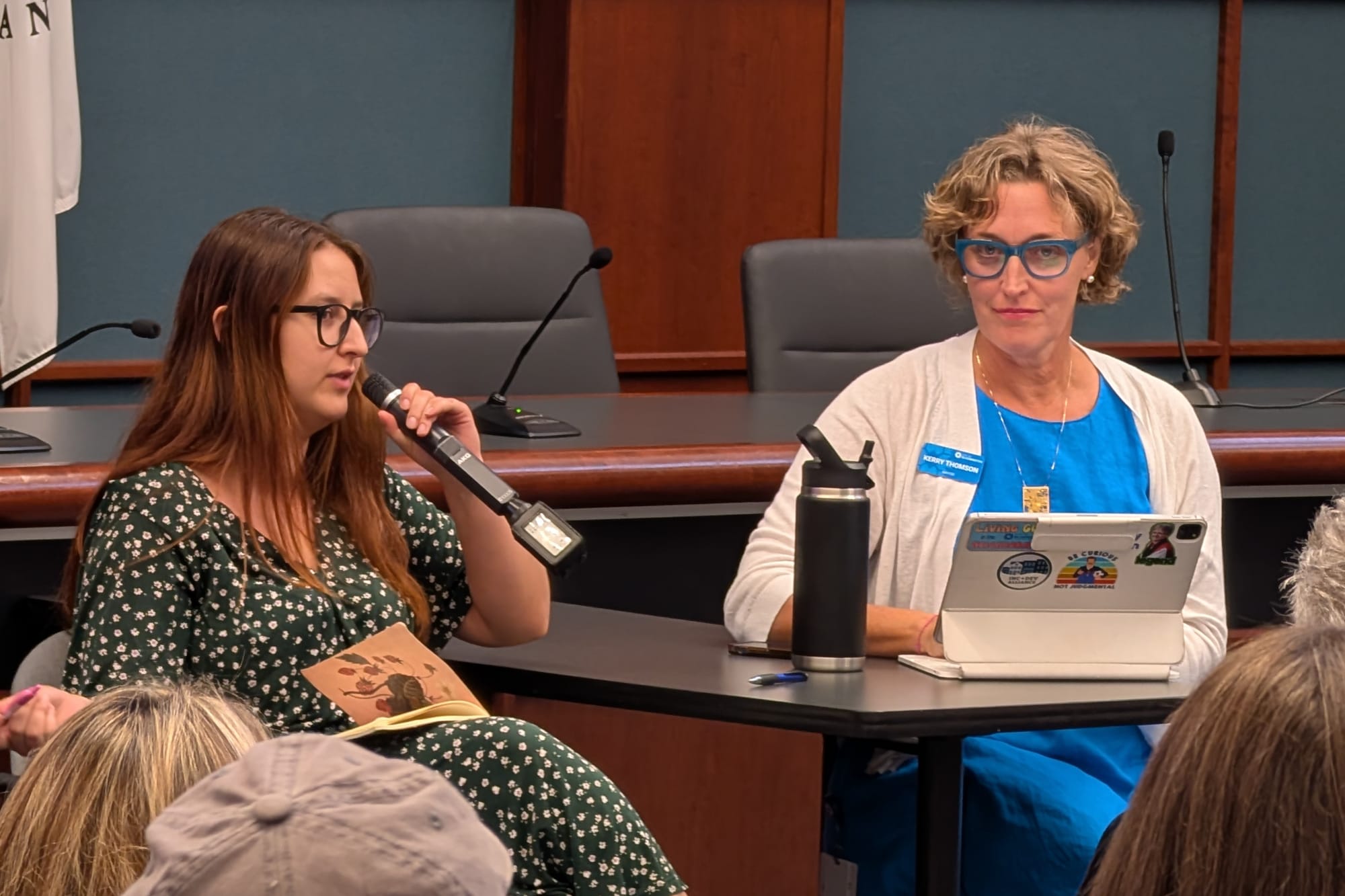
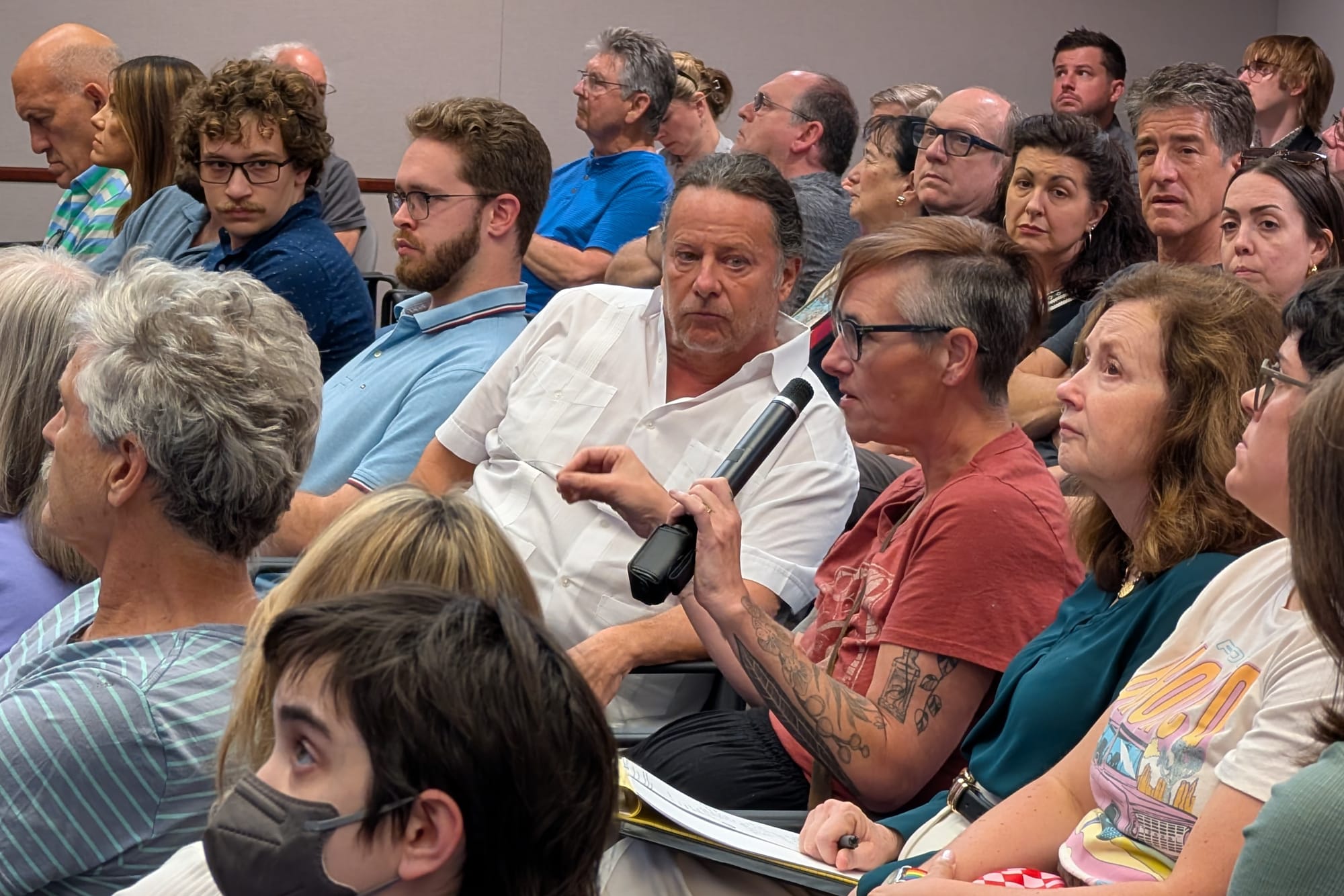
Left: Bloomington city councilmember Sydney Zulich (with mic) and mayor Kerry Thomson listen to feedback on the council’s ordinance that closes Kirkwood Avenue to cars for seven months out of the year. Right:Talia Halliday (with mic) addresses the mayor. Halliday is flanked by Jeff Mease on her right and Talisha Coppock on her left. (Dave Askins, June 16, 2026)


Comments ()