
Jail site panel to start scoring, Monroe County commissioners decline role
A jail site committee is set to start scoring properties, but Monroe County commissioners confirmed they won’t formally join the process. On Wednesday, the panel added a constitutional-care screen, flagged floodway concerns at 3 sites, and will meet three more times before a mid-July recommendation.
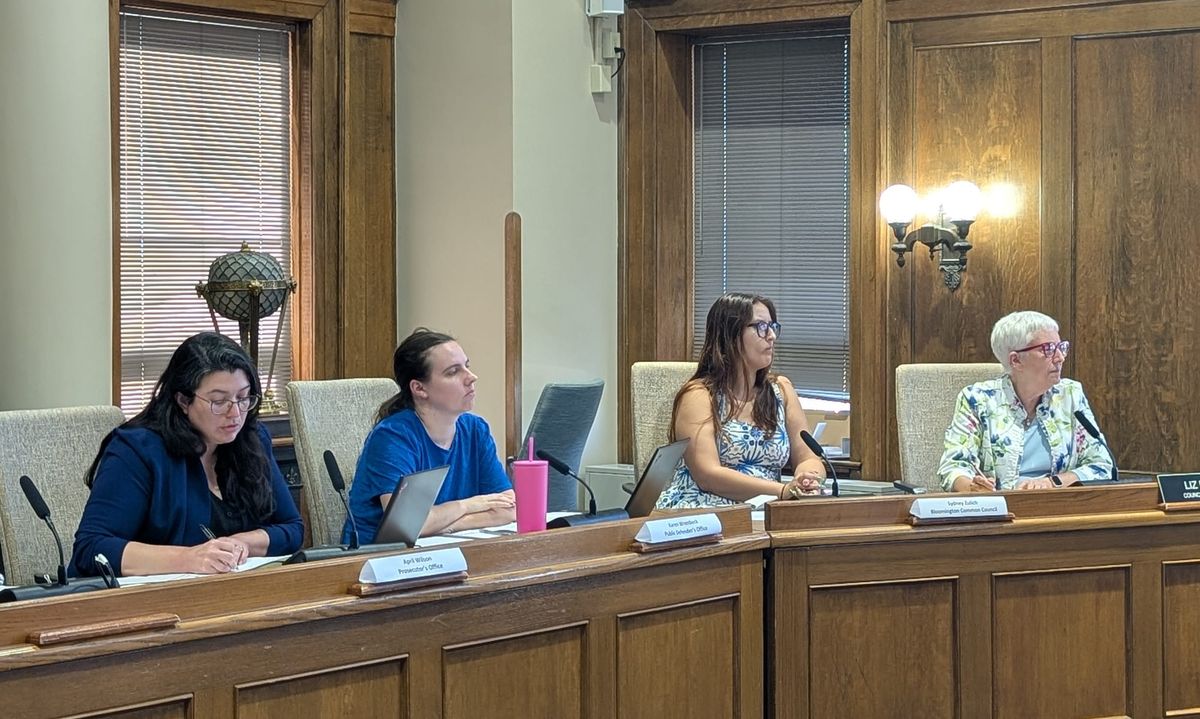
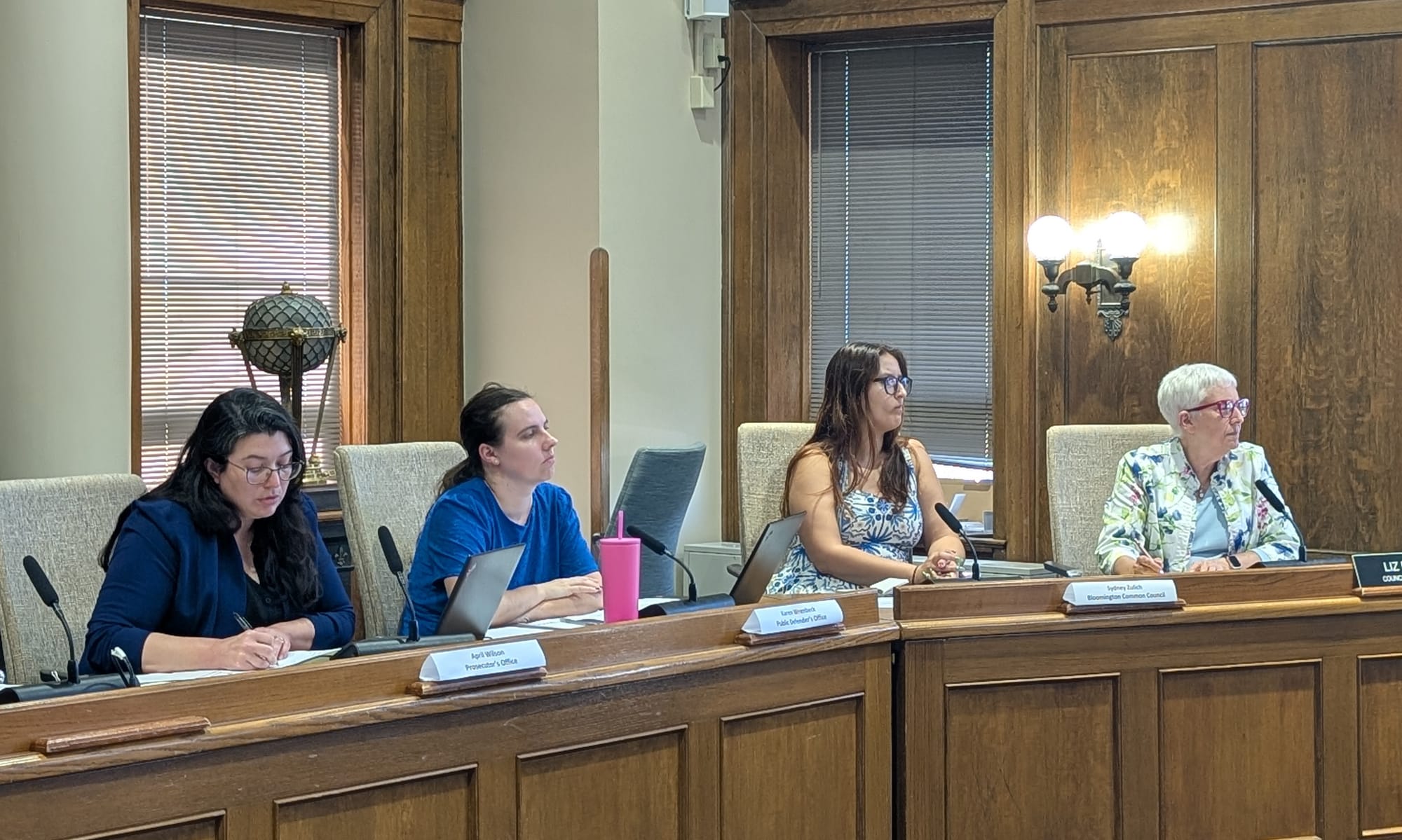
The Collaborative Justice Project Working Subcommittee met Wednesday (July 1) to continue its task of evaluating properties within city limits to come up with a recommendation by mid-July for a new site for the county jail.
The group is working under the perceived threat of litigation from the ACLU over conditions at the jail. The ACLU recently let a settlement agreement expire from a 2008 lawsuit. Lead ACLU attorney Ken Falk has started interviewing Monroe County jail prisoners to serve as plaintiffs in a new lawsuit.
Wednesday’s meeting of the jail site committee came two weeks after the group’s formation. The group started the meeting with a finalized set of metrics and a list of properties to consider.
The group has been working so far without participation from any of the county commissioners, and that’s how it will stay, based on the lack of any action by commissioners at their regular Thursday (July 2) meeting to appoint a member.
Commissioners confirm: No formal participation in committee
After Thursday’s meeting, commissioners Jody Madeira and Julie Thomas made it clear in response to questions from The B Square that the commissioners won’t be participating formally in the Collaborative Justice Project Working Subcommittee.
Thomas said she had posed the question to outside counsel about what commissioners could safely say in public about the jail site selection. The outside counsel was Pamela Schneeman, with Clark, Johnson & Knight. At their Thursday meeting, the commissioners approved a letter of representation with Clark, Johnson & Knight. Schneeman has represented other counties in litigation related to jails. Schneeman’s services could be paid under the county’s insurance policy, if the insurer agrees that it is covered.
But there had not been a full conversation with Schneeman about the question of public discussion, Thomas said. By the time Schneeman would be able to review it throughly, it would be another week, and by that time the committee’s work would be done.
Speaking just for herself and not other commissioners, Thomas questioned the basic premise of the committee and the county council’s approach to it. She called that fact that the committee members wanted to meet “fascinating,” but stressed that the committee doesn’t really have any “authority.”
County government will eventually need the city of Bloomington’s help on jail issues but not in the way the county council has structured its process. Bloomington’s mayor, Kerry Thomson, as well as Sydney Zulich, a Bloomington city councilmember, serve on the committee. Thomson did not attend this Wednesday’s meeting.
In Thomas’s view, the county council’s vote against North Park as a jail site earlier this year meant councilors had turned over the county’s fate to a federal judge, once litigation is filed. The committee composition, in Thomas’s view, meant the county councilors had “abdicated their responsibility” not just to a federal judge, but also to the city government.
Thomas said that ACLU lead attorney Ken Falk had warned against bringing the city into the core decision-making.
Madeira was a bit more sanguine about the benefit to the committee’s work, saying that it could help the public understand the history of the jail-siting effort—because the sites to be reviewed and scored have essentially already been reviewed. Madeira indicated she’s willing to participate as a member of the public, something she’s already done, by submitting suggestions for revisions to the site evaluation metric, using the public form.
Commissioner Lee Jones was absent from Thursday’s meeting. Based on the comments from Madeira and Thomas, it is evident that whatever recommendation the committee ultimately makes, it won’t necessarily carry much weight with the county board of commissioners, who will have decision-making authority over the choice of a jail site.
Jail site committee: July 1, 2026 meeting
At the beginning of the meeting, city council attorney Larry Allen briefed the subcommittee members on notable public feedback received through a portal posted on its website.
Allen read through detailed feedback on the metrics provided by county commissioner Jody Madeira, which included suggestions to create pass/fail gates based on legal issues and minimum acreage, fatal environmental or floodway problems, or is implausible to support construction within the required timeline. Madeira also suggested weighting the criteria to reflect relative importance of each of the metrics used for evaluation, and requiring evidence for each answer to ensure it becomes a defensible record.
Madeira’s feedback included a critique of the metrics and suggestions for revisions.
Allen also briefed the committee on comments sent by city council member Matt Flaherty, which included suggestions to consider some new properties.
“Those include the convention center parking lot that’s just west of the B-Line, which I believe is county owned. The city hall parking lot, so the parking lot immediately in front of City Hall, off of Morton Street,” Allen said.
According to Allen, there were also two sites recommended for the project that are currently in private hands, bringing the total of new properties mentioned at yesterday’s meeting to four. Those didn’t get a public mention, because Allen said it would be advisable to set an executive session to discuss that real estate, if that’s what committee members wanted to do.
County attorney Jeff Cockerill then presented cost estimates based on the design at the now-rejected North Park site, which is outside of city limits. The committee at a previous meeting had decided to use minimum square footage figures from the North Park design as one of the metrics to evaluate properties for the new jail.
“The total planned square foot for the joint facility [jail and sheriff’s office and justice center] was 237,316 square feet, and the total building, the estimated construction cost was $194,090,689. That did not include a little over 30 million of soft costs,” he said. “Of that, the budget for the construction of the sheriff and jail space was 123,455 square feet, and that budget estimate was $122,256,182.”
Committee member and deputy prosecutor April Wilson asked Cockerill about the budgeted area for the sheriff’s office and jail space, and how much of that was for the jail and jail administration versus the sheriff’s office.
“If you look at the material, it basically talks about the sheriff space including the jail, and the non-sheriff space—the justice [center] space. So, I don’t have it broken down between sheriff and jail,” Cockerill responded.
The committee then made some amendments to the metrics—adding a screening question about maintain constitutional standards of care, and then to exclude properties that were on the list but not within city limits, before eventually moving on to site evaluations.
During Wednesday’s meeting, the group reviewed the floodway designation of the properties on the list, which indicated that the Bloomington Transit Garage, the former H-T Building, and the site south of the post office had floodway issues.
They also reviewed the willingness of current owners to sell the property, in case it was not owned by the county already. The committee found the information on this metric to be lacking for some of the properties—including Hopewell, the property north of Tapp Road, and the property south of the post office.
An hour into the meeting, Bloomington city councilmember Sydney Zulich said, “I think the vast majority of the rest of these metrics will require more information, given that it is 7:00, I would suggest that we adjourn shortly and give our legal teams the adequate time to review the rest of the information.”
City council attorney Larry Allen agreed saying, “I think that information will be helpful just to make this a much more productive conversation to have those basic facts for these properties.”
The group is scheduled to meet again on Monday, July 6 at 6 p.m., followed by two more meetings on July 9 (6 p.m.) and July 13 at noon.

Comments ()