
Judge restores use of state-issued university student cards as voter ID in Indiana—for now
A federal judge has blocked Indiana from enforcing its new ban on using state-university student cards for voting, finding plaintiffs likely to succeed on their constitutional claim. The preliminary injunction restores the previous practice until the lawsuit over the 2025 law is concluded.
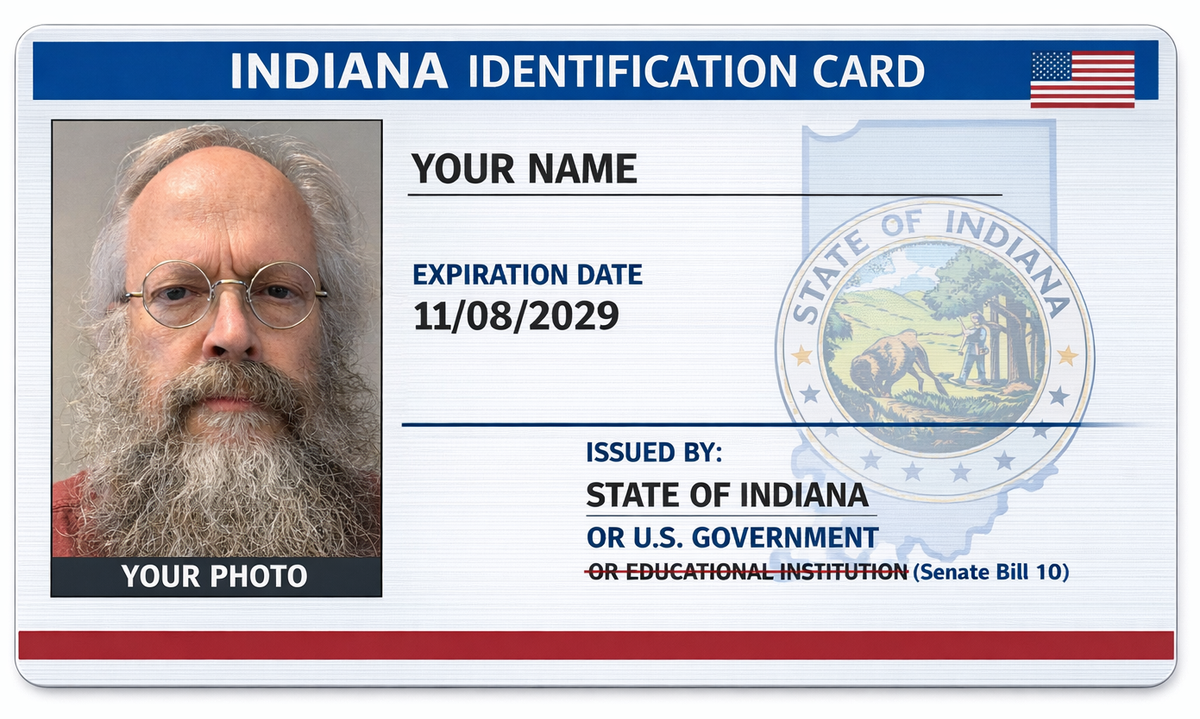
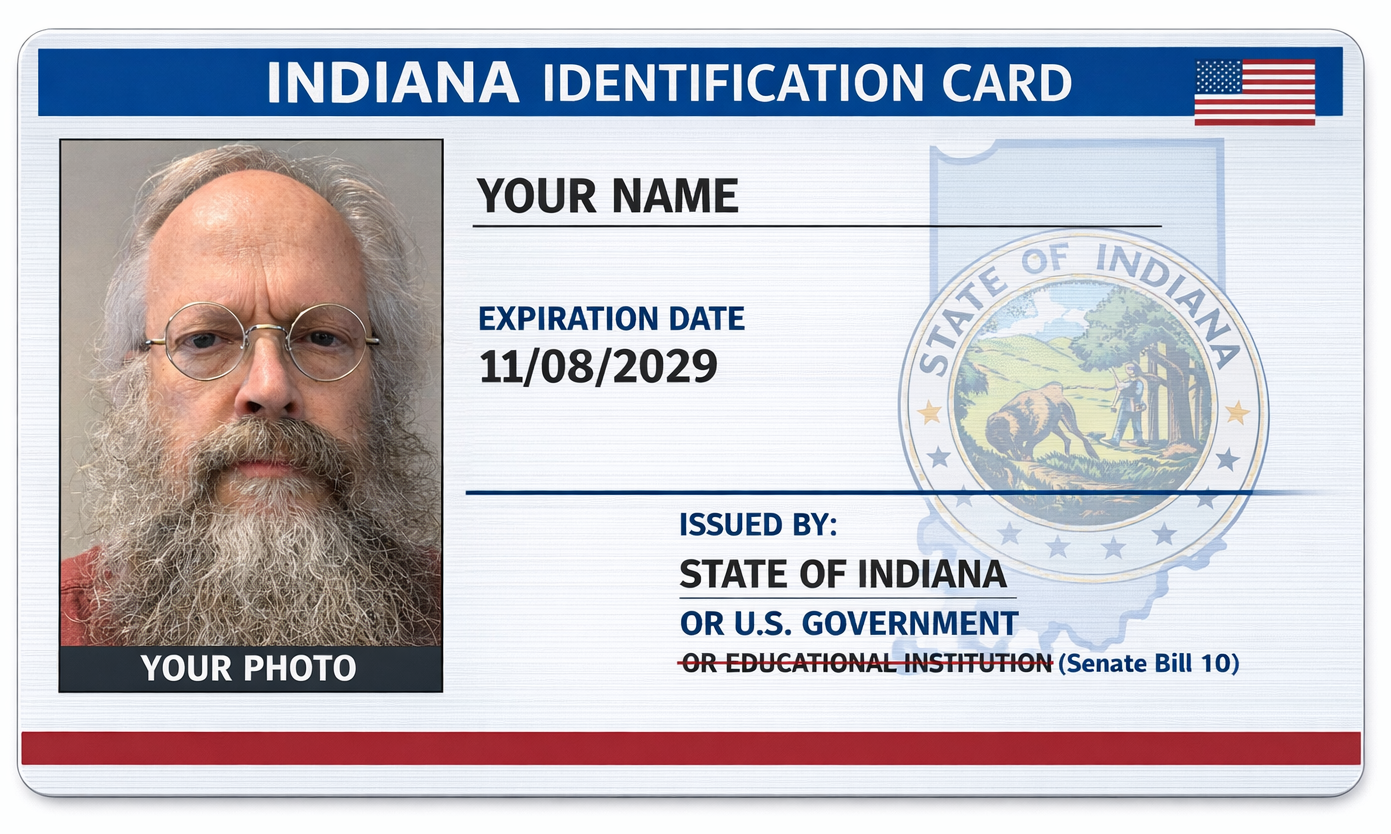
A federal judge on Tuesday (April 14) blocked the state of Indiana from enforcing its new ban on using student IDs as voter identification.
U.S. District judge Richard L. Young issued a preliminary injunction against enforcement, concluding that the plaintiffs are likely to succeed on their claim that SB 10 —which says that identification issued by state educational institutions does not qualify as valid voter ID—imposes an unconstitutional burden on students and young voters. SB 10 was enacted in 2025.
The lawsuit was brought by Count US IN, Women4Change Indiana, and Indiana University Bloomington student Josh Montagne. The injunction bars state and local election officials from enforcing Senate Bill 10 “to the extent that it prohibits voters from using documents issued by educational institutions as proof of identification” until the case is finally resolved.
For now, it means that college students like Montagne at state universities in Indiana can use their student IDs to vote. Reached by email Tuesday evening, Montagne said he plans to vote early at Monroe County’s North Showers location sometime Wednesday.
County election supervisor Kylie Faris attended Tuesday’s regular Monroe County council meeting on Tuesday, to ask for approval to fill a vacancy of a voter registration clerk, against the backdrop of the county’s hiring freeze. Asked by the B Square after that item was approved what the logistical impact of Tuesday’s ruling would be for her office, Farris said:
We've already had two training classes that we're going to have to go back and re-inform them of this change now. So those were two classes that happened yesterday and today. Those are inspectors and judges, so they're the ones that we really need to make sure have the correct information. But then we'll also have to go back and revise our training materials that get sent out to each of them, and then we will also have to retrain early voting as well to make sure that they're all informed.
The ruling means that, for now, Indiana must again accept student IDs that otherwise satisfy the state’s voter-ID requirements—something the state had done for nearly two decades before the General Assembly enacted SB 10 in 2025.
The new law did not alter the usual criteria for acceptable photo identification—name, photo, expiration date, and issuance by the state or federal government—but added wording saying that a document issued by an educational institution does not count.
In the 34-page order issued Tuesday, Young found that the plaintiffs had shown a reasonable likelihood of success on their First and Fourteenth Amendment claim. He wrote that SB 10 imposes a “moderate burden” on students and young voters, and that on the current record Indiana’s justifications were not strong enough to support that burden. The judge summed up the problem this way: “SB 10 looks more like a solution in search of a problem.”
In its order, the court did not try to resolve every legal issue raised by the parties, in order to grant the emergency injunction. On the question of legal standing, Young said it was enough at this stage that Josh Montagne had standing, because the defendants did not dispute that point.
Defendants in the case include Indiana Secretary of State Diego Morales, the members of the Indiana Election Commission in their official capacities, and the members of the Monroe County election board. The Monroe County election board was looped in as a defendant because local election officials are responsible for administering elections and enforcing Indiana’s voter-ID requirements at the polls, and Montague is a resident of Monroe County, where Indiana University, Bloomington is located.
On the question of proper defendants, the judge rejected the state’s sovereign-immunity and redressability arguments, concluding that Indiana election officials were proper defendants in a challenge to Indiana election law. The order says that, at minimum, the Indiana Election Commission and Monroe County Board of Elections could be enjoined.
A major issue in the case had been timing. In their March 6 brief, state attorneys had argued that the court should not change election rules so close to an election, invoking the U.S. Supreme Court’s Purcell principle. They stressed that early voting for the May 5 primary had begun on April 7 and argued that the plaintiffs had waited too long to seek an injunction.
Young rejected the argument based on the Purcell case. He wrote that the confusion and disruption concerns underlying Purcell were “largely absent” here, because the requested solution simply required Indiana to revive its previous practice of accepting qualifying student IDs. He pointed out that the relevant changes to election materials were minimal—essentially a sentence added to the Election Administrator’s Manual and similar brief references in training materials.
That conclusion echoed arguments the plaintiffs had made in their March 20 reply to the state’s brief. They said an injunction would merely restore the pre-SB 10 status quo, not impose a complex new system, and cited evidence from Marion County’s elections director that the change could be implemented in time.
Young also found the harm to voters who would be turned away from the polls for not having anything other than a student ID was irreparable. He wrote that harms from restrictions on the right to vote are routinely treated by courts as irreparable, because an election cannot be rerun for a voter who was wrongly disenfranchised. He said the balance of harms and the public interest favored an injunction, especially where the plaintiffs were likely to succeed on a constitutional claim.
The plaintiffs had framed the case in their initial filing as a challenge to a law that “bars students—and only students—from using the IDs most accessible to them,” arguing that it places special burdens on younger voters, especially those from out of state or those without driver’s licenses. State attorneys had countered that SB 10 was only a clarification of existing law and put students “on the same footing” as everyone else, because other forms of identification—including free state IDs—remain available.
The injunction requiring student IDs to count for election purposes will remain in place until the case is finally resolved, unless it is successfully appealed mid-case and the injunction is vacated by the Court of Appeals for the Seventh Circuit.

Comments ()