
Monroe County cuts GO bonds to $3.1M, but leaves project list intact
Monroe County councilors approved $3.1M in GO bonds, down from a $6.5M ceiling, but left nearly $3.9M in projects on the list. Councilors floated food and beverage tax funds for parks, while commissioners eye $300K from that tax to advance the convention center host hotel.
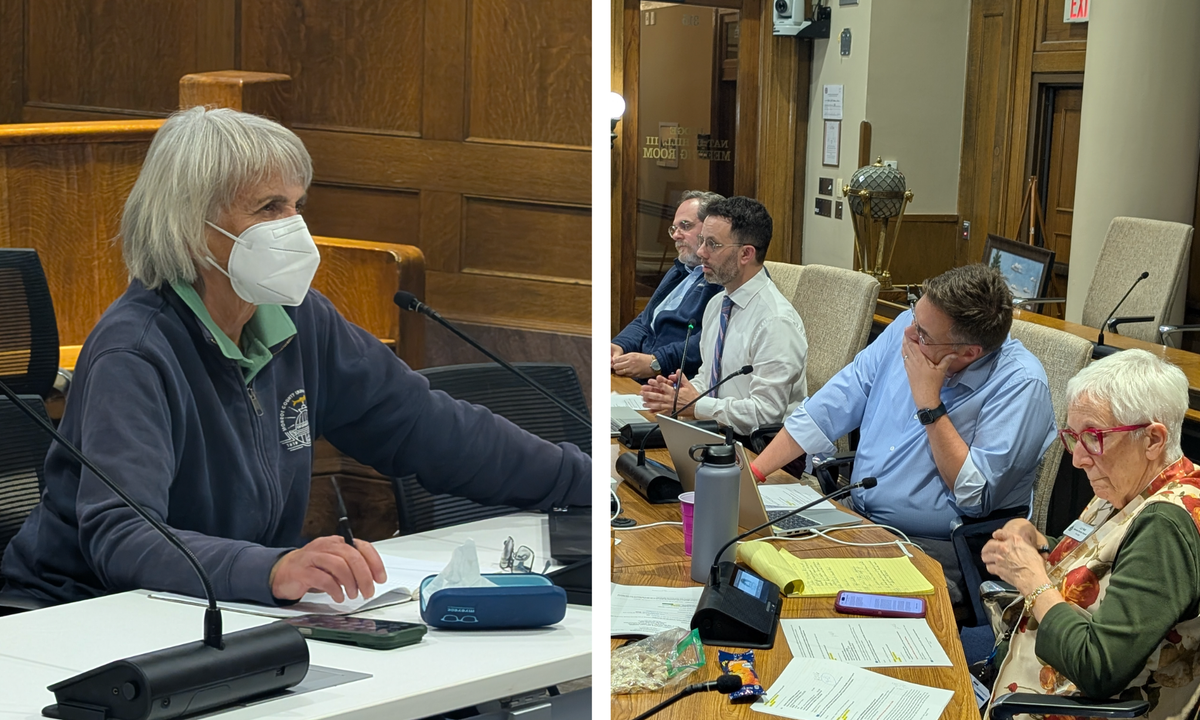
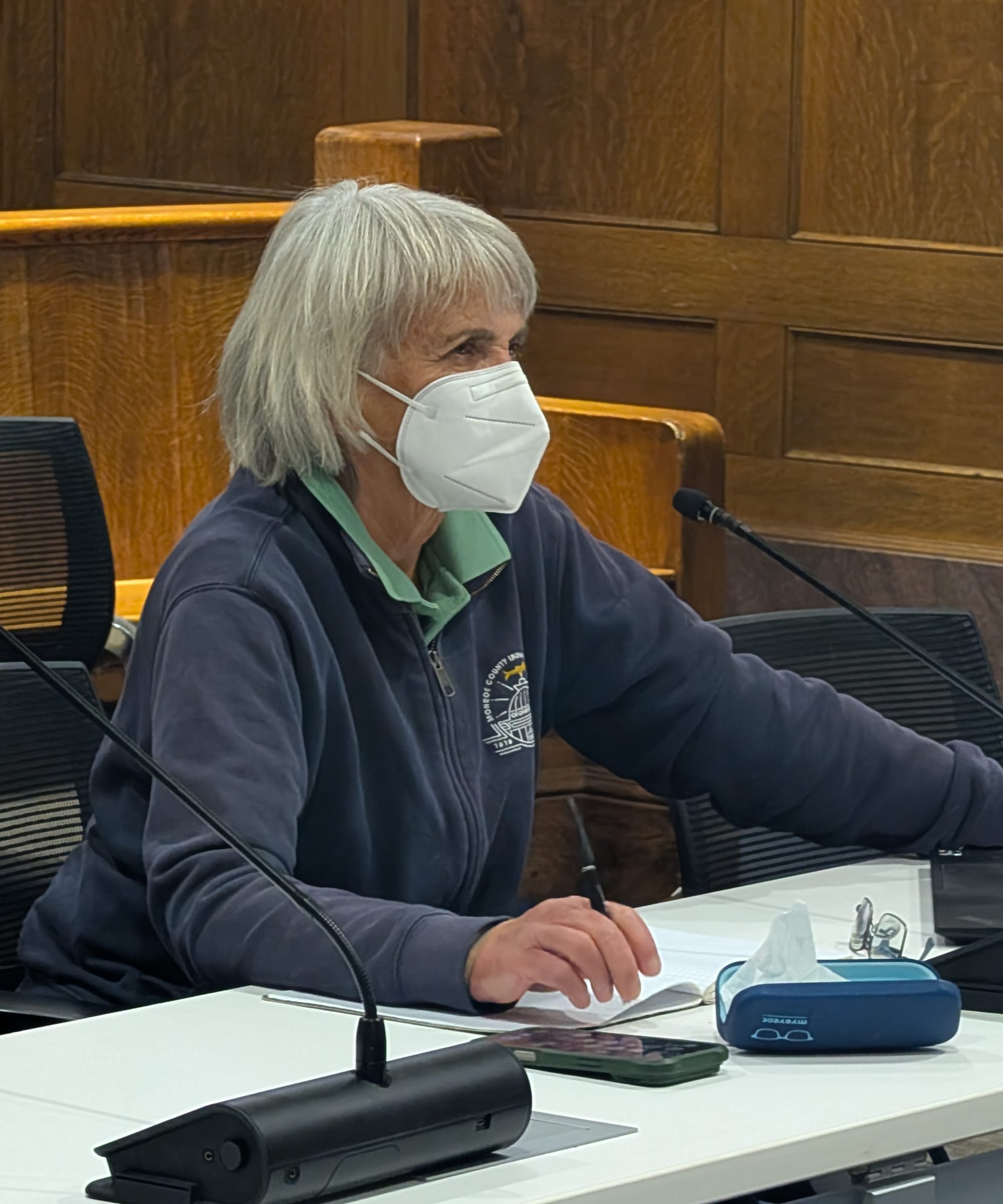
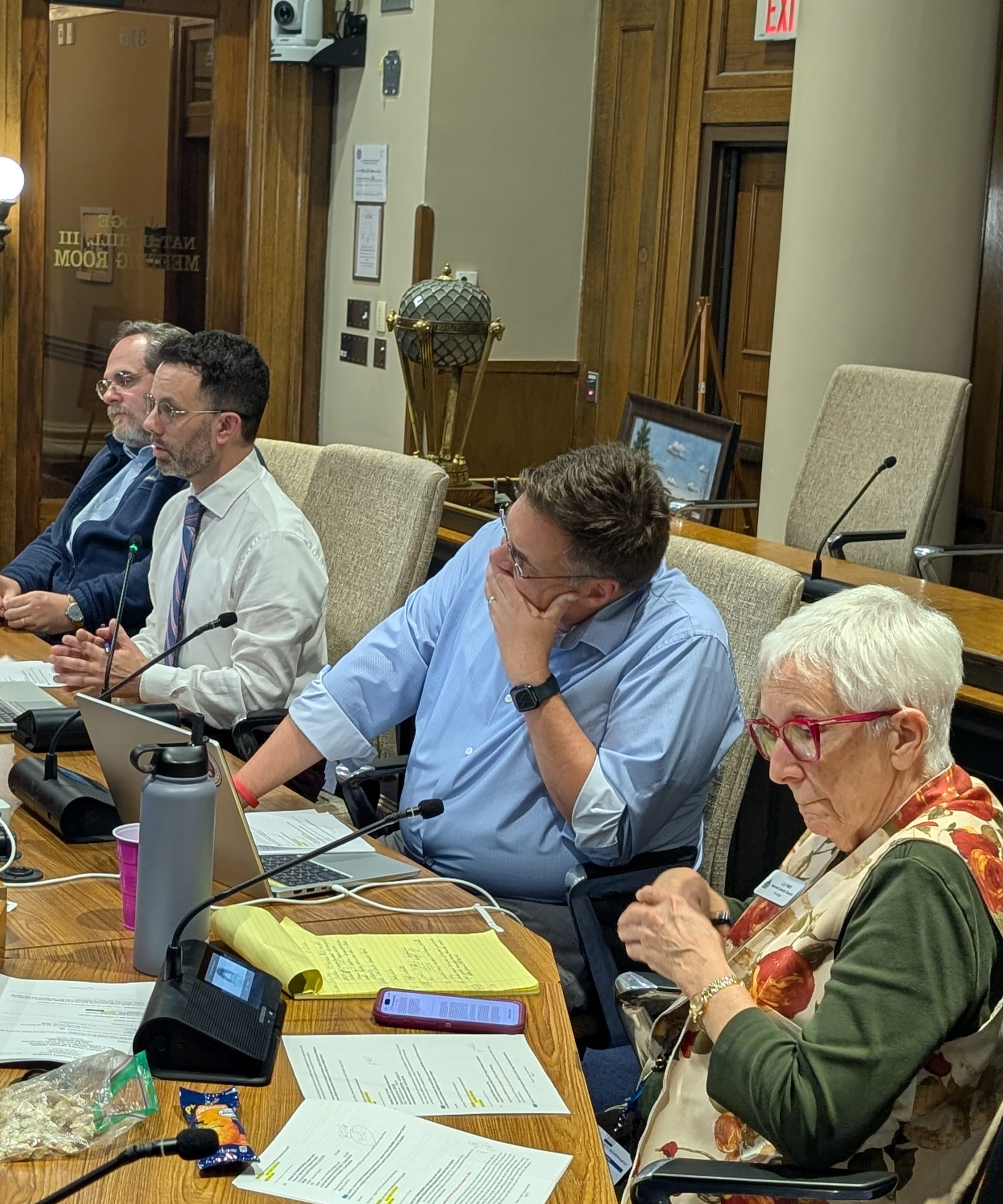
Left: County commissioner Julie Thomas. Right: County councilors from left are David Henry, Peter Iversen, Trent Deckard, and Liz Feitl. Marty Hawk, Kate Wiltz, and Jennifer Crossley did not attend. (Dave Askins, Oct. 27, 2026)
Monroe County’s council voted unanimously on Tuesday (Oct. 27) to authorize up to $3.1 million in general obligation (GO) bonds, cutting $3.4 million from the borrowing limit in the original ordinance.
But the council did not reduce the list of projects eligible for the bond proceeds.
The latest list from the county commissioners totals nearly $3.9 million, even after applying unused money from previous bonds. That leaves a gap of about $795,000 between the proposed expenditures and the borrowing approved by the council, before accounting for bond issuance costs.
The types of projects range from emergency warning sirens and sheriff’s equipment to jail repairs, courthouse improvements, highway equipment and improvements to county parks.
County attorney Jeff Cockerill told councilors that the project list identifies what bond proceeds can be spent on, not what must be funded. Changing the list would have required another approval by the county commissioners. Instead, the council left the list intact and approved the lower borrowing limit on a 4–0 vote.
That leaves the commissioners to determine which projects will be reduced, postponed or funded from other sources. The council had reduced the bond amount at its previous meeting without a conversation first between councilors and the commissioners about revisions to the project list.
Commissioner Julie Thomas attended the council’s Tuesday meeting to express her disappointment and frustration about that.
But in the end, Thomas seemed resigned to the circumstances. She put it like this: “If you all just want to vote on an amount, we’ll just figure it out, and that will be it, which we can do.”
From $6.5 million to $3.1 million
The original $6.5 million amount was a borrowing ceiling, not the cost of the projects remaining on the list that commissioners had approved.
Through earlier discussions with councilors, the commissioners had already reduced their proposed projects to about $4.1 million, including bond issuance costs.
The revised list in the presentation from commissioners totals $4,062,200. But by applying $167,346 in unused proceeds from previous bonds to some list items (emergency sirens and sheriff’s equipment), the amount needed for projects from the new bond falls to $3,894,854.
The council’s decision to go lower reflects concerns about accumulating debt, even though councilors generally acknowledged the need for the individual projects.
At the county council’s Oct. 13 meeting, Kate Wiltz weighed in against borrowing more simply because the county had the capacity to do so. “I do not think we should be bonding for this much just because we can,” she said.
Wiltz favored returning to the county’s traditional borrowing level for GO bonds of about $3 million annually. Councilor David Henry raised similar concerns, suggesting that some capital purchases could be paid from existing county resources instead of borrowing money and paying interest.
The county previously relied on issuance of roughly $3 million in one-year GO bonds every year. Following a change in state law affecting short-term bonds, the county shifted last year to six-year borrowing. This year’s proposal also calls for a six-year term, with debt payments automatically supported by property taxes.
At a special discussion on Oct. 20, Wiltz proposed a $3.1 million ceiling. That motion passed 5–0, setting up Tuesday’s final vote on the two ordinances authorizing the borrowing and corresponding appropriation.
Thomas told councilors Tuesday that the commissioners had understood the earlier discussions to have settled on about $4.1 million. She expressed frustration that the amount had subsequently been reduced another $1 million, without a conversation about which projects would be eliminated.
The list compiled by commissioners, with adjustments for unused money from earlier bonds, includes $500,000 for jail cameras, $500,000 for renovations to the prosecutor’s office, $312,000 for sheriff’s Tasers and cameras, and about $306,000 for emergency warning sirens.
Food and beverage tax as an alternative
Emerging during Tuesday’s discussion, was another way to make the projects fit within the lower borrowing limit
Councilor Trent Deckard suggested using money from Monroe County’s share of the proceeds from the 1% food and beverage tax to pay for some of the parks improvements, rather than including those expenditures in the bond issue.
The four parks projects total $824,100, including $286,500 for blacktop work at Karst Farm Park and additional parking and accessibility improvements at county recreation facilities.
Removing all four projects from the bond would leave $3,070,754 in proposed expenditures. That would come close to the $3.1 million borrowing ceiling, but leave only about $29,246 for bond issuance costs.
The council voted 4–0 to add a statement expressing the idea that food and beverage tax revenue could be considered as a possible funding source for eligible projects that cannot be covered by the bonds.
But Henry expressed reservations about using the food and beverage tax for projects unrelated to the convention center. He said he considered the convention center and its related activities to be the intended purpose of the county’s share of the tax.
Under the food and beverage tax process, the commissioners develop spending plans, which require review by the food and beverage tax advisory commission before the county council can appropriate the funds.
The statement approved by the council does not change the bond’s project list or appropriate food and beverage tax revenue.
Food and beverage tax funds for host hotel project?
During Tuesday’s discussion, Thomas revealed a possible new use of the county’s food-and-beverage tax revenue.
She said the commissioners expected to consider a spending plan Thursday (Oct. 29), with a presentation planned for Friday (Oct. 30) to the food and beverage tax advisory commission.
The plan would include about $300,000 to help the Monroe County capital improvement board (CIB) with its convention center host hotel project.
Thomas said she thought the city should be helping with that expense, noting that Bloomington receives 90% of the food and beverage tax revenue. But the county government did not want the hotel project to stall for lack of funding, Thomas said.
“We’d hate to see that project linger unnecessarily for want of $300,000,” she said.
The proposed hotel expenditure is separate from Deckard’s suggestion to use food-and-beverage tax money for the county parks projects.
The county’s food and beverage tax advisory commission (FABTAC) webpage includes an amended public notice dated Oct. 19, but no agenda for Friday’s meeting was posted as of Wednesday morning. Additional details about the proposed $300,000 allocation to support the host hotel project could emerge at Thursday’s meeting of the county commissioners.
Meanwhile, Bloomington is pursuing its own GO bond issue of about $6.87 million to replace an aerial platform fire truck and pay for street safety improvements, among other projects.
The city council is expected to hold a public hearing and could take a final vote on that borrowing at its Nov. 4 meeting.


Comments ()