
North Dunn subdivision fight: Judge weighs stay of Bloomington BZA variances
A Monroe County judge expects to rule Monday on whether to pause three Bloomington BZA variances for a proposed 14-lot subdivision on North Dunn, while a full judicial review is undertaken.
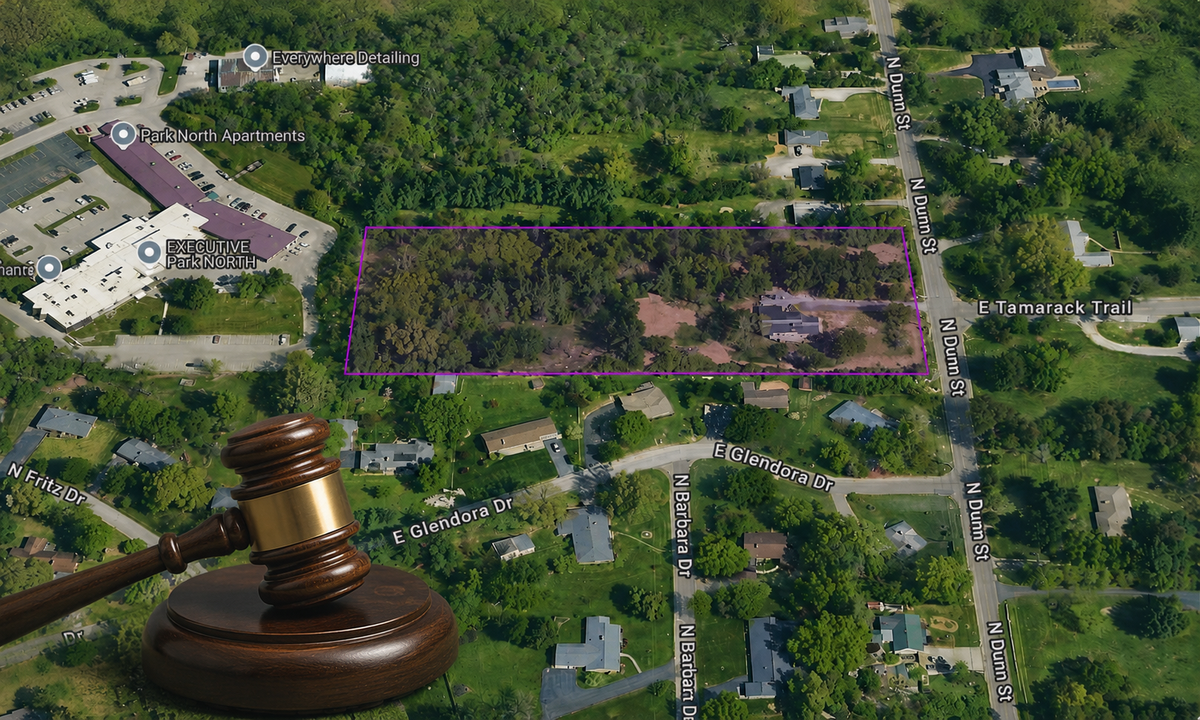
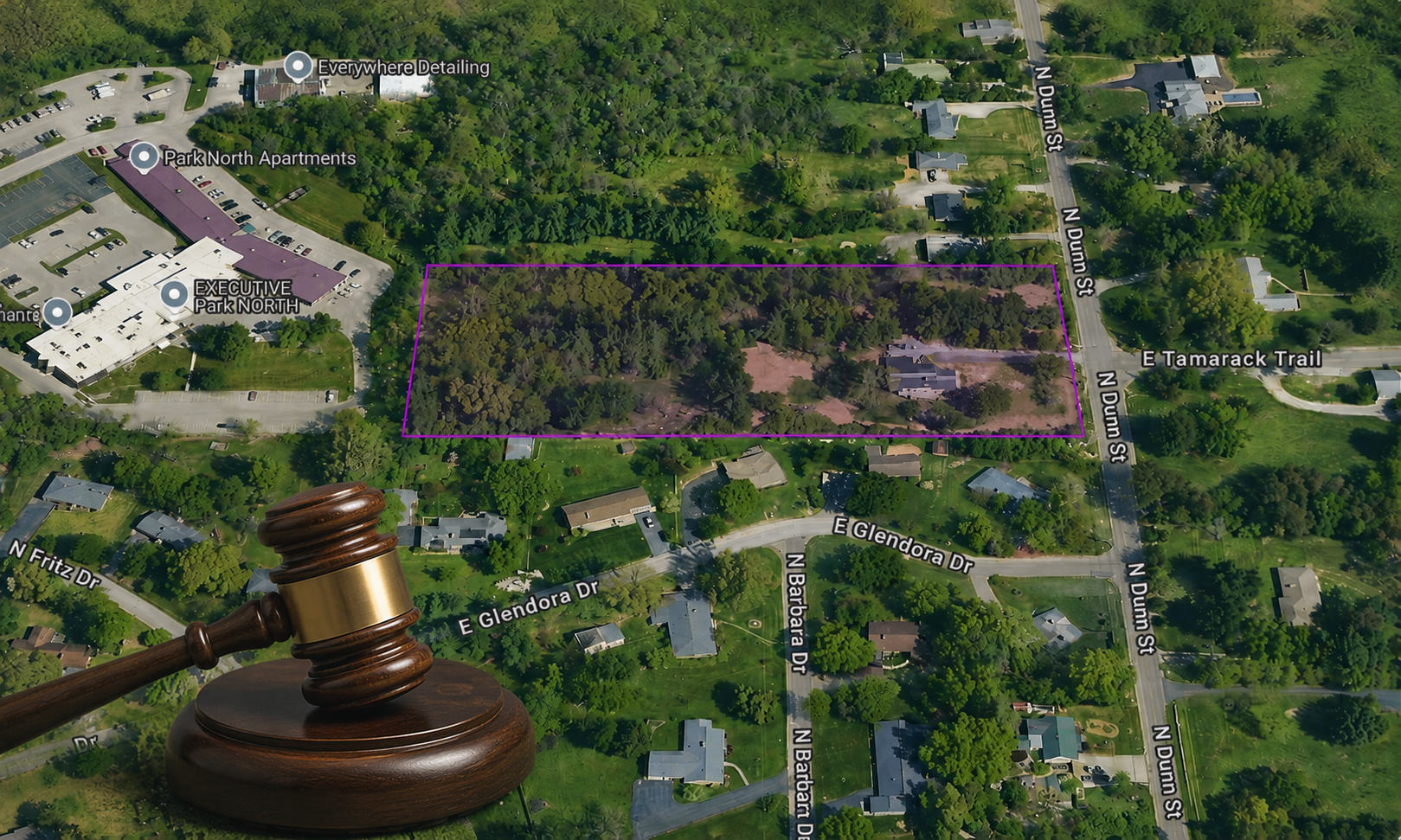
By Monday (June 22), opponents of a new subdivision in the north part of the city should know whether their initial request of Monroe County circuit court judge Emily Salzmann will be granted. [Added 5:43 p.m. on June 22, 2026. Salzmann issued her order denying the stay on Monday (June 22).]
That’s when Salzmann hopes to issue a ruling on their request. They want a stay of three variances that were granted by Bloomington’s board of zoning appeals (BZA) three and a half months ago in February. Salzmann announced her hoped-for timeline at a Wednesday morning (June 17) hearing.
Wednesday’s hearing was on the question of whether to put on hold the variances granted by Bloomington’s BZA, until the full judicial review of the BZA’s actions has run its course. The standard laid out in state law for granting a stay, while the variances are pending review, is a “reasonable probability” that the variances will be found not to be valid.
The case stems from the decision by the Bloomington BZA on Feb. 26 to approve some variances for a proposed subdivision of a heavily wooded parcel on the north side of town on Dunn Street.
The three variances allow the developer to reduce the required tree canopy preservation from 60% to 36%, to remove trees in a riparian buffer near what neighbors describe as a wetland area, and to move tree‑protection fencing closer to the trunks of trees that are supposed to be preserved during construction.
Representing the residents who are challenging the BZA’s variances in court on Wednesday was attorney Jason McAuley. He told the judge the variances are unlawful because the “practical difficulties” cited in support of them are self‑created.
McAuley told the court that, by the developer’s own admission, the property can be developed with four or five houses without any variances. The higher‑density plan, as many as 15 houses at one point, is what forces a road into the buffer area, and drives the request to cut down more trees, he said. That, he said, is a design choice, not a hardship that is peculiar to the property.
McAuley also emphasized existing flooding problems on the properties downhill from the site. He contended that cutting more trees and disturbing the riparian area will worsen those conditions, and that once mature trees are removed, “there is no going back,” even if the court later finds the variances invalid.
Representing the BZA in court on Wednesday was assistant city attorney Enedina Kassamanian, who said the city doesn’t have a position on the request for a stay of the variances. But she was hoping to get some clarity about the impact of the proceedings on the planning department and plan commission’s ability to review the subdivision plan.
The proposed subdivision considered by the Bloomington plan commission last Monday (June 8). In front of the plan commission that night was a revised proposal compared to the one that the commission heard in January.
The proposal is now for a 14-lot subdivision on 4 acres at 2511 N. Dunn St., where an existing single-family house would be demolished and replaced with 11 single-family residential lots and three common-area lots. The property is zoned R2 (residential medium lot) and the proposal calls for a new public street, stormwater detention, utility work, tree-preservation areas and drainage improvements. Last week, the plan commission continued the hearing on the subdivision to its July 13 meeting.
Representing developers Keith Kline and Paul Pruitt in Wednesday’s court hearing was Patrick Ziepolt, with Mallor Grodner Plummer. He framed the case as a standard example of the BZA doing what it is supposed to do, namely balance competing policy goals, like environmental protection, transportation connectivity, and the city’s stated aim to increase single‑family housing supply. He stressed that the court’s job at this stage is not to decide whether it agrees with the BZA’s choices, but whether there was “substantial evidence” in the record to support the BZA’s decision.
Ziepolt pointed to a detailed staff report, engineering drainage studies, and a tree‑preservation and planting plan as evidence that the project will control stormwater and could even improve downstream conditions by releasing stormwater at a reduced rate. Staff and BZA members had described the decision as a “balance” between two opposing viewpoints, Ziepolt said. On that basis, he said that the BZA’s action could not be considered to be “arbitrary or capricious.”
The immediate question in front of Salzmann is pretty narrow, which is whether to issue a stay of the variances. It would prevent the developer from acting on the variances, for example, by clearing trees or doing other things in reliance on them, while the court decides the merits of the underlying case.
The underlying issue is whether the BZA’s approval of the variances was lawful: Did the board rely on substantial evidence, particularly on the question of “practical difficulties” peculiar to the property, or did it bless a density‑driven site plan that could have complied with the code, but for the developer’s preferences?
At the close of Wednesday’s hearing, Salzmann said she hopes to issue a written order on the stay by Monday (June 22), but that will depend on how her docket unfolds over the next few days. The order will eventually be posted in the MyCase system under cause number 53C08-2603-MI-000829.
Salzmann also indicated that, no matter how she rules on the stay, she will set an expedited briefing schedule for the underlying case itself, and plans to hold a status conference with the attorneys to hammer out how quickly that briefing can proceed.
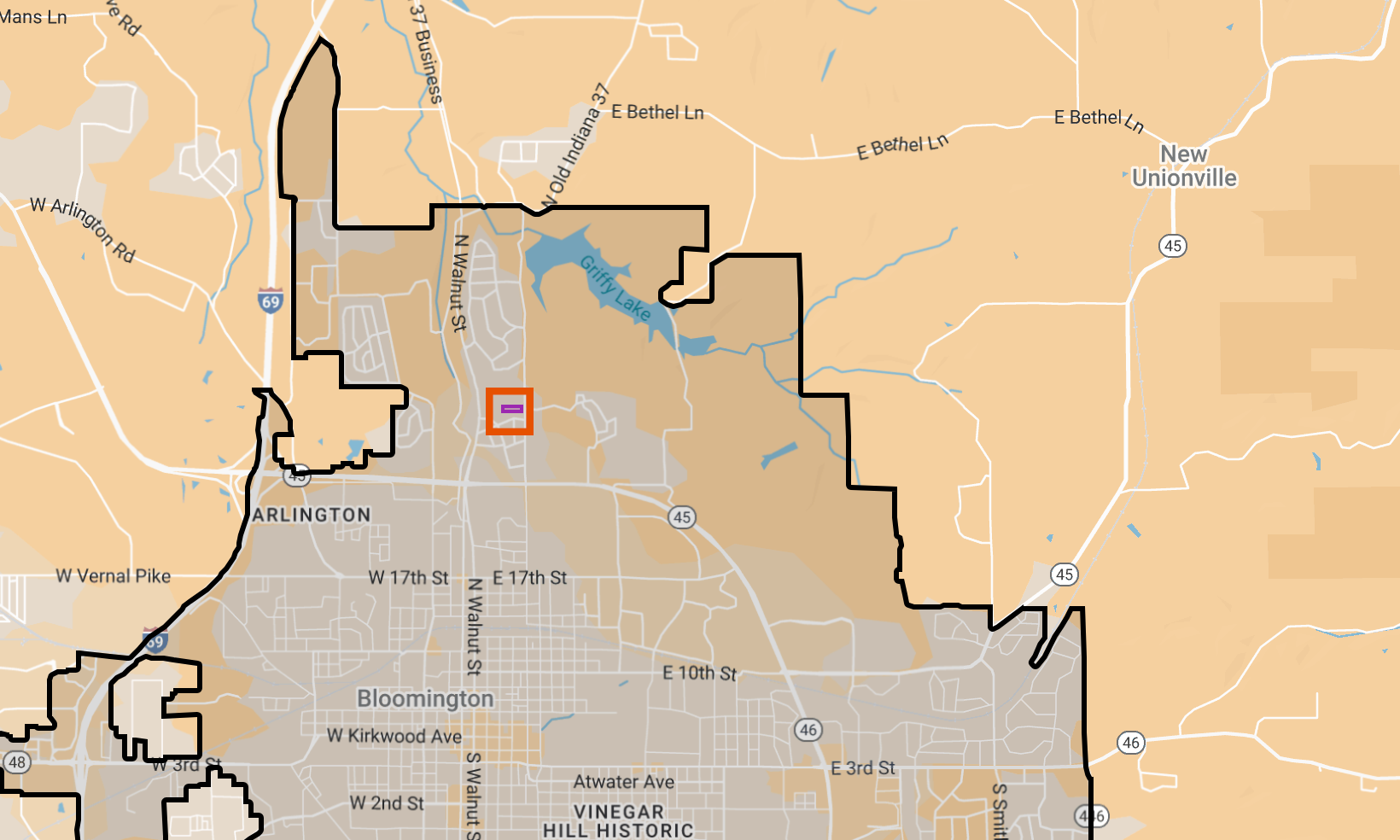
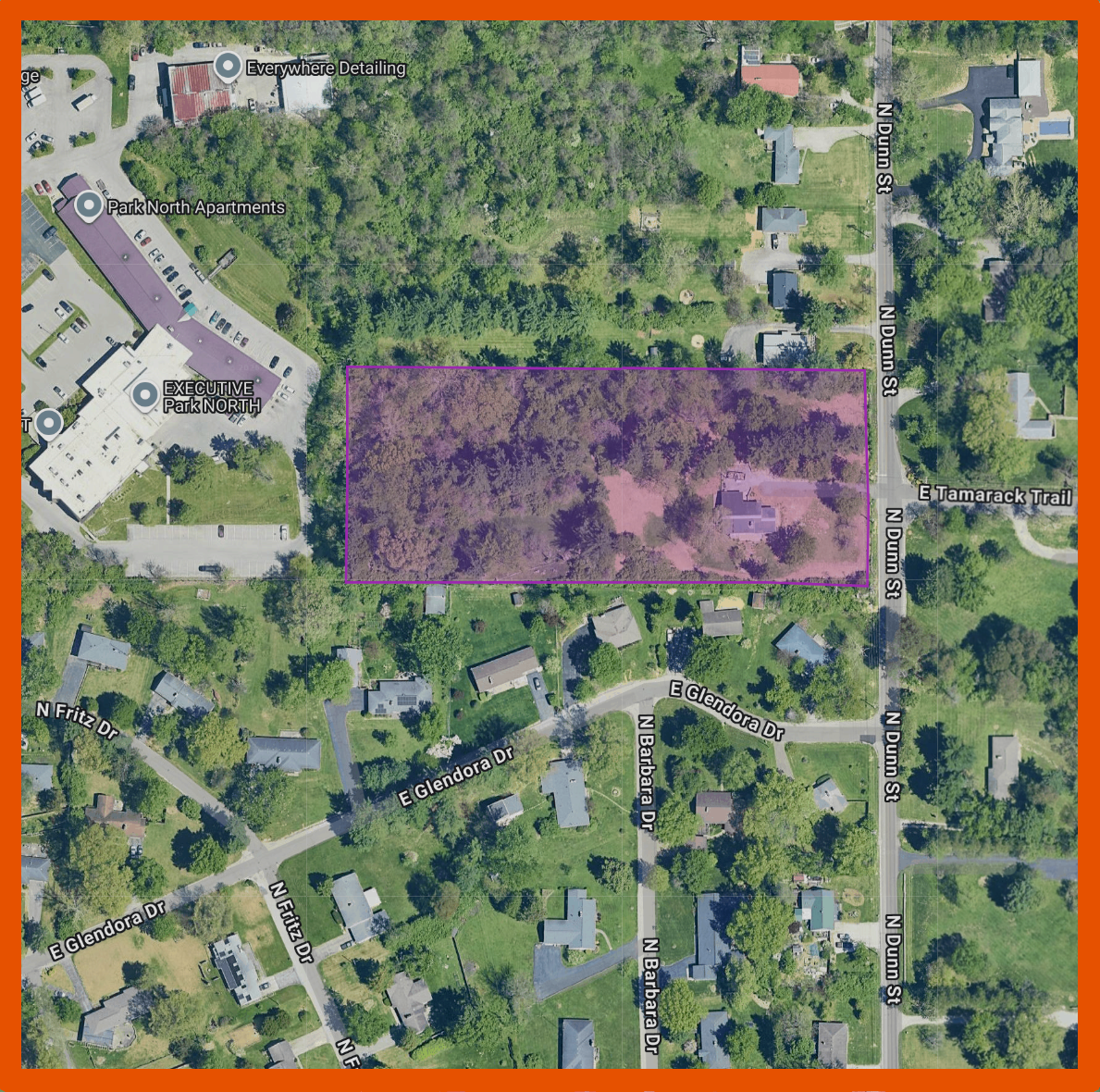
Maps by The B Square with information from the city of Bloomington. [link to dynamic map]

Comments ()