
Bloomington Transit board chair’s Florida vote raises new questions about residency, eligibility to serve
Bloomington Transit board chair James McLary voted in Florida’s Nov. 3 election, raising questions about his eligibility to serve on the board. Property records show homestead tax benefits in Florida. Mayor Kerry Thomson says the records, if accurate, present a conflict with board membership.
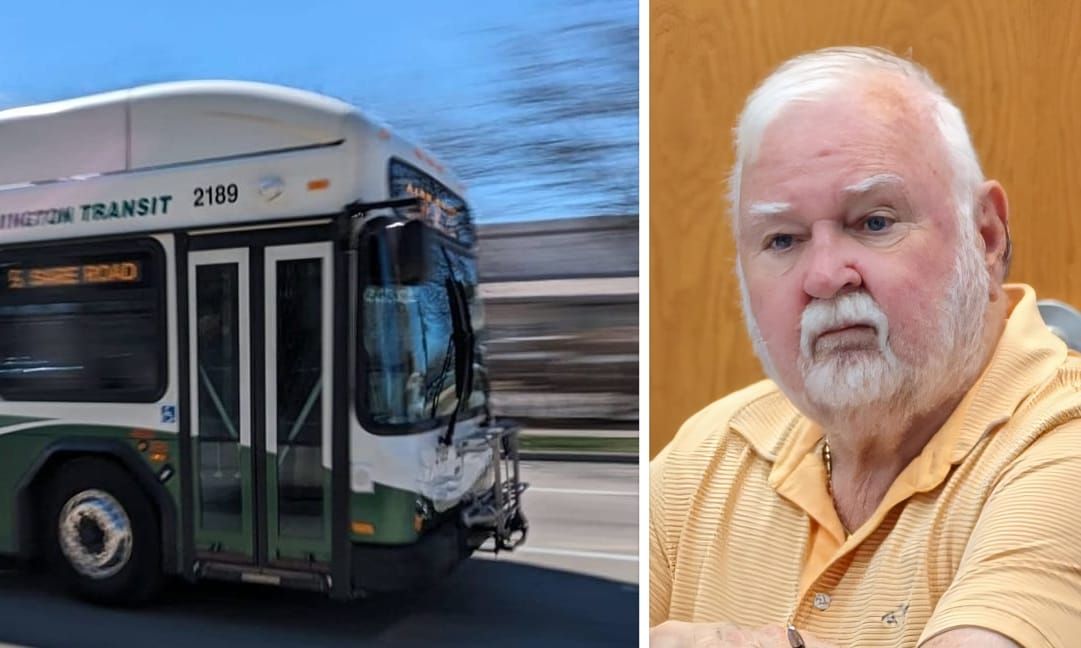
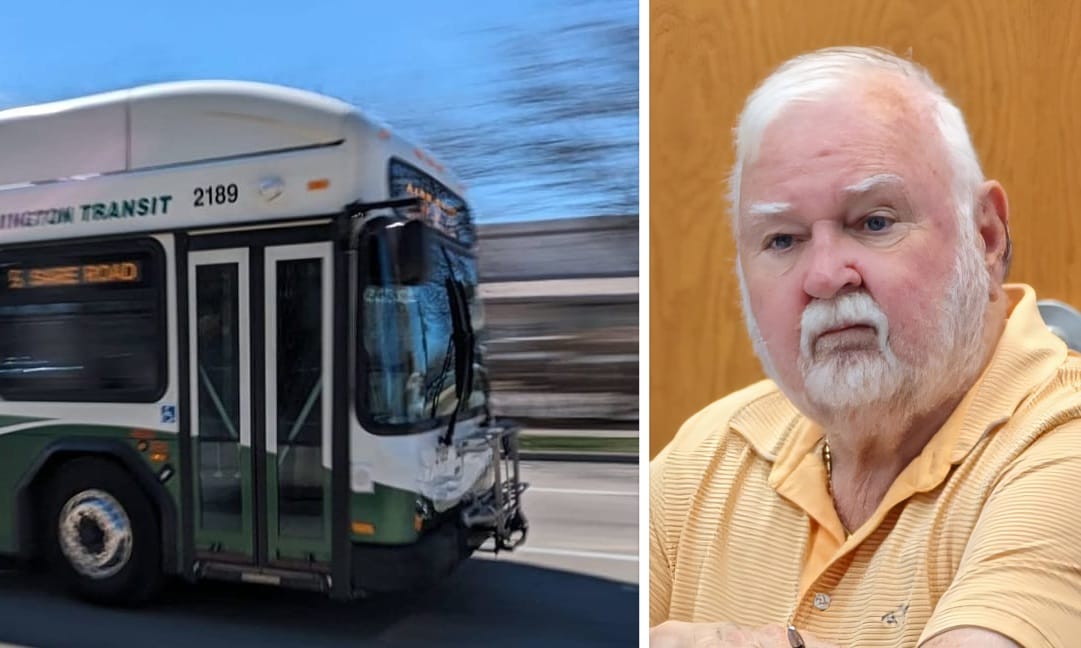
A question raised last summer about Bloomington Transit board chair James McLary’s residency, and whether he is eligible to serve on the five-member board, has resurfaced.
Records obtained by The B Square show McLary is actively registered to vote in two states, Indiana and Florida. Registration in one state does not automatically cancel a registration in a different state, and it is not illegal.
McLary voted in Florida’s Nov. 3, 2026, general election, according to an official with the Lee County, Florida elections office. He did not vote in Indiana’s general election, according to the Monroe County election office.
But the voting records raise questions about McLary’s legal residency, and whether he’s eligible to serve on the BT board.
That’s because Indiana state law explicitly requires members of the Bloomington Public Transportation Corporation board to be “residents” of the corporation’s taxing district, which is Bloomington’s city limits. (Bloomington Public Transportation Corporation is the legal name of Bloomington Transit.)
McLary has decades of experience in transportation, including eight years managing the public bus system in Madison, Wisconsin. He’s held leadership positions with several private transit management firms, and owned Bloomington-based E2 Taxi. Bloomington’s city records indicate he was appointed to the Bloomington Transit board in 2013, and reappointed by Bloomington mayor Kerry Thomson to a four-year term beginning Aug. 1, 2024.
Lee County, Florida property tax records indicate McLary and his wife show a homestead exemption on their Florida property. Monroe County, Indiana records show homestead deductions on their Bloomington property.
McLary responded to an emailed B Square question about how he justifies a claim to Bloomington residency, given his Florida voter registration and homestead exemption in Florida: “We own property in Indiana, we pay property taxes in Bloomington, and our cars are registered in Indiana. We reside in Bloomington 6-7 months per year.”
Bloomington mayor Kerry Thomson re-appointed McLary to the board in 2024. Responding to an emailed question from The B Square, Thomson on Friday indicated the city is still looking to confirm the accuracy of the information on voter registration and tax records. But she added, “If this all checks out, it will be a clear conflict with his board membership here.”
Residency question first raised in July
The residency question was first raised publicly in connection with Bloomington Transit’s selection of a new management company.
On July 28, RATP Dev, which had managed Bloomington Transit for years, sent the transit corporation a four-page letter challenging aspects of the procurement process that led to the selection of competing firm, Keolis.
The letter, signed by RATP Dev chief development officer Steve Sherrer, included a section requesting confirmation that McLary met the residency requirement for board membership.
RATP Dev acknowledged that a board member’s spending substantial time at a second residence did not, by itself, establish that the member was legally ineligible. But it asked Bloomington Transit and the appointing authority to confirm McLary’s compliance in writing and place that confirmation in the public record.
Bloomington Transit rejected RATP Dev’s procurement challenge in a five-page response dated Aug. 14. In the response, BT’s procurement officer, Zac Huneck, said McLary had told Bloomington Transit that he resided in Bloomington. Huneck said RATP Dev had identified no evidence establishing otherwise.
Huneck’s response said Bloomington Transit had no basis, on the information presented by RATP Dev, to conclude that McLary was ineligible. It also said that RATP Dev’s request for separate confirmation in writing by the governmental authority responsible for McLary’s appointment fell outside the scope of the procurement protest. Bloomington Transit said that such a request could be directed to the appointing authority.
The appointing authority was Bloomington mayor Kerry Thomson. A spokesperson from RATP Dev wrote in response to an emailed B Square question: “RATP Dev did not subsequently request or receive separate confirmation from the Bloomington mayor’s office regarding Mr. McLary’s residency. We have no additional information regarding his residency status.”
At the time of the management contract dispute, a B Square review of Indiana voter registration records showed McLary was registered at a Bloomington address. That supported his claim of local residency, but did not preclude claimed legal residency elsewhere.
What counts as residency?
McLary’s statement that he lives in Bloomington six to seven months a year is relevant to the residency question. But Indiana law does not use a single definition of residency for every purpose.
How much time someone spends living in Indiana is crucial for motor-vehicle registration. Indiana state law says residents of Indiana include people who live in Indiana for at least 183 days during a calendar year, even while maintaining legal residency in another state.
That part of Indiana law could help account for why McLary’s vehicles are registered in Indiana. It does not necessarily settle his residency for purposes of membership on the Bloomington Transit board.
Indiana’s election law is more restrictive. It says that a person cannot have a residence in more than one precinct within Indiana. And it adds: “For purposes of this chapter, a person does not have residence both within Indiana and outside Indiana.”
That provision is part of the state’s standards for determining residency for voters, candidates and elected officials. It does not specifically address appointed members of transit corporation boards, like Bloomington Transit’s, whose qualifications are governed by a different statute.
For Bloomington Transit, the membership requirement that matters is IC 36-9-4-14(b), which states: “Directors must be residents of the taxing district of the corporation.”.
Bloomington’s city code about Bloomington Transit makes the corporation’s taxing district “coterminous with the city limits.” City code about boards and commissions generally says that a member of a board or commission who no longer resides in the city has to resign immediately and notify the appointing authority.
Voter registration in Florida
The newly obtained voter records show that McLary has an active registration in Monroe County, Indiana and another registration in Lee County, Florida. Florida’s voter registration database identifies McLary as an active voter registered in Fort Myers, Lee County. The record gives his Florida registration date as Dec. 16, 2024.
Registration in one state does not automatically cancel a registration in another state, and it’s not illegal to be registered in more than one state at a time. But under federal law it is illegal to vote in two different states for federal offices.
The Florida registration was established after the McLarys purchased their Bloomington property in 2023.
A Lee County, Florida official confirmed to The B Square by phone that McLary voted in the Nov. 3, 2026, general election. The official said he voted by mail on Oct. 23 and that his ballot was mailed to an address in Bloomington, Indiana.
The Monroe County elections division confirmed to The B Square that McLary did not vote in Indiana’s Nov. 3 election.
But participating in Florida’s election is significant because eligibility to vote in Florida depends on legal residency in that state. Florida state law requires a voter to be a “legal resident” of Florida.
The question is: Can McLary be a “legal resident” of Florida but at the same time be a resident of Bloomington, Indiana in the sense that is required for service on the board of Bloomington Transit? It’s a complex enough issue that one attorney The B Square asked for comment described it as a very “niche” topic.
Homestead exemptions in both states
The voter records are not the only documents that raise questions about McLary’s residency.
McLary and his wife own a home in Bloomington and a property in Fort Myers. Publicly available Florida property tax bills show that their Fort Myers home received a homestead exemption in both 2025 and 2026.
For 2025, and 2026 the Lee County property records show that their Florida property received a $25,000 standard homestead exemption. That amount represents a reduction in the property’s taxable assessed value, not the amount saved in property taxes. For both 2025 and 2026, they also received additional homestead exemptions, in the amount of $25,722 and $26,411, respectively.
A separate document, identifies both McLary and his wife as applicants for the Florida homestead exemption and shows its automatic renewal for 2026.
In Indiana, Monroe County property records indicate that the couple’s Bloomington property received a $48,000 standard homestead deduction and a $154,600 supplemental homestead deduction for the 2025 assessment year, with taxes payable in 2026.
Under Indiana state law, a person who receives an “equivalent” homestead tax benefit in another state generally is ineligible for Indiana’s homestead deduction. The law requires a person who becomes ineligible to notify the county auditor by filing a certified statement within 60 days. An exception applies to married couples who maintain separate principal residences and meet other requirements.
Florida state law generally disqualifies a person from receiving its homestead exemption, if the person receives or claims a residency-based property tax exemption or credit in another state.
Florida’s application form makes the residency requirement explicit for a homestead deduction. Form DR-501 has a heading “Permanent Florida residency required on January 1.” The form asks both applicants whether they claim residency in another county or state. It also requires them to certify that the Florida property is their permanent residence or the permanent residence of a qualifying dependent.
The B Square has not obtained the completed original Florida application made by the McLarys.
Lee County’s property appraiser advises property owners that maintaining voter registration in another state or claiming residency-based tax benefits elsewhere can jeopardize a Florida homestead exemption. Its guidance specifically addresses property jointly held by married couples.
Decision rests with appointing authority
For McLary, the appointing authority is Bloomington mayor Kerry Thomson.
The mayor’s relationship with her transit board appointees became an issue during the summer debate over whether to retain RATP Dev and general manager John Connell or replace them with Keolis.
On July 15, deputy mayor Gretchen Knapp emailed McLary and fellow mayoral appointee Don Griffin, urging them to support continued leadership under Connell. In the email, Knapp wrote: “As you serve at the pleasure of the Mayor, I would hope her opinion would be of high interest to you.”
The implication that the mayor could remove the appointees for any reason was later contradicted by both the city corporation counsel and the city council’s interim attorney. They cited the statutory process for removing transit board members for cause.
Despite the mayor’s preference, McLary and Griffin joined Doug Horn in voting 3–2 to select Keolis on July 21. The board subsequently approved the management contract in September, and Keolis replaced RATP Dev on Oct. 1.
The earlier disagreement concerned the direction of Bloomington Transit and the mayor’s authority over her appointees. The newly documented residency question is different: Whether McLary satisfies an explicit legal qualification for board membership.
Bloomington Transit’s August response to RATP Dev said the evidence presented at that time did not establish that McLary was ineligible. It also directed the question of independent confirmation to the appointing authority, which was the mayor. Based on RATP Dev’s statement to The B Square, the company did not pursue the issue with the mayor.
Bloomington mayor Kerry Thomson has now indicated her view that, if accurate, the voter registration and tax records would be in conflict with the BT board residency requirement.
But it’s not clear what the next step will be or when it would be taken. The board has a significant vote coming up on Dec. 8, about service reductions as a response to a driver shortage.
It’s unlikely a new board appointment would be made by early December. One challenge for making appointments to the transit board is the requirement for partisan balancing. McLary is a Republican, as is Doug Horn. Zach Ammerman, Nancy Obermeyer, and Don Griffin are Democrats.
Under the partisan balancing law, a replacement for McClary could not be a Democrat, but would not necessarily have to be a Republican.
Comments ()