
Bloomington Transit picks new management firm on split vote, ending Connell’s tenure
Bloomington Transit’s board has voted 3–2 to replace longtime management firm RATP Dev with Keolis. That ends general manager John Connell’s tenure. He has two months left. The board's action came despite opposition from the mayor’s office.
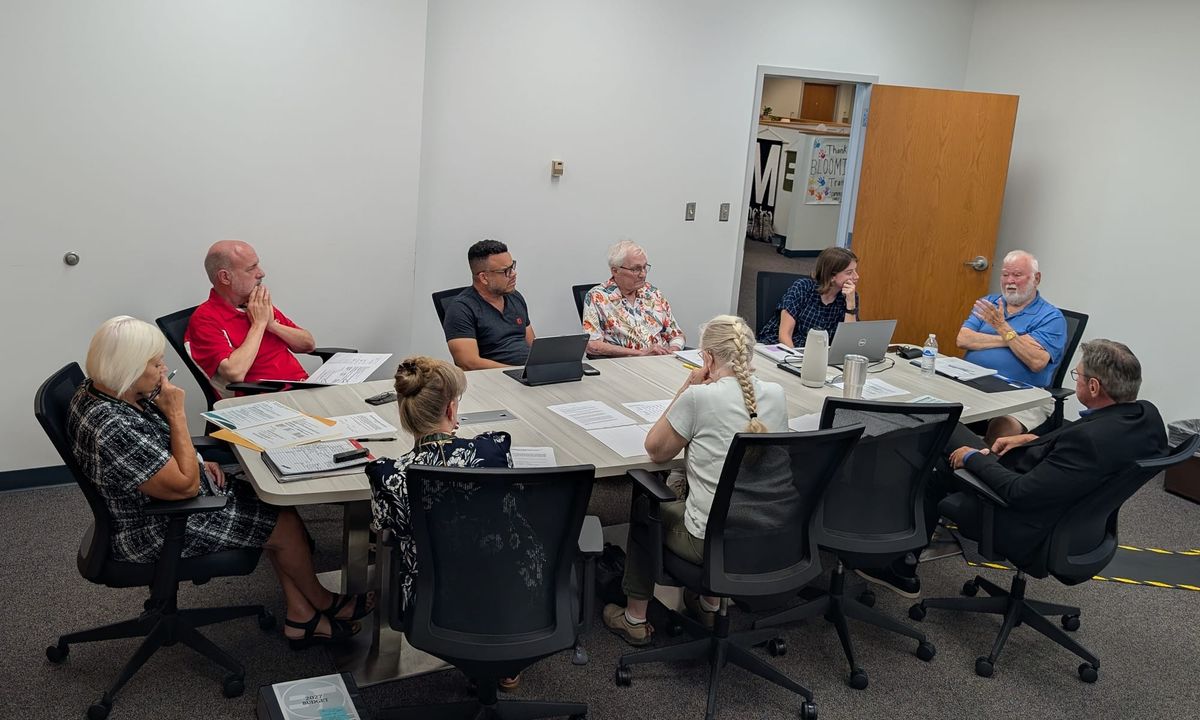
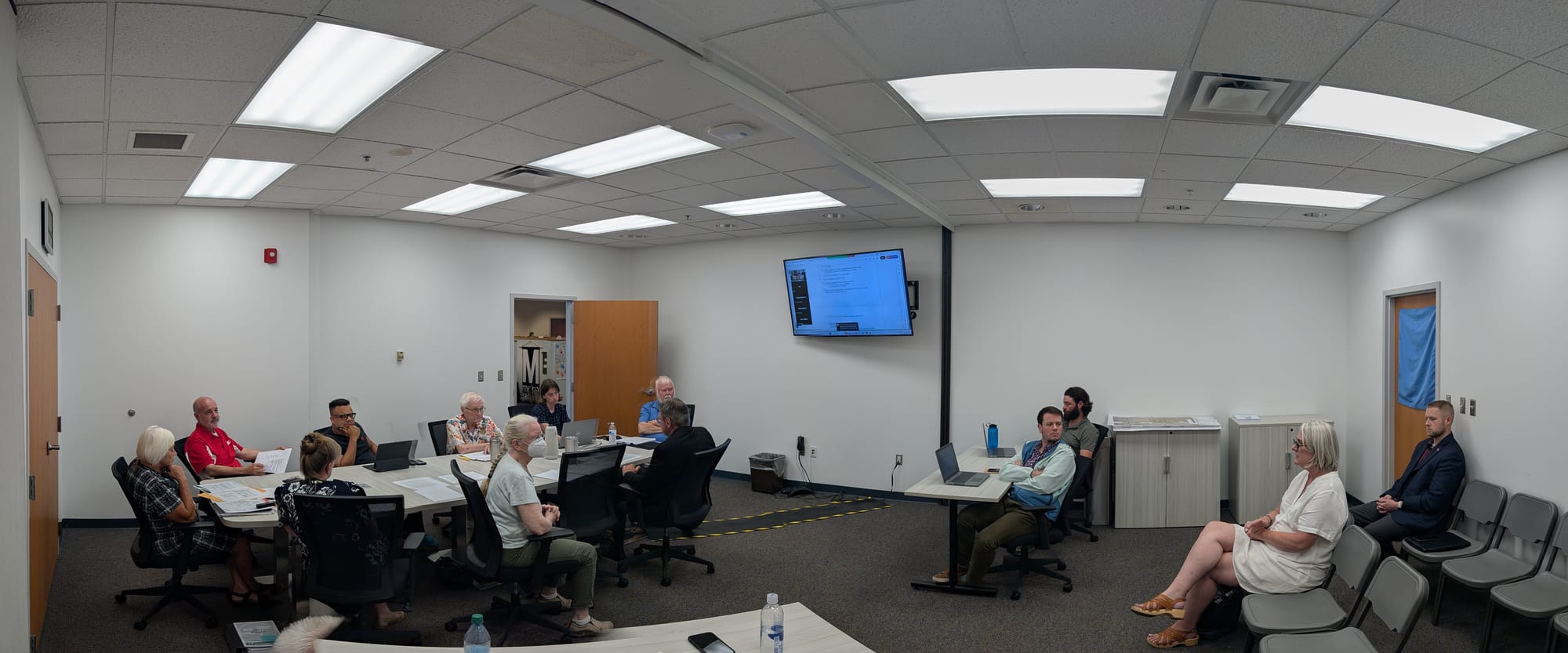
Bloomington Transit’s board voted 3–2 Tuesday (July 21) to replace its longtime management company, a decision that will end general manager John Connell’s five-year tenure with the agency at the end of September.
Chair James McLary and board members Don Griffin and Doug Horn voted to negotiate a contract with Keolis instead of renewing an arrangement with RATP Dev. Nancy Obermeyer and Kent McDaniel voted against the change.
Bloomington Transit does not directly hire its general manager. The agency contracts with a private management firm, which supplies the person who fills that position. So choosing Keolis over RATP Dev means replacing Connell, even though the board did not take a separate vote on Connell. Not named at Tuesday’s regular board meeting was the general manager who will be provided by Keolis.
The board’s vote came against the wishes of the mayor’s office, conveyed during Tuesday’s meeting by deputy mayor Gretchen Knapp, who defended RATP Dev and Connell.
The board’s discussion was wide ranging and included: concerns about microtransit; marketing; the ballooning estimated cost of a new transit operations facility; and accusations that employee members of the recommendation committee were “disgruntled.”
Tuesday’s meeting included a dramatic exit by McDaniel, who left the meeting after telling his colleagues, “It’s been a pleasure working with some of you.”
RATP Dev’s current contract expires Sept. 30, leaving Connell about two months to oversee a transition. Among his final major duties will be completing Bloomington Transit’s proposed 2027 budget and presenting it to the Bloomington city council in September.
Board members consistently said the vote was about the management firm, not Connell personally. Their discussion included pointed criticism of conditions at Bloomington Transit, the support provided to Connell by RATP Dev, and the performance of some agency initiatives.
Concerns voiced by board members included a slow and confusing microtransit rollout, lagging marketing efforts, and an estimated full-scope cost of about $55 million for a new operations, maintenance and administrative facility. That’s up from the roughly $35 million figure board members said they had previously understood.
McLary’s report of the recommending committee’s work
The management firm selection committee consisted of McLary, Griffin, BT human resource administrator Brenda Underwood, and controller Christa Browning.
The four-member committee reviewed three proposals, from RATP Dev, Keolis, and Transdev United States. After evaluating the companies with more than one scoring method, the committee unanimously recommended Keolis, according to McLary.
McLary said Transdev submitted the least expensive proposal.
The draft budget for 2027 includes a payment to the management firm around $294,000. Not all of that amount goes for compensation for the general manager.
McLary said it weighed against Transdev that the firm changed its proposed general manager the day before the interview. McLary also described Transdev’s proposed general management candidate as an “elderly gentleman” who was thought by committee members to be “coming here to retire.”
That meant the serious choice was between RATP Dev and Keolis, McLary said.
McLary credited Connell with advancing Bloomington Transit during the past five years. He recalled that Connell had been competing with an energetic, forward-looking candidate when RATP Dev last won the contract, and said he remained glad the board had selected Connell.
But McLary said BT’s efforts in microtransit and marketing had lagged. The general manager proposed by Keolis had extensive microtransit experience, MClary said. That experience included starting what McLary described as the first such service in the state of Illinois, and managing a $48 million transit facility project.
His concern about BT’s microtransit rollout was not just low ridership. McLary said the board had repeatedly struggled to get a clear account of how many rides BT’s service was providing, because microtransit trips had been combined with other demand-response services in monthly reports. “I have never heard the number,” McLary said.
Later in the meeting, staff directed the board to figures showing 71 microtransit trips provided directly by Bloomington Transit in June and 70 overflow trips provided through Uber and Lyft. Thirty-three of the directly provided trips occurred during a free promotional week at the start of June.
McLary said he had spent “many sleepless nights” considering the management decision and had discussed it repeatedly with his wife.
Committee member comment: Griffin
Don Griffin described the decision as difficult, but said leadership sometimes requires making an unpopular change.
He compared it to leaving a church that had served someone well during one part of life but was no longer the right choice for the future. Bloomington Transit had succeeded under its existing arrangement, he said, but that did not mean the same arrangement was best for its next chapter.
Griffin also criticized RATP Dev’s presentation to the selection committee as complacent. The company came without a PowerPoint presentation, he said, and appeared to act as though it already had the contract. RATP Dev and its predecessor have managed Bloomington Transit since the early 1990s, Griffin said.
Griffin also questioned why one of the representatives the company brought to the interview was a maintenance specialist.
Immediately before the vote, Griffin told Connell that changing firms should not be interpreted as a rejection of his leadership. “I think you have carried us well,” Griffin said. “But I feel like your folks let you down.”
Doug Horn: RATP Dev deserves criticism
Horn, who was not on the recommendation committee, offered the most pointed critique of RATP Dev’s record.
When Connell took over, Horn said, the board learned that Bloomington Transit had fallen behind the transit industry in several areas. Despite RATP Dev’s access to experts around the world, the local agency was still using a machine to stamp paper transfers and was ridiculed for it by technology professionals, Horn said.
Horn said Connell appeared to have been left largely to his own devices rather than receiving the support Bloomington Transit should have expected from an international management company. If that support existed, Horn said, it had not been visible to the board members responsible for choosing the next firm.
Horn also noted that Bloomington Transit’s strategic plan originated with the board, not RATP Dev. Connell had picked up that work and advanced it “to the best of his ability, with or without” his company’s support, Horn said.
Keolis, by contrast, committed to regular involvement by senior company officials, including monthly and quarterly visits, Horn said.
After roughly 35 years under an incumbent company whose record “leaves us wanting,” Horn said, “we need to make a change.”
McLary, Griffin: New facility estimate reaches $55 million?
Questions about Bloomington Transit’s proposed new facility surfaced during the budget discussion before the management vote. At the board’s June meeting, the final approval was given for purchase of the real estate—a $3.6-million property on the corner of Curry Pike and Profile Parkway.
The preliminary 2027 annual budget for BT includes $20 million for the first construction phase of the new facility. Connell said the agency has about $16 million in accumulated federal money intended for the project, although that money cannot be placed into a grant until a required environmental review is completed.
Connell said Bloomington Transit would then seek another $35 million to complete the full project. “So we’re looking at $55 million?” McLary asked. “Yeah,” answered Connell.
McLary and Griffin said that was the first time they had heard the figure. Both said they had understood the project to be estimated at about $35 million.
Connell said $55 million was not a final cost. It represented a version containing essentially every desired feature, including solar panels, water reclamation systems and enough large maintenance bays to accommodate articulated buses.
The project could be scaled back, Connell said. A $35 million version would remain a substantial improvement over the existing facility, while an initial maintenance phase could be built with the roughly $20 million currently expected to be available.
Costs had also risen since planning began about two and a half years ago, Connell said.
Obermeyer: Support of Connell, RATP Dev
Obermeyer said that Bloomington Transit needs continuity while acquiring property, designing a new facility, and pursuing several significant service initiatives.
Replacing Connell with someone who lacked his depth of local experience would be risky, she said. “You just don’t know what’s going to happen,” Obermeyer said.
Obermeyer acknowledged that some employees might be unhappy and that workplace concerns needed to be addressed. But she said those concerns were separate from whether Bloomington Transit should change its management structure in the middle of major projects.
Putting someone new in charge during a period of “massive changes,” Obermeyer said, would be problematic.
RATP Dev, deputy mayor weigh in
Steve Spade, an RATP Dev operations director who works with 11 transit systems, defended the company’s record during Tuesday’s meeting.
Bloomington Transit had simultaneously undertaken service improvements, microtransit, technology changes, a new facility and regional service partnerships, Spade said. Few transit agencies successfully manage that many major initiatives at once, he said.
He also pointed to Bloomington Transit’s progress on the strategic plan developed five years ago and its decision to begin another planning process.
During Tuesday’s meeting, on behalf of Bloomington mayor Kerry Thomson, deputy mayor Gretchen Knapp delivered a full-throated endorsement of Connell, RATP Dev and Bloomington Transit’s current direction.
She said the administration was proud of Bloomington Transit’s work to expand service and prepare for future growth. City officials had worked closely with Connell, Knapp said, including helping arrange discussions with Indiana University’s senior leadership.
Those conversations had been interrupted by a change in IU personnel, Knapp said. John D’Angelo had replaced longtime vice president for capital planning Tom Morrison and needed time to learn his new position. Discussions involving IU and Bloomington Transit had now resumed, according to Knapp.
The land at Grimes Lane where BT’s current operations center sits, is owned by IU, even though the building is owned by BT. The campus bus service and BT share the maintenance and storage facility there. There’s currently no plan for IU to join BT in its move west of town, or for the building that BT will leave behind.
Knapp said the city is frequently approached by companies promising to improve the services provided by existing contractors. Their proposals often look impressive, but decision-makers must weigh those promises against the disruption caused by changing leadership in a critical public service, she said.
A transition requires rebuilding relationships and trust, Knapp said, while a new manager learns the agency and community. The promised advantages might not materialize, while the costs of changing leadership would be immediate.
Bloomington Transit had acquired its new property, renewed its conversations with IU and built momentum, Knapp said. “Bringing someone new at this point, you’re starting from scratch,” Knapp said.
Even if the transition eventually proved successful, work would be placed on hold while a new manager learned the community, she said.
Knapp said the mayor’s administration values Connell as a partner and believes the board, staff and general manager are doing good work. She pointed to Bloomington Transit’s new advertising and bus branding as visible signs of progress.
“We really encourage you to continue in the direction you’re going,” Knapp said.
Despite the explicit request from the deputy mayor, Griffin and McLary, who are the board’s two mayoral appointees, supplied two of the three votes to replace RATP Dev. Horn, Obermeyer and McDaniel are appointed by the city council.
McDaniel’s dissent
Kent McDaniel was unambiguous in his support of RATP Dev and Connell. He put it like this: “They’ve got enormous experience. They know what they’re doing here. John’s done an excellent job.” He added, “And if we change course, we’re going to have to start all over again with somebody, and it’s going to slow the whole process.”
He wrapped up his remarks in support by saying, “I’m very, very strongly opposed to doing anything other than rehiring.”
McDaniel questioned why the four-person committee that was making such a consequential recommendation included only two board members and two employees.
McLary said that including three board members, which is a quorum of the board, would have turned the committee’s meetings into official board meetings subject to Indiana’s Open Door Law.
McDaniel then described the two employees on the committee as “disgruntled” and accused them of using the contract process to remove Connell. In the same way, he claimed the staff members had previously sought to remove Connell’s predecessor, Lew May.
Griffin objected to the description of “disgruntled” employees. The alleged dissatisfaction of employees was not reflected in how the proposals from management firms were graded, Griffin said. He also told McDaniel that he was discussing matters raised during a closed executive session that board members had agreed not to disclose publicly.
“You have opened that up,” Griffin said. “That is detrimental to several people.”
McDaniel said he had attended the executive session where the two employees spoke for close to an hour and was convinced that they were piling on Connell after publicly praising his performance.
“Everything’s going smoothly for five years,” McDaniel said. “Everybody’s happy, and they’re talking about what a great job Lew is doing. Now everybody says John’s done a great job, and now there’s a chance to dump him, and they’re piling on.”
McLary said committee members had spoken with other Bloomington Transit employees and had not relied solely on the two staff members serving on the committee.
Griffin told McDaniel that publicly characterizing the employees as “disgruntled” was unfair. “You can’t get away with that,” Griffin said.
McDaniel nevertheless maintained that Bloomington Transit was operating well, that Connell had done an excellent job and that replacing RATP Dev would force the agency to rebuild relationships and slow its projects.
When McClary’s call of the roll reached McDaniel, he asked to vote last. After McLary reserved the final vote for himself as chair, McDaniel said he would deliver his vote “in a little more dramatic fashion.”
He had served on the board for 36 years, McDaniel said, and choosing Keolis was the biggest mistake he had seen during that time. McDaniel’s term expires July 31. He said he was seriously considering withdrawing his application to the city council for reappointment and that Tuesday might be his final board meeting.
McDaniel voted no. McLary’s vote, immediately following McDaniel’s, broke the 2–2 tie in favor of Keolis.
McDaniel gathered his things and announced that the board could finish its one remaining piece of voting business, approval of the claims docket, without him.
“It’s been a pleasure working with some of you,” he said before leaving the room.
Connell: Promises smooth transition
McLary told Connell that the next couple of months would be difficult.
Connell responded by saying he had been committed to Bloomington Transit’s success during his five years as general manager and had enjoyed working through its challenges.
“I’ve been committed to Bloomington Transit’s success over the past five years. I’ve truly enjoyed everything that we’ve gone through. It’s challenging. … Got a remarkable staff. These things don’t happen because of me. It happens because of the people that are here,” Connel said.
His personal goal after completing the strategic plan had been to make Bloomington Transit one of the country’s best small transit systems. “We were making great progress,” Connell said.
Connell promised to do everything within his ability to ensure a smooth transition. He said there was much he would miss, but wished the employees, board and agency continued success.
Connell then continued with the remainder of his general manager’s report, including plans for employee and community focus groups and an October strategic-planning retreat.
Near the meeting’s end, McLary again thanked Connell. He said Connell had brought Bloomington Transit a long way, although the agency still had a long way to go.



Comments ()