
Hopewell South plat wins 8–1 Bloomington plan commission OK after waiver request dropped
Bloomington’s plan commission voted 8–1 to approve Hopewell South’s primary plat after the city withdrew a disputed 1st Street tree-plot waiver. The vote moves the 98-home project closer to construction after months of debate over affordability, street design and city process.
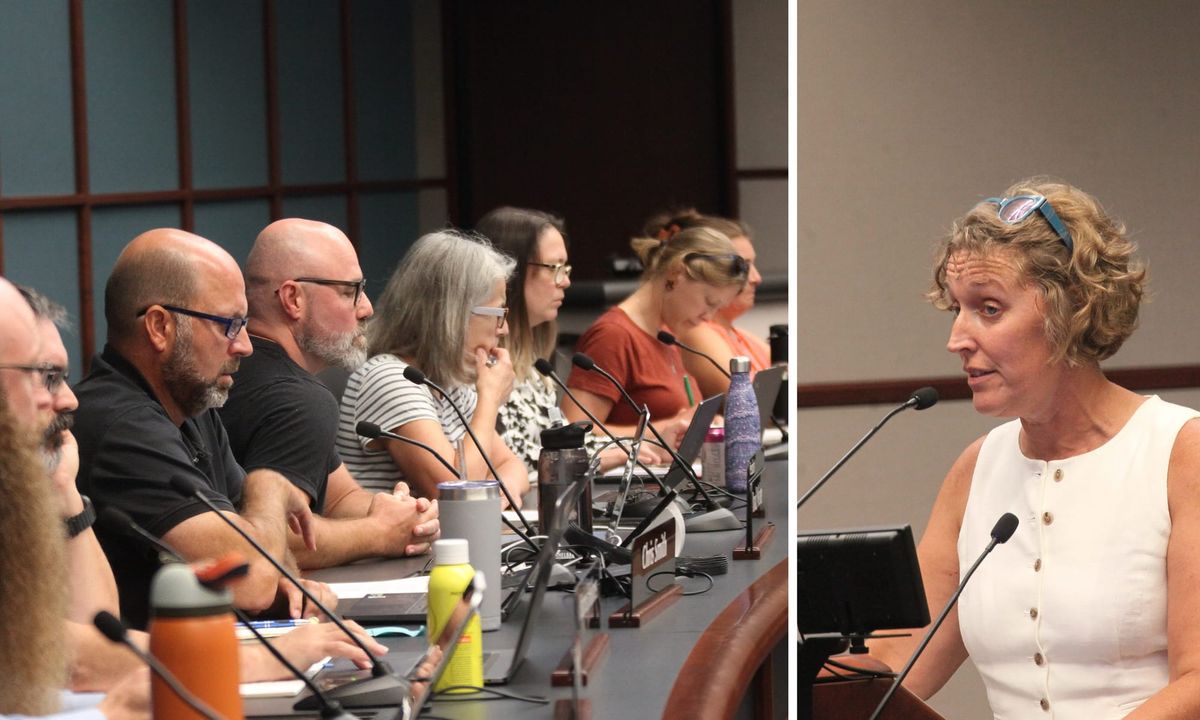
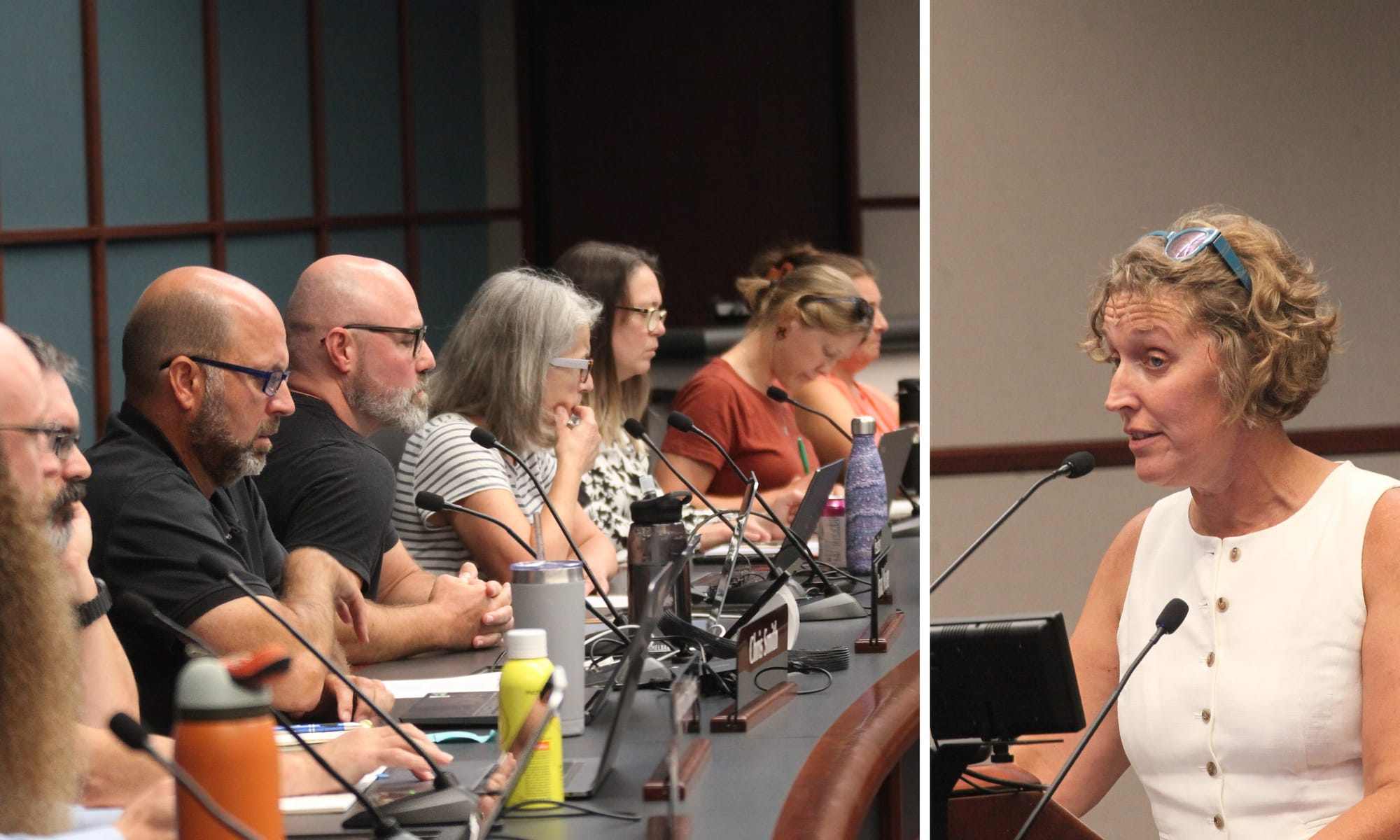
Bloomington’s plan commission voted 8–1 on Monday (Aug. 10) to approve the primary plat for Hopewell South, after the city’s redevelopment commission withdrew a request to waive a tree-plot requirement along 1st Street.
Monday’s meeting showed continued friction between the city council and the mayor over Hopewell South, even after the city council approved the planned unit development (PUD) in early May. Bloomington mayor Kerry Thomson attended the meeting in person, and defended the plat against a total of four city councilmembers who weighed in against it.
As the owner of the Hopewell South real estate, it was the Bloomington redevelopment commission (RDC), a part of city government, that was the petitioner for the PUD and the plat.
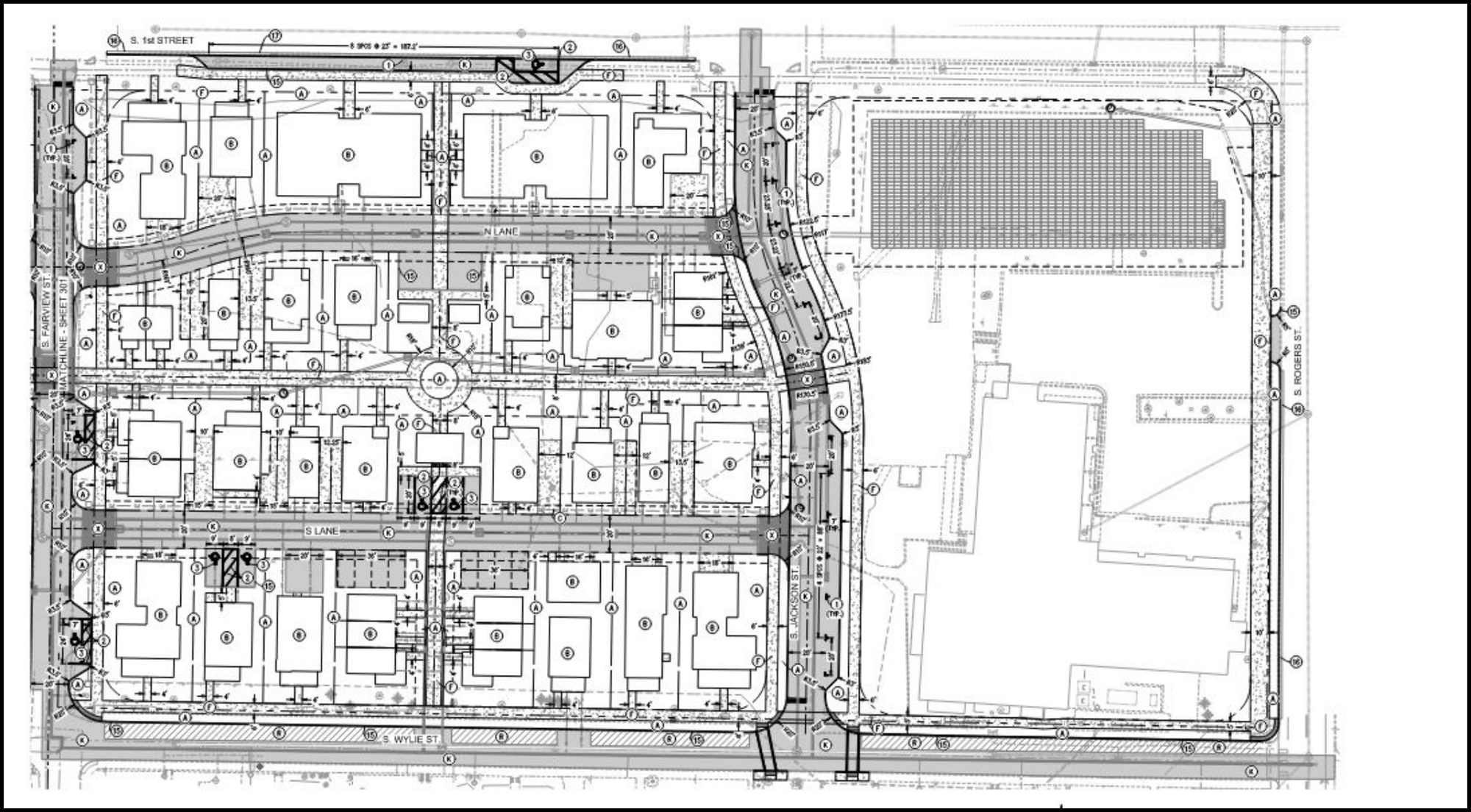
Monday’s approval moves the city closer to construction on about 6.3-acres at and around the former IU Health Bloomington hospital site. The Hopewell South planned unit development (PUD) allows up to 98 homes. A plat is just the technical term for a map showing how a piece of land is divided into individual lots, streets, rights-of-way and other designated areas.
Of the 65 lots created by the plat, 62 of them are residential, two are common-area lots and one containing the former Bloomington Convalescent Center building at 714 S. Rogers St. It also folds three lots from an old subdivision (Dixie Highway) into the new subdivision.
Monday’s split vote marks the latest step in a Hopewell South approval process that has stretched through most of 2026 so far. The plan commission unanimously recommended the PUD in February, and the Bloomington city council ultimately approved it 9–0 on May 6 after months of debate over affordability, accessibility, street design and other conditions. The council’s approval requires at least 35% of the homes to be permanently affordable, with a goal of 50%.
Speaking on Monday from the remote public mic with its initially proposed waiver of a tree-plot requirement, were three city councilmembers—Kate Rosenbarger, Isabel Piedmont-Smith, and Matt Flaherty. They said the waiver contradicted one of the conditions of approval imposed by the council on the Hopewell South PUD. And the city’s legal department eventually agreed that they were right. It’s what led to the withdrawal of the waiver request by the administration.
It was Hopi Stosberg, who serves as the city council’s appointee to the plan commission, who cast the sole vote against the plat. Her objections included the fact that the plan commissioner meeting information packet did not include written documentation that City of Bloomington Utilities (CBU) had approved the project’s approach to drainage.
“If this was a private petitioner, we would not be trusting right now that they have that signed off on,” Stosberg said. “I am entirely sick of this petition getting special treatment simply because they are an arm of the city and not a petitioner like any other.” Stosberg added: “We’re eight months into this right now, and I’m honestly not interested in continuing to give them special treatment.”
Development services manager Eric Greulich responded by saying that in the wording of the plat approval, it says that final acceptance and approval from CBU is required before issuance of any permits. He pointed out that the wording is “standard language that we have on every single petition.” Greulich also said he had emails from the CBU, including one from director Kat Zaiger indicating CBU’s acceptance and approval of the plat moving forward.
Voting with the plan commission majority was Chris Smith, who said, “We need housing.” He said, “This whole process has been micromanaged and taken way too long. We have a great plan before us.”
Plan commissioners: 1st Street parking triggers dispute
Much of Monday’s deliberation focused on the city’s proposal to add some on-street parking along the south side of 1st Street.
1st Street already has a sidewalk, tree plot and recently planted street trees. Adding the parking would have shifted the tree plot south, over a water line, where trees cannot be planted. The city proposed instead to put the sidewalk over the water line and plant the required trees on the other side of the sidewalk.
But the city council had explicitly required, as one of the conditions of its PUD approval, a tree plot at least five feet wide between the sidewalk and drive lane.
Three councilmembers appeared remotely during public comment Monday to object to the waiver. District 2 councilmember Kate Rosenbarger said the council had already engaged in “extensive public comment and debate” over the street design before settling on the existing configuration.
“A tree plot on the other side of the sidewalk is not a tree plot,” Rosenbarger said. “That is not a thing.” Rosenbarger also objected to tearing into the recently reconstructed 1st Street to add the parking.
District 1 councilmember Isabel Piedmont-Smith said she was “just baffled” by the waiver request because the placement of the tree plot had been an explicit condition of the council’s approval. “What we approved should stand,” Piedmont-Smith said.
At-large councilmember Matt Flaherty called the waiver “an express violation of a reasonable condition passed by the city council” and said its approval could invite a legal challenge.
Flaherty also returned to an issue that has surfaced repeatedly during the Hopewell South review: Is the city government, acting as developer, being held to the same standards as a private petitioner?
“I think the kind of self-dealing and special exceptions for how we’re treating the city as a petitioner with this particular PUD has been part of the problem and contentiousness all along,” Flaherty said.
Flaherty also raised a point of trust, which has been a frequent talking point for him since Thomson took over as mayor at the start of 2024: “Finally, I would just say it’s hard to overstate how much approval of this proposal would further erode what little trust remains in Mayor Thompson and some of her staff to engage with the city council in good faith. ”
In the end, the city’s legal staff agreed that the waiver conflicted with the council condition. Assistant city attorney Dana Kerr told commissioners that the waiver “does specifically contradict the reasonable condition” and that it would be “inadvisable” for the plan commission to grant it.
Planning staff said the primary plat could nevertheless be approved without the waiver, with the 1st Street design modified before secondary plat approval.
Commissioner Chris Smith pushed for getting the overall project moving, even as he opposed the 1st Street waiver.
“We need housing,” Smith said. “This whole process has been micromanaged and taken way too long. We have a great plan before us.”
Smith said he did not favor the waiver because he preferred the approved street cross-section and did not want recently installed infrastructure torn out and rebuilt. “I think we need to approve this and get this thing moving because we need housing more than we need anything else,” Smith said.
Mayor: No attempt to skirt requirements
The meeting included a short recess to sort out the question of the tree plot. After the break, Bloomington mayor Kerry Thomson appeared at the mic on behalf of the RDC and pushed back against suggestions that the proposed change had been an attempt to circumvent the council’s conditions.
“There was really no malicious intent here,” Thomson said. She described the proposal as an engineering solution intended to preserve trees while adding parking. “Definitely not the mayor playing chess here,” she said.
Thomson said the bigger priority was moving Hopewell South toward construction. “It’s really important to us to get this affordable housing built and built as soon as possible,” Thomson said.
Project engineer Kendall Knoke said the idea of the waiver had emerged from RDC discussions about whether more parking could be added to reduce spillover into surrounding neighborhoods. He said the project could move forward without the 1st Street parking.
It was RDC executive director Anna Killion-Hanson who stepped the mic to withdraw the request for a tree-plot waiver. The 8–1 vote followed.
Long road to construction
Hopewell South’s path to construction of housing predates this year’s PUD debate.
The city initially sought private developers for the property. After a second offering produced two proposals, the RDC rejected both in June 2025 and shifted to a strategy built around smaller builders, pre-approved house designs and city coordination of the overall development.
The RDC formally authorized the Hopewell South PUD filing in December 2025, with the customized zoning intended to allow as many as 98 homes, compared with roughly 28 under the existing zoning without additional discretionary approvals.
The PUD then went through two plan commission hearings and a City Council process that included postponements on Feb. 18, March 4, March 25 and April 1 before the final May 6 vote. On June 1, the RDC formally accepted the council’s conditions and authorized staff to proceed with plats and permits.
Next steps
Knoke laid out a more specific timetable Monday for getting from the primary plat to construction.
The remaining development approvals include the PUD final plan, the secondary plat and permits. Knoke said he expects the project to work through permitting from August through October 2026. Bidding is expected in November, with construction to follow.
The infrastructure is planned to be built in one phase rather than broken into separate construction stages. Knoke said that will include all roadway modifications and new streets, sidewalks and related infrastructure, including work around the 714 S. Rogers St. property.
The former convalescent center building has been eyed as a potential rehab-reuse project for a new police station. But the result of a feasibility study by American Structurepoint raises the question of whether it could be more cost effective to demolish the building and build from scratch.
Monday’s primary plat approval means the city has now taken one more step towards a Hopewell South concept that has been revised since the city’s first offering of the property in 2023 and construction of the neighborhood itself.


Comments ()