
Monroe County says ‘Powerline Camp’ must close by Sept. 1—fight stokes safety concerns
Monroe County has set Sept. 1 as the deadline for homeless residents to leave the ‘Powerline Camp’ on the Thomson property. A fight near Habitat for Humanity’s Osage Place has deepened safety concerns and prompted calls for more police presence and better city-county coordination.
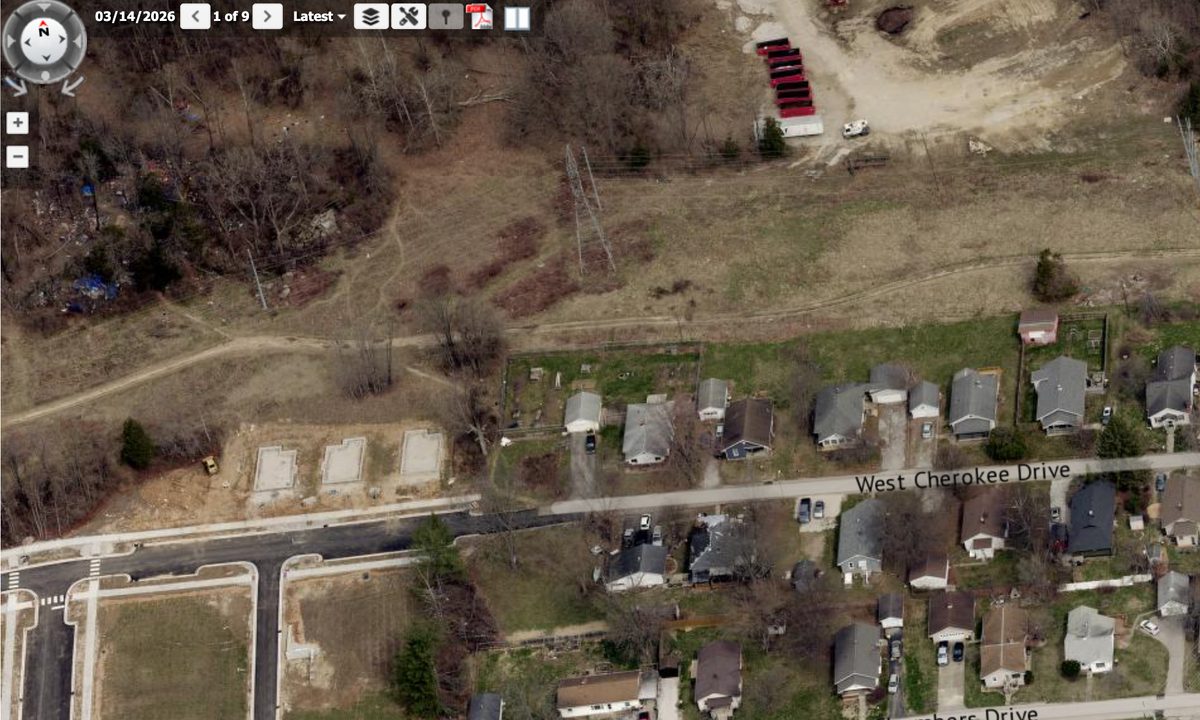
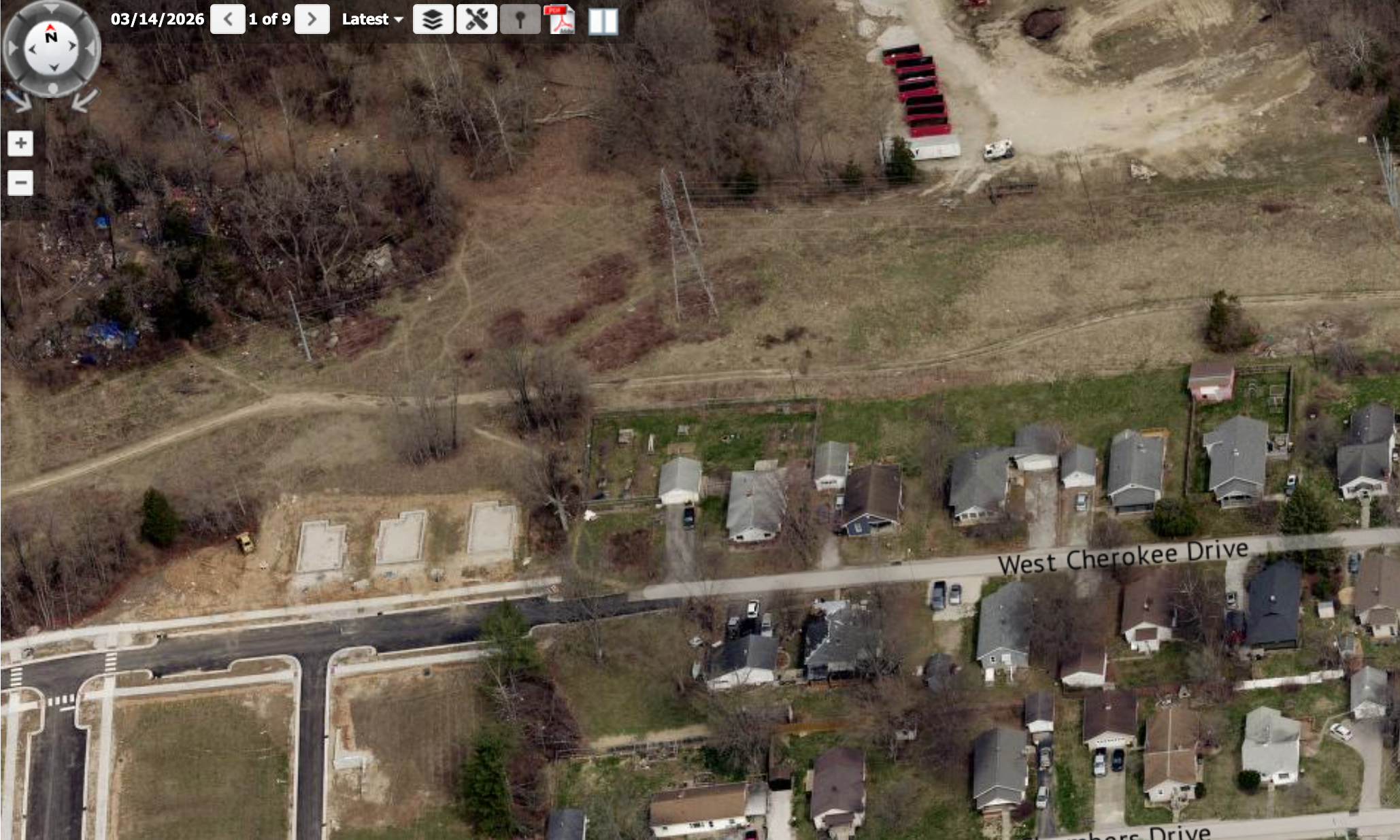
People living in the homeless encampment on Monroe County’s Thomson property have been told they have until Sept. 1 to leave.
According to the Monroe County commissioners office, notice was posted on Monday (Aug. 3) at the county-owned property off South Rogers Street. The site is commonly known as the Thomson encampment and has been given the 911 dispatch address moniker “Powerline Camp.”
Monday’s notice puts a specific date on a closure that county commissioners had set in motion two weeks ago, on July 23, when they authorized county attorney Jeff Cockerill to take formal steps toward clearing the encampment.
At the July meeting, Cockerill told commissioners the sheriff’s office believed conditions at the site were “becoming more dangerous and more of a cause of a public safety concern.” Commissioners did not set a closing date at that meeting, but gave Cockerill authority to post a notice before their next regular meeting, if circumstances warranted it.
The Sept. 1 deadline comes as the county government faces pressure from more than one direction. Neighbors have described safety and quality-of-life problems they associate with the camp. A fight among camp residents this week, which took place in the neighborhood next to the encampment, and was preceded by reports of gunshots from inside the encampment, drew a law enforcement response from city police and from sheriff’s deputies.
People living in the encampment say finding conventional housing can be blocked by eviction histories, poor or nonexistent credit, criminal records and a shortage of realistic alternatives.
The posted notice of closure also comes a month after a new Indiana law took effect on July 1 that makes unauthorized camping or long-term shelter on state or local government property a Class C misdemeanor under certain circumstances.
The county’s Sept. 1 deadline is separate from the enforcement process laid out in the new state law. Under that law, before a person can be prosecuted for “street camping,” law enforcement generally has to give the person a warning and information about available shelter or services.
To count as a violation, at least 48 hours have to pass after the warning, with the person remaining within 300 feet of the location where it was issued. The law also includes defenses to prosecution, including when no shelter is available closer than five miles.
In June, county commissioners removed a formal 30-day notice requirement from their encampment policy, because county attorney Cockerill said it could conflict with the new state statute. But commissioners said their goal remained giving people as much advance notice as possible when the county itself initiates a camp removal. Sheriff Ruben Marté also said at the time that deputies would continue handling complaints case by case, seeking voluntary compliance and working with service providers when appropriate.
The resolution rescinded by the June action had been adopted by commissioners in December 2025 and generally called for at least 30 days notice before clearing out homeless encampments.
Monroe County’s underlying ordinance covering camping, littering and storage of personal property on county government property is Chapter 257 of the county code.
Habitat describes problems for Osage Place
The deadline for people to leave the Thomson property follows an appeal in late July to county officials from Habitat for Humanity of Monroe County. The nonprofit is developing a new neighborhood called Osage Place, just to the south of the Thomson property.
Speaking from the public mic during the July 28 meeting of the county council, Habitat operations director Kari Bennett said the organization does not support the new state law on camping and considers criminalization of homelessness “cruel and counterproductive.”
But Bennett said Habitat also has to respond to homeowners, employees and volunteers who have reported uncomfortable or frightening interactions associated with the neighboring encampment.
Among the situations Bennett described were people coming onto neighborhood porches to get water from outdoor faucets, people seeking food or water at construction sites, dogs roaming the neighborhood and sometimes behaving aggressively, thefts of bicycles and Habitat construction materials, and frequent yelling and screaming from the direction of the encampment.
Bennett said Habitat has also had prospective homeowners turn down offers of lots in Osage Place because they were concerned about the safety of their families.
“Without a solution to find a better housing situation, these incidents will continue,” Bennett told the council.
Bennett’s remarks served to foreshadow a violent episode this week.
Aug. 5 fight brings city, county police response
A violent incident Wednesday (Aug. 5) near the encampment brought both Bloomington police and Monroe County sheriff’s deputies to the area, although sheriff’s officials said they were unable to substantiate an initial report of gunfire with hard evidence.
The original call came from the area of Cherokee Drive and Rogers Street and involved four people fighting over a backpack, according to the Monroe County sheriff’s office.
Because the reported location was in the city, Bloomington police responded first. The person who called in the fight showed an officer a short video of the confrontation and also reported that about 10 minutes before the brawl started, he had heard four sounds he believed were gunshots coming from the direction of the encampment.
The sheriff’s office said the video showed a physical struggle over the backpack. At least a couple of punches were thrown, but the people involved eventually stopped fighting and walked away together.
After the person who made the call told responding officers that possible gunshots had been heard from the county-owned property, three sheriff’s deputies went into the encampment and spent considerable time walking through the area and talking with people there.
Some people told deputies they had heard something, according to the sheriff’s office, but deputies could not establish where specifically inside the encampment the apparent gunshots had originated.
The Monroe County sheriff’s office also rejected as inaccurate any reports that Bloomington police had simply arrived and declared the incident a county problem. Chief deputy Phil Parker said Bloomington police responded appropriately to the city call, then contacted sheriff’s deputies when the investigation pointed toward possible activity on the county-owned property.
On April 16, according to Bloomington police, central dispatch established “Powerline Camp” as an address moniker, which could be selected by a dispatcher taking a call. Since then, police say there have been 30 calls associated with the location.
That number does not mean there have been 30 complaints about criminal activity by people living at the camp. Some calls were generated by government agencies themselves. In one instance, for example, Bloomington animal care and control asked for police assistance while looking for a dog believed to be on the property.
The address moniker draws a clean line for dispatch purposes between calls originating in the city of Bloomington and those associated with the encampment, on county-owned land. A call to the intersection of Cherokee and Rogers would send Bloomington police as the primary responding agency. A call to the Powerline Camp would send the sheriff’s office as the primary responding agency.
Habitat CEO Wendi Goodlett told The B Square that Bloomington mayor Kerry Thomson has told her Bloomington police will increase patrols in the area. [The mayor is not connected to the county-owned property—the name is a coincidence.]
Goodlett said Habitat is also asking for a more coordinated approach in which the two law enforcement agencies can respond quickly when there’s a fluid situation between an area like Cherokee Drive and county-owned property inside city limits, like the Thomson encampment.
The Aug. 5 fight took place just inside one of Habitat’s most significant project neighborhoods, Osage Place.
Habitat for Humanity: Impact on Osage Place
Ground was broken for Osage Place in June 2021. The development, immediately east of RCA Community Park, is planned for 69 homes in two phases.
Goodlett told The B Square on Friday that Habitat is now finishing the last few houses in the 30-home first phase. Construction has also started on some of the 39 homes in the second phase.
That puts Habitat’s active construction increasingly close to the Thomson property. Goodlett said the second phase occupies the northeastern portion of Osage Place, including the area where Habitat crews are now working.
Habitat says that proximity to the encampment did not always present a problem. In an Aug. 6 public statement, the nonprofit said that as progress has been made building homes farther north in Osage Place, friction with the encampment has grown. But for years before that, it “no significant issues” were encountered with people living there. Habitat says that changed as the encampment grew.
The effects are no longer limited to general unease, according to Habitat. Goodlett said one family has withdrawn from Habitat’s homeownership program. The family cited several reasons, she said, but one of them was concern about safety in the area.
Habitat has also made changes on the ground. Goodlett said the organization blocked vehicle access from Bernard Drive into the Thomson property and has emphasized keeping property locked up. She said several bicycles have been stolen, including bicycles belonging to a Habitat family that relies on bikes for transportation.
Until the Aug. 5 incident, Goodlett said, the changes Habitat was seeing mostly involved increased foot traffic through the neighborhood. Other concerns included yelling from the encampment and what residents have described as increasingly frequent gunfire. But previously those sounds had been more distant from the neighborhood and Habitat’s actual construction activity.
What made Wednesday’s incident so different, Goodlett said, is that it took place so close to the house where Habitat staff and volunteers were working. Habitat’s Aug. 6 statement says workers heard what they believed were gunshots nearby, and just after that saw four people involved in a physical fight on Cherokee Drive. Habitat staff called 911 and took shelter inside the house under construction.
For Habitat, however, the close proximity of the fight itself was enough to force a new look at construction-site safety. “It definitely has made us reconsider the safety of having people out there,” Goodlett said.
That presents a specific problem for Habitat’s construction model. Homeowners earn “sweat equity” by working alongside volunteers, and Goodlett said Saturdays are when many families can perform those hours. Saturdays are also a principal way Habitat brings volunteer groups from the wider community onto its construction sites.
That’s why Goodlett said Habitat is asking city and county governments for a more visible law-enforcement presence around Osage Place. Providing additional security is just not something Habitat is able to do, Goodlet said: “It’s not our job.”
As the Sept. 1 deadline for clearance of the encampment approaches, Habitat is concerned that tensions will increase even more. The nonprofit’s public statement calls for a stronger law enforcement presence, better collaboration between city and county agencies and “proactive steps” ahead of the Sept. 1 deadline.
Goodlett said the concern extends beyond Habitat itself. After the organization released its statement, she heard from a volunteer who lives in a nearby neighborhood and said residents there had also become more vigilant, particularly as children returned to school starting this week.
At the same time, Goodlett stressed that Habitat is not trying to assign collective blame to people living at the encampment. “I feel bad for everybody involved,” she said.
Goodlett said she worries about the safety of people living at the Thomson property, including people who have been there for a long time, are minding their own business and might not have another place where they feel safe.
Habitat’s written statement draws a similar distinction. It says many people experiencing homelessness are not responsible for criminal activity and calls for long-term solutions involving stable housing, mental health resources and support services.
But the organization says those concerns have to coexist with the safety of the people already living and working next door at Osage Place. “We believe communities are strongest when they prioritize both the safety of residents and the dignity and well-being of those in need,” Habitat’s statement says.
For camp residents, closure means another move
The closure notice resolves one uncertainty that existed when The B Square visited the encampment on July 24: Residents now know when the county expects them to be gone. What it does not resolve is where they will go.
Stephanie, a Bloomington native who had been living at the camp with her adult son and two dogs, told The B Square in July that she had already started thinking about her next campsite.
Stephanie said she was already in the coordinated housing system and had received a relatively high score on Indiana’s housing assessment tool. But she described a series of practical obstacles to getting an apartment. Those include evictions in her rental history, no credit history, and a Level 6 felony conviction that appears on background checks.
Her answer when asked what she wanted was simple: “Someplace to live.”
County officials have acknowledged the same underlying problem even as they set the stage for closing the camp.
When commissioners revised their encampment policy in June, commissioner Jody Madeira criticized the state’s new approach, pointing out that moving people or imposing criminal penalties does not itself create housing. Commissioner Julie Thomas likewise called the statute an unfunded state mandate and said the county would continue coordinating with Bloomington and local service providers.
For residents of the Thomson property, their basic housing problem now comes with a date certain, given by the county’s posted deadline: Sept. 1.


Comments ()