
Bloomington nonprofit initiative aims for leases, not shelter beds, as camping ban starts
Heading Home’s Streets to Stability initiative would move people from Bloomington-area encampments directly into housing, starting with 10 to 12 people once funding is secured. The effort is being planned as Indiana’s new public-camping law takes effect.
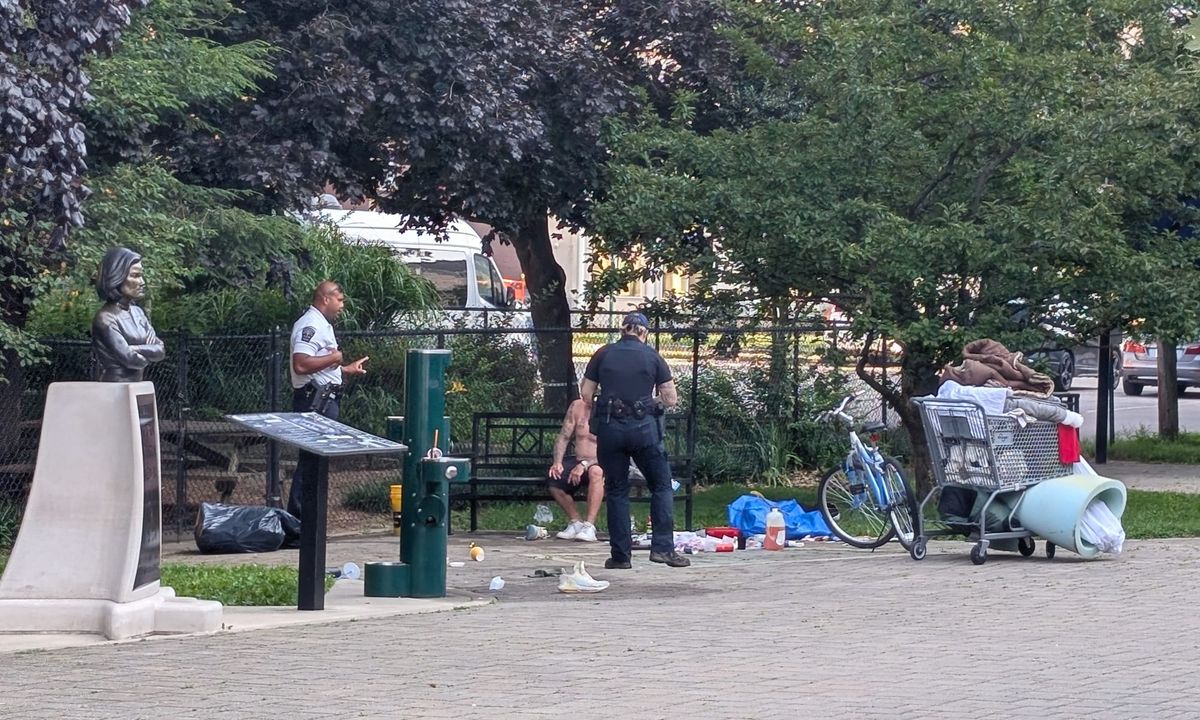
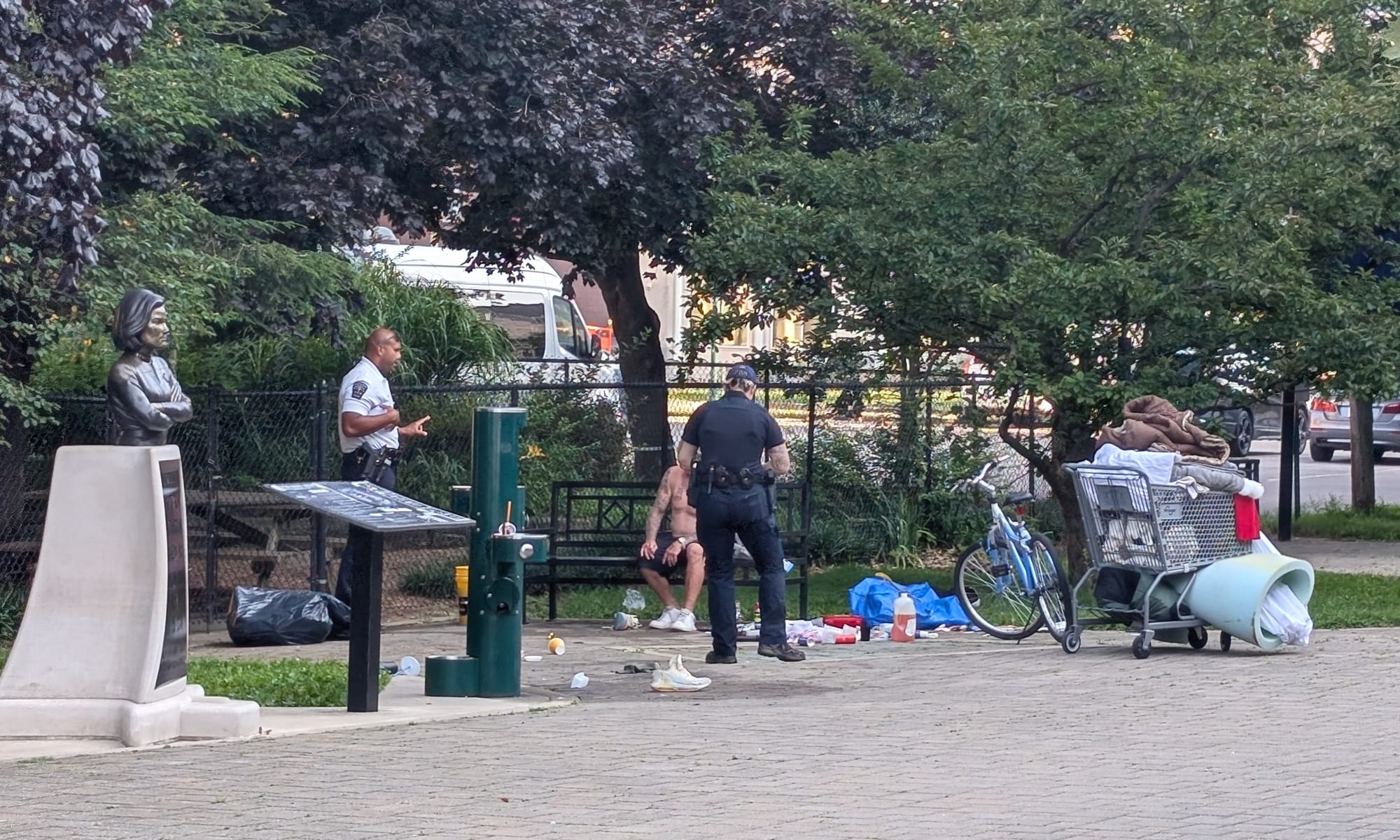
One day ahead of Wednesday’s (July 1) effective date of a new Indiana law, which prohibits camping and sleeping on public property, Heading Home of South Central Indiana announced a new initiative aimed at moving people from encampments directly into housing, instead of temporary shelters.
Heading Home’s announcement came in a news release issued on Tuesday (June 30).
The initiative, called Streets to Stability, is intended to start this summer in Bloomington and Monroe County, with one small encampment or “zone” of about 10 to 12 people. The first location has not been selected, according to Heading Home executive director Mary Morgan. A “zone” can mean a specific encampment or a general area, like the downtown.
Even after it is selected, Heading Home does not plan to announce the location of the first zone, until after people at that site have been housed. That’s consistent with the guidance that Heading Home has received from advisors who are named in the news release, Clutch Consulting and Community Solutions.
The timing is driven partly by this year’s Senate Enrolled Act 285, Indiana’s new statewide public camping law. The law prohibits a person from camping, sleeping, or using state or local government land for long-term shelter unless that use of the land has been authorized.
Before a person can be charged, law enforcement must first determine whether emergency detention procedures apply, then issue a warning and provide information about available shelter or services. A Class C misdemeanor charge can follow only after at least 48 hours have elapsed and the person is still camping or sleeping within 300 feet of the warning location.
Heading Home’s June 30 announcement describes Streets to Stability as a “direct-to-housing encampment response” model, focused on one encampment or zone at a time, through a coordinated four- to six-week process. Participants would be connected to long-term housing through a 12-month rental subsidy, and individualized supportive services. After residents have been offered a plan that leads to housing and services, the encampment would be closed and restored to prevent re-encampment.
But that still leaves open the possibility in the short term that encampments will be closed by local governments, just as they have been in the past. That means residents are given posted notice, and local nonprofits work to convince them to move into shelters, without the kind of offers of actual housing that the new initiative aims to provide. In many cases, it’s not known where the residents move, and case workers have to put considerable effort into reconnecting with them.
The length of the notice period has shrunk due to the SEA 285. About three weeks ago, in early June, Monroe County commissioners formally rescinded their previous policy of a 30-day notice, saying it would conflict with the new state law.
Funding: How much?
The first phase of Streets to Stability will not begin until funding is secured for the full cost of housing the initial group, Morgan said in written answers to questions from The B Square. For 10 to 12 people, Heading Home estimates the cost at about $371,000. Rental subsidies alone are estimated at $1,388 per month per person, based on Bloomington fair market rent plus utilities. Other costs could include landlord incentives and salaries for stabilization case managers.
About 150 people are estimated by Heading Home to be living unsheltered in Bloomington and Monroe County. That means they are staying in encampments, sleeping in vehicles, or living in other places unfit for human habitation, and not connected to emergency shelters.
If that first-phase cost estimate is used to extrapolate the cost of housing all 150 people, on the high end that works out to about $5.57 million. That’s a B Square calculation, not a formal budget request from Heading Home, and actual costs could vary as the program scales up.
Funding is still unresolved. Morgan said Heading Home is discussing funding options with the city of Bloomington, Monroe County, Bloomington Township, Perry Township, IU Health, the Community Foundation of Bloomington and Monroe County, the Greater Bloomington Chamber of Commerce, private foundations and other stakeholders.
The local leadership team for Streets to Stability named in the news release includes Morgan; Bloomington mayor Kerry Thomson; Monroe County commissioner Jody Madeira; Monroe County councilor Trent Deckard; Bloomington Township trustee Efrat Rosser; Emily Pike, chair of the South Central Housing Network and executive director of New Hope for Families; Tina Peterson, president and CEO of the Community Foundation; Brianna Solola, IU Health South Region chief of staff; and Eric Spoonmore, president and CEO of the Greater Bloomington Chamber of Commerce.
The Monroe County council is the fiscal body of the county government. There is no money specifically earmarked for Streets to Stability in Monroe County’s adopted 2026 budget, county councilor Trent Deckard wrote to The B Square in response to emailed questions.
Deckard said one possible source could be the county’s Local Assistance and Tribal Consistency Fund, depending on further discussion among county officials. The county auditor has said that about $162,379 is available in LATCF funding, according to Deckard. That’s less than half of the estimated $371,000 needed for the first 10-to-12-person phase.
Monroe County commissioner Jody Madeira responded to emailed B Square questions, indicating there is not yet a specific plan to make Streets to Stability part of the 2027 budget. Madeira indicated that commissioners would be discussing the issue with the county council, which would need to approve any appropriation.
The city of Bloomington’s budget picture for potential funding of the Streets to Stability initiative is even less clear. Bloomington mayor Kerry Thomson is quoted in Heading Home’s news release supporting the initiative: “What Streets to Stability offers is a more coordinated way to bring those pieces together.” The quote from Thomson continues: “It will require funding and sustained partnership, but it gives us a credible path toward two goals our community shares: helping people reach stable housing and keeping public spaces safe, welcoming and accessible.”
Thomson did not respond to emailed questions from The B Square about whether there is money in the city’s current 2026 budget that could be tapped for Streets to Stability, or what role the Heading Home initiative might play in the city’s 2027 budget.
For local governments, the 2027 budget picture may have a smidgen more room than it would have otherwise had, if the same past pattern for limiting revenue increases had been followed by the state legislature for next year, at least for the property tax levy side.
The Indiana State Budget Agency has now calculated the maximum levy growth quotient (MLGQ) for property tax levies payable in 2027 at 6.000%. That is two percentage points higher than the 4.000% quotient used for 2024, 2025 and 2026. The quotient does not itself fund any program, and it is not the same as overall budget growth. Still, it gives taxing units a bit more levy-growth room than they have had for the last few budget cycles.
Geographic focus?
The Streets to Stability initiative will not have a full-county rollout from the start. Morgan said Heading Home has not divided Bloomington and Monroe County into a fixed set of zones. Instead, the first phase is intended to test the process, make adjustments, and then expand to additional encampments or zones as funding becomes available.
In the Clutch Consulting model, advance notice of a specific site is avoided for both privacy and operational reasons. In the model, outreach workers build a by-name list of people who are regularly sleeping in a place, not just visiting or passing through.
Publicly announcing the site before or during that work could draw additional people to the location, making it harder to close the encampment after the people on the list have been housed. The model also treats housing, not just shelter, as the central offer: a lease, a door, a lock and a key. In that model, acceptance rates reported by Clutch are typically very high, often above 90%.
Community Solutions system improvement adviser Marney Thomas said in an emailed response to The B Square that the decision not to name specific zones in advance is intended to protect the privacy and safety of the people being served and to let providers build trust without external disruption.
Enough housing?
Besides funding, ensuring there is enough housing for encampment residents to move into is also a big challenge. Morgan said Heading Home is aware of more than 150 vacancies in apartment complexes in Bloomington and Monroe County that typically offer rents accessible to people with limited incomes.
Mary Hamric, Heading Home’s director of strategic partnerships, is working with landlords and property managers to assess what incentives might be needed. Morgan said 12 months of guaranteed rent is itself a significant incentive to landlords, and the model also includes stabilization case managers who would work intensively with tenants. Heading Home does not anticipate needing 24/7 on-site support.
In the Clutch Consulting model, landlord engagement is treated as a business relationship with the rental market. That can include landlord engagement teams with real estate or property management experience, plus a flexible fund for incentives such as deposits, first month’s rent, or “hold fees” to keep units available while people are being matched to housing.
After the 12-month subsidy ends, Morgan said each tenant would have worked with a stabilization case manager on an individualized plan for month 13. That could include securing additional income, finding a roommate, moving into other subsidized housing, or, in limited cases, receiving a short extension.
Heading Home says success will be measured by reductions in the number of unsheltered residents in Monroe County and by the percentage of participants who remain housed after the 12-month subsidy ends. The organization maintains a data dashboard and conducts a midyear survey of unhoused residents with partner agencies. This year’s survey was conducted June 24, and Heading Home staff are still entering and analyzing the data.
The initiative is tied to a national model developed by Texas-based Clutch Consulting Group. In January 2026, Clutch partnered with Community Solutions, the national organization known for its “Built for Zero” network, to expand the model through training, technical assistance and implementation support. Heading Home leads the South Central Indiana “Built for Zero” partnership, which was selected to participate in that effort.
The model has been used in other communities, according to Heading Home’s announcement. In Cleveland, partners used it to close 53 encampments and house 177 people in eight months. Across Connecticut, it helped close 13 encampments and connect 71 people to housing. In Tulsa, Oklahoma, the approach was used to resolve all downtown encampments.
[Note: The reporter is the spouse of Mary Morgan, who is executive director of Heading Home of South Central Indiana.]

Comments ()